IELTSpeaking 앱은 언제 어디서나 실제 IELTS 말하기 시험을 시뮬레이션하는 데 도움이 됩니다. 비디오 시험관과 함께 모의고사를 치르고 유창성, 문법, 어휘, 발음에 대해 즉시 Band 점수를 받고 다음 Band에 도달하는 방법을 정확히 알아보세요.
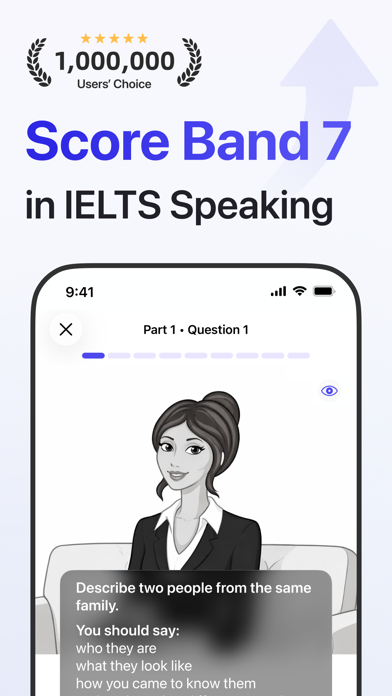
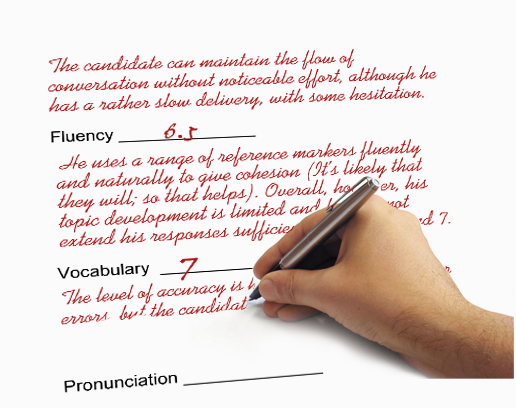
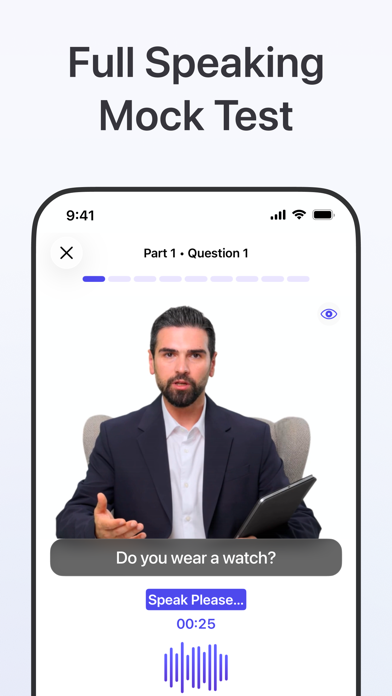
전체 모의 테스트 영상검사관과 함께
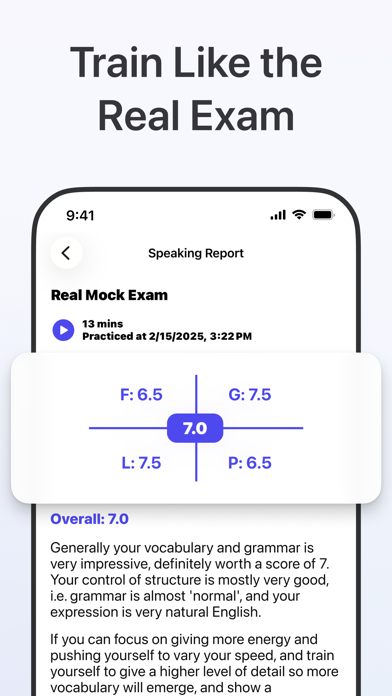
즉시 Band 점수 F · G · L · P용
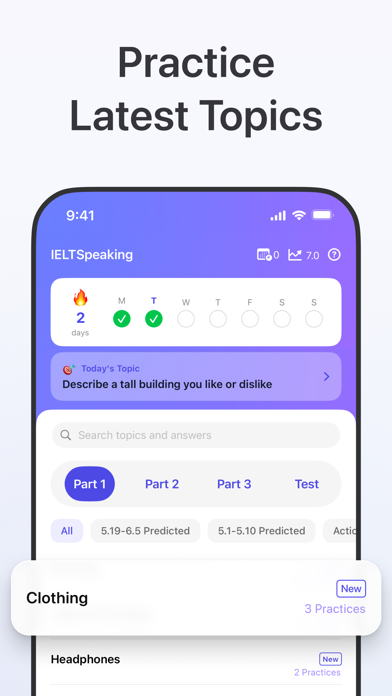
현재 시즌 주제 매시간 업데이트됨
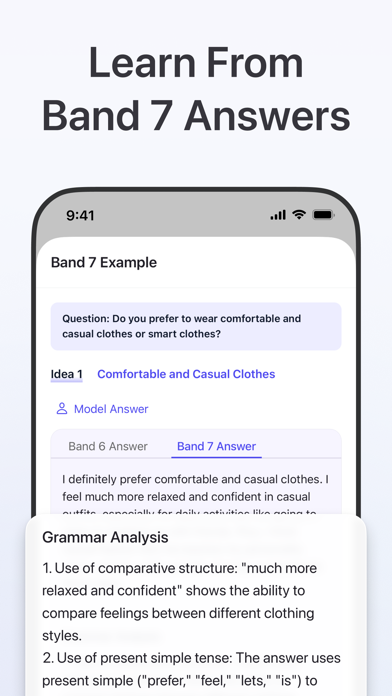
Band 6 → 7 모델 답변 쌍
모의 테스트부터 점수 보고, 목표 연습까지 — 매일 10분의 시간은 다음과 같습니다.
'내 수준을 모르겠다'부터 자신감 있는 시험 당일 성적까지 4단계.
시험 당일과 똑같이 비디오 시험관과 함께 전체 IELTS 말하기 시험(파트 1, 2, 3)을 응시하세요.
전반적인 Band 및 시험관 스타일 피드백을 통해 유창함, 문법, 어휘 리소스 및 발음을 평가하는 즉시 보고서를 받으세요.
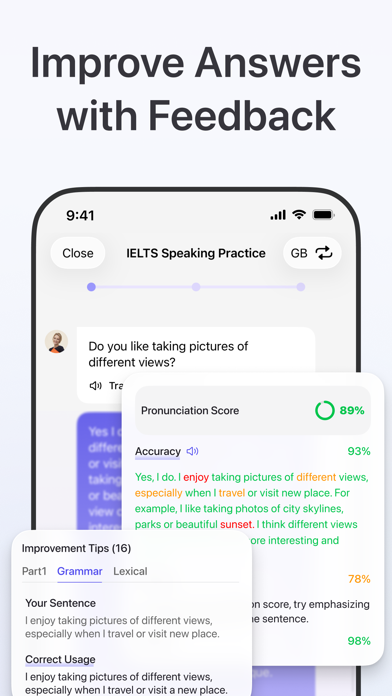
AI 시험관으로 파트 1, 2 또는 3을 훈련하고, 발음 점수와 문법 수정을 받고, Band 6 대 Band 7 모델 답변을 비교하세요.
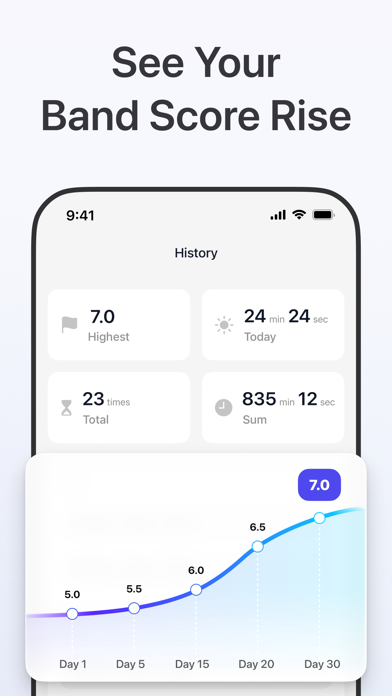
진행 차트에서 비교 가능한 세션을 추적하고, 들리는 변화를 듣고, 연습할 다음 기술을 선택하세요.
응시자가 지금 시험에서 다루고 있는 주제를 무료로 찾아보고 앱에서 연습해 보세요.
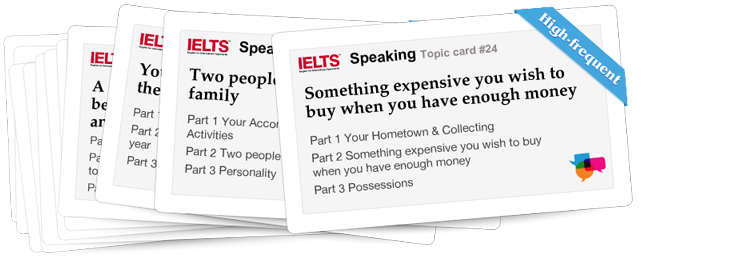
앱 내 문제 은행은 응시자가 현재 시험에서 직면하고 있는 질문을 추적합니다. 즉, 파트 1, 파트 2 큐 카드 및 파트 3 후속 질문은 주제 변경 시즌 동안 매시간 업데이트됩니다. 이 사이트에서 현재 목록을 무료로 탐색한 다음 앱에서 원하는 주제를 자세히 살펴보세요.
현재 주제 찾아보기모든 후보자가 묻는 질문에 대한 실용적인 답변과 이를 실제로 적용하는 방법.
IELTS Speaking 시험 형식, 파트 1, 2, 3, 타이밍, 질문, Band 점수 및 실용적인 7일 준비 계획을 이해하세요.
가이드 읽기 →효과적인 루틴을 통해 집에서 혼자 IELTS 말하기를 연습하세요. 자신을 녹음하고, 정해진 시간에 모의 테스트를 실행하고, Band 피드백을 받으세요. 파트너가 필요하지 않습니다.
가이드 읽기 →IELTS Speaking Part 1의 시험 형식, 답변 길이, 자연스러운 답변 구조, 자주 나오는 주제, Band 7 수준의 언어 사용, 시간 제한 연습 루틴을 익히세요.
가이드 읽기 →예시와 시간 제한 녹음 루틴을 통해 IELTS Speaking Part 3 형식, 답변 구조, 아이디어 개발, 비교 및 추측을 알아보세요.
가이드 읽기 →IELTS Speaking 시험 당일에 무엇을 기대할 수 있는지 알아보세요: 신원 확인, 세 가지 시험 부분, 타이밍, 녹음, 화상 통화 전달 및 차분한 최종 체크리스트.
가이드 읽기 →공식적인 단어 수는 없습니다. 파트 1, 2, 3의 실용적인 IELTS Speaking 답변 길이와 연장 또는 중단 시기를 아는 방법을 알아보세요.
가이드 읽기 →일반적인 IELTS 말하기 실수를 찾아서 수정하세요: 암기된 답변, 취약한 전개, 채우기, 어휘 강제, 문법 오류 및 잘못된 녹음 검토.
가이드 읽기 →유창성, 어휘, 문법 및 발음에 대한 2단계 체크리스트가 포함된 IELTS Speaking 녹음을 검토한 후 집중적인 변경 사항 하나를 다시 녹음하세요.
가이드 읽기 →IELTS 말하기 시험은 파트 1의 친숙한 질문, 파트 2의 준비된 긴 차례, 파트 3의 더 광범위한 토론의 세 부분으로 구성된 11-14분 녹음 인터뷰입니다. 동일한 가중치를 적용한 네 가지 기준으로 말하기 Band가 생성됩니다. 자세히 알아보기 →
예. 대부분의 성공적인 자가 학습자는 실제 파트 1, 2, 3 질문에 대한 시간적 답변과 4가지 채점 기준에 따라 검토하는 녹음을 사용하여 대부분의 말하기 연습을 혼자 수행합니다. 솔로 연습이 줄 수 없는 것은 정직한 채점인데, 여기에 IELTSpeaking의 AI 모의 테스트와 즉석 Band 보고서가 들어갑니다. 자세히 알아보기 →
직접 답변한 다음 관련 이유, 세부 정보, 예시 또는 대조를 추가하세요. 공식적인 문장 수는 없습니다. 한 단어로 된 답변이나 암기된 연설이 아닌 자연스럽고 완전한 답변이 목표입니다. 자세히 알아보기 →
명확한 입장을 밝히고 주된 이유를 설명하고 예, 결과 또는 비교를 통해 이를 뒷받침하십시오. 답변이 더 정확해질 때만 뉘앙스를 추가하세요. 자세히 알아보기 →
테스트 센터의 신원 확인 절차가 끝나면 녹음된 11~14분 인터뷰를 완료합니다. 파트 1에서는 친숙한 질문, 파트 2에서는 준비된 긴 차례, 파트 3에서는 더 광범위한 토론이 진행됩니다. 자세히 알아보기 →
공식적인 단어나 문장 대상이 없습니다. 파트 1은 짧은 개발 답변이 필요하고, 파트 2는 1~2분 정도의 긴 차례가 필요하며, 파트 3은 지지 의견을 위한 충분한 공간이 필요합니다. 자세히 알아보기 →
일반적인 패턴에는 암기되거나 관련 없는 답변, 취약한 전개, 반복적인 채우기 및 다시 시작, 강제적인 어휘, 통제되지 않은 문법, 녹음 검토가 없는 연습 등이 포함됩니다. 자세히 알아보기 →
관련성과 명확성을 위해 한 번 듣고 타임스탬프나 짧은 스크립트를 사용하여 하나의 채점 기준을 검사하세요. 하나의 수리를 선택하고, 한 번 다시 기록하고, 나중에 새로운 질문에 대해 기술을 다시 테스트하세요. 자세히 알아보기 →
예. 간단합니다. 앱이 이를 솔직하게 알려줍니다. 자신만의 학습 계획을 세우고 이를 고수하세요. 일일 연속 기록은 출석 여부를 추적하고, 연습 시간 통계는 여러분이 투자한 작업을 합산하며, Band-점수 기록 차트는 계획이 성과를 거두었음을 보여줍니다. 설정하고, 고수하고, 결국 현실로 만드세요.
IELTSpeaking: IELTS 말하기 연습 및 모의고사
실제 IELTS 말하기 문제를 연습하고 iPhone 또는 iPad에서 전체 말하기 시험을 시뮬레이션하세요.