
IELTS Berbicara Bagian 2 & 3: Describe a person who is good at learning and speaking new languages
Bagian 2 kartu isyarat
Describe a person who is good at learning and speaking new languages
Anda harus mengatakan:
- Bagaimana Anda bisa mengenalnya
- Bagaimana dia belajar bahasa baru
- Bahasa apa yang bisa dia gunakan
- Bagaimana perasaan Anda terhadap dia
Anda memiliki waktu satu hingga dua menit untuk membicarakan topik ini.
Baca transkrip lengkapnya
I want to describe a friend of mine called Ana, who’s brilliant at picking up languages. I met her at university during a language-exchange event, and we quickly became study partners; in our first term we’d meet twice a week to practise conversation and swap notes. She learns new languages mainly through immersion and deliberate practise — she spends weeks listening to podcasts, shadowing speakers and making herself speak even when she makes mistakes; for example, she spent a month living with a Spanish family and kept a small phrasebook of tricky expressions. She also uses a mix of resources: grammar books, language apps and conversation tandems, and she’s not afraid to ask native speakers to correct her. As a result she speaks English and Spanish fluently, French and German quite well, and has basic Mandarin and Arabic for travel; I’ve seen her switch effortlessly from casual chat to formal introductions at a multicultural fair where she helped as an unofficial interpreter. I admire her patience and resilience — she’s the sort of person who makes language learning look enjoyable rather than a chore, and she often encourages me to push myself by suggesting tiny daily habits that really help. She even keeps a record of the mistakes she’s made so she doesn't repeat them.
Status persiapan: Siklus topik yang diprediksi. Sumber latihan mandiri ini bukan makalah IELTS resmi, dan soal-soal dalam tes Anda bisa berbeda. Bagaimana topik diberi label.
Bagian 3 pertanyaan diskusi
Pindahkan pertanyaan satu per satu: dengarkan, jawab, bandingkan, dan coba lagi. Teks pertanyaan lengkap tetap ada di halaman HTML untuk aksesibilitas dan pencarian.
- 01Are there many people who can speak foreign languages in your country?
- 02Does speaking other languages help at work?
- 03Do people learn any languages other than English?
- 04Why is it easier for children to learn new things than for adults?
- 05How do people learn new things?
- 06What is the most important thing for learning a language well?
Lihat topiknya sebelum Anda berbicara
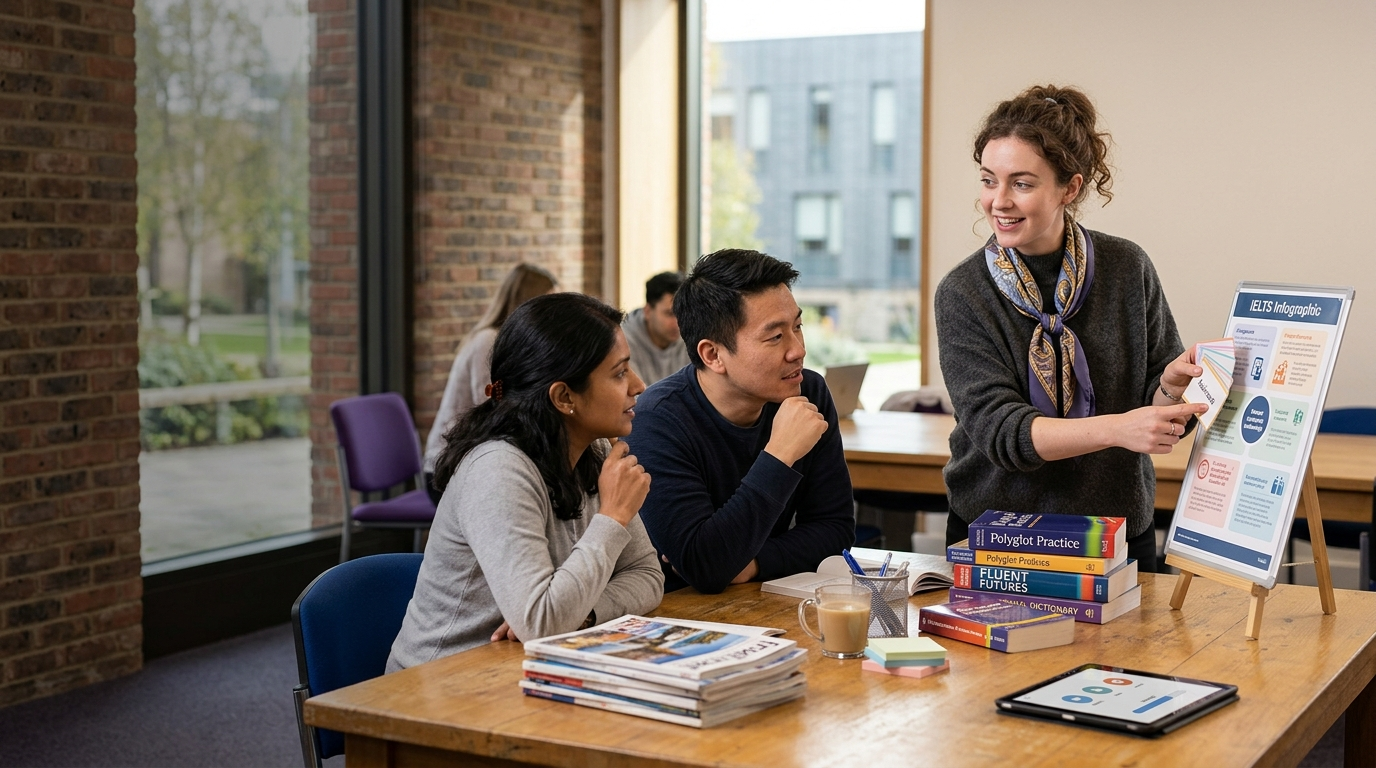
Gunakan gambar sebagai petunjuk ide. Jelaskan apa yang Anda perhatikan, hubungkan dengan pengalaman Anda, lalu jawab pertanyaan sebenarnya.


Jawaban model, terdengar berdampingan
Mulailah dengan jawaban yang lebih sederhana, alihkan Band untuk mendengarkan bagaimana tugas yang sama dapat dikembangkan, lalu catat tanggapan pribadi. Ini adalah contoh pengajaran, bukan jawaban resmi atau jaminan skor.
Bagian 2 — Jawaban Model
Part 2 cue-card response
I'd like to talk about a colleague called Tom who is very good at learning languages. I met him at work two years ago when we were on the same project. He learns by practising a little every day. He uses apps, watches films with subtitles and talks to native speakers when he can. He speaks English and Spanish well and can hold basic conversations in Italian. I think he is very patient and hardworking. He is not afraid of making mistakes and he helps others too. I feel inspired by him and it makes me want to study more.
I want to describe a friend of mine called Ana, who’s brilliant at picking up languages. I met her at university during a language-exchange event, and we quickly became study partners; in our first term we’d meet twice a week to practise conversation and swap notes. She learns new languages mainly through immersion and deliberate practise — she spends weeks listening to podcasts, shadowing speakers and making herself speak even when she makes mistakes; for example, she spent a month living with a Spanish family and kept a small phrasebook of tricky expressions. She also uses a mix of resources: grammar books, language apps and conversation tandems, and she’s not afraid to ask native speakers to correct her. As a result she speaks English and Spanish fluently, French and German quite well, and has basic Mandarin and Arabic for travel; I’ve seen her switch effortlessly from casual chat to formal introductions at a multicultural fair where she helped as an unofficial interpreter. I admire her patience and resilience — she’s the sort of person who makes language learning look enjoyable rather than a chore, and she often encourages me to push myself by suggesting tiny daily habits that really help. She even keeps a record of the mistakes she’s made so she doesn't repeat them.
Bagian 3 - Jawaban Model
Are there many people who can speak foreign languages in your country?
Yes, there are more people now, especially in big cities. Young people learn English at school and many can speak it reasonably well. In rural areas there are fewer bilinguals. Tourism and business have made language skills more common, but not everyone has the chance to practise.
Overall, the number of people who can use a foreign language has increased, particularly in towns and cities. English is widespread because it's part of the school curriculum, and many young adults also pick up a second language at university or through work. In addition, migration and tourism have encouraged service workers to learn conversational phrases. However, fluency differs a lot by age and location: older generations in some regions still have limited access to language learning opportunities.
Does speaking other languages help at work?
Yes, speaking other languages helps at work. It can make communication with foreign clients easier and open up job opportunities. People who speak another language often get better roles or pay. In some jobs, though, it isn’t necessary.
Absolutely — speaking another language can be a real advantage in the workplace. It improves employability, allows you to build relationships with overseas clients and can be crucial in roles like sales, diplomacy or tourism. It also shows cultural sensitivity, which employers value. That said, for purely local jobs it might be less important, but overall it widens your career options and sometimes leads to higher pay or international secondments.
Do people learn any languages other than English?
Yes, people learn other languages besides English. Popular choices are Spanish, French and German. Some learn Mandarin because of business. People also learn languages because of films, music or family background.
Definitely — English is common, but many people study other languages depending on personal or professional reasons. Spanish and French remain popular because of travel and culture, Mandarin is chosen for business links, and languages like Japanese or Korean gain followers because of media and music. There are also heritage speakers who learn a family language to keep traditions alive. The choice often reflects career aims, cultural interest or social trends.
Why is it easier for children to learn new things than for adults?
Children pick up new things more easily because their brains are flexible and they aren’t afraid to make mistakes. They also have more free time and often more chances to practise at school. Adults have habits that can make learning slower.
Children tend to learn faster because of greater neural plasticity and an ability to absorb patterns unconsciously; they also have fewer inhibitions about making mistakes and generally more exposure through play and school. Adults often approach learning analytically, which can help with grammar but might slow down natural use. In short, kids get lots of implicit practice and repetition, whereas adults rely more on explicit study and conscious effort.
How do people learn new things?
People learn new things by practising, watching videos, reading and asking others for help. Some take classes or use apps. Repetition and doing something regularly helps a lot.
There are several effective ways to learn: deliberate practise with clear goals, spaced repetition to move knowledge into long-term memory, multimodal input like reading and listening, and timely feedback to correct errors. Social methods — discussing ideas, teaching others or joining a group — also boost retention. Combining these approaches and staying consistent tends to be far more effective than passive exposure alone.
What is the most important thing for learning a language well?
The most important thing is regular practise and using the language to speak. Motivation matters too — if you want to learn, you will try harder. Getting feedback helps, but regular exposure is key.
I’d say the single most important factor is meaningful, regular exposure combined with active use — in other words, plenty of input (listening and reading) plus output (speaking and writing) in real contexts. Motivation and consistency are crucial, but without opportunities to communicate and to get corrective feedback, progress stalls. Immersion, even partial, accelerates learning because it forces you to use language for real purposes rather than just memorising rules.
Bagaimana menjawab Jelaskan seseorang yang pandai belajar dan berbicara bahasa baru Pertanyaan Berbicara IELTS
Untuk kartu isyarat Jelaskan seseorang yang pandai belajar dan berbicara bahasa baru, gunakan menit persiapan untuk membangun rute melalui pembicaraan. Pilih subjek yang jelas, tambahkan dua momen atau detail spesifik, dan akhiri dengan alasan mengapa hal itu penting. Kemudian gunakan pertanyaan Bagian 3 yang tertaut untuk melatih penjelasan dan perbandingan yang lebih luas.
Perintah kartu isyarat:
- Bagaimana Anda bisa mengenalnya
- Bagaimana dia belajar bahasa baru
- Bahasa apa yang bisa dia gunakan
- Bagaimana perasaan Anda terhadap dia
- Pembukaan: mengidentifikasi orang, tempat, benda atau peristiwa.
- Perkembangan: mendeskripsikan dua detail atau momen dalam urutan yang logis.
- Ekstensi: menjelaskan alasan, hasil, perbandingan atau masalah.
- Refleksi: akhiri dengan alasan mengapa subjek tersebut berkesan atau penting.
Pendekatan pertanyaan demi pertanyaan
| Soal latihan | Langkah jawaban yang berguna |
|---|---|
| Are there many people who can speak foreign languages in your country? | Berikan jawaban langsung, satu alasan dan contoh singkat tanpa harus hafal naskahnya. |
| Does speaking other languages help at work? | Berikan jawaban langsung, satu alasan dan contoh singkat tanpa harus hafal naskahnya. |
| Do people learn any languages other than English? | Berikan jawaban langsung, satu alasan dan contoh singkat tanpa harus hafal naskahnya. |
| Why is it easier for children to learn new things than for adults? | Jawab dengan satu penyebab utama, lalu dukung dengan contoh konkrit. |
Fokus kosakata
Bahasa yang berguna sudah ditunjukkan dalam model jawaban yang disertakan bilingual, fluency, service worker, employability, secondment, cultural sensitivity, heritage speaker, media influence. Pelajari setiap arti dan hubungan kata yang alami, lalu gunakan item tersebut dalam jawaban baru alih-alih menyalin naskah lengkap.
Kesalahan umum yang harus dihindari
- Memberikan respon hafalan yang hanya menjawab sebagian pertanyaan.
- Menambah kosakata sulit tanpa memeriksa makna atau kolokasi.
- Memulai ulang setelah setiap kesalahan alih-alih mengoreksi sebentar dan melanjutkan.
- Membaca jawaban model sebelum merekam upaya pertama Anda.
Jelaskan FAQ praktik seseorang yang pandai belajar dan berbicara bahasa baru
Bagaimana cara menggunakan menit persiapan kartu isyarat Jelaskan seseorang yang pandai belajar dan berbicara bahasa baru?
Tulis kata kunci untuk pembukaan, dua atau tiga detail, dan refleksi akhir. Jangan mencoba menulis kalimat lengkap.
Apakah saya harus menutupi setiap poin di kartu petunjuk?
Petunjuknya membantu Anda mengatur pembicaraan. Meliputinya memang berguna, tetapi respons yang koheren selama satu hingga dua menit lebih penting daripada mencentang setiap baris secara mekanis.
Bagaimana pertanyaan Bagian 3 terhubung dengan Bagian 2?
Mereka mengembangkan tema luas yang sama melalui alasan, perbandingan, dampak sosial atau kemungkinan masa depan, sehingga jawaban biasanya memerlukan penjelasan lebih banyak daripada Bagian 1.
