
IELTS Speaking Parte 2 y 3: Describe a sports competition you watched

Tarjeta de referencia de la parte 2
Describe a sports competition you watched
Deberías decir:
- que fue
- Cuando/donde lo viste
- ¿Con quién lo viste?
- Y explica si lo disfrutaste.
Tendrás uno o dos minutos para hablar sobre este tema.
Lea la transcripción completa
I watched an FA Cup quarter-final match between two well-known clubs, which was a thrilling local football competition. It took place last spring at our city’s main stadium, a place I often pass on the bus and whose atmosphere is always electric on match days. I went with two close friends from university; we’d booked our tickets weeks beforehand and made a day of it together. We sat in the family stand and shared a large pie and some hot drinks while cheering; our friends are fans of different teams so there was lots of good-natured banter. The match itself was highly entertaining: both sides played aggressively, there were a couple of near-misses and the winning goal came in stoppage time, which made the crowd go wild. I really enjoyed the whole experience because of the tension and the sense of community among supporters; afterwards we stayed behind to talk about the best moments and to watch the players leave, which felt memorable. Even the rainy weather added to the drama rather than spoiling it, because everyone huddled together under umbrellas and sang the team songs louder. Overall it was one of the most exciting live sports events I’ve seen.
Estado de preparación: ciclo de tema previsto. Este recurso de práctica independiente no es un documento oficial del IELTS y las preguntas de su examen pueden ser diferentes. Cómo se etiquetan los temas.
Preguntas de discusión de la parte 3
Mueva una pregunta a la vez: escuche, responda, compare y vuelva a intentarlo. El texto completo de la pregunta permanece en la página HTML para accesibilidad y búsqueda.
- 01What kind of competitions do people in your country like to watch? Why?
Vea el tema antes de hablar.
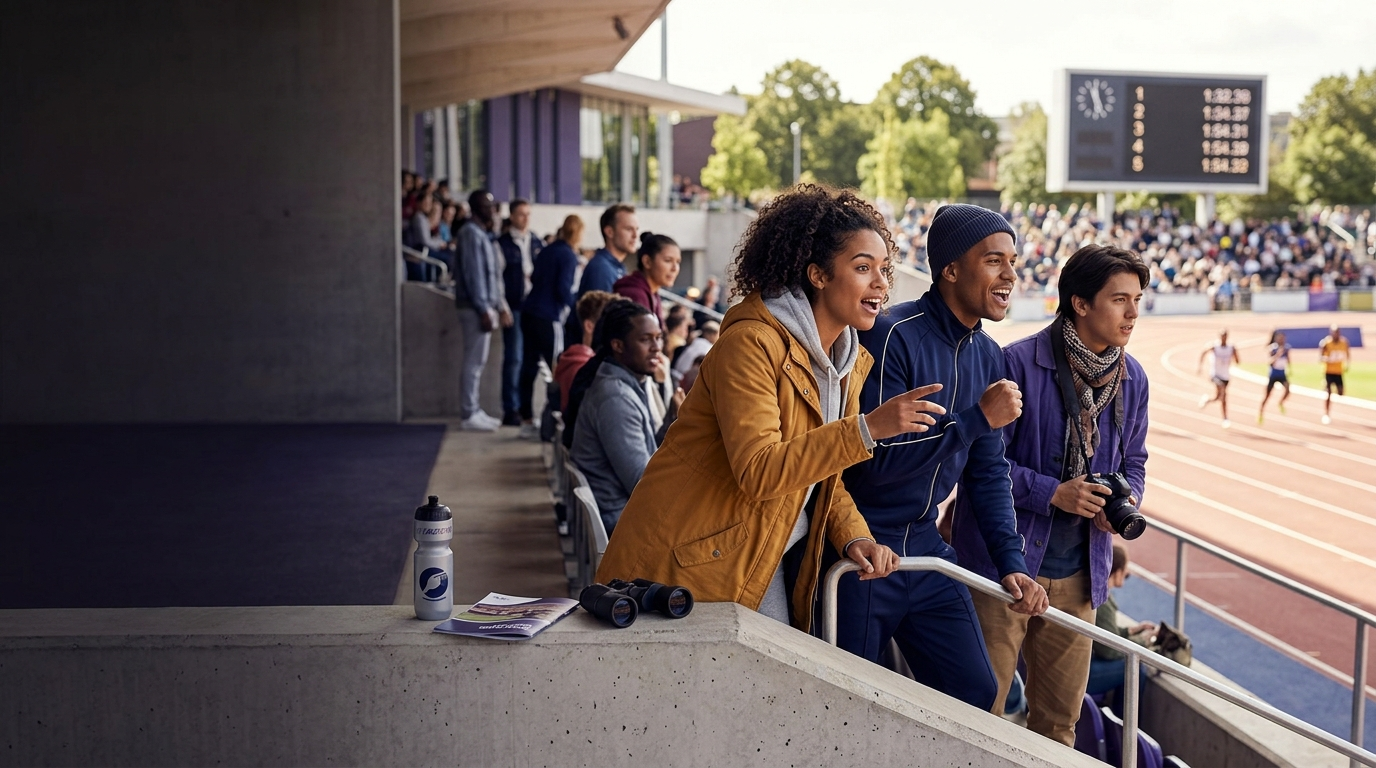
Utilice las imágenes como sugerencias de ideas. Describe lo que notas, conéctalo con tu experiencia y luego responde la pregunta real.

Respuestas modelo, escuchadas una al lado de la otra
Comience con la respuesta más simple, cambie Band para escuchar cómo se puede desarrollar la misma tarea y luego registre una respuesta personal. Estos son ejemplos de enseñanza, no respuestas oficiales ni garantías de puntuación.
Parte 2: Respuesta modelo
Part 2 cue-card response
I watched a local football match last autumn at the town stadium. It was a league game between our local side and their neighbours. I went with my brother and two friends from college; we all enjoy football and meet up sometimes to watch matches. We sat in the main stand and had chips and hot chocolate while watching. The game was close and the atmosphere was noisy, with supporters shouting and singing. I enjoyed it because it was exciting and we had a laugh together. It felt good to be part of the crowd and to see the players up close.
I watched an FA Cup quarter-final match between two well-known clubs, which was a thrilling local football competition. It took place last spring at our city’s main stadium, a place I often pass on the bus and whose atmosphere is always electric on match days. I went with two close friends from university; we’d booked our tickets weeks beforehand and made a day of it together. We sat in the family stand and shared a large pie and some hot drinks while cheering; our friends are fans of different teams so there was lots of good-natured banter. The match itself was highly entertaining: both sides played aggressively, there were a couple of near-misses and the winning goal came in stoppage time, which made the crowd go wild. I really enjoyed the whole experience because of the tension and the sense of community among supporters; afterwards we stayed behind to talk about the best moments and to watch the players leave, which felt memorable. Even the rainy weather added to the drama rather than spoiling it, because everyone huddled together under umbrellas and sang the team songs louder. Overall it was one of the most exciting live sports events I’ve seen.
Parte 3: Respuestas modelo
What kind of competitions do people in your country like to watch? Why?
People here mostly watch football and cricket competitions. Football is very popular because it's easy to follow and matches are on TV often. Cricket, especially international tests and one-day games, also gets big audiences. People also watch local athletics and rugby sometimes, but not as much. In towns, community sports days and school competitions attract families. Overall, people prefer sports that are traditional and easy to watch with friends.
Generally the biggest audiences are for football and cricket, though the pattern varies by season — football dominates the winter months while cricket takes over in summer. High-profile league matches, cup ties and international fixtures draw large crowds and viewing figures because they’re widely televised and have strong local loyalties. Other competitions like rugby tournaments, tennis Grand Slams and major athletics meetings attract attention too, particularly when national athletes are involved and there’s a clear narrative to follow. People favour events that are easy to understand, provide clear rivalries and offer a communal atmosphere for watching with friends or family.
Estado de la práctica: tema archivado de un ciclo anterior del banco de preguntas. Sigue siendo útil para la práctica de habilidades, pero no se presenta como una pregunta de examen actual o garantizada. Cómo se etiquetan los temas.
Cómo responder Describe una competición deportiva que hayas visto Preguntas orales del IELTS
Para la tarjeta de referencia Describe una competencia deportiva que viste, usa el minuto de preparación para construir una ruta a través de la charla. Elija un tema claro, agregue dos momentos o detalles específicos y termine explicando por qué es importante. Luego utilice las preguntas vinculadas de la Parte 3 para practicar explicaciones y comparaciones más amplias.
Indicaciones de la tarjeta de referencia:
- que fue
- Cuando/donde lo viste
- ¿Con quién lo viste?
- Y explica si lo disfrutaste.
- Apertura: identificar a la persona, lugar, objeto o evento.
- Desarrollo: describir dos detalles o momentos en un orden lógico.
- Ampliación: explicar un motivo, resultado, comparación o problema.
- Reflexión: terminar con por qué el tema es memorable o importante.
Enfoque pregunta por pregunta
| pregunta de práctica | movimiento de respuesta útil |
|---|---|
| What kind of competitions do people in your country like to watch? Why? | Primero nombra el objeto y luego describe una característica o ejemplo específico. |
Enfoque de vocabulario
El lenguaje útil ya demostrado en las respuestas modelo incluye dominates the winter months, local loyalties, viewing figures, stoppage time, good-natured banter, sense of community. Aprenda cada significado y una asociación natural de palabras, luego use el elemento en una respuesta nueva en lugar de copiar un guión completo.
Errores comunes a evitar
- Dar una respuesta memorizada que responda sólo parcialmente a la pregunta.
- Agregar vocabulario difícil sin verificar el significado o la colocación.
- Reiniciar después de cada error en lugar de corregir brevemente y continuar.
- Leer la respuesta modelo antes de grabar su primer intento.
Describe una competición deportiva que hayas visto practicar. Preguntas frecuentes
¿Cómo debo utilizar el minuto de preparación de la tarjeta de referencia Describe una competición deportiva que viste?
Escribe palabras clave para una apertura, dos o tres detalles y una reflexión final. No intentes escribir oraciones completas.
¿Tengo que cubrir cada viñeta de la tarjeta de referencia?
Las indicaciones le ayudarán a organizar la charla. Cubrirlos es útil, pero una respuesta coherente de uno a dos minutos es más importante que marcar mecánicamente cada línea.
¿Cómo se conectan las preguntas de la Parte 3 con la Parte 2?
Desarrollan el mismo tema amplio a través de razones, comparaciones, efectos sociales o posibilidades futuras, por lo que las respuestas normalmente necesitan más explicaciones que la Parte 1.
