
雅思口說第 1 部分:Home and Accommodation 問答
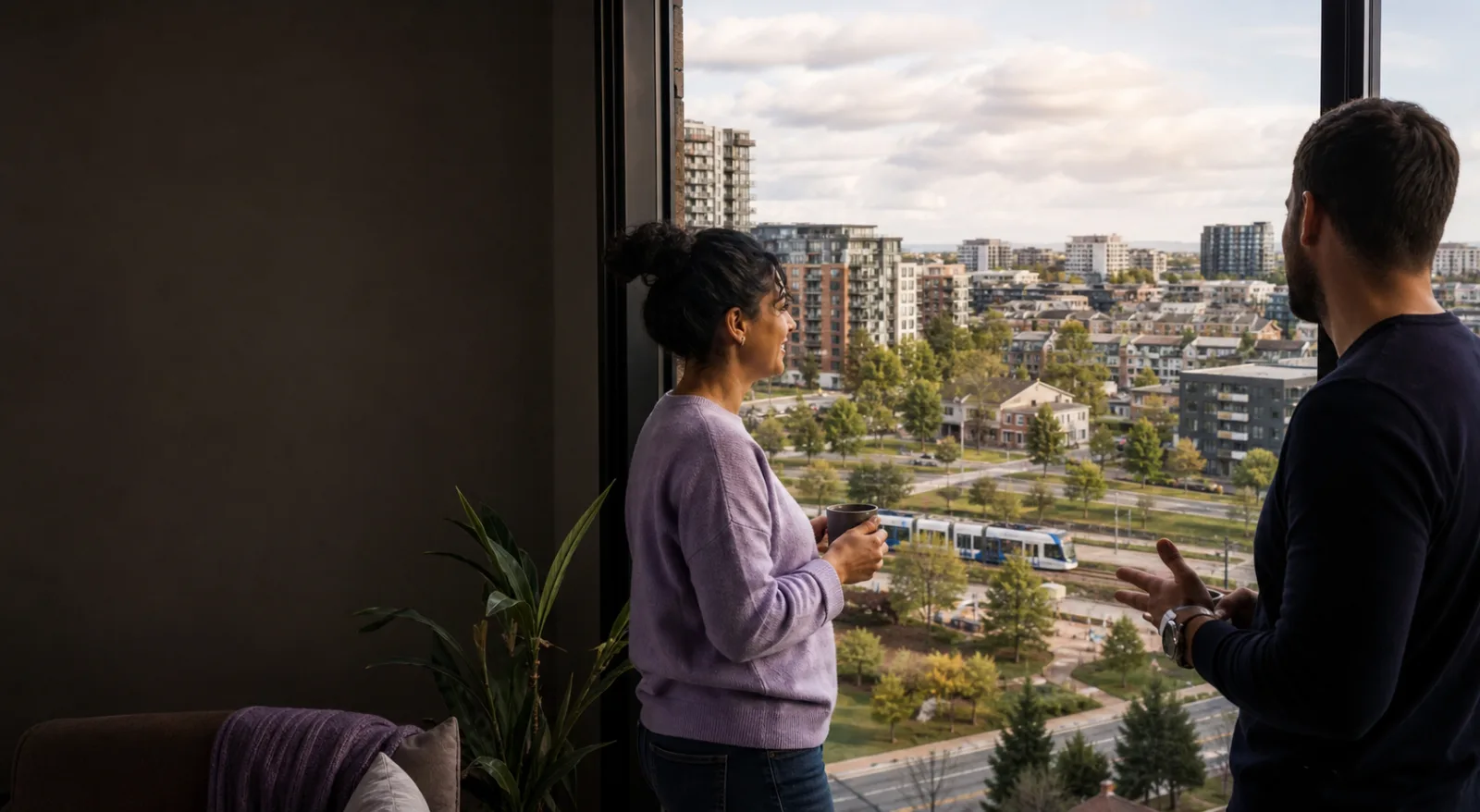
家庭和住宿是第 1 部分中熟悉的主題。使用這份常青指南來練習描述您居住的房屋類型、週邊地區、您喜歡什麼、您會改變什麼以及您將來可能住在哪裡。
家庭與住宿第 1 部分問題
一次移動一個問題:聆聽、回答、比較並重試。完整的問題文字保留在 HTML 頁面中,以便於存取和搜尋。
- 01Do you live in a house or an apartment?Full Band 6/7 answer →
- 02Can you describe the place where you live?Full Band 6/7 answer →
- 03How long have you lived there?Full Band 6/7 answer →
- 04What do you like most about your home?
- 05What is the area or neighbourhood like?
- 06Is there anything you would like to change about your home or area?
- 07Do you plan to continue living there in the future?
- 08What kind of home would you like to live in one day?
實踐狀態:Evergreen 第 1 部分指南。在官方雅思準備資料中,「家」被命名為熟悉的口語第 1 部分主題;本頁的標準答案和教學筆記是獨立的IELTSpeaking範例,而不是官方考試答案。 查看官方格式來源.
模範答案,並排聆聽
從更簡單的答案開始,切換 Band 來聽聽如何發展相同的任務,然後記錄個人回答。這些是教學範例,不是官方答案或分數保證。
Do you live in a house or an apartment?
I live in a two-bedroom apartment with my parents. It is on the sixth floor of a fairly new building, about twenty minutes from the city centre. It is not very large, but it has enough space for the three of us.
I live with my parents in a two-bedroom apartment on the sixth floor of a modern residential block. It is in a well-connected suburb, so the city centre is roughly twenty minutes away by metro. The flat is fairly compact, but the layout makes good use of the available space.
Can you describe the place where you live?
My apartment has a living room, a small kitchen, two bedrooms and one bathroom. It is quite bright because the main windows face south. The furniture is simple, and we have a small balcony with a few plants.
It is a bright, practical apartment with an open-plan living area, two modest bedrooms and a narrow balcony overlooking a row of trees. We have kept the furniture quite minimal, which stops the rooms from feeling crowded. My favourite feature is the natural light we get in the afternoon.
How long have you lived there?
I have lived there for about five years. My family moved in when I started university because our old home was too far from campus. I am used to the area now, and most of the places I need are nearby.
I have been living there for just over five years. We moved when I began university, mainly to shorten my commute and be closer to public transport. At first the neighbourhood felt unfamiliar, but it gradually became home as I discovered the local shops and got to know a few neighbours.
What do you like most about your home?
The best thing is the location. There is a metro station near my building, as well as a supermarket and a park. It is easy to get to work, and I can go for a walk without travelling far.
What I value most is the combination of convenience and quiet. The metro, grocery shops and a public park are all within walking distance, yet our building is set back from the main road. That means my commute is straightforward without having to put up with much traffic noise at home.
What is the area or neighbourhood like?
It is a quiet residential area with a mix of families and older people. There are several small shops, cafés and a primary school. It can get busy in the morning, but in the evening it is usually peaceful.
It is a fairly settled residential neighbourhood with tree-lined streets and a mixture of apartment blocks and older houses. Most daily essentials are available locally, and there is a friendly community feel because people recognise one another. The only busy period is the morning school run.
Is there anything you would like to change about your home or area?
I would like a larger kitchen because two people cannot cook comfortably at the same time. In the area, I think there should be more bicycle parking. Apart from those things, I am happy living there.
If I could change one thing inside the flat, I would make the kitchen slightly more spacious, as it becomes cramped whenever two of us cook together. As for the neighbourhood, secure bicycle storage would be useful. They are small improvements, though, rather than reasons to move.
Do you plan to continue living there in the future?
I will probably stay there for another year or two because it is affordable and convenient for work. Later, I may move closer to the city centre if I find a better job, but I have not made a firm plan yet.
For the next couple of years, I expect to stay because the rent is manageable and the location suits my current job. In the longer term, I would consider moving somewhere more central, particularly if my work situation changes. At the moment, though, there is no urgent reason to leave.
What kind of home would you like to live in one day?
I would like to live in a medium-sized house near a park. I do not need a huge home, but I would like a garden and a quiet room where I could work. Good public transport would also be important.
My ideal home would be a modest, energy-efficient house on the edge of a city. I would want a small garden, a dedicated workspace and plenty of daylight rather than lots of extra rooms. The main priority would be finding a peaceful street that still has reliable public transport nearby.
如何回答有關您居住地的問題
首先提供所要求的確切訊息,然後用一個具體細節來個性化回答。例如,在描述房屋位置之前先確定房屋的類型;在解釋您搬家的原因之前先給出時間長度;或在解釋為什麼它對您很重要之前先說出一項功能。
- 答: 直接說明房屋、特色、偏好或計劃。
- 定位: 新增有關大小、佈局、面積、交通或時間的有用詳細資訊。
- 解釋一下: 舉出一個理由、效果、對比或簡短的個人例子。
- 自然停止: 不要將熟悉的第 1 部分問題變成準備好的演講。
有用的家庭和住宿詞彙
將這些項目作為完整的單字夥伴關係來學習。在記錄答案之前,將範例詳細資訊替換為有關您自己家庭的資訊。
| 單字或片語 | 意義 | 自然搭配 | 範例 |
|---|---|---|---|
| 住宿 | 某人居住或逗留的地方 | 學生宿舍/租宿舍 | 我目前住在工作地點附近的出租屋。 |
| 住宅區 | 主要用於住宅而不是辦公室或工廠的區域 | 安靜的住宅區 | 我的公寓位於市中心外一個安靜的住宅區。 |
| 人脈廣泛 | 搭乘大眾運輸工具或道路即可輕鬆抵達 | 交通便利的社區 | 附近交通便利,所以我很少需要汽車。 |
| within walking distance | 夠近,可以舒適地步行到達 | 步行即可到達車站 | 我去的大多數商店都在步行距離之內。 |
| 寬敞 | 有足夠的空間 | 寬敞的客廳 | 客廳夠寬敞,足以容納全家人。 |
| 緊湊型 | 小但佈置高效 | 緊湊的公寓 | 這是一套緊湊的公寓,但佈局很實用。 |
| cramped | 太小或拥挤得令人不舒服 | 狹窄的廚房 | 當多人做飯時,廚房會感覺很擁擠。 |
| 開放式 | 設計時沒有很多內牆 | 開放式廚房和起居區 | 我們有一個開放式廚房和起居區。 |
| natural light | 日光透過窗戶射入 | 獲得充足的自然光 | 下午房間自然光線充足。 |
| overlook | 从上方或附近看到某物 | 俯瞰公園/庭院 | 我們的陽台俯瞰著一個小型公共花園。 |
| 便利設施 | 有用的当地设施和服务 | 當地設施 | 該地區擁有有用的當地設施,包括診所和圖書館。 |
| 通勤 | 家和工作或学习之间的常规旅程 | 短程通勤/縮短我的通勤時間 | 靠近地鐵縮短了我每天的通勤時間。 |
| 鄰裡 | 一个人家周围的局部区域 | 友善的鄰居 | 這是一個友善的社區,人們互相打招呼。 |
| 從 | 距離道路或邊界有一段距離 | 遠離主路 | 建築物遠離主幹道,因此相當安靜。 |
| 搬入/搬出 | 開始或停止住在家裡 | 搬入新公寓/明年搬出 | 五年前我們搬進了這間公寓。 |
| 善用空間 | 有效安排有限的空間 | 充分利用空間的佈局 | 內建儲存空間充分利用了可用空間。 |
常見錯誤
- 在不先回答問題的情況下列出房間和家具。
- 稱每個小房子都「狹窄」;當空間被有效地安排時,緊湊可以是積極的。
- 記住一個豪華夢想家園的描述,這聽起來不太合理。
- 將幾個習慣用語強行變成簡短的答案,而不是使用精確的日常詞彙。
- 當考官只詢問其中一項時,您會混淆您現在的住所、家鄉和鄰居。
家庭和住宿常見問題解答
家庭和住宿第 1 部分的答案應該要多長?
給出一個直接的答案,並用一個理由、細節或例子來闡述它。通常兩到四個自然句子就足夠了,但沒有要求的句子或字數。
雅思口語應該說「公寓」還是「公寓」?
兩者都是正確的。 Flat 在英式英語中尤其常見,而 Apartment 在多種英語中也很常見。使用您覺得自然的詞語並保持一致。
我需要記住有關家庭的高級詞彙嗎?
不會。學習適合您真實家庭的準確單字和自然搭配。諸如“步行距離之內”之類的精確短語比錯誤使用的罕見單字更有用。
如果我不喜歡我居住的地方怎麼辦?
自然地說並解釋一個具體原因,然後提及一個積極的觀點或您將做出的改變。雅思評估的是你的語言,而不是你的觀點是否正面。
官方格式來源
這些來源表明,家庭和住宿是熟悉的雅思口語第 1 部分主題,並提供官方格式練習。 IELTSpeaking 獨立撰寫本頁的標準答案和教學說明。
