
雅思口說第二部分和第三部分:Describe a quiet place you like to go

第 2 部分 提示卡
Describe a quiet place you like to go
你應該說:
- 它在哪裡
- 你是怎麼知道的
- 你多久去那裡一次
- 你在那裡做什麼
- 並解釋你對這個地方的感受
您將有一到兩分鐘的時間來討論這個主題。
閱讀完整的文字記錄
My favourite quiet place is a tiny riverside courtyard tucked behind the town library, between two low brick buildings, where you mainly hear water and birds rather than traffic. I first found it when I was cramming for an exam and a librarian friend nudged me through a narrow gate to get some fresh air; that first visit felt like discovering a secret. I try to go there at least once a week, typically on Sunday mornings when it's at its calmest, and occasionally I pop in for twenty or thirty minutes during lunch breaks. When I'm there I sit on a worn wooden bench with a thermos of tea, read or jot down ideas in a notebook, watch swans, and sometimes take photos of the light on the water to use later in a painting. The place makes me feel grounded and less stressed because the flowing water quietens my mind and gives me perspective; I always come away calmer and more focused, ready to face a busy week. I usually stay for about an hour, long enough to reset my mood but short enough to keep my schedule.
準備狀態:預測主題週期。這個獨立的練習資源不是雅思官方試卷,您測驗中的問題可能會有所不同。 主題如何標記.
第三部分討論問題
一次移動一個問題:聆聽、回答、比較並重試。完整的問題文字保留在 HTML 頁面中,以便於存取和搜尋。
- 01Is it easy to find quiet places in your country? Why?
- 02How do people spend their leisure time in your country?
- 03How does technology affect the way people spend their leisure time?
- 04Do you think only old people have time for leisure?
- 05Why do old people prefer to live in quiet places?
- 06Why are there more noises made at home now than in the past?
說話前先看清主題
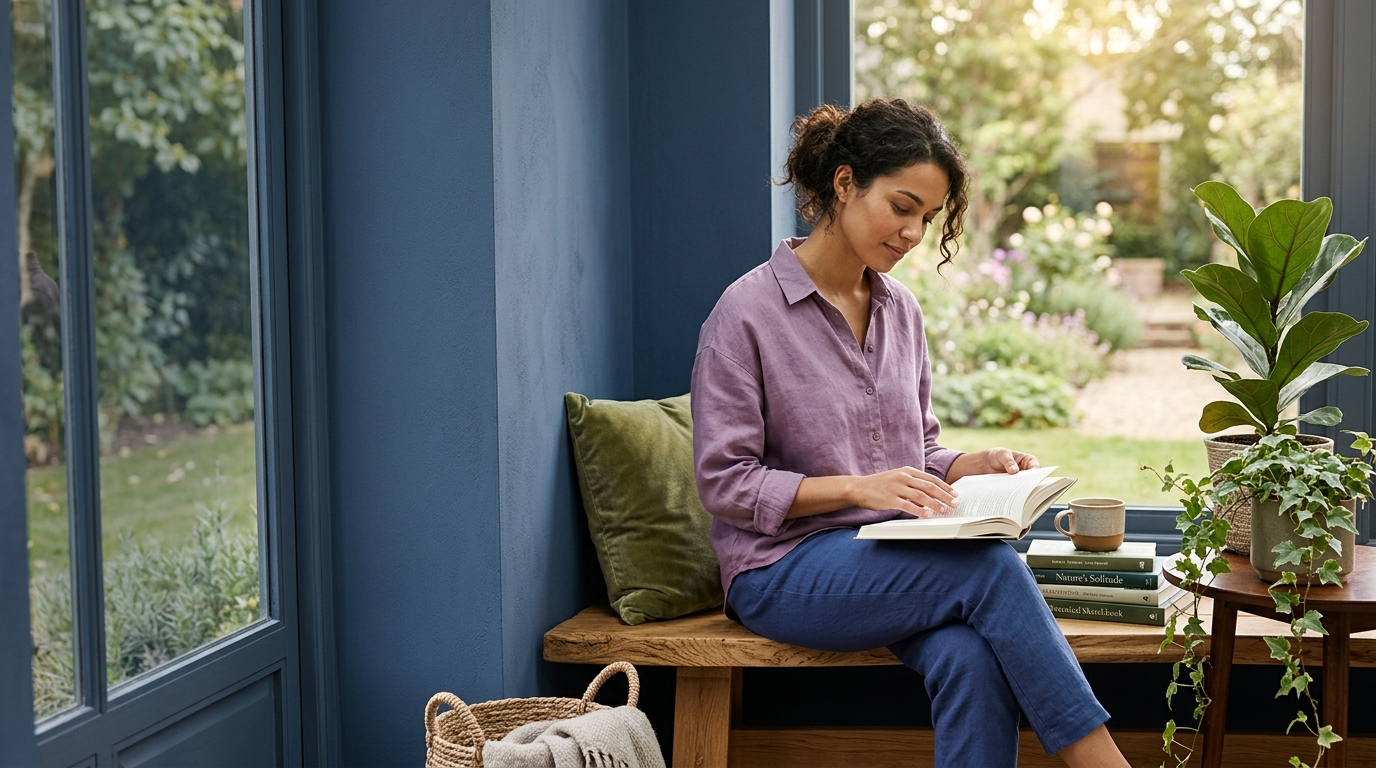
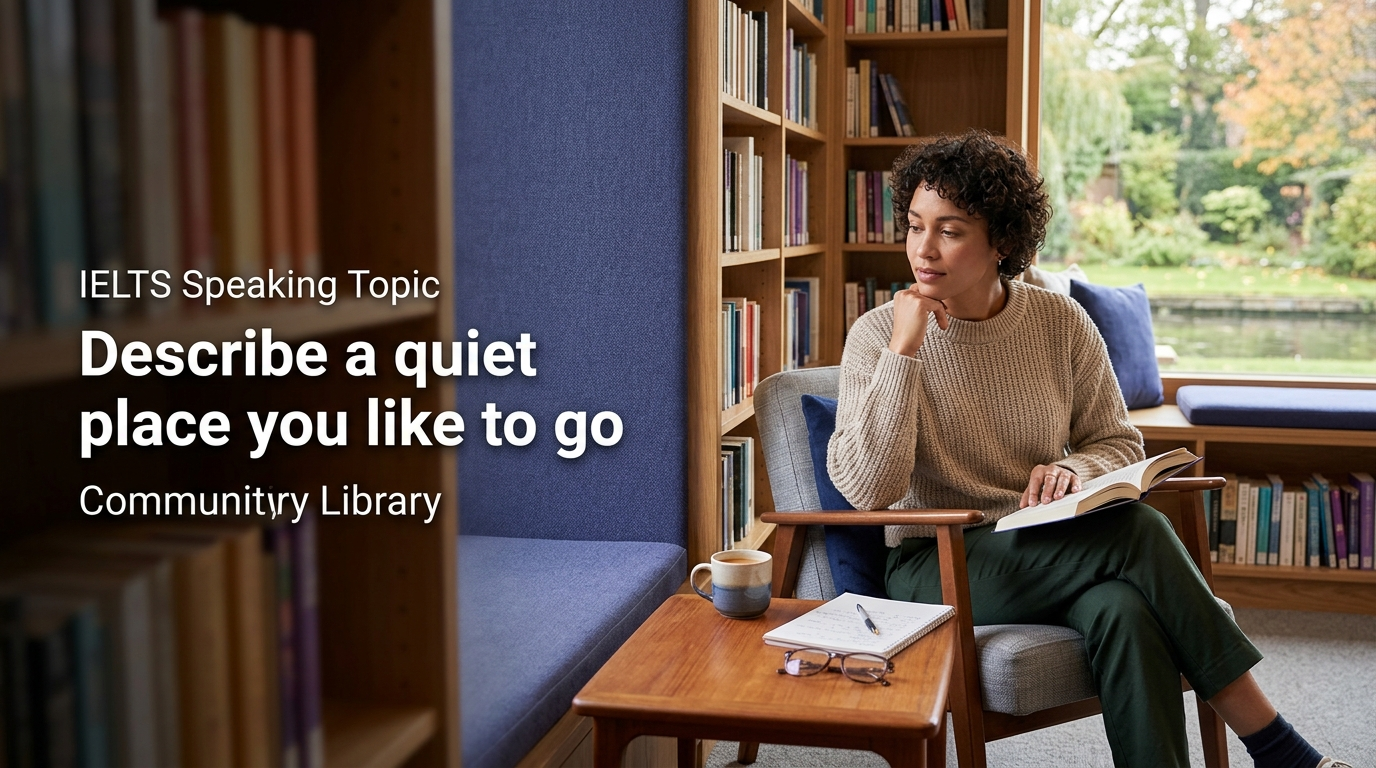
使用圖像作為想法提示。描述您注意到的內容,將其與您的經歷聯繫起來,然後回答真正的問題。
模範答案,並排聆聽
從更簡單的答案開始,切換 Band 來聽聽如何發展相同的任務,然後記錄個人回答。這些是教學範例,不是官方答案或分數保證。
第 2 部分—標準答案
Part 2 cue-card response
There is a quiet park near my flat that I like to go to. It's a small park with a pond, some trees and a few benches. I first noticed it when I walked by on my way to work. I go there maybe once or twice a week, usually in the evening after work. I sit on a bench and sometimes read a book or just look at the water. Sometimes I listen to music on my phone. The park is calm and there are not many people. It helps me relax and forget about problems for a little while, and after ten or twenty minutes I usually feel better.
My favourite quiet place is a tiny riverside courtyard tucked behind the town library, between two low brick buildings, where you mainly hear water and birds rather than traffic. I first found it when I was cramming for an exam and a librarian friend nudged me through a narrow gate to get some fresh air; that first visit felt like discovering a secret. I try to go there at least once a week, typically on Sunday mornings when it's at its calmest, and occasionally I pop in for twenty or thirty minutes during lunch breaks. When I'm there I sit on a worn wooden bench with a thermos of tea, read or jot down ideas in a notebook, watch swans, and sometimes take photos of the light on the water to use later in a painting. The place makes me feel grounded and less stressed because the flowing water quietens my mind and gives me perspective; I always come away calmer and more focused, ready to face a busy week. I usually stay for about an hour, long enough to reset my mood but short enough to keep my schedule.
第 3 部分—標準答案
Is it easy to find quiet places in your country? Why?
It depends. In the countryside it's easy to find quiet places like fields, parks or lakes. In big cities it's harder because of traffic and crowds. Still, libraries, small parks and some cafes can be quiet if you go at the right time. People who look for silence can usually find somewhere, but you may need to travel a bit.
It really varies. In rural areas and smaller towns quiet spots are plentiful — woodland paths, canals and village commons — but in major cities it's more of a hunt because of traffic, building work and nightlife. That said, councils often protect green belts and some libraries or community gardens are designated as quiet zones, so with a bit of planning you can still find peaceful corners even in urban centres. Ultimately, accessibility and planning make a big difference.
How do people spend their leisure time in your country?
People spend their free time in many ways. Many watch TV or use their phones, some play sports, and others meet friends or visit parks and cafés. Families may go to shopping centres or cinemas at the weekend. Older people often walk or garden. It depends on age and money, but most people have some kind of hobby.
There's quite a variety. Many people now prefer experience-based leisure: going to cafés, weekend markets, live music or exercise classes. Streaming services and gaming are hugely popular for staying in, while others join clubs for hobbies like cycling or photography. Volunteering and short courses have also become common, as people look for meaningful ways to spend spare time rather than just passively consuming content. Age, income and work patterns still shape what people choose.
How does technology affect the way people spend their leisure time?
Technology has changed leisure a lot. People watch films and shows online, play video games and use social media. It's easy to be entertained at home so some people go out less. Technology also helps people find events or meetups, but mostly it means more screen time and less outdoor activity for many.
Technology has reshaped leisure profoundly. On the one hand, on-demand streaming, social media and gaming mean people can tailor entertainment to their tastes and fit it around busy lives; algorithms suggest new content and make discovery effortless. On the other hand, it can blur the line between work and free time, with smartphones encouraging constant checking and reducing uninterrupted relaxation. That said, technology also enables new hobbies — online courses, virtual meetups, photo communities — so it can both fragment and enrich leisure depending on how it's used.
Do you think only old people have time for leisure?
No, I don't think only old people have time for leisure. People of all ages have free time, although younger adults might be busier with work or children. Retired people often have more free time, but many younger people also make time for hobbies or weekends away. It depends on their situation.
Definitely not. While older people often gain more leisure time after retirement, the picture is more complex: many younger adults now enjoy flexible working hours or take sabbaticals, so they can also carve out leisure time. Conversely, some older people still work part-time or care for family and may be time-poor. Cultural expectations, childcare and job demands all influence who has free time, so it's not simply about age.
Why do old people prefer to live in quiet places?
Older people like quiet places because they are calmer and safer. They may have health issues and need rest, and they prefer routine. Quiet places make it easier to sleep and avoid stress. Also there are fewer crowds, which many older people find nicer.
Older people often choose quiet places for several reasons: better sleep, lower stress levels and fewer hazards like busy roads. Quiet communities can also support a slower pace of life and closer social ties, for example local clubs or regular neighbours who look out for one another. Financial considerations and the desire for green space or single-storey housing also matter, so the preference is a mix of health, social and practical factors rather than just taste.
Why are there more noises made at home now than in the past?
There is more noise at home now because we have more electrical devices like TVs, washing machines and entertainment systems. People also have more deliveries, DIY or renovation work, and children with gadgets make noise. Houses may be closer together too, so you hear neighbours more.
Several shifts explain why homes seem noisier. Modern life brings more appliances, 24-hour deliveries, and gadgets in every room, while open-plan layouts reduce sound insulation so noise travels more easily. Urban densification and more people working from home can add to daytime noise, and the culture of immediate availability means neighbours and contractors are active at odd hours. In short, changes in technology, housing design and lifestyles have all increased domestic noise levels.
練習狀態:上一個題庫週期的存檔主題。它對於技能練習仍然有用,但不會作為當前或保證的考試問題出現。 主題如何標記.
如何回答 描述一個你喜歡去的安靜的地方 雅思口語問題
對於「描述一個你喜歡去的安靜地方」提示卡,請利用準備時間在演講中建立一條路線。選擇一個明確的主題,加入兩個特定的時刻或細節,最後說明為什麼它很重要。然後使用連結的第 3 部分問題來練習更廣泛的解釋和比較。
提示卡提示:
- 它在哪裡
- 你是怎麼知道的
- 你多久去那裡一次
- 你在那裡做什麼
- 並解釋你對這個地方的感受
- 開頭:指出人物、地點、物件或事件。
- 發展:以邏輯順序描述兩個細節或時刻。
- 擴展:解釋原因、結果、比較或問題。
- 反思:以為什麼主題令人難忘或重要來結束。
逐個問題的方法
| 練習題 | 有用的答案動作 |
|---|---|
| Is it easy to find quiet places in your country? Why? | 直接回答,給出理由並添加一個自然的個人細節。 |
| How do people spend their leisure time in your country? | 以清晰的順序描述流程或差異並添加結果。 |
| How does technology affect the way people spend their leisure time? | 以清晰的順序描述流程或差異並添加結果。 |
| Do you think only old people have time for leisure? | 陳述一種可能的觀點,解釋原因並添加一個條件或示例。 |
詞彙重點
模型答案中已經展示的有用語言包括 green belt, designated quiet zone, with a bit of planning, experience-based, passively consuming, meaningful ways, on-demand, blur the line。學習每個含義和自然的單字夥伴關係,然後在新的答案中使用該項目,而不是複製完整的腳本。
要避免的常見錯誤
- 給出的記憶答案只能部分回答問題。
- 加入困難的詞彙而不檢查意義或搭配。
- 每次錯誤後重新啟動,而不是短暫修正並繼續。
- 在記錄您自己的第一次嘗試之前,請先閱讀標準答案。
描述一個你喜歡去練習的安靜地方
我應該如何使用“描述一個您喜歡去的安靜地方”提示卡準備分鐘?
為開頭、兩三個細節和最後的反思寫下關鍵字。不要試圖寫出完整的句子。
我必須覆蓋所有提示卡項目符號嗎?
提示可以幫助您組織演講。涵蓋它們是有用的,但是一到兩分鐘的連貫響應比機械地勾選每一行更重要。
第 3 部分的問題與第 2 部分有何關聯?
他們透過原因、比較、社會影響或未來的可能性發展出相同的廣泛主題,因此答案通常需要比第 1 部分更多的解釋。
