
IELTS 말하기 파트 2 & 3: Describe a quiet place you like to go

파트 2 큐 카드
Describe a quiet place you like to go
당신은 이렇게 말해야 합니다:
- 그것이 어디에 있는가
- 어떻게 알았어?
- 거기 얼마나 자주 가나요?
- 거기서 뭐해?
- 그리고 그 장소에 대해 어떻게 생각하는지 설명해주세요.
이 주제에 대해 1~2분 정도 이야기할 시간이 있습니다.
전체 내용 읽기
My favourite quiet place is a tiny riverside courtyard tucked behind the town library, between two low brick buildings, where you mainly hear water and birds rather than traffic. I first found it when I was cramming for an exam and a librarian friend nudged me through a narrow gate to get some fresh air; that first visit felt like discovering a secret. I try to go there at least once a week, typically on Sunday mornings when it's at its calmest, and occasionally I pop in for twenty or thirty minutes during lunch breaks. When I'm there I sit on a worn wooden bench with a thermos of tea, read or jot down ideas in a notebook, watch swans, and sometimes take photos of the light on the water to use later in a painting. The place makes me feel grounded and less stressed because the flowing water quietens my mind and gives me perspective; I always come away calmer and more focused, ready to face a busy week. I usually stay for about an hour, long enough to reset my mood but short enough to keep my schedule.
준비상태: 예상 주제주기. 이 독립적인 연습 리소스는 공식 IELTS 시험이 아니며 시험 문제가 다를 수 있습니다. 주제에 라벨을 지정하는 방법.
파트 3 토론 질문
한 번에 하나의 질문을 이동하세요. 듣고, 대답하고, 비교하고, 다시 시도하세요. 전체 질문 텍스트는 접근성 및 검색을 위해 페이지 HTML에 남아 있습니다.
- 01Is it easy to find quiet places in your country? Why?
- 02How do people spend their leisure time in your country?
- 03How does technology affect the way people spend their leisure time?
- 04Do you think only old people have time for leisure?
- 05Why do old people prefer to live in quiet places?
- 06Why are there more noises made at home now than in the past?
말하기 전에 주제를 살펴보세요
이미지를 아이디어 프롬프트로 사용하세요. 발견한 사항을 설명하고 이를 경험과 연결한 다음 실제 질문에 답하세요.
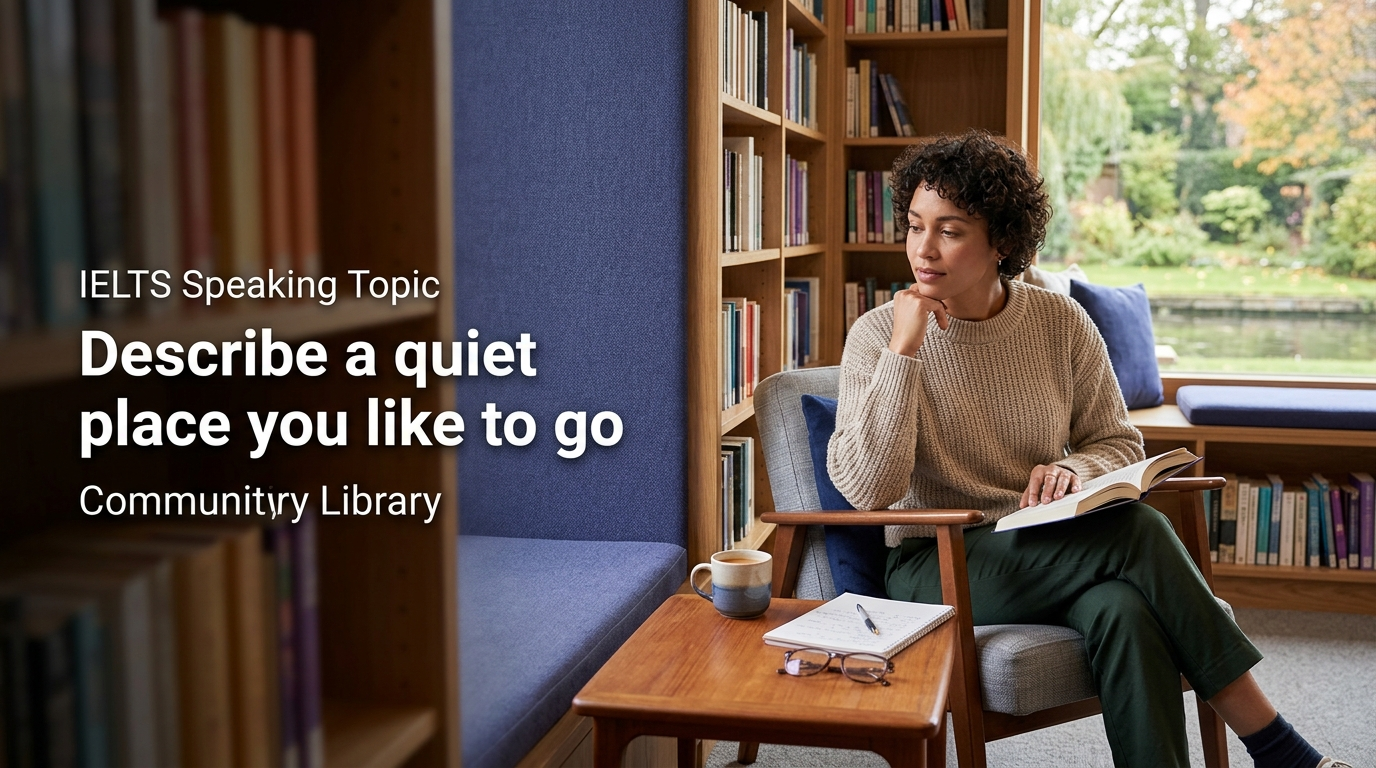
모델 답변을 나란히 들음
더 간단한 답변부터 시작하여 Band를 전환하여 동일한 작업이 어떻게 개발될 수 있는지 듣고 개인 응답을 녹음하세요. 이것은 공식적인 답변이나 점수 보장이 아닌 교육용 예시입니다.
2부 — 모델 답변
Part 2 cue-card response
There is a quiet park near my flat that I like to go to. It's a small park with a pond, some trees and a few benches. I first noticed it when I walked by on my way to work. I go there maybe once or twice a week, usually in the evening after work. I sit on a bench and sometimes read a book or just look at the water. Sometimes I listen to music on my phone. The park is calm and there are not many people. It helps me relax and forget about problems for a little while, and after ten or twenty minutes I usually feel better.
My favourite quiet place is a tiny riverside courtyard tucked behind the town library, between two low brick buildings, where you mainly hear water and birds rather than traffic. I first found it when I was cramming for an exam and a librarian friend nudged me through a narrow gate to get some fresh air; that first visit felt like discovering a secret. I try to go there at least once a week, typically on Sunday mornings when it's at its calmest, and occasionally I pop in for twenty or thirty minutes during lunch breaks. When I'm there I sit on a worn wooden bench with a thermos of tea, read or jot down ideas in a notebook, watch swans, and sometimes take photos of the light on the water to use later in a painting. The place makes me feel grounded and less stressed because the flowing water quietens my mind and gives me perspective; I always come away calmer and more focused, ready to face a busy week. I usually stay for about an hour, long enough to reset my mood but short enough to keep my schedule.
3부 - 모델 답변
Is it easy to find quiet places in your country? Why?
It depends. In the countryside it's easy to find quiet places like fields, parks or lakes. In big cities it's harder because of traffic and crowds. Still, libraries, small parks and some cafes can be quiet if you go at the right time. People who look for silence can usually find somewhere, but you may need to travel a bit.
It really varies. In rural areas and smaller towns quiet spots are plentiful — woodland paths, canals and village commons — but in major cities it's more of a hunt because of traffic, building work and nightlife. That said, councils often protect green belts and some libraries or community gardens are designated as quiet zones, so with a bit of planning you can still find peaceful corners even in urban centres. Ultimately, accessibility and planning make a big difference.
How do people spend their leisure time in your country?
People spend their free time in many ways. Many watch TV or use their phones, some play sports, and others meet friends or visit parks and cafés. Families may go to shopping centres or cinemas at the weekend. Older people often walk or garden. It depends on age and money, but most people have some kind of hobby.
There's quite a variety. Many people now prefer experience-based leisure: going to cafés, weekend markets, live music or exercise classes. Streaming services and gaming are hugely popular for staying in, while others join clubs for hobbies like cycling or photography. Volunteering and short courses have also become common, as people look for meaningful ways to spend spare time rather than just passively consuming content. Age, income and work patterns still shape what people choose.
How does technology affect the way people spend their leisure time?
Technology has changed leisure a lot. People watch films and shows online, play video games and use social media. It's easy to be entertained at home so some people go out less. Technology also helps people find events or meetups, but mostly it means more screen time and less outdoor activity for many.
Technology has reshaped leisure profoundly. On the one hand, on-demand streaming, social media and gaming mean people can tailor entertainment to their tastes and fit it around busy lives; algorithms suggest new content and make discovery effortless. On the other hand, it can blur the line between work and free time, with smartphones encouraging constant checking and reducing uninterrupted relaxation. That said, technology also enables new hobbies — online courses, virtual meetups, photo communities — so it can both fragment and enrich leisure depending on how it's used.
Do you think only old people have time for leisure?
No, I don't think only old people have time for leisure. People of all ages have free time, although younger adults might be busier with work or children. Retired people often have more free time, but many younger people also make time for hobbies or weekends away. It depends on their situation.
Definitely not. While older people often gain more leisure time after retirement, the picture is more complex: many younger adults now enjoy flexible working hours or take sabbaticals, so they can also carve out leisure time. Conversely, some older people still work part-time or care for family and may be time-poor. Cultural expectations, childcare and job demands all influence who has free time, so it's not simply about age.
Why do old people prefer to live in quiet places?
Older people like quiet places because they are calmer and safer. They may have health issues and need rest, and they prefer routine. Quiet places make it easier to sleep and avoid stress. Also there are fewer crowds, which many older people find nicer.
Older people often choose quiet places for several reasons: better sleep, lower stress levels and fewer hazards like busy roads. Quiet communities can also support a slower pace of life and closer social ties, for example local clubs or regular neighbours who look out for one another. Financial considerations and the desire for green space or single-storey housing also matter, so the preference is a mix of health, social and practical factors rather than just taste.
Why are there more noises made at home now than in the past?
There is more noise at home now because we have more electrical devices like TVs, washing machines and entertainment systems. People also have more deliveries, DIY or renovation work, and children with gadgets make noise. Houses may be closer together too, so you hear neighbours more.
Several shifts explain why homes seem noisier. Modern life brings more appliances, 24-hour deliveries, and gadgets in every room, while open-plan layouts reduce sound insulation so noise travels more easily. Urban densification and more people working from home can add to daytime noise, and the culture of immediate availability means neighbours and contractors are active at odd hours. In short, changes in technology, housing design and lifestyles have all increased domestic noise levels.
연습 상태: 이전 문제 은행 주기에서 보관된 주제입니다. 기술 연습에는 여전히 유용하지만 현재 또는 보장된 시험 문제로 제시되지는 않습니다. 주제에 라벨을 지정하는 방법.
답변 방법 가고 싶은 조용한 장소를 설명하세요 IELTS 말하기 질문
가고 싶은 조용한 장소를 설명하세요 큐 카드의 경우 준비 시간을 활용하여 강연을 통해 경로를 구축하세요. 명확한 주제를 선택하고 두 가지 구체적인 순간이나 세부 사항을 추가한 후 그것이 중요한 이유를 설명하여 마무리하세요. 그런 다음 연결된 파트 3 질문을 사용하여 더 폭넓은 설명과 비교를 연습하세요.
큐 카드 프롬프트:
- 그것이 어디에 있는가
- 어떻게 알았어?
- 거기 얼마나 자주 가나요?
- 거기서 뭐해?
- 그리고 그 장소에 대해 어떻게 생각하는지 설명해주세요.
- 열기: 사람, 장소, 사물 또는 사건을 식별합니다.
- 개발: 두 가지 세부 사항이나 순간을 논리적 순서로 설명합니다.
- 확장: 이유, 결과, 비교 또는 문제를 설명합니다.
- 묵상: 주제가 기억에 남거나 중요한 이유를 설명하여 마무리합니다.
질문별 접근 방식
| 연습문제 | 유용한 답변 이동 |
|---|---|
| Is it easy to find quiet places in your country? Why? | 직접 답변하고, 이유를 제시하고, 자연스러운 개인 정보를 하나 추가하세요. |
| How do people spend their leisure time in your country? | 과정이나 차이점을 명확한 순서로 기술하고 결과를 추가하세요. |
| How does technology affect the way people spend their leisure time? | 과정이나 차이점을 명확한 순서로 기술하고 결과를 추가하세요. |
| Do you think only old people have time for leisure? | 가능한 견해를 기술하고 이유를 설명하고 하나의 조건이나 예를 추가하십시오. |
어휘 집중
모델 답변에서 이미 입증된 유용한 언어는 다음과 같습니다. green belt, designated quiet zone, with a bit of planning, experience-based, passively consuming, meaningful ways, on-demand, blur the line. 각 의미와 자연스러운 단어 파트너십을 배운 다음 전체 스크립트를 복사하는 대신 새로운 답변에 항목을 사용하십시오.
피해야 할 일반적인 실수
- 질문에 부분적으로만 대답하는 암기된 답변을 제공합니다.
- 의미나 배열을 확인하지 않고 어려운 어휘를 추가합니다.
- 잠시 수정하고 계속하는 대신 오류가 발생할 때마다 다시 시작합니다.
- 첫 번째 시도를 기록하기 전에 모범 답변을 읽어보세요.
연습하고 싶은 조용한 장소에 대해 설명해주세요.
가고 싶은 조용한 장소 설명 큐카드 준비시간은 어떻게 활용해야 하나요?
오프닝, 두세 가지 세부 사항 및 최종 반영을 위한 키워드를 작성하세요. 완전한 문장을 쓰려고 하지 마세요.
큐카드 총알을 모두 가려야 하나요?
프롬프트는 대화를 정리하는 데 도움이 됩니다. 이를 덮는 것이 유용하지만 각 라인을 기계적으로 체크하는 것보다 일관된 1~2분 응답이 더 중요합니다.
파트 3 질문은 파트 2와 어떻게 연결되어 있나요?
이유, 비교, 사회적 영향 또는 미래 가능성을 통해 동일한 광범위한 주제를 전개하므로 답변에는 일반적으로 파트 1보다 더 많은 설명이 필요합니다.
