
IELTS Speaking, часть 2 и 3: Describe a quiet place you like to go

Карточка-подсказка части 2
Describe a quiet place you like to go
Вы должны сказать:
- Где это
- Откуда ты это знаешь
- Как часто ты туда ходишь
- Что ты там делаешь
- И объясните, как вы относитесь к этому месту
У вас будет одна-две минуты, чтобы поговорить на эту тему.
Читать полную расшифровку
My favourite quiet place is a tiny riverside courtyard tucked behind the town library, between two low brick buildings, where you mainly hear water and birds rather than traffic. I first found it when I was cramming for an exam and a librarian friend nudged me through a narrow gate to get some fresh air; that first visit felt like discovering a secret. I try to go there at least once a week, typically on Sunday mornings when it's at its calmest, and occasionally I pop in for twenty or thirty minutes during lunch breaks. When I'm there I sit on a worn wooden bench with a thermos of tea, read or jot down ideas in a notebook, watch swans, and sometimes take photos of the light on the water to use later in a painting. The place makes me feel grounded and less stressed because the flowing water quietens my mind and gives me perspective; I always come away calmer and more focused, ready to face a busy week. I usually stay for about an hour, long enough to reset my mood but short enough to keep my schedule.
Статус подготовки: Прогнозируемый тематический цикл. Этот независимый практический ресурс не является официальным документом IELTS, и вопросы в вашем тесте могут быть разными. Как помечаются темы.
Вопросы для обсуждения части 3
Двигайтесь по одному вопросу за раз: слушайте, отвечайте, сравнивайте и повторяйте. Полный текст вопроса остается в HTML-коде страницы для обеспечения доступности и поиска.
- 01Is it easy to find quiet places in your country? Why?
- 02How do people spend their leisure time in your country?
- 03How does technology affect the way people spend their leisure time?
- 04Do you think only old people have time for leisure?
- 05Why do old people prefer to live in quiet places?
- 06Why are there more noises made at home now than in the past?
Прежде чем говорить, просмотрите тему
Используйте изображения в качестве подсказок идей. Опишите то, что вы заметили, свяжите это со своим опытом, а затем ответьте на реальный вопрос.

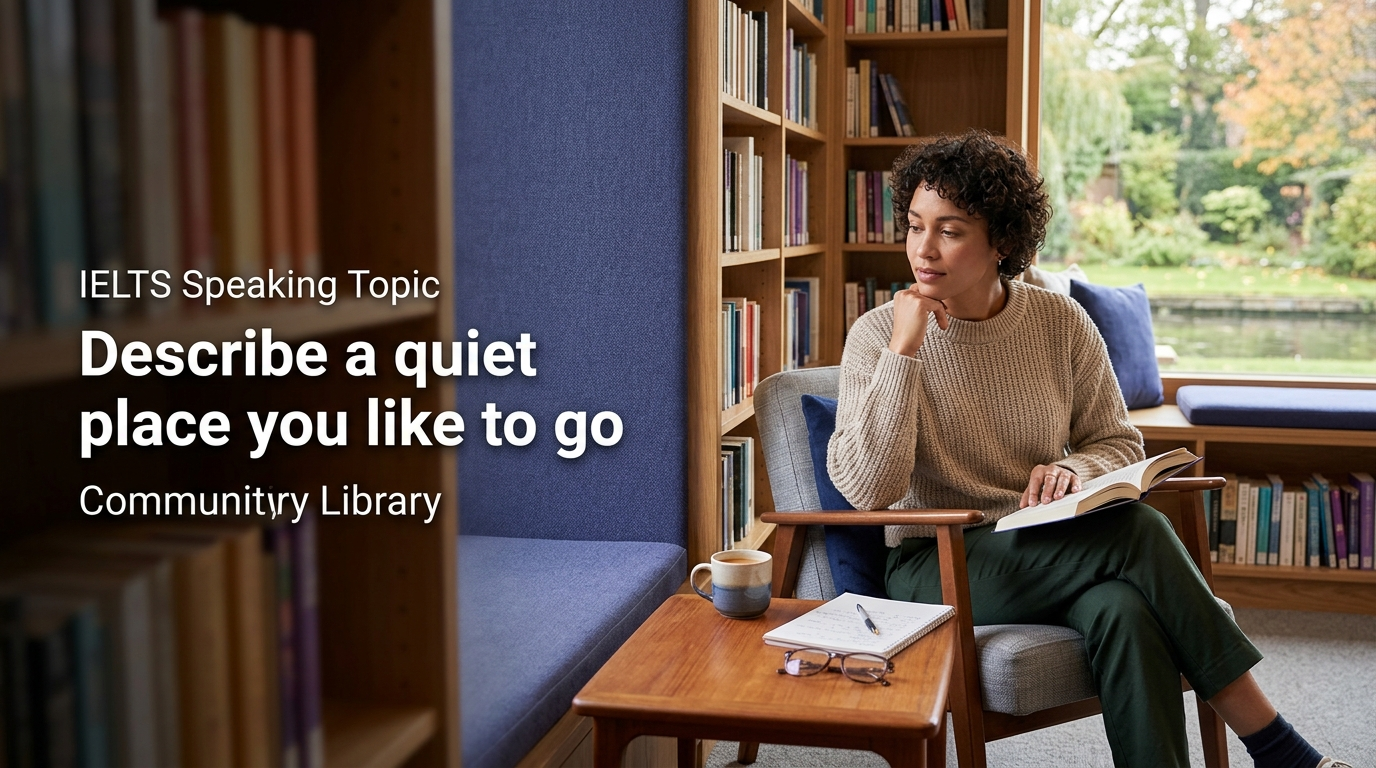
Типовые ответы, услышанные параллельно
Начните с более простого ответа, переключитесь на Band, чтобы услышать, как можно разработать ту же задачу, а затем запишите личный ответ. Это обучающие примеры, а не официальные ответы или гарантии баллов.
Часть 2. Типовой ответ
Part 2 cue-card response
There is a quiet park near my flat that I like to go to. It's a small park with a pond, some trees and a few benches. I first noticed it when I walked by on my way to work. I go there maybe once or twice a week, usually in the evening after work. I sit on a bench and sometimes read a book or just look at the water. Sometimes I listen to music on my phone. The park is calm and there are not many people. It helps me relax and forget about problems for a little while, and after ten or twenty minutes I usually feel better.
My favourite quiet place is a tiny riverside courtyard tucked behind the town library, between two low brick buildings, where you mainly hear water and birds rather than traffic. I first found it when I was cramming for an exam and a librarian friend nudged me through a narrow gate to get some fresh air; that first visit felt like discovering a secret. I try to go there at least once a week, typically on Sunday mornings when it's at its calmest, and occasionally I pop in for twenty or thirty minutes during lunch breaks. When I'm there I sit on a worn wooden bench with a thermos of tea, read or jot down ideas in a notebook, watch swans, and sometimes take photos of the light on the water to use later in a painting. The place makes me feel grounded and less stressed because the flowing water quietens my mind and gives me perspective; I always come away calmer and more focused, ready to face a busy week. I usually stay for about an hour, long enough to reset my mood but short enough to keep my schedule.
Часть 3. Типовые ответы
Is it easy to find quiet places in your country? Why?
It depends. In the countryside it's easy to find quiet places like fields, parks or lakes. In big cities it's harder because of traffic and crowds. Still, libraries, small parks and some cafes can be quiet if you go at the right time. People who look for silence can usually find somewhere, but you may need to travel a bit.
It really varies. In rural areas and smaller towns quiet spots are plentiful — woodland paths, canals and village commons — but in major cities it's more of a hunt because of traffic, building work and nightlife. That said, councils often protect green belts and some libraries or community gardens are designated as quiet zones, so with a bit of planning you can still find peaceful corners even in urban centres. Ultimately, accessibility and planning make a big difference.
How do people spend their leisure time in your country?
People spend their free time in many ways. Many watch TV or use their phones, some play sports, and others meet friends or visit parks and cafés. Families may go to shopping centres or cinemas at the weekend. Older people often walk or garden. It depends on age and money, but most people have some kind of hobby.
There's quite a variety. Many people now prefer experience-based leisure: going to cafés, weekend markets, live music or exercise classes. Streaming services and gaming are hugely popular for staying in, while others join clubs for hobbies like cycling or photography. Volunteering and short courses have also become common, as people look for meaningful ways to spend spare time rather than just passively consuming content. Age, income and work patterns still shape what people choose.
How does technology affect the way people spend their leisure time?
Technology has changed leisure a lot. People watch films and shows online, play video games and use social media. It's easy to be entertained at home so some people go out less. Technology also helps people find events or meetups, but mostly it means more screen time and less outdoor activity for many.
Technology has reshaped leisure profoundly. On the one hand, on-demand streaming, social media and gaming mean people can tailor entertainment to their tastes and fit it around busy lives; algorithms suggest new content and make discovery effortless. On the other hand, it can blur the line between work and free time, with smartphones encouraging constant checking and reducing uninterrupted relaxation. That said, technology also enables new hobbies — online courses, virtual meetups, photo communities — so it can both fragment and enrich leisure depending on how it's used.
Do you think only old people have time for leisure?
No, I don't think only old people have time for leisure. People of all ages have free time, although younger adults might be busier with work or children. Retired people often have more free time, but many younger people also make time for hobbies or weekends away. It depends on their situation.
Definitely not. While older people often gain more leisure time after retirement, the picture is more complex: many younger adults now enjoy flexible working hours or take sabbaticals, so they can also carve out leisure time. Conversely, some older people still work part-time or care for family and may be time-poor. Cultural expectations, childcare and job demands all influence who has free time, so it's not simply about age.
Why do old people prefer to live in quiet places?
Older people like quiet places because they are calmer and safer. They may have health issues and need rest, and they prefer routine. Quiet places make it easier to sleep and avoid stress. Also there are fewer crowds, which many older people find nicer.
Older people often choose quiet places for several reasons: better sleep, lower stress levels and fewer hazards like busy roads. Quiet communities can also support a slower pace of life and closer social ties, for example local clubs or regular neighbours who look out for one another. Financial considerations and the desire for green space or single-storey housing also matter, so the preference is a mix of health, social and practical factors rather than just taste.
Why are there more noises made at home now than in the past?
There is more noise at home now because we have more electrical devices like TVs, washing machines and entertainment systems. People also have more deliveries, DIY or renovation work, and children with gadgets make noise. Houses may be closer together too, so you hear neighbours more.
Several shifts explain why homes seem noisier. Modern life brings more appliances, 24-hour deliveries, and gadgets in every room, while open-plan layouts reduce sound insulation so noise travels more easily. Urban densification and more people working from home can add to daytime noise, and the culture of immediate availability means neighbours and contractors are active at odd hours. In short, changes in technology, housing design and lifestyles have all increased domestic noise levels.
Статус практики: Архивированная тема из предыдущего цикла банка вопросов. Он по-прежнему полезен для практики навыков, но не представлен в качестве текущего или гарантированного вопроса экзамена. Как помечаются темы.
Как ответить Опишите тихое место, куда вы любите ходить Вопросы IELTS Speaking
Для подсказки «Опишите тихое место, куда вы любите пойти», используйте минуту подготовки, чтобы проложить маршрут разговора. Выберите четкую тему, добавьте два конкретных момента или детали и закончите рассказом, почему это важно. Затем используйте связанные вопросы Части 3, чтобы попрактиковаться в более широком объяснении и сравнении.
Подсказки на карточке:
- Где это
- Откуда ты это знаешь
- Как часто ты туда ходишь
- Что ты там делаешь
- И объясните, как вы относитесь к этому месту
- Открытие: идентифицируйте человека, место, предмет или событие.
- Развитие: опишите две детали или моменты в логическом порядке.
- Расширение: объясните причину, результат, сравнение или проблему.
- Для размышления: закончите рассказом о том, почему тема запомнилась или важна.
Повопросный подход
| Практический вопрос | Полезный ответный ход |
|---|---|
| Is it easy to find quiet places in your country? Why? | Ответьте прямо, объясните причину и добавьте одну естественную личную деталь. |
| How do people spend their leisure time in your country? | Опишите процесс или разницу в четком порядке и добавьте результат. |
| How does technology affect the way people spend their leisure time? | Опишите процесс или разницу в четком порядке и добавьте результат. |
| Do you think only old people have time for leisure? | Выскажите вероятную точку зрения, объясните причину и добавьте одно условие или пример. |
Словарный фокус
Полезные формулировки, уже продемонстрированные в примерных ответах, включают: green belt, designated quiet zone, with a bit of planning, experience-based, passively consuming, meaningful ways, on-demand, blur the line. Изучите каждое значение и естественное сочетание слов, а затем используйте этот элемент в новом ответе вместо того, чтобы копировать полный сценарий.
Распространенные ошибки, которых следует избегать
- Дает заученный ответ, который лишь частично отвечает на вопрос.
- Добавление сложной лексики без проверки значения или словосочетания.
- Перезапуск после каждой ошибки вместо кратковременного исправления и продолжения.
- Чтение ответа модели перед записью своей первой попытки.
Опишите тихое место, где вы любите заниматься. Часто задаваемые вопросы
Как мне использовать минутку подготовки карточки-подсказки «Опишите тихое место, куда вы любите пойти?»
Напишите ключевые слова для начала, двух-трех деталей и финального размышления. Не пытайтесь писать полные предложения.
Должен ли я покрывать каждый пункт подсказки?
Подсказки помогут вам организовать беседу. Рассказывать о них полезно, но последовательный ответ в течение одной-двух минут важнее, чем механическая отметка каждой строки.
Как вопросы Части 3 связаны с Частью 2?
Они развивают одну и ту же широкую тему посредством причин, сравнений, социальных последствий или будущих возможностей, поэтому ответы обычно требуют большего объяснения, чем Часть 1.
