
IELTS Speaking, часть 2 и 3: Describe a tall building you like or dislike
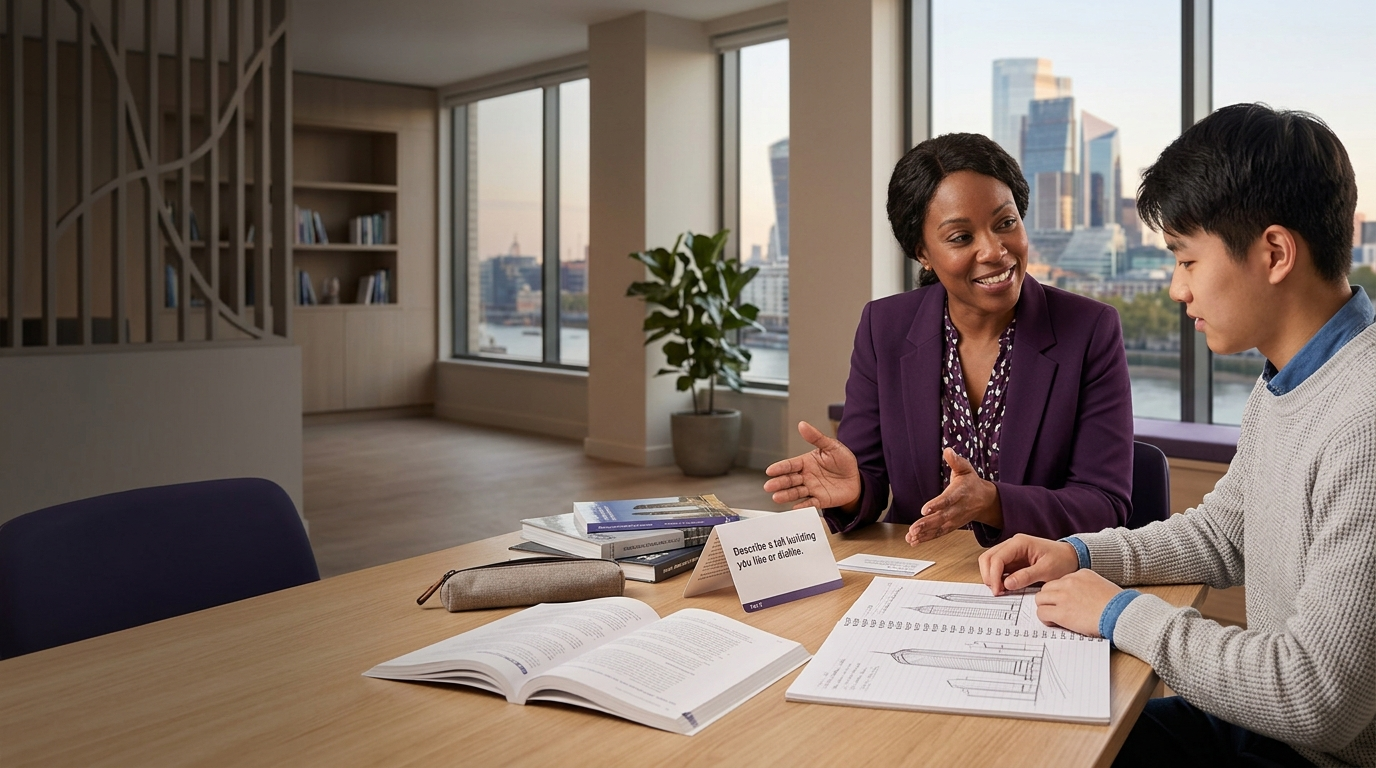
Карточка-подсказка части 2
Describe a tall building you like or dislike
Вы должны сказать:
- Для чего он используется
- Где это
- Как это выглядит
- И объясните, почему вам это нравится или не нравится.
У вас будет одна-две минуты, чтобы поговорить на эту тему.
Читать полную расшифровку
One tall building I really like is Riverside Tower, a mixed-use skyscraper on the bank of the main river in my city's centre. It's used for offices, luxury apartments and a public observation gallery on the top floor, plus a few shops and a small supermarket on the ground level for locals. The location is very convenient — it's right by the tram stop and several cafés, which makes it a lively spot. Architecturally, the tower has a slim, tapering silhouette with a glass and steel façade and stepped terraces planted with trees; at night it's lit with soft white LEDs. The greenery on the terraces is real — some trees are large enough to give shade in summer and attract birds. I like it because it manages to be striking without feeling arrogant, and it includes sustainable features like rainwater harvesting and solar panels on the roof. For example, the building's water system irrigates the gardens and reduces the need for mains water. The top-floor gallery offers panoramic views of the river and bridges, and visiting there always makes me appreciate the city. Overall it's a successful blend of function, aesthetics and community use, which is why I admire it. Every visit cheers me up.
Статус подготовки: Прогнозируемый тематический цикл. Этот независимый практический ресурс не является официальным документом IELTS, и вопросы в вашем тесте могут быть разными. Как помечаются темы.
Вопросы для обсуждения части 3
Двигайтесь по одному вопросу за раз: слушайте, отвечайте, сравнивайте и повторяйте. Полный текст вопроса остается в HTML-коде страницы для обеспечения доступности и поиска.
- 01Are there many tall buildings in your country?
- 02What are the differences between those tall buildings in your country?Full Band 6/7 answer →
- 03Why are different places laid out and designed differently?
- 04What are the advantages of living in tall buildings?
- 05Why do some people like to remodel and decorate their homes themselves?
- 06What kind of interior design style do most people like?
Прежде чем говорить, просмотрите тему
Используйте изображения в качестве подсказок идей. Опишите то, что вы заметили, свяжите это со своим опытом, а затем ответьте на реальный вопрос.


Типовые ответы, услышанные параллельно
Начните с более простого ответа, переключитесь на Band, чтобы услышать, как можно разработать ту же задачу, а затем запишите личный ответ. Это обучающие примеры, а не официальные ответы или гарантии баллов.
Часть 2. Типовой ответ
Part 2 cue-card response
I want to talk about a tall building I like called Riverside Tower. It's used for offices and flats and has a small shopping area on the ground floor. It stands by the river in the city centre near the tram stop. The building is mostly glass and looks thin with terraces on some floors. I like it because it has plants on the balconies and an observation deck with nice views. It also has solar panels, so it feels modern and useful.
One tall building I really like is Riverside Tower, a mixed-use skyscraper on the bank of the main river in my city's centre. It's used for offices, luxury apartments and a public observation gallery on the top floor, plus a few shops and a small supermarket on the ground level for locals. The location is very convenient — it's right by the tram stop and several cafés, which makes it a lively spot. Architecturally, the tower has a slim, tapering silhouette with a glass and steel façade and stepped terraces planted with trees; at night it's lit with soft white LEDs. The greenery on the terraces is real — some trees are large enough to give shade in summer and attract birds. I like it because it manages to be striking without feeling arrogant, and it includes sustainable features like rainwater harvesting and solar panels on the roof. For example, the building's water system irrigates the gardens and reduces the need for mains water. The top-floor gallery offers panoramic views of the river and bridges, and visiting there always makes me appreciate the city. Overall it's a successful blend of function, aesthetics and community use, which is why I admire it. Every visit cheers me up.
Часть 3. Типовые ответы
Are there many tall buildings in your country?
Yes, in the bigger cities there are quite a few tall buildings. The capital and other big towns have office towers and some residential high-rises. In smaller towns you won't see many; they usually have low-rise housing. The tall ones are mostly in business areas near trains and tram stops.
There are definitely clusters of tall buildings, but they're concentrated in major urban centres rather than spread evenly across the country. Cities with financial districts and major transport hubs tend to have office skyscrapers and newer residential towers, whereas historic towns preserve low-rise streets. Planning restrictions and land prices also shape where high-rises appear — it makes economic sense to build up close to good transport links.
What are the differences between those tall buildings in your country?
Tall buildings differ in style and use. Some are modern glass towers used by banks and companies. Others are older concrete apartment blocks. They also differ in height and how fancy the inside is.
The differences are quite marked: some are sleek, glass-clad office towers with high-tech facilities, while others are residential high-rises designed for density and affordability. You also get mixed-use developments combining shops, homes and offices, and heritage areas where any tall structure must respect the skyline. Materials, sustainability features and intended occupants all affect the design.
Why are different places laid out and designed differently?
Places are laid out differently because of history and how people live there. Some towns grew slowly so they are compact. Newer areas are planned with roads and parks. Climate and geography also matter.
Different places are designed according to a mix of factors: historical development, local climate, the economy and transport infrastructure. For instance, coastal towns might have promenades and low buildings to protect views, while industrial zones are laid out for vehicle access and storage. Planning policy and community priorities also influence the final shape.
What are the advantages of living in tall buildings?
Living in tall buildings has advantages. You often get good views and they are close to shops and transport. Many have security and shared facilities like gyms. They can save land in crowded cities.
There are several benefits to living in tall blocks: they maximise limited urban land, often provide excellent views and sunlight, and usually sit close to public transport and amenities. Many modern towers include concierge services, communal gyms and green roofs which foster a sense of community. They can also be more energy-efficient per occupant than spread-out housing.
Why do some people like to remodel and decorate their homes themselves?
Some people like to remodel themselves because it's cheaper. They enjoy DIY and making their home look the way they want. It can be relaxing and you learn skills.
Many people choose to redecorate or remodel themselves for several reasons: to save money, to personalise a space, or simply because DIY has become a popular hobby. Social media and online tutorials make projects seem achievable, and some enjoy the creative control and satisfaction of doing it themselves. It can also be a way to reuse materials and be more sustainable.
What kind of interior design style do most people like?
Most people like modern and simple interior styles. Neutral colours, clean lines and practical furniture are popular. Some people prefer traditional looks, but modern minimalism is common.
Contemporary tastes often lean towards clean, functional styles such as Scandinavian minimalism or modern contemporary design — light colours, natural materials and uncluttered spaces. However, there's also interest in mixing styles: industrial elements, vintage pieces and biophilic touches like lots of plants. Trends are influenced by magazines and platforms like Instagram, so people often aim for spaces that look both comfortable and photogenic.
Как ответить Опишите высотное здание, которое вам нравится или не нравится Вопросы IELTS Speaking
Для карточки-подсказки «Опишите высокое здание, которое вам нравится или не нравится» используйте минуту подготовки, чтобы построить маршрут выступления. Выберите четкую тему, добавьте два конкретных момента или детали и закончите рассказом, почему это важно. Затем используйте связанные вопросы Части 3, чтобы попрактиковаться в более широком объяснении и сравнении.
Подсказки на карточке:
- Для чего он используется
- Где это
- Как это выглядит
- И объясните, почему вам это нравится или не нравится.
- Открытие: идентифицируйте человека, место, предмет или событие.
- Развитие: опишите две детали или моменты в логическом порядке.
- Расширение: объясните причину, результат, сравнение или проблему.
- Для размышления: закончите рассказом о том, почему тема запомнилась или важна.
Повопросный подход
| Практический вопрос | Полезный ответный ход |
|---|---|
| Are there many tall buildings in your country? | Дайте прямой ответ, одну причину и короткий пример, не заучивая сценарий. |
| What are the differences between those tall buildings in your country? | Сначала назовите вещь, затем опишите конкретную особенность или пример. |
| Why are different places laid out and designed differently? | Ответьте на одну основную причину, а затем подтвердите ее конкретным примером. |
| What are the advantages of living in tall buildings? | Сначала назовите вещь, затем опишите конкретную особенность или пример. |
Словарный фокус
Полезные формулировки, уже продемонстрированные в примерных ответах, включают: urban centres, financial district, planning restrictions, glass-clad, mixed-use, heritage areas, infrastructure, promenade. Изучите каждое значение и естественное сочетание слов, а затем используйте этот элемент в новом ответе вместо того, чтобы копировать полный сценарий.
Распространенные ошибки, которых следует избегать
- Дает заученный ответ, который лишь частично отвечает на вопрос.
- Добавление сложной лексики без проверки значения или словосочетания.
- Перезапуск после каждой ошибки вместо кратковременного исправления и продолжения.
- Чтение ответа модели перед записью своей первой попытки.
Опишите высотное здание, которое вам нравится или не нравится. Часто задаваемые вопросы.
Как мне использовать минутку подготовки карточки-подсказки «Опишите высотное здание, которое вам нравится или не нравится»?
Напишите ключевые слова для начала, двух-трех деталей и финального размышления. Не пытайтесь писать полные предложения.
Должен ли я покрывать каждый пункт подсказки?
Подсказки помогут вам организовать беседу. Рассказывать о них полезно, но последовательный ответ в течение одной-двух минут важнее, чем механическая отметка каждой строки.
Как вопросы Части 3 связаны с Частью 2?
Они развивают одну и ту же широкую тему посредством причин, сравнений, социальных последствий или будущих возможностей, поэтому ответы обычно требуют большего объяснения, чем Часть 1.
