
IELTS การพูด ตอนที่ 2 และ 3: Describe a tall building you like or dislike
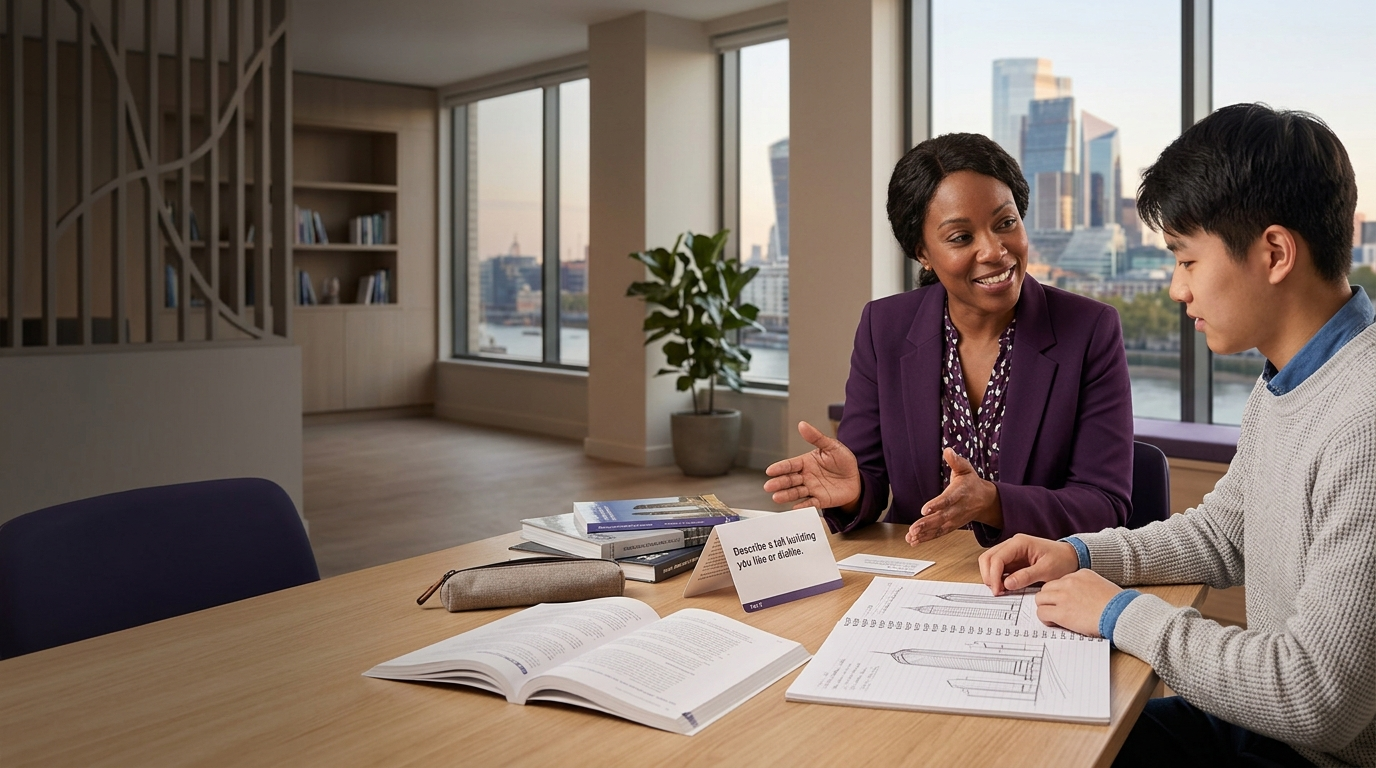
ส่วนที่ 2 บัตรคิว
Describe a tall building you like or dislike
คุณควรพูดว่า:
- มันใช้ทำอะไร
- มันอยู่ที่ไหน
- มันดูเหมือนอะไร
- และอธิบายว่าทำไมคุณถึงชอบหรือไม่ชอบมัน
คุณจะมีเวลาหนึ่งถึงสองนาทีในการพูดคุยเกี่ยวกับหัวข้อนี้
อ่านบทบรรยายฉบับสมบูรณ์
One tall building I really like is Riverside Tower, a mixed-use skyscraper on the bank of the main river in my city's centre. It's used for offices, luxury apartments and a public observation gallery on the top floor, plus a few shops and a small supermarket on the ground level for locals. The location is very convenient — it's right by the tram stop and several cafés, which makes it a lively spot. Architecturally, the tower has a slim, tapering silhouette with a glass and steel façade and stepped terraces planted with trees; at night it's lit with soft white LEDs. The greenery on the terraces is real — some trees are large enough to give shade in summer and attract birds. I like it because it manages to be striking without feeling arrogant, and it includes sustainable features like rainwater harvesting and solar panels on the roof. For example, the building's water system irrigates the gardens and reduces the need for mains water. The top-floor gallery offers panoramic views of the river and bridges, and visiting there always makes me appreciate the city. Overall it's a successful blend of function, aesthetics and community use, which is why I admire it. Every visit cheers me up.
สถานะการเตรียมการ: รอบหัวข้อที่คาดการณ์ไว้ แหล่งข้อมูลสำหรับฝึกหัดอิสระนี้ไม่ใช่ข้อสอบ IELTS อย่างเป็นทางการ และคำถามในการทดสอบอาจแตกต่างกันออกไป วิธีการติดป้ายกำกับหัวข้อ.
ส่วนที่ 3 คำถามสนทนา
ย้ายทีละคำถาม: ฟัง ตอบ เปรียบเทียบ และลองอีกครั้ง ข้อความคำถามที่สมบูรณ์จะยังคงอยู่ในหน้า HTML เพื่อการเข้าถึงและการค้นหา
- 01Are there many tall buildings in your country?
- 02What are the differences between those tall buildings in your country?Full Band 6/7 answer →
- 03Why are different places laid out and designed differently?
- 04What are the advantages of living in tall buildings?
- 05Why do some people like to remodel and decorate their homes themselves?
- 06What kind of interior design style do most people like?
ดูหัวข้อก่อนพูด
ใช้รูปภาพเป็นไอเดีย อธิบายสิ่งที่คุณสังเกตเห็น เชื่อมโยงกับประสบการณ์ของคุณ แล้วตอบคำถามจริง

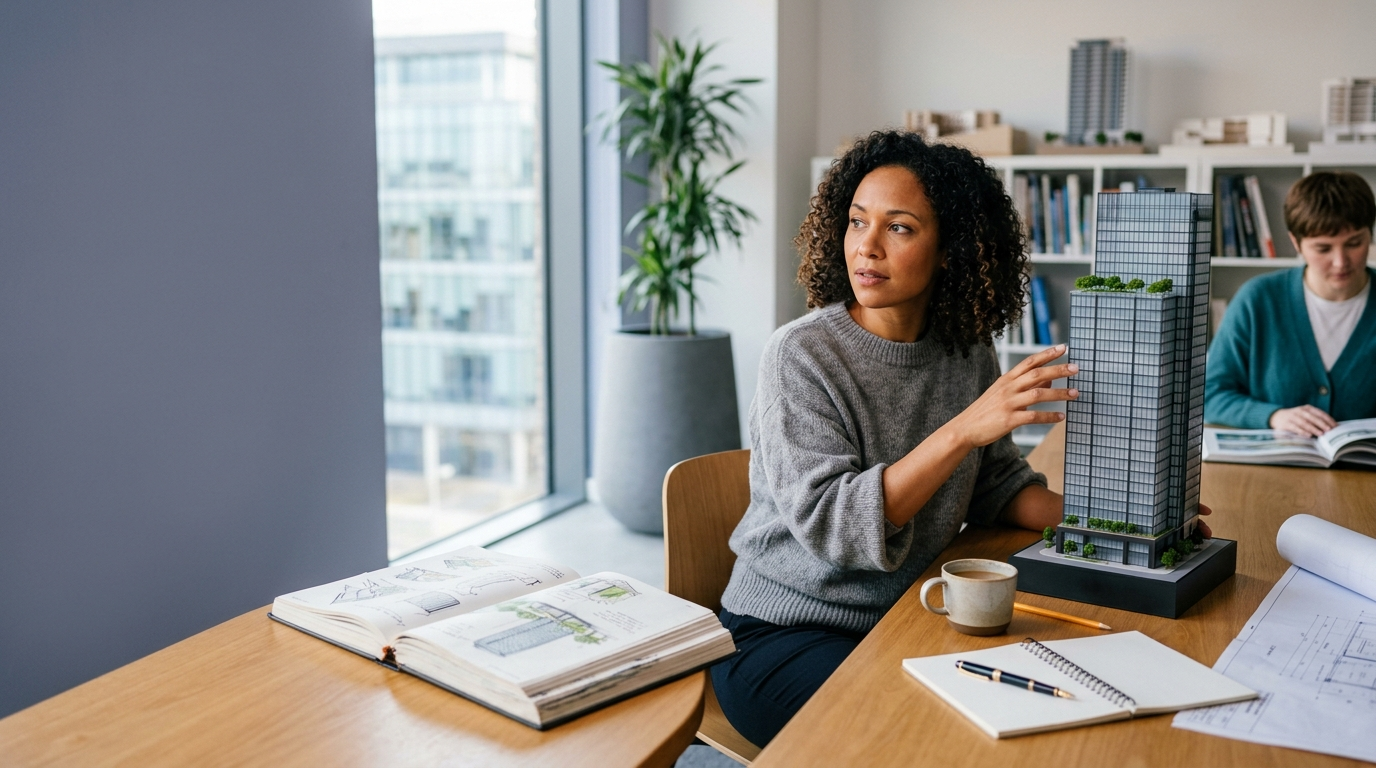
โมเดลตอบ ได้ยินพร้อมๆ กัน
เริ่มต้นด้วยคำตอบที่ง่ายกว่า สลับ Band เพื่อฟังว่างานเดียวกันนี้สามารถพัฒนาได้อย่างไร จากนั้นจึงบันทึกคำตอบส่วนตัว นี่เป็นตัวอย่างการสอน ไม่ใช่คำตอบอย่างเป็นทางการหรือการรับประกันคะแนน
ส่วนที่ 2 - คำตอบของแบบจำลอง
Part 2 cue-card response
I want to talk about a tall building I like called Riverside Tower. It's used for offices and flats and has a small shopping area on the ground floor. It stands by the river in the city centre near the tram stop. The building is mostly glass and looks thin with terraces on some floors. I like it because it has plants on the balconies and an observation deck with nice views. It also has solar panels, so it feels modern and useful.
One tall building I really like is Riverside Tower, a mixed-use skyscraper on the bank of the main river in my city's centre. It's used for offices, luxury apartments and a public observation gallery on the top floor, plus a few shops and a small supermarket on the ground level for locals. The location is very convenient — it's right by the tram stop and several cafés, which makes it a lively spot. Architecturally, the tower has a slim, tapering silhouette with a glass and steel façade and stepped terraces planted with trees; at night it's lit with soft white LEDs. The greenery on the terraces is real — some trees are large enough to give shade in summer and attract birds. I like it because it manages to be striking without feeling arrogant, and it includes sustainable features like rainwater harvesting and solar panels on the roof. For example, the building's water system irrigates the gardens and reduces the need for mains water. The top-floor gallery offers panoramic views of the river and bridges, and visiting there always makes me appreciate the city. Overall it's a successful blend of function, aesthetics and community use, which is why I admire it. Every visit cheers me up.
ส่วนที่ 3 - คำตอบของแบบจำลอง
Are there many tall buildings in your country?
Yes, in the bigger cities there are quite a few tall buildings. The capital and other big towns have office towers and some residential high-rises. In smaller towns you won't see many; they usually have low-rise housing. The tall ones are mostly in business areas near trains and tram stops.
There are definitely clusters of tall buildings, but they're concentrated in major urban centres rather than spread evenly across the country. Cities with financial districts and major transport hubs tend to have office skyscrapers and newer residential towers, whereas historic towns preserve low-rise streets. Planning restrictions and land prices also shape where high-rises appear — it makes economic sense to build up close to good transport links.
What are the differences between those tall buildings in your country?
Tall buildings differ in style and use. Some are modern glass towers used by banks and companies. Others are older concrete apartment blocks. They also differ in height and how fancy the inside is.
The differences are quite marked: some are sleek, glass-clad office towers with high-tech facilities, while others are residential high-rises designed for density and affordability. You also get mixed-use developments combining shops, homes and offices, and heritage areas where any tall structure must respect the skyline. Materials, sustainability features and intended occupants all affect the design.
Why are different places laid out and designed differently?
Places are laid out differently because of history and how people live there. Some towns grew slowly so they are compact. Newer areas are planned with roads and parks. Climate and geography also matter.
Different places are designed according to a mix of factors: historical development, local climate, the economy and transport infrastructure. For instance, coastal towns might have promenades and low buildings to protect views, while industrial zones are laid out for vehicle access and storage. Planning policy and community priorities also influence the final shape.
What are the advantages of living in tall buildings?
Living in tall buildings has advantages. You often get good views and they are close to shops and transport. Many have security and shared facilities like gyms. They can save land in crowded cities.
There are several benefits to living in tall blocks: they maximise limited urban land, often provide excellent views and sunlight, and usually sit close to public transport and amenities. Many modern towers include concierge services, communal gyms and green roofs which foster a sense of community. They can also be more energy-efficient per occupant than spread-out housing.
Why do some people like to remodel and decorate their homes themselves?
Some people like to remodel themselves because it's cheaper. They enjoy DIY and making their home look the way they want. It can be relaxing and you learn skills.
Many people choose to redecorate or remodel themselves for several reasons: to save money, to personalise a space, or simply because DIY has become a popular hobby. Social media and online tutorials make projects seem achievable, and some enjoy the creative control and satisfaction of doing it themselves. It can also be a way to reuse materials and be more sustainable.
What kind of interior design style do most people like?
Most people like modern and simple interior styles. Neutral colours, clean lines and practical furniture are popular. Some people prefer traditional looks, but modern minimalism is common.
Contemporary tastes often lean towards clean, functional styles such as Scandinavian minimalism or modern contemporary design — light colours, natural materials and uncluttered spaces. However, there's also interest in mixing styles: industrial elements, vintage pieces and biophilic touches like lots of plants. Trends are influenced by magazines and platforms like Instagram, so people often aim for spaces that look both comfortable and photogenic.
วิธีตอบ อธิบายอาคารสูงที่คุณชอบหรือไม่ชอบ คำถาม IELTS Speaking
สำหรับบัตรคิวอธิบายอาคารสูงที่คุณชอบหรือไม่ชอบ ให้ใช้นาทีการเตรียมการเพื่อสร้างเส้นทางผ่านการพูดคุย เลือกหัวข้อที่ชัดเจน เพิ่มช่วงเวลาหรือรายละเอียดที่เฉพาะเจาะจงสองรายการ และจบด้วยเหตุผลว่าทำไมจึงสำคัญ จากนั้นใช้คำถามส่วนที่ 3 ที่เชื่อมโยงเพื่อฝึกฝนการอธิบายและการเปรียบเทียบที่กว้างขึ้น
ข้อความแจ้งบัตรคิว:
- มันใช้ทำอะไร
- มันอยู่ที่ไหน
- มันดูเหมือนอะไร
- และอธิบายว่าทำไมคุณถึงชอบหรือไม่ชอบมัน
- การเปิด: ระบุบุคคล สถานที่ วัตถุ หรือเหตุการณ์
- การพัฒนา: อธิบายสองรายละเอียดหรือช่วงเวลาตามลำดับตรรกะ
- ส่วนขยาย: อธิบายเหตุผล ผลลัพธ์ การเปรียบเทียบ หรือปัญหา
- การสะท้อนกลับ: จบด้วยเหตุผลว่าทำไมหัวข้อนั้นถึงน่าจดจำหรือสำคัญ
แนวทางคำถามต่อคำถาม
| คำถามฝึกหัด | การย้ายคำตอบที่เป็นประโยชน์ |
|---|---|
| Are there many tall buildings in your country? | ให้คำตอบโดยตรง เหตุผลหนึ่งข้อ และตัวอย่างสั้นๆ โดยไม่ต้องจำสคริปต์ |
| What are the differences between those tall buildings in your country? | ตั้งชื่อสิ่งนั้นก่อน จากนั้นจึงอธิบายคุณลักษณะหรือตัวอย่างเฉพาะเจาะจง |
| Why are different places laid out and designed differently? | ตอบด้วยสาเหตุหลักเพียงข้อเดียว แล้วสนับสนุนด้วยตัวอย่างที่เป็นรูปธรรม |
| What are the advantages of living in tall buildings? | ตั้งชื่อสิ่งนั้นก่อน จากนั้นจึงอธิบายคุณลักษณะหรือตัวอย่างเฉพาะเจาะจง |
เน้นคำศัพท์
ภาษาที่มีประโยชน์แสดงให้เห็นแล้วในคำตอบของโมเดล ได้แก่ urban centres, financial district, planning restrictions, glass-clad, mixed-use, heritage areas, infrastructure, promenade. เรียนรู้แต่ละความหมายและคู่คำที่เป็นธรรมชาติ จากนั้นใช้รายการนั้นเป็นคำตอบใหม่แทนที่จะคัดลอกสคริปต์ที่สมบูรณ์
ข้อผิดพลาดทั่วไปที่ควรหลีกเลี่ยง
- ให้คำตอบที่จดจำซึ่งตอบคำถามเพียงบางส่วนเท่านั้น
- เติมคำศัพท์ยากๆ โดยไม่ต้องตรวจสอบความหมายหรือการจัดตำแหน่ง
- รีสตาร์ทหลังจากทุกข้อผิดพลาด แทนที่จะแก้ไขในช่วงสั้นๆ และดำเนินการต่อ
- อ่านคำตอบของแบบจำลองก่อนที่จะบันทึกความพยายามครั้งแรกของคุณเอง
อธิบายอาคารสูงที่คุณชอบหรือไม่ชอบคำถามที่พบบ่อยในการฝึกซ้อม
ฉันควรใช้นาทีการเตรียมบัตรคิวอธิบายอาคารสูงที่คุณชอบหรือไม่ชอบได้อย่างไร
เขียนคำหลักสำหรับช่วงเริ่มต้น รายละเอียดสองหรือสามรายละเอียด และการไตร่ตรองขั้นสุดท้าย อย่าพยายามเขียนประโยคที่สมบูรณ์
ฉันต้องครอบคลุมสัญลักษณ์แสดงหัวข้อย่อยทุกบัตรคิวหรือไม่
ข้อความแจ้งจะช่วยคุณจัดระเบียบการสนทนา การครอบคลุมสิ่งเหล่านี้มีประโยชน์ แต่การตอบสนองหนึ่งถึงสองนาทีที่สอดคล้องกันนั้นมีความสำคัญมากกว่าการทำเครื่องหมายแต่ละบรรทัดโดยอัตโนมัติ
คำถามส่วนที่ 3 เชื่อมโยงกับส่วนที่ 2 อย่างไร
พวกเขาพัฒนาหัวข้อกว้างๆ ที่เหมือนกันด้วยเหตุผล การเปรียบเทียบ ผลกระทบทางสังคม หรือความเป็นไปได้ในอนาคต ดังนั้น คำตอบโดยปกติจะต้องมีคำอธิบายมากกว่าส่วนที่ 1
