
IELTS Speaking Parte 2 y 3: Describe a tall building you like or dislike
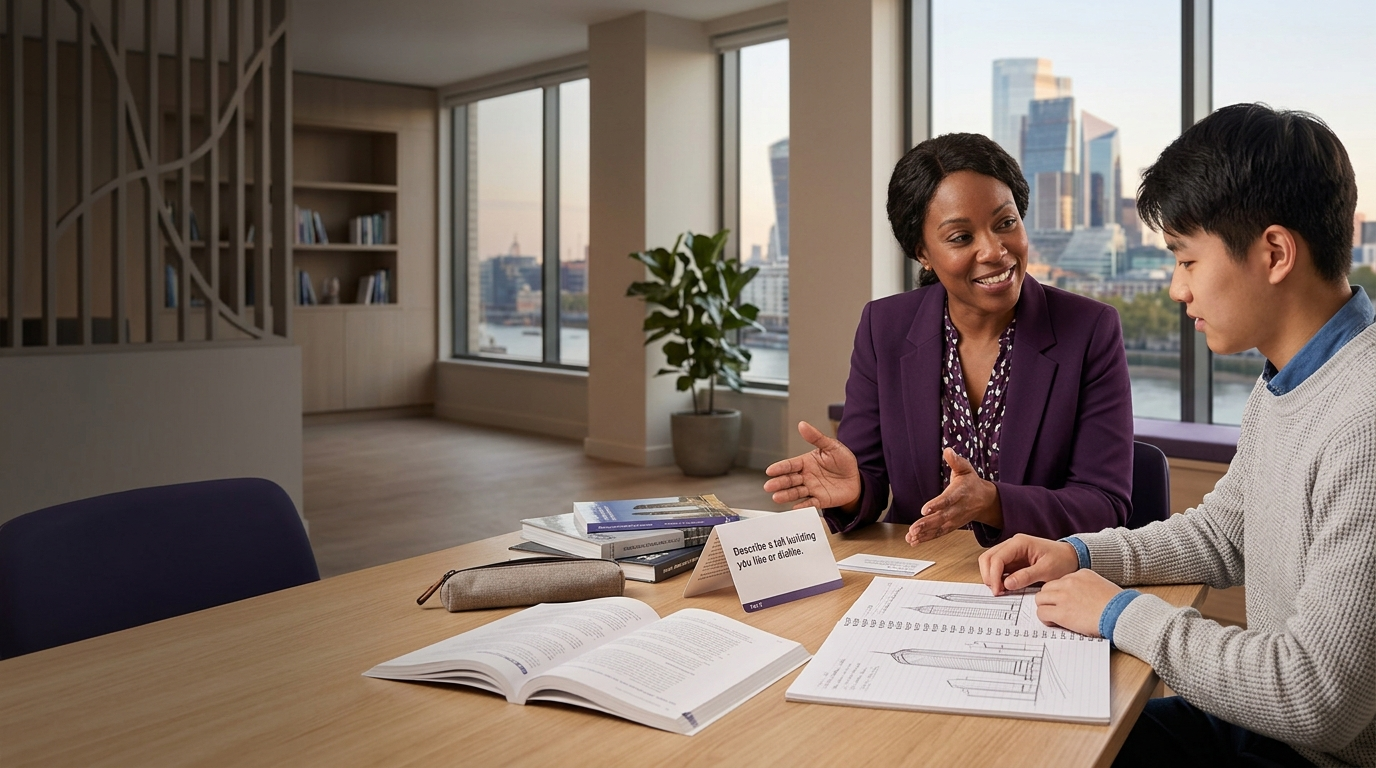
Tarjeta de referencia de la parte 2
Describe a tall building you like or dislike
Deberías decir:
- Para que se utiliza
- donde esta
- lo que parece
- Y explica por qué te gusta o no te gusta.
Tendrás uno o dos minutos para hablar sobre este tema.
Lea la transcripción completa
One tall building I really like is Riverside Tower, a mixed-use skyscraper on the bank of the main river in my city's centre. It's used for offices, luxury apartments and a public observation gallery on the top floor, plus a few shops and a small supermarket on the ground level for locals. The location is very convenient — it's right by the tram stop and several cafés, which makes it a lively spot. Architecturally, the tower has a slim, tapering silhouette with a glass and steel façade and stepped terraces planted with trees; at night it's lit with soft white LEDs. The greenery on the terraces is real — some trees are large enough to give shade in summer and attract birds. I like it because it manages to be striking without feeling arrogant, and it includes sustainable features like rainwater harvesting and solar panels on the roof. For example, the building's water system irrigates the gardens and reduces the need for mains water. The top-floor gallery offers panoramic views of the river and bridges, and visiting there always makes me appreciate the city. Overall it's a successful blend of function, aesthetics and community use, which is why I admire it. Every visit cheers me up.
Estado de preparación: ciclo de tema previsto. Este recurso de práctica independiente no es un documento oficial del IELTS y las preguntas de su examen pueden ser diferentes. Cómo se etiquetan los temas.
Preguntas de discusión de la parte 3
Mueva una pregunta a la vez: escuche, responda, compare y vuelva a intentarlo. El texto completo de la pregunta permanece en la página HTML para accesibilidad y búsqueda.
- 01Are there many tall buildings in your country?
- 02What are the differences between those tall buildings in your country?Full Band 6/7 answer →
- 03Why are different places laid out and designed differently?
- 04What are the advantages of living in tall buildings?
- 05Why do some people like to remodel and decorate their homes themselves?
- 06What kind of interior design style do most people like?
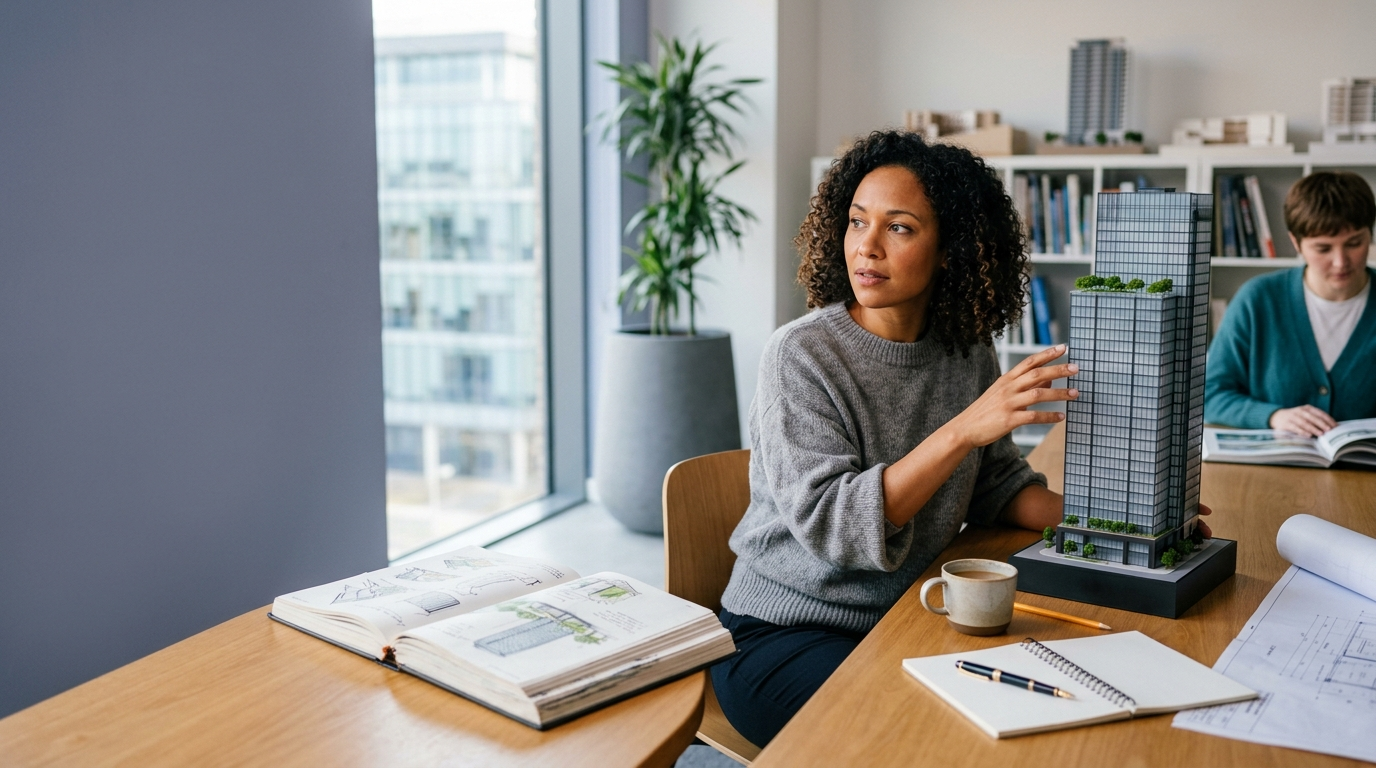
Vea el tema antes de hablar.
Utilice las imágenes como sugerencias de ideas. Describe lo que notas, conéctalo con tu experiencia y luego responde la pregunta real.

Respuestas modelo, escuchadas una al lado de la otra
Comience con la respuesta más simple, cambie Band para escuchar cómo se puede desarrollar la misma tarea y luego registre una respuesta personal. Estos son ejemplos de enseñanza, no respuestas oficiales ni garantías de puntuación.
Parte 2: Respuesta modelo
Part 2 cue-card response
I want to talk about a tall building I like called Riverside Tower. It's used for offices and flats and has a small shopping area on the ground floor. It stands by the river in the city centre near the tram stop. The building is mostly glass and looks thin with terraces on some floors. I like it because it has plants on the balconies and an observation deck with nice views. It also has solar panels, so it feels modern and useful.
One tall building I really like is Riverside Tower, a mixed-use skyscraper on the bank of the main river in my city's centre. It's used for offices, luxury apartments and a public observation gallery on the top floor, plus a few shops and a small supermarket on the ground level for locals. The location is very convenient — it's right by the tram stop and several cafés, which makes it a lively spot. Architecturally, the tower has a slim, tapering silhouette with a glass and steel façade and stepped terraces planted with trees; at night it's lit with soft white LEDs. The greenery on the terraces is real — some trees are large enough to give shade in summer and attract birds. I like it because it manages to be striking without feeling arrogant, and it includes sustainable features like rainwater harvesting and solar panels on the roof. For example, the building's water system irrigates the gardens and reduces the need for mains water. The top-floor gallery offers panoramic views of the river and bridges, and visiting there always makes me appreciate the city. Overall it's a successful blend of function, aesthetics and community use, which is why I admire it. Every visit cheers me up.
Parte 3: Respuestas modelo
Are there many tall buildings in your country?
Yes, in the bigger cities there are quite a few tall buildings. The capital and other big towns have office towers and some residential high-rises. In smaller towns you won't see many; they usually have low-rise housing. The tall ones are mostly in business areas near trains and tram stops.
There are definitely clusters of tall buildings, but they're concentrated in major urban centres rather than spread evenly across the country. Cities with financial districts and major transport hubs tend to have office skyscrapers and newer residential towers, whereas historic towns preserve low-rise streets. Planning restrictions and land prices also shape where high-rises appear — it makes economic sense to build up close to good transport links.
What are the differences between those tall buildings in your country?
Tall buildings differ in style and use. Some are modern glass towers used by banks and companies. Others are older concrete apartment blocks. They also differ in height and how fancy the inside is.
The differences are quite marked: some are sleek, glass-clad office towers with high-tech facilities, while others are residential high-rises designed for density and affordability. You also get mixed-use developments combining shops, homes and offices, and heritage areas where any tall structure must respect the skyline. Materials, sustainability features and intended occupants all affect the design.
Why are different places laid out and designed differently?
Places are laid out differently because of history and how people live there. Some towns grew slowly so they are compact. Newer areas are planned with roads and parks. Climate and geography also matter.
Different places are designed according to a mix of factors: historical development, local climate, the economy and transport infrastructure. For instance, coastal towns might have promenades and low buildings to protect views, while industrial zones are laid out for vehicle access and storage. Planning policy and community priorities also influence the final shape.
What are the advantages of living in tall buildings?
Living in tall buildings has advantages. You often get good views and they are close to shops and transport. Many have security and shared facilities like gyms. They can save land in crowded cities.
There are several benefits to living in tall blocks: they maximise limited urban land, often provide excellent views and sunlight, and usually sit close to public transport and amenities. Many modern towers include concierge services, communal gyms and green roofs which foster a sense of community. They can also be more energy-efficient per occupant than spread-out housing.
Why do some people like to remodel and decorate their homes themselves?
Some people like to remodel themselves because it's cheaper. They enjoy DIY and making their home look the way they want. It can be relaxing and you learn skills.
Many people choose to redecorate or remodel themselves for several reasons: to save money, to personalise a space, or simply because DIY has become a popular hobby. Social media and online tutorials make projects seem achievable, and some enjoy the creative control and satisfaction of doing it themselves. It can also be a way to reuse materials and be more sustainable.
What kind of interior design style do most people like?
Most people like modern and simple interior styles. Neutral colours, clean lines and practical furniture are popular. Some people prefer traditional looks, but modern minimalism is common.
Contemporary tastes often lean towards clean, functional styles such as Scandinavian minimalism or modern contemporary design — light colours, natural materials and uncluttered spaces. However, there's also interest in mixing styles: industrial elements, vintage pieces and biophilic touches like lots of plants. Trends are influenced by magazines and platforms like Instagram, so people often aim for spaces that look both comfortable and photogenic.
Cómo responder Describe un edificio alto que te guste o no te guste Preguntas orales del IELTS
Para la tarjeta de referencia Describe un edificio alto que te guste o no, utiliza el minuto de preparación para construir una ruta a lo largo de la charla. Elija un tema claro, agregue dos momentos o detalles específicos y termine explicando por qué es importante. Luego utilice las preguntas vinculadas de la Parte 3 para practicar explicaciones y comparaciones más amplias.
Indicaciones de la tarjeta de referencia:
- Para que se utiliza
- donde esta
- lo que parece
- Y explica por qué te gusta o no te gusta.
- Apertura: identificar a la persona, lugar, objeto o evento.
- Desarrollo: describir dos detalles o momentos en un orden lógico.
- Ampliación: explicar un motivo, resultado, comparación o problema.
- Reflexión: terminar con por qué el tema es memorable o importante.
Enfoque pregunta por pregunta
| pregunta de práctica | movimiento de respuesta útil |
|---|---|
| Are there many tall buildings in your country? | Da una respuesta directa, una razón y un breve ejemplo sin memorizar un guión. |
| What are the differences between those tall buildings in your country? | Primero nombra el objeto y luego describe una característica o ejemplo específico. |
| Why are different places laid out and designed differently? | Responda con una causa principal y luego apóyela con un ejemplo concreto. |
| What are the advantages of living in tall buildings? | Primero nombra el objeto y luego describe una característica o ejemplo específico. |
Enfoque de vocabulario
El lenguaje útil ya demostrado en las respuestas modelo incluye urban centres, financial district, planning restrictions, glass-clad, mixed-use, heritage areas, infrastructure, promenade. Aprenda cada significado y una asociación natural de palabras, luego use el elemento en una respuesta nueva en lugar de copiar un guión completo.
Errores comunes a evitar
- Dar una respuesta memorizada que responda sólo parcialmente a la pregunta.
- Agregar vocabulario difícil sin verificar el significado o la colocación.
- Reiniciar después de cada error en lugar de corregir brevemente y continuar.
- Leer la respuesta modelo antes de grabar su primer intento.
Describe un edificio alto que te guste o no te guste, practica las preguntas frecuentes
¿Cómo debo utilizar el minuto de preparación de la tarjeta de referencia Describe un edificio alto que te guste o no te guste?
Escribe palabras clave para una apertura, dos o tres detalles y una reflexión final. No intentes escribir oraciones completas.
¿Tengo que cubrir cada viñeta de la tarjeta de referencia?
Las indicaciones le ayudarán a organizar la charla. Cubrirlos es útil, pero una respuesta coherente de uno a dos minutos es más importante que marcar mecánicamente cada línea.
¿Cómo se conectan las preguntas de la Parte 3 con la Parte 2?
Desarrollan el mismo tema amplio a través de razones, comparaciones, efectos sociales o posibilidades futuras, por lo que las respuestas normalmente necesitan más explicaciones que la Parte 1.
