
IELTS Speaking, часть 2 и 3: Describe a place you have travelled to that you would like to recommend to others
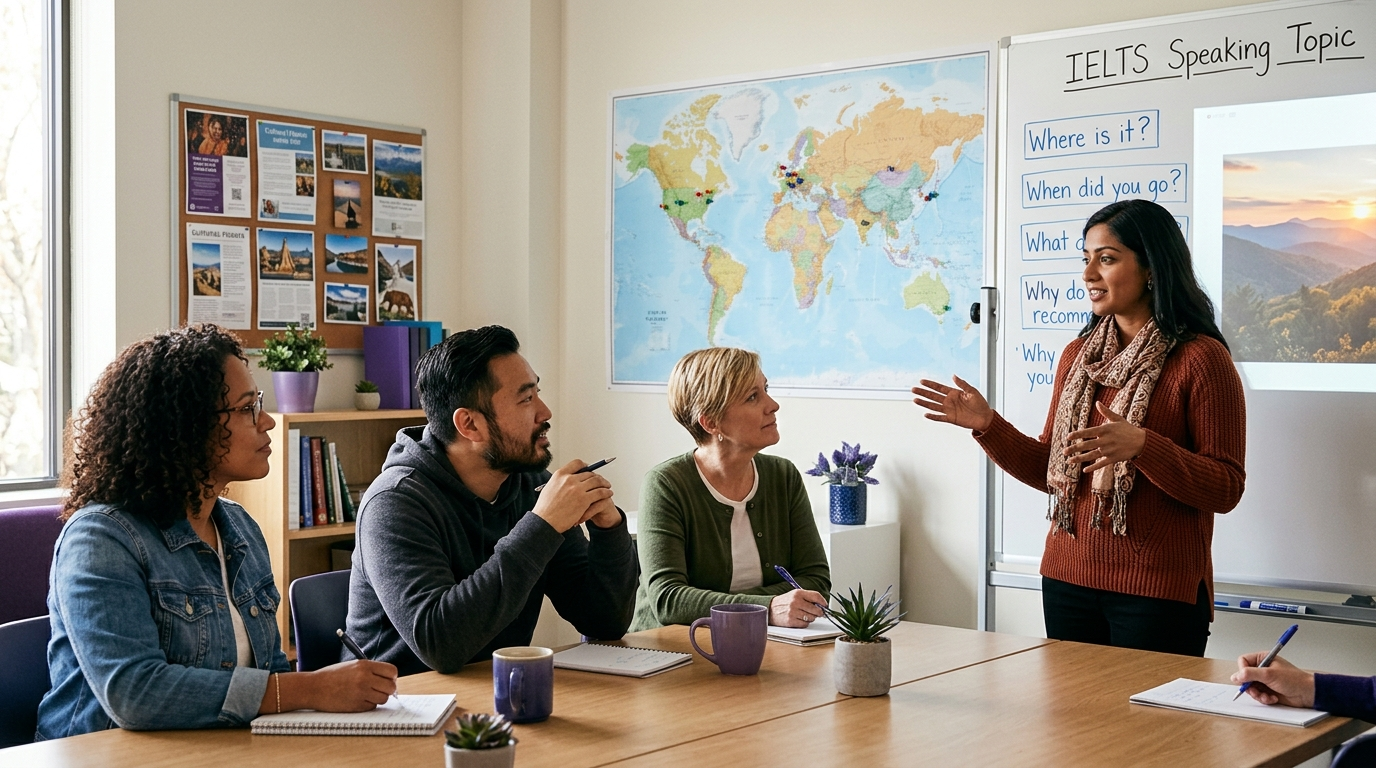
Карточка-подсказка части 2
Describe a place you have travelled to that you would like to recommend to others
Вы должны сказать:
- Что это такое
- Где это
- Что вы там видели и делали
- И объясните, почему вы хотите порекомендовать его другим.
У вас будет одна-две минуты, чтобы поговорить на эту тему.
Читать полную расшифровку
I'd like to recommend the Lake District, a national park in north‑west England, famous for its lakes and craggy fells. It’s a place where countryside feels dramatic yet welcoming; writers like Wordsworth drew inspiration from the scenery and you can still sense that literary atmosphere. It’s situated in Cumbria, roughly two hours by train from Manchester and easily reached by car, which makes it practical for a long weekend. For instance, I took a train to Oxenholme and then a short bus ride into Ambleside. While I was there I did a mix of things: walked along the shores of Windermere, took a small boat trip, and climbed to the summit of Helvellyn via Striding Edge. I also visited cosy tea rooms in Grasmere and went to a little museum about local history. In spring the hills are full of wildflowers and you can often spot red squirrels and herons, which made my morning walks feel special. There are also farmers’ markets and independent shops where you can buy local cheese and crafts. I’d recommend it because it offers something for everyone — from gentle lakeside strolls to challenging hikes — and the scenery feels rejuvenating. In addition, the local food and friendly accommodation make it easy to relax after a day outdoors, so it’s great whether you’re travelling with family, friends or alone.
Статус подготовки: Прогнозируемый тематический цикл. Этот независимый практический ресурс не является официальным документом IELTS, и вопросы в вашем тесте могут быть разными. Как помечаются темы.
Вопросы для обсуждения части 3
Двигайтесь по одному вопросу за раз: слушайте, отвечайте, сравнивайте и повторяйте. Полный текст вопроса остается в HTML-коде страницы для обеспечения доступности и поиска.
- 01Where do people in your country often go for holidays?
- 02What is the ideal length for a holiday?
- 03How do people usually plan holidays?
- 04Is it important to plan a holiday ahead?
- 05Why do many countries try to attract people to visit?
- 06How do people decide when to travel?
Прежде чем говорить, просмотрите тему
Используйте изображения в качестве подсказок идей. Опишите то, что вы заметили, свяжите это со своим опытом, а затем ответьте на реальный вопрос.


Типовые ответы, услышанные параллельно
Начните с более простого ответа, переключитесь на Band, чтобы услышать, как можно разработать ту же задачу, а затем запишите личный ответ. Это обучающие примеры, а не официальные ответы или гарантии баллов.
Часть 2. Типовой ответ
Part 2 cue-card response
I want to recommend the Lake District in north‑west England. It’s a national park with lots of lakes, hills and small villages. I went there last year and did walks along Windermere, took a short boat trip and visited Grasmere. I also ate in a small pub and enjoyed the views from a hill top. I would recommend it because it’s easy to get to from many cities, it has different things for different people and it’s a good place to relax. Even if you don’t like tough walking, there are gentle paths and cafés to sit in.
I'd like to recommend the Lake District, a national park in north‑west England, famous for its lakes and craggy fells. It’s a place where countryside feels dramatic yet welcoming; writers like Wordsworth drew inspiration from the scenery and you can still sense that literary atmosphere. It’s situated in Cumbria, roughly two hours by train from Manchester and easily reached by car, which makes it practical for a long weekend. For instance, I took a train to Oxenholme and then a short bus ride into Ambleside. While I was there I did a mix of things: walked along the shores of Windermere, took a small boat trip, and climbed to the summit of Helvellyn via Striding Edge. I also visited cosy tea rooms in Grasmere and went to a little museum about local history. In spring the hills are full of wildflowers and you can often spot red squirrels and herons, which made my morning walks feel special. There are also farmers’ markets and independent shops where you can buy local cheese and crafts. I’d recommend it because it offers something for everyone — from gentle lakeside strolls to challenging hikes — and the scenery feels rejuvenating. In addition, the local food and friendly accommodation make it easy to relax after a day outdoors, so it’s great whether you’re travelling with family, friends or alone.
Часть 3. Типовые ответы
Where do people in your country often go for holidays?
People often go to the coast, like beaches, or to the countryside for a week or two. Many families visit seaside towns in the summer, and quite a few go abroad to Europe for cheaper flights. Some people prefer city breaks to visit museums and shops. Visiting relatives is also common during big holidays.
On the whole, people choose a mix of beach resorts, countryside escapes and European city breaks. For example, families often head to seaside towns in summer for sun and shallow waters, while young couples might pick a short city break to see galleries or theatre. There’s also a growing trend for staycations, where people explore national parks or coastal paths rather than flying, often because it’s more convenient or cheaper. Work patterns and school terms still shape most choices, though.
What is the ideal length for a holiday?
I think one to two weeks is ideal for a holiday. A few days is OK for a short trip, but if you go far it’s better to stay longer so you don’t waste time travelling. Two weeks lets you relax properly and see the main things.
It really depends on the type of trip, but generally one to two weeks is ideal. A long weekend suits city breaks or short visits, whereas two weeks works well for overseas travel because you can recover from jet lag and explore at a relaxed pace. For adventurous trips or multi‑stop tours, I’d say two weeks or more so you’re not rushing from place to place.
How do people usually plan holidays?
People usually plan holidays online now. They search for flights and hotels and read reviews. Some still use travel agents to book a whole package. Friends and family often give suggestions too.
Most people start planning online, comparing flights, accommodation and traveller reviews on several websites, and often use apps to track prices. Some prefer package holidays from agents for convenience, especially when travelling with children or to less familiar destinations. Others piece together their own itineraries, booking flexible tickets and using maps and blogs for local tips. Social media and personal recommendations also shape choices these days.
Is it important to plan a holiday ahead?
Yes, it’s important to plan ahead for things like flights, visas and accommodation. If you plan early you can get better prices. But some people like to be spontaneous and book at the last minute.
Planning ahead is generally important because it secures better prices, availability and necessary documents like visas or permits. It also reduces stress and helps you make an efficient itinerary, especially in peak season. That said, leaving room for spontaneity can be valuable too; a mix of advance planning and flexibility often works best.
Why do many countries try to attract people to visit?
Countries try to attract visitors because tourism brings money and jobs. It helps local businesses and sometimes pays for services. Also, tourists can learn about the country’s culture.
Many countries actively promote tourism because it brings significant economic benefits, creates jobs and supports local businesses such as hotels, restaurants and transport. Beyond economics, tourism is used as a form of soft power to raise a country’s profile and share cultural heritage. However, governments must also manage environmental impact and overcrowding, so promotion is often balanced with sustainability plans.
How do people decide when to travel?
People decide when to travel by looking at school holidays, work leave and the weather. Price is important too — some travel in low season to save money. Special events or festivals also determine timing.
Decisions about timing are shaped by practical constraints like school terms, work leave and favourable weather, but people also look for value by travelling in shoulder or off‑peak seasons. Events, festivals or local celebrations can strongly influence dates, as can personal commitments and even seasonal wildlife or crop cycles if someone is going for nature or food experiences. Many people also watch for deals and book when fares drop.
Статус практики: Архивированная тема из предыдущего цикла банка вопросов. Он по-прежнему полезен для практики навыков, но не представлен в качестве текущего или гарантированного вопроса экзамена. Как помечаются темы.
Как ответить Опишите место, куда вы побывали и которое вы хотели бы порекомендовать другим Вопросы IELTS Speaking.
Для карточки-подсказки «Опишите место, куда вы побывали и которое вы хотели бы порекомендовать другим», используйте минуту подготовки, чтобы построить маршрут беседы. Выберите четкую тему, добавьте два конкретных момента или детали и закончите рассказом, почему это важно. Затем используйте связанные вопросы Части 3, чтобы попрактиковаться в более широком объяснении и сравнении.
Подсказки на карточке:
- Что это такое
- Где это
- Что вы там видели и делали
- И объясните, почему вы хотите порекомендовать его другим.
- Открытие: идентифицируйте человека, место, предмет или событие.
- Развитие: опишите две детали или моменты в логическом порядке.
- Расширение: объясните причину, результат, сравнение или проблему.
- Для размышления: закончите рассказом о том, почему тема запомнилась или важна.
Повопросный подход
| Практический вопрос | Полезный ответный ход |
|---|---|
| Where do people in your country often go for holidays? | Дайте прямой ответ, одну причину и короткий пример, не заучивая сценарий. |
| What is the ideal length for a holiday? | Сначала назовите вещь, затем опишите конкретную особенность или пример. |
| How do people usually plan holidays? | Опишите процесс или разницу в четком порядке и добавьте результат. |
| Is it important to plan a holiday ahead? | Ответьте прямо, объясните причину и добавьте одну естественную личную деталь. |
Словарный фокус
Полезные формулировки, уже продемонстрированные в примерных ответах, включают: staycation, city break, seaside resort, long weekend, jet lag, at a relaxed pace, itinerary, flexible tickets. Изучите каждое значение и естественное сочетание слов, а затем используйте этот элемент в новом ответе вместо того, чтобы копировать полный сценарий.
Распространенные ошибки, которых следует избегать
- Дает заученный ответ, который лишь частично отвечает на вопрос.
- Добавление сложной лексики без проверки значения или словосочетания.
- Перезапуск после каждой ошибки вместо кратковременного исправления и продолжения.
- Чтение ответа модели перед записью своей первой попытки.
Опишите место, куда вы побывали, и которое вы хотели бы порекомендовать другим. Часто задаваемые вопросы.
Как мне использовать минуту подготовки карточки-подсказки «Опишите место, куда вы побывали и которое вы хотели бы порекомендовать другим?»
Напишите ключевые слова для начала, двух-трех деталей и финального размышления. Не пытайтесь писать полные предложения.
Должен ли я покрывать каждый пункт подсказки?
Подсказки помогут вам организовать беседу. Рассказывать о них полезно, но последовательный ответ в течение одной-двух минут важнее, чем механическая отметка каждой строки.
Как вопросы Части 3 связаны с Частью 2?
Они развивают одну и ту же широкую тему посредством причин, сравнений, социальных последствий или будущих возможностей, поэтому ответы обычно требуют большего объяснения, чем Часть 1.
