
IELTS Berbicara Bagian 2 & 3: Describe a place you have travelled to that you would like to recommend to others
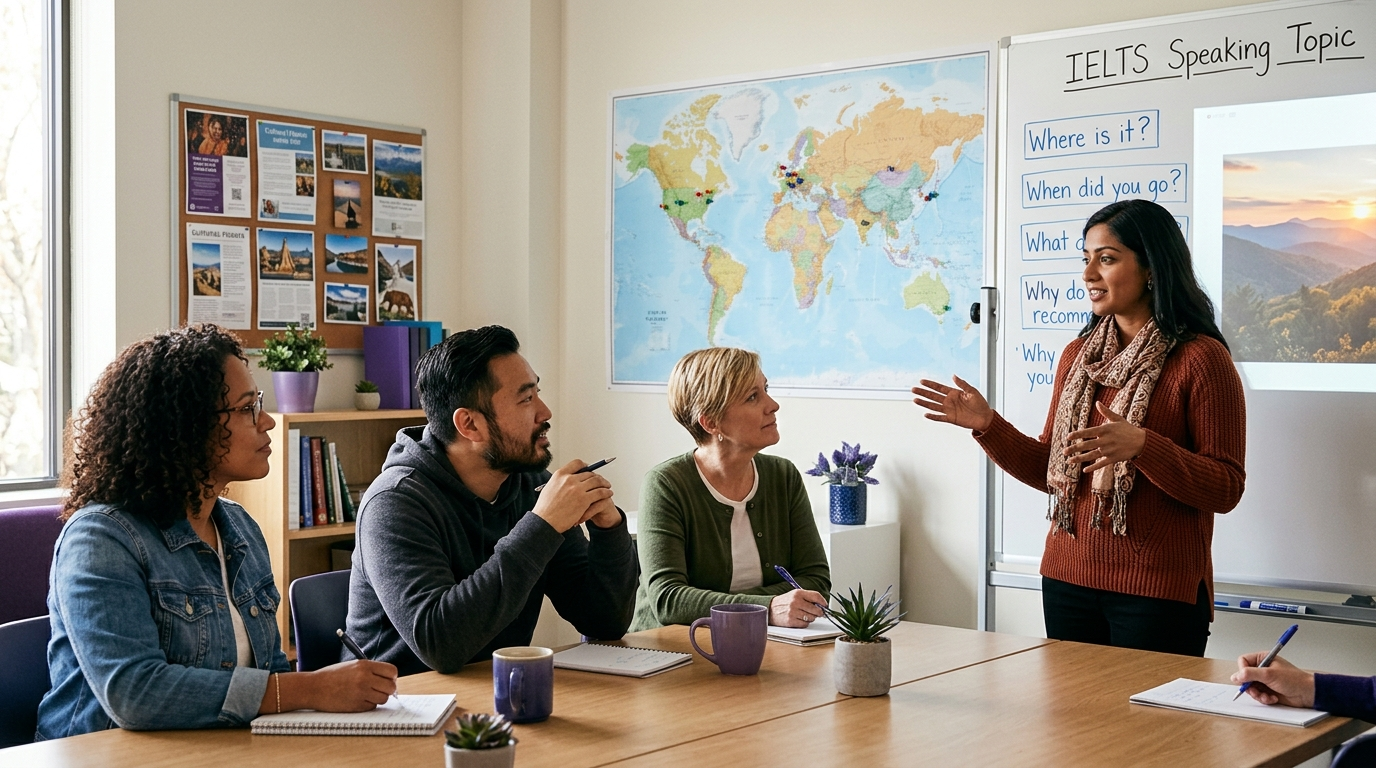
Bagian 2 kartu isyarat
Describe a place you have travelled to that you would like to recommend to others
Anda harus mengatakan:
- Apa itu
- Dimana itu
- Apa yang Anda lihat dan lakukan di sana
- Dan jelaskan mengapa Anda ingin merekomendasikannya kepada orang lain
Anda memiliki waktu satu hingga dua menit untuk membicarakan topik ini.
Baca transkrip lengkapnya
I'd like to recommend the Lake District, a national park in north‑west England, famous for its lakes and craggy fells. It’s a place where countryside feels dramatic yet welcoming; writers like Wordsworth drew inspiration from the scenery and you can still sense that literary atmosphere. It’s situated in Cumbria, roughly two hours by train from Manchester and easily reached by car, which makes it practical for a long weekend. For instance, I took a train to Oxenholme and then a short bus ride into Ambleside. While I was there I did a mix of things: walked along the shores of Windermere, took a small boat trip, and climbed to the summit of Helvellyn via Striding Edge. I also visited cosy tea rooms in Grasmere and went to a little museum about local history. In spring the hills are full of wildflowers and you can often spot red squirrels and herons, which made my morning walks feel special. There are also farmers’ markets and independent shops where you can buy local cheese and crafts. I’d recommend it because it offers something for everyone — from gentle lakeside strolls to challenging hikes — and the scenery feels rejuvenating. In addition, the local food and friendly accommodation make it easy to relax after a day outdoors, so it’s great whether you’re travelling with family, friends or alone.
Status persiapan: Siklus topik yang diprediksi. Sumber latihan mandiri ini bukan makalah IELTS resmi, dan soal-soal dalam tes Anda bisa berbeda. Bagaimana topik diberi label.
Bagian 3 pertanyaan diskusi
Pindahkan pertanyaan satu per satu: dengarkan, jawab, bandingkan, dan coba lagi. Teks pertanyaan lengkap tetap ada di halaman HTML untuk aksesibilitas dan pencarian.
- 01Where do people in your country often go for holidays?
- 02What is the ideal length for a holiday?
- 03How do people usually plan holidays?
- 04Is it important to plan a holiday ahead?
- 05Why do many countries try to attract people to visit?
- 06How do people decide when to travel?
Lihat topiknya sebelum Anda berbicara
Gunakan gambar sebagai petunjuk ide. Jelaskan apa yang Anda perhatikan, hubungkan dengan pengalaman Anda, lalu jawab pertanyaan sebenarnya.


Jawaban model, terdengar berdampingan
Mulailah dengan jawaban yang lebih sederhana, alihkan Band untuk mendengarkan bagaimana tugas yang sama dapat dikembangkan, lalu catat tanggapan pribadi. Ini adalah contoh pengajaran, bukan jawaban resmi atau jaminan skor.
Bagian 2 — Jawaban Model
Part 2 cue-card response
I want to recommend the Lake District in north‑west England. It’s a national park with lots of lakes, hills and small villages. I went there last year and did walks along Windermere, took a short boat trip and visited Grasmere. I also ate in a small pub and enjoyed the views from a hill top. I would recommend it because it’s easy to get to from many cities, it has different things for different people and it’s a good place to relax. Even if you don’t like tough walking, there are gentle paths and cafés to sit in.
I'd like to recommend the Lake District, a national park in north‑west England, famous for its lakes and craggy fells. It’s a place where countryside feels dramatic yet welcoming; writers like Wordsworth drew inspiration from the scenery and you can still sense that literary atmosphere. It’s situated in Cumbria, roughly two hours by train from Manchester and easily reached by car, which makes it practical for a long weekend. For instance, I took a train to Oxenholme and then a short bus ride into Ambleside. While I was there I did a mix of things: walked along the shores of Windermere, took a small boat trip, and climbed to the summit of Helvellyn via Striding Edge. I also visited cosy tea rooms in Grasmere and went to a little museum about local history. In spring the hills are full of wildflowers and you can often spot red squirrels and herons, which made my morning walks feel special. There are also farmers’ markets and independent shops where you can buy local cheese and crafts. I’d recommend it because it offers something for everyone — from gentle lakeside strolls to challenging hikes — and the scenery feels rejuvenating. In addition, the local food and friendly accommodation make it easy to relax after a day outdoors, so it’s great whether you’re travelling with family, friends or alone.
Bagian 3 - Jawaban Model
Where do people in your country often go for holidays?
People often go to the coast, like beaches, or to the countryside for a week or two. Many families visit seaside towns in the summer, and quite a few go abroad to Europe for cheaper flights. Some people prefer city breaks to visit museums and shops. Visiting relatives is also common during big holidays.
On the whole, people choose a mix of beach resorts, countryside escapes and European city breaks. For example, families often head to seaside towns in summer for sun and shallow waters, while young couples might pick a short city break to see galleries or theatre. There’s also a growing trend for staycations, where people explore national parks or coastal paths rather than flying, often because it’s more convenient or cheaper. Work patterns and school terms still shape most choices, though.
What is the ideal length for a holiday?
I think one to two weeks is ideal for a holiday. A few days is OK for a short trip, but if you go far it’s better to stay longer so you don’t waste time travelling. Two weeks lets you relax properly and see the main things.
It really depends on the type of trip, but generally one to two weeks is ideal. A long weekend suits city breaks or short visits, whereas two weeks works well for overseas travel because you can recover from jet lag and explore at a relaxed pace. For adventurous trips or multi‑stop tours, I’d say two weeks or more so you’re not rushing from place to place.
How do people usually plan holidays?
People usually plan holidays online now. They search for flights and hotels and read reviews. Some still use travel agents to book a whole package. Friends and family often give suggestions too.
Most people start planning online, comparing flights, accommodation and traveller reviews on several websites, and often use apps to track prices. Some prefer package holidays from agents for convenience, especially when travelling with children or to less familiar destinations. Others piece together their own itineraries, booking flexible tickets and using maps and blogs for local tips. Social media and personal recommendations also shape choices these days.
Is it important to plan a holiday ahead?
Yes, it’s important to plan ahead for things like flights, visas and accommodation. If you plan early you can get better prices. But some people like to be spontaneous and book at the last minute.
Planning ahead is generally important because it secures better prices, availability and necessary documents like visas or permits. It also reduces stress and helps you make an efficient itinerary, especially in peak season. That said, leaving room for spontaneity can be valuable too; a mix of advance planning and flexibility often works best.
Why do many countries try to attract people to visit?
Countries try to attract visitors because tourism brings money and jobs. It helps local businesses and sometimes pays for services. Also, tourists can learn about the country’s culture.
Many countries actively promote tourism because it brings significant economic benefits, creates jobs and supports local businesses such as hotels, restaurants and transport. Beyond economics, tourism is used as a form of soft power to raise a country’s profile and share cultural heritage. However, governments must also manage environmental impact and overcrowding, so promotion is often balanced with sustainability plans.
How do people decide when to travel?
People decide when to travel by looking at school holidays, work leave and the weather. Price is important too — some travel in low season to save money. Special events or festivals also determine timing.
Decisions about timing are shaped by practical constraints like school terms, work leave and favourable weather, but people also look for value by travelling in shoulder or off‑peak seasons. Events, festivals or local celebrations can strongly influence dates, as can personal commitments and even seasonal wildlife or crop cycles if someone is going for nature or food experiences. Many people also watch for deals and book when fares drop.
Status latihan: Arsip topik dari siklus bank soal sebelumnya. Ini tetap berguna untuk latihan keterampilan tetapi tidak disajikan sebagai soal ujian saat ini atau yang dijamin. Bagaimana topik diberi label.
Bagaimana menjawab Jelaskan tempat yang pernah Anda kunjungi dan ingin Anda rekomendasikan kepada orang lain untuk pertanyaan Berbicara IELTS
Untuk kartu petunjuk Jelaskan tempat yang pernah Anda kunjungi yang ingin Anda rekomendasikan kepada orang lain, gunakan menit persiapan untuk membuat rute melalui pembicaraan tersebut. Pilih subjek yang jelas, tambahkan dua momen atau detail spesifik, dan akhiri dengan alasan mengapa hal itu penting. Kemudian gunakan pertanyaan Bagian 3 yang tertaut untuk melatih penjelasan dan perbandingan yang lebih luas.
Perintah kartu isyarat:
- Apa itu
- Dimana itu
- Apa yang Anda lihat dan lakukan di sana
- Dan jelaskan mengapa Anda ingin merekomendasikannya kepada orang lain
- Pembukaan: mengidentifikasi orang, tempat, benda atau peristiwa.
- Perkembangan: mendeskripsikan dua detail atau momen dalam urutan yang logis.
- Ekstensi: menjelaskan alasan, hasil, perbandingan atau masalah.
- Refleksi: akhiri dengan alasan mengapa subjek tersebut berkesan atau penting.
Pendekatan pertanyaan demi pertanyaan
| Soal latihan | Langkah jawaban yang berguna |
|---|---|
| Where do people in your country often go for holidays? | Berikan jawaban langsung, satu alasan dan contoh singkat tanpa harus hafal naskahnya. |
| What is the ideal length for a holiday? | Beri nama bendanya terlebih dahulu, lalu jelaskan fitur atau contoh spesifiknya. |
| How do people usually plan holidays? | Jelaskan proses atau perbedaannya dalam urutan yang jelas dan tambahkan hasilnya. |
| Is it important to plan a holiday ahead? | Jawab secara langsung, berikan alasan dan tambahkan satu detail pribadi yang alami. |
Fokus kosakata
Bahasa yang berguna sudah ditunjukkan dalam model jawaban yang disertakan staycation, city break, seaside resort, long weekend, jet lag, at a relaxed pace, itinerary, flexible tickets. Pelajari setiap arti dan hubungan kata yang alami, lalu gunakan item tersebut dalam jawaban baru alih-alih menyalin naskah lengkap.
Kesalahan umum yang harus dihindari
- Memberikan respon hafalan yang hanya menjawab sebagian pertanyaan.
- Menambah kosakata sulit tanpa memeriksa makna atau kolokasi.
- Memulai ulang setelah setiap kesalahan alih-alih mengoreksi sebentar dan melanjutkan.
- Membaca jawaban model sebelum merekam upaya pertama Anda.
Jelaskan tempat yang pernah Anda kunjungi dan ingin Anda rekomendasikan kepada orang lain. Latihan FAQ
Bagaimana saya harus menggunakan menit persiapan Jelaskan tempat yang pernah Anda kunjungi yang ingin Anda rekomendasikan kepada orang lain?
Tulis kata kunci untuk pembukaan, dua atau tiga detail, dan refleksi akhir. Jangan mencoba menulis kalimat lengkap.
Apakah saya harus menutupi setiap poin di kartu petunjuk?
Petunjuknya membantu Anda mengatur pembicaraan. Meliputinya memang berguna, tetapi respons yang koheren selama satu hingga dua menit lebih penting daripada mencentang setiap baris secara mekanis.
Bagaimana pertanyaan Bagian 3 terhubung dengan Bagian 2?
Mereka mengembangkan tema luas yang sama melalui alasan, perbandingan, dampak sosial atau kemungkinan masa depan, sehingga jawaban biasanya memerlukan penjelasan lebih banyak daripada Bagian 1.
