
IELTS Berbicara Bagian 2 & 3: Describe a quiet place you like to go

Bagian 2 kartu isyarat
Describe a quiet place you like to go
Anda harus mengatakan:
- Dimana itu
- Bagaimana Anda mengetahuinya
- Seberapa sering Anda pergi ke sana
- Apa yang kamu lakukan di sana
- Dan jelaskan bagaimana perasaan Anda tentang tempat itu
Anda memiliki waktu satu hingga dua menit untuk membicarakan topik ini.
Baca transkrip lengkapnya
My favourite quiet place is a tiny riverside courtyard tucked behind the town library, between two low brick buildings, where you mainly hear water and birds rather than traffic. I first found it when I was cramming for an exam and a librarian friend nudged me through a narrow gate to get some fresh air; that first visit felt like discovering a secret. I try to go there at least once a week, typically on Sunday mornings when it's at its calmest, and occasionally I pop in for twenty or thirty minutes during lunch breaks. When I'm there I sit on a worn wooden bench with a thermos of tea, read or jot down ideas in a notebook, watch swans, and sometimes take photos of the light on the water to use later in a painting. The place makes me feel grounded and less stressed because the flowing water quietens my mind and gives me perspective; I always come away calmer and more focused, ready to face a busy week. I usually stay for about an hour, long enough to reset my mood but short enough to keep my schedule.
Status persiapan: Siklus topik yang diprediksi. Sumber latihan mandiri ini bukan makalah IELTS resmi, dan soal-soal dalam tes Anda bisa berbeda. Bagaimana topik diberi label.
Bagian 3 pertanyaan diskusi
Pindahkan pertanyaan satu per satu: dengarkan, jawab, bandingkan, dan coba lagi. Teks pertanyaan lengkap tetap ada di halaman HTML untuk aksesibilitas dan pencarian.
- 01Is it easy to find quiet places in your country? Why?
- 02How do people spend their leisure time in your country?
- 03How does technology affect the way people spend their leisure time?
- 04Do you think only old people have time for leisure?
- 05Why do old people prefer to live in quiet places?
- 06Why are there more noises made at home now than in the past?
Lihat topiknya sebelum Anda berbicara
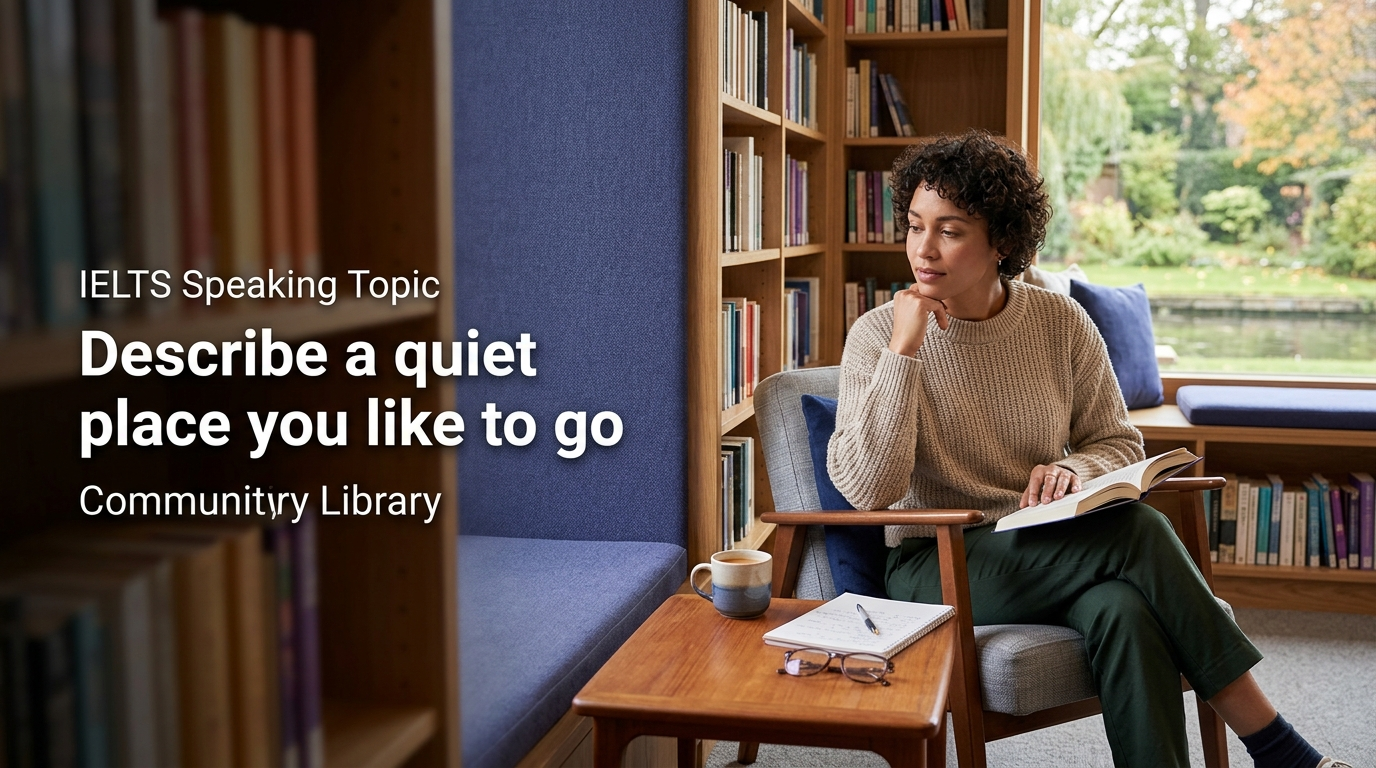
Gunakan gambar sebagai petunjuk ide. Jelaskan apa yang Anda perhatikan, hubungkan dengan pengalaman Anda, lalu jawab pertanyaan sebenarnya.
Jawaban model, terdengar berdampingan
Mulailah dengan jawaban yang lebih sederhana, alihkan Band untuk mendengarkan bagaimana tugas yang sama dapat dikembangkan, lalu catat tanggapan pribadi. Ini adalah contoh pengajaran, bukan jawaban resmi atau jaminan skor.
Bagian 2 — Jawaban Model
Part 2 cue-card response
There is a quiet park near my flat that I like to go to. It's a small park with a pond, some trees and a few benches. I first noticed it when I walked by on my way to work. I go there maybe once or twice a week, usually in the evening after work. I sit on a bench and sometimes read a book or just look at the water. Sometimes I listen to music on my phone. The park is calm and there are not many people. It helps me relax and forget about problems for a little while, and after ten or twenty minutes I usually feel better.
My favourite quiet place is a tiny riverside courtyard tucked behind the town library, between two low brick buildings, where you mainly hear water and birds rather than traffic. I first found it when I was cramming for an exam and a librarian friend nudged me through a narrow gate to get some fresh air; that first visit felt like discovering a secret. I try to go there at least once a week, typically on Sunday mornings when it's at its calmest, and occasionally I pop in for twenty or thirty minutes during lunch breaks. When I'm there I sit on a worn wooden bench with a thermos of tea, read or jot down ideas in a notebook, watch swans, and sometimes take photos of the light on the water to use later in a painting. The place makes me feel grounded and less stressed because the flowing water quietens my mind and gives me perspective; I always come away calmer and more focused, ready to face a busy week. I usually stay for about an hour, long enough to reset my mood but short enough to keep my schedule.
Bagian 3 - Jawaban Model
Is it easy to find quiet places in your country? Why?
It depends. In the countryside it's easy to find quiet places like fields, parks or lakes. In big cities it's harder because of traffic and crowds. Still, libraries, small parks and some cafes can be quiet if you go at the right time. People who look for silence can usually find somewhere, but you may need to travel a bit.
It really varies. In rural areas and smaller towns quiet spots are plentiful — woodland paths, canals and village commons — but in major cities it's more of a hunt because of traffic, building work and nightlife. That said, councils often protect green belts and some libraries or community gardens are designated as quiet zones, so with a bit of planning you can still find peaceful corners even in urban centres. Ultimately, accessibility and planning make a big difference.
How do people spend their leisure time in your country?
People spend their free time in many ways. Many watch TV or use their phones, some play sports, and others meet friends or visit parks and cafés. Families may go to shopping centres or cinemas at the weekend. Older people often walk or garden. It depends on age and money, but most people have some kind of hobby.
There's quite a variety. Many people now prefer experience-based leisure: going to cafés, weekend markets, live music or exercise classes. Streaming services and gaming are hugely popular for staying in, while others join clubs for hobbies like cycling or photography. Volunteering and short courses have also become common, as people look for meaningful ways to spend spare time rather than just passively consuming content. Age, income and work patterns still shape what people choose.
How does technology affect the way people spend their leisure time?
Technology has changed leisure a lot. People watch films and shows online, play video games and use social media. It's easy to be entertained at home so some people go out less. Technology also helps people find events or meetups, but mostly it means more screen time and less outdoor activity for many.
Technology has reshaped leisure profoundly. On the one hand, on-demand streaming, social media and gaming mean people can tailor entertainment to their tastes and fit it around busy lives; algorithms suggest new content and make discovery effortless. On the other hand, it can blur the line between work and free time, with smartphones encouraging constant checking and reducing uninterrupted relaxation. That said, technology also enables new hobbies — online courses, virtual meetups, photo communities — so it can both fragment and enrich leisure depending on how it's used.
Do you think only old people have time for leisure?
No, I don't think only old people have time for leisure. People of all ages have free time, although younger adults might be busier with work or children. Retired people often have more free time, but many younger people also make time for hobbies or weekends away. It depends on their situation.
Definitely not. While older people often gain more leisure time after retirement, the picture is more complex: many younger adults now enjoy flexible working hours or take sabbaticals, so they can also carve out leisure time. Conversely, some older people still work part-time or care for family and may be time-poor. Cultural expectations, childcare and job demands all influence who has free time, so it's not simply about age.
Why do old people prefer to live in quiet places?
Older people like quiet places because they are calmer and safer. They may have health issues and need rest, and they prefer routine. Quiet places make it easier to sleep and avoid stress. Also there are fewer crowds, which many older people find nicer.
Older people often choose quiet places for several reasons: better sleep, lower stress levels and fewer hazards like busy roads. Quiet communities can also support a slower pace of life and closer social ties, for example local clubs or regular neighbours who look out for one another. Financial considerations and the desire for green space or single-storey housing also matter, so the preference is a mix of health, social and practical factors rather than just taste.
Why are there more noises made at home now than in the past?
There is more noise at home now because we have more electrical devices like TVs, washing machines and entertainment systems. People also have more deliveries, DIY or renovation work, and children with gadgets make noise. Houses may be closer together too, so you hear neighbours more.
Several shifts explain why homes seem noisier. Modern life brings more appliances, 24-hour deliveries, and gadgets in every room, while open-plan layouts reduce sound insulation so noise travels more easily. Urban densification and more people working from home can add to daytime noise, and the culture of immediate availability means neighbours and contractors are active at odd hours. In short, changes in technology, housing design and lifestyles have all increased domestic noise levels.
Status latihan: Arsip topik dari siklus bank soal sebelumnya. Ini tetap berguna untuk latihan keterampilan tetapi tidak disajikan sebagai soal ujian saat ini atau yang dijamin. Bagaimana topik diberi label.
Bagaimana menjawabnya Jelaskan tempat tenang yang Anda sukai untuk pergi Pertanyaan Berbicara IELTS
Untuk kartu isyarat Jelaskan tempat tenang yang ingin Anda datangi, gunakan menit persiapan untuk membuat rute melalui pembicaraan. Pilih subjek yang jelas, tambahkan dua momen atau detail spesifik, dan akhiri dengan alasan mengapa hal itu penting. Kemudian gunakan pertanyaan Bagian 3 yang tertaut untuk melatih penjelasan dan perbandingan yang lebih luas.
Perintah kartu isyarat:
- Dimana itu
- Bagaimana Anda mengetahuinya
- Seberapa sering Anda pergi ke sana
- Apa yang kamu lakukan di sana
- Dan jelaskan bagaimana perasaan Anda tentang tempat itu
- Pembukaan: mengidentifikasi orang, tempat, benda atau peristiwa.
- Perkembangan: mendeskripsikan dua detail atau momen dalam urutan yang logis.
- Ekstensi: menjelaskan alasan, hasil, perbandingan atau masalah.
- Refleksi: akhiri dengan alasan mengapa subjek tersebut berkesan atau penting.
Pendekatan pertanyaan demi pertanyaan
| Soal latihan | Langkah jawaban yang berguna |
|---|---|
| Is it easy to find quiet places in your country? Why? | Jawab secara langsung, berikan alasan dan tambahkan satu detail pribadi yang alami. |
| How do people spend their leisure time in your country? | Jelaskan proses atau perbedaannya dalam urutan yang jelas dan tambahkan hasilnya. |
| How does technology affect the way people spend their leisure time? | Jelaskan proses atau perbedaannya dalam urutan yang jelas dan tambahkan hasilnya. |
| Do you think only old people have time for leisure? | Nyatakan kemungkinan pandangan, jelaskan alasannya dan tambahkan satu kondisi atau contoh. |
Fokus kosakata
Bahasa yang berguna sudah ditunjukkan dalam model jawaban yang disertakan green belt, designated quiet zone, with a bit of planning, experience-based, passively consuming, meaningful ways, on-demand, blur the line. Pelajari setiap arti dan hubungan kata yang alami, lalu gunakan item tersebut dalam jawaban baru alih-alih menyalin naskah lengkap.
Kesalahan umum yang harus dihindari
- Memberikan respon hafalan yang hanya menjawab sebagian pertanyaan.
- Menambah kosakata sulit tanpa memeriksa makna atau kolokasi.
- Memulai ulang setelah setiap kesalahan alih-alih mengoreksi sebentar dan melanjutkan.
- Membaca jawaban model sebelum merekam upaya pertama Anda.
Jelaskan tempat tenang yang ingin Anda kunjungi, latihan FAQ
Bagaimana cara menggunakan menit persiapan kartu isyarat Jelaskan tempat tenang yang Anda sukai?
Tulis kata kunci untuk pembukaan, dua atau tiga detail, dan refleksi akhir. Jangan mencoba menulis kalimat lengkap.
Apakah saya harus menutupi setiap poin di kartu petunjuk?
Petunjuknya membantu Anda mengatur pembicaraan. Meliputinya memang berguna, tetapi respons yang koheren selama satu hingga dua menit lebih penting daripada mencentang setiap baris secara mekanis.
Bagaimana pertanyaan Bagian 3 terhubung dengan Bagian 2?
Mereka mengembangkan tema luas yang sama melalui alasan, perbandingan, dampak sosial atau kemungkinan masa depan, sehingga jawaban biasanya memerlukan penjelasan lebih banyak daripada Bagian 1.
