
IELTS Speaking Parte 2 y 3: Describe a quiet place you like to go

Tarjeta de referencia de la parte 2
Describe a quiet place you like to go
Deberías decir:
- donde esta
- como lo supiste
- ¿Con qué frecuencia vas allí?
- ¿Qué haces allí?
- Y explica cómo te sientes acerca del lugar.
Tendrás uno o dos minutos para hablar sobre este tema.
Lea la transcripción completa
My favourite quiet place is a tiny riverside courtyard tucked behind the town library, between two low brick buildings, where you mainly hear water and birds rather than traffic. I first found it when I was cramming for an exam and a librarian friend nudged me through a narrow gate to get some fresh air; that first visit felt like discovering a secret. I try to go there at least once a week, typically on Sunday mornings when it's at its calmest, and occasionally I pop in for twenty or thirty minutes during lunch breaks. When I'm there I sit on a worn wooden bench with a thermos of tea, read or jot down ideas in a notebook, watch swans, and sometimes take photos of the light on the water to use later in a painting. The place makes me feel grounded and less stressed because the flowing water quietens my mind and gives me perspective; I always come away calmer and more focused, ready to face a busy week. I usually stay for about an hour, long enough to reset my mood but short enough to keep my schedule.
Estado de preparación: ciclo de tema previsto. Este recurso de práctica independiente no es un documento oficial del IELTS y las preguntas de su examen pueden ser diferentes. Cómo se etiquetan los temas.
Preguntas de discusión de la parte 3
Mueva una pregunta a la vez: escuche, responda, compare y vuelva a intentarlo. El texto completo de la pregunta permanece en la página HTML para accesibilidad y búsqueda.
- 01Is it easy to find quiet places in your country? Why?
- 02How do people spend their leisure time in your country?
- 03How does technology affect the way people spend their leisure time?
- 04Do you think only old people have time for leisure?
- 05Why do old people prefer to live in quiet places?
- 06Why are there more noises made at home now than in the past?
Vea el tema antes de hablar.
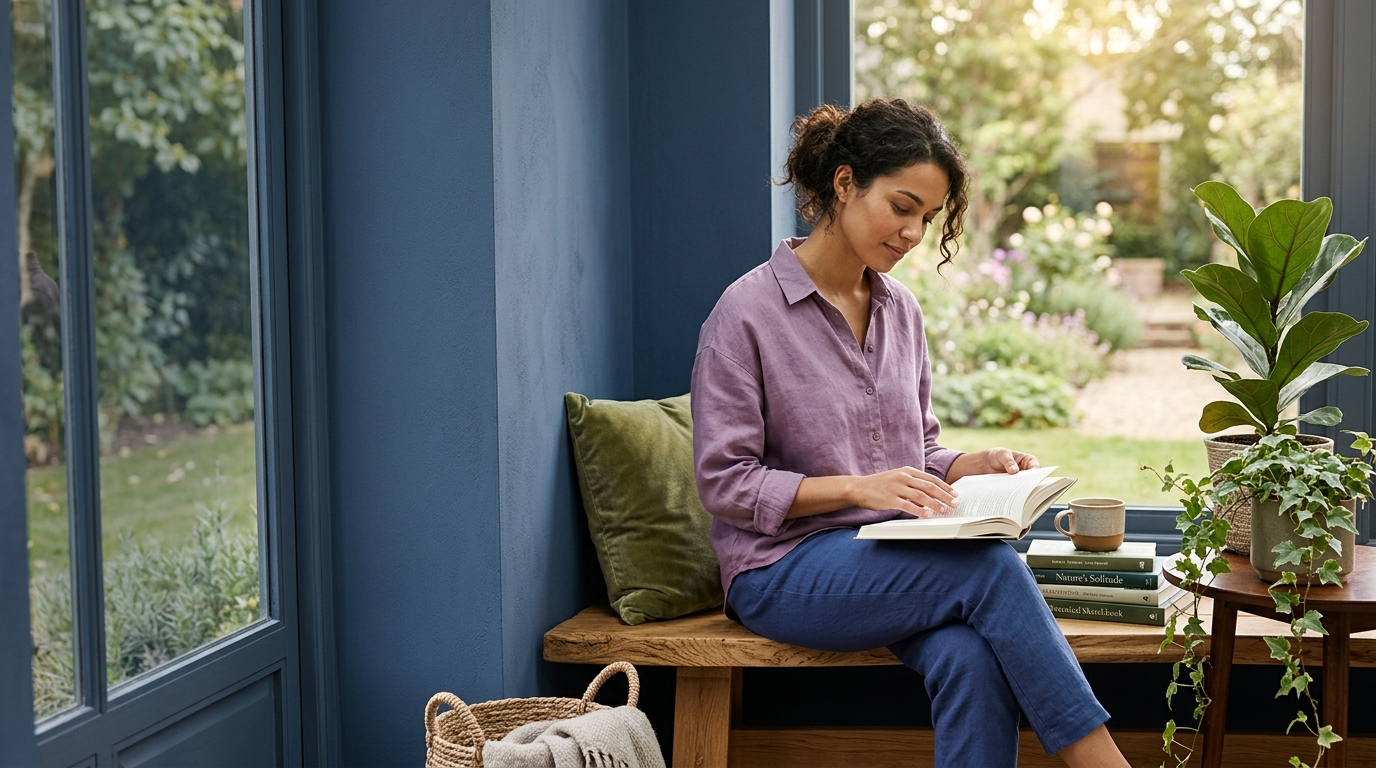
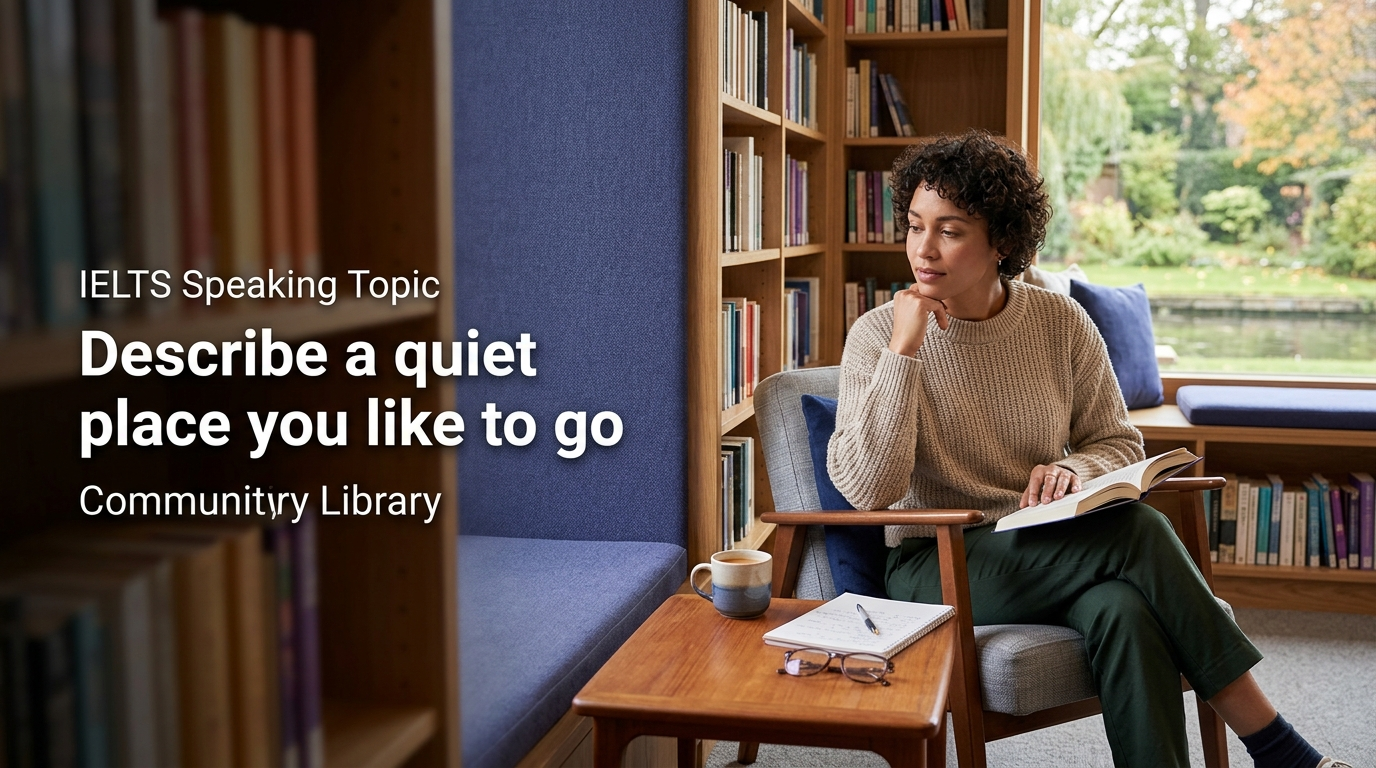
Utilice las imágenes como sugerencias de ideas. Describe lo que notas, conéctalo con tu experiencia y luego responde la pregunta real.
Respuestas modelo, escuchadas una al lado de la otra
Comience con la respuesta más simple, cambie Band para escuchar cómo se puede desarrollar la misma tarea y luego registre una respuesta personal. Estos son ejemplos de enseñanza, no respuestas oficiales ni garantías de puntuación.
Parte 2: Respuesta modelo
Part 2 cue-card response
There is a quiet park near my flat that I like to go to. It's a small park with a pond, some trees and a few benches. I first noticed it when I walked by on my way to work. I go there maybe once or twice a week, usually in the evening after work. I sit on a bench and sometimes read a book or just look at the water. Sometimes I listen to music on my phone. The park is calm and there are not many people. It helps me relax and forget about problems for a little while, and after ten or twenty minutes I usually feel better.
My favourite quiet place is a tiny riverside courtyard tucked behind the town library, between two low brick buildings, where you mainly hear water and birds rather than traffic. I first found it when I was cramming for an exam and a librarian friend nudged me through a narrow gate to get some fresh air; that first visit felt like discovering a secret. I try to go there at least once a week, typically on Sunday mornings when it's at its calmest, and occasionally I pop in for twenty or thirty minutes during lunch breaks. When I'm there I sit on a worn wooden bench with a thermos of tea, read or jot down ideas in a notebook, watch swans, and sometimes take photos of the light on the water to use later in a painting. The place makes me feel grounded and less stressed because the flowing water quietens my mind and gives me perspective; I always come away calmer and more focused, ready to face a busy week. I usually stay for about an hour, long enough to reset my mood but short enough to keep my schedule.
Parte 3: Respuestas modelo
Is it easy to find quiet places in your country? Why?
It depends. In the countryside it's easy to find quiet places like fields, parks or lakes. In big cities it's harder because of traffic and crowds. Still, libraries, small parks and some cafes can be quiet if you go at the right time. People who look for silence can usually find somewhere, but you may need to travel a bit.
It really varies. In rural areas and smaller towns quiet spots are plentiful — woodland paths, canals and village commons — but in major cities it's more of a hunt because of traffic, building work and nightlife. That said, councils often protect green belts and some libraries or community gardens are designated as quiet zones, so with a bit of planning you can still find peaceful corners even in urban centres. Ultimately, accessibility and planning make a big difference.
How do people spend their leisure time in your country?
People spend their free time in many ways. Many watch TV or use their phones, some play sports, and others meet friends or visit parks and cafés. Families may go to shopping centres or cinemas at the weekend. Older people often walk or garden. It depends on age and money, but most people have some kind of hobby.
There's quite a variety. Many people now prefer experience-based leisure: going to cafés, weekend markets, live music or exercise classes. Streaming services and gaming are hugely popular for staying in, while others join clubs for hobbies like cycling or photography. Volunteering and short courses have also become common, as people look for meaningful ways to spend spare time rather than just passively consuming content. Age, income and work patterns still shape what people choose.
How does technology affect the way people spend their leisure time?
Technology has changed leisure a lot. People watch films and shows online, play video games and use social media. It's easy to be entertained at home so some people go out less. Technology also helps people find events or meetups, but mostly it means more screen time and less outdoor activity for many.
Technology has reshaped leisure profoundly. On the one hand, on-demand streaming, social media and gaming mean people can tailor entertainment to their tastes and fit it around busy lives; algorithms suggest new content and make discovery effortless. On the other hand, it can blur the line between work and free time, with smartphones encouraging constant checking and reducing uninterrupted relaxation. That said, technology also enables new hobbies — online courses, virtual meetups, photo communities — so it can both fragment and enrich leisure depending on how it's used.
Do you think only old people have time for leisure?
No, I don't think only old people have time for leisure. People of all ages have free time, although younger adults might be busier with work or children. Retired people often have more free time, but many younger people also make time for hobbies or weekends away. It depends on their situation.
Definitely not. While older people often gain more leisure time after retirement, the picture is more complex: many younger adults now enjoy flexible working hours or take sabbaticals, so they can also carve out leisure time. Conversely, some older people still work part-time or care for family and may be time-poor. Cultural expectations, childcare and job demands all influence who has free time, so it's not simply about age.
Why do old people prefer to live in quiet places?
Older people like quiet places because they are calmer and safer. They may have health issues and need rest, and they prefer routine. Quiet places make it easier to sleep and avoid stress. Also there are fewer crowds, which many older people find nicer.
Older people often choose quiet places for several reasons: better sleep, lower stress levels and fewer hazards like busy roads. Quiet communities can also support a slower pace of life and closer social ties, for example local clubs or regular neighbours who look out for one another. Financial considerations and the desire for green space or single-storey housing also matter, so the preference is a mix of health, social and practical factors rather than just taste.
Why are there more noises made at home now than in the past?
There is more noise at home now because we have more electrical devices like TVs, washing machines and entertainment systems. People also have more deliveries, DIY or renovation work, and children with gadgets make noise. Houses may be closer together too, so you hear neighbours more.
Several shifts explain why homes seem noisier. Modern life brings more appliances, 24-hour deliveries, and gadgets in every room, while open-plan layouts reduce sound insulation so noise travels more easily. Urban densification and more people working from home can add to daytime noise, and the culture of immediate availability means neighbours and contractors are active at odd hours. In short, changes in technology, housing design and lifestyles have all increased domestic noise levels.
Estado de la práctica: tema archivado de un ciclo anterior del banco de preguntas. Sigue siendo útil para la práctica de habilidades, pero no se presenta como una pregunta de examen actual o garantizada. Cómo se etiquetan los temas.
Cómo responder Describe un lugar tranquilo al que te guste ir Preguntas orales del IELTS
Para la tarjeta de referencia Describe un lugar tranquilo al que te guste ir, utiliza el minuto de preparación para construir una ruta a lo largo de la charla. Elija un tema claro, agregue dos momentos o detalles específicos y termine explicando por qué es importante. Luego utilice las preguntas vinculadas de la Parte 3 para practicar explicaciones y comparaciones más amplias.
Indicaciones de la tarjeta de referencia:
- donde esta
- como lo supiste
- ¿Con qué frecuencia vas allí?
- ¿Qué haces allí?
- Y explica cómo te sientes acerca del lugar.
- Apertura: identificar a la persona, lugar, objeto o evento.
- Desarrollo: describir dos detalles o momentos en un orden lógico.
- Ampliación: explicar un motivo, resultado, comparación o problema.
- Reflexión: terminar con por qué el tema es memorable o importante.
Enfoque pregunta por pregunta
| pregunta de práctica | movimiento de respuesta útil |
|---|---|
| Is it easy to find quiet places in your country? Why? | Responde directamente, da un motivo y añade un detalle personal natural. |
| How do people spend their leisure time in your country? | Describe el proceso o diferencia en un orden claro y agrega un resultado. |
| How does technology affect the way people spend their leisure time? | Describe el proceso o diferencia en un orden claro y agrega un resultado. |
| Do you think only old people have time for leisure? | Indique una opinión probable, explique el motivo y agregue una condición o ejemplo. |
Enfoque de vocabulario
El lenguaje útil ya demostrado en las respuestas modelo incluye green belt, designated quiet zone, with a bit of planning, experience-based, passively consuming, meaningful ways, on-demand, blur the line. Aprenda cada significado y una asociación natural de palabras, luego use el elemento en una respuesta nueva en lugar de copiar un guión completo.
Errores comunes a evitar
- Dar una respuesta memorizada que responda sólo parcialmente a la pregunta.
- Agregar vocabulario difícil sin verificar el significado o la colocación.
- Reiniciar después de cada error en lugar de corregir brevemente y continuar.
- Leer la respuesta modelo antes de grabar su primer intento.
Describe un lugar tranquilo al que te guste ir a practicar Preguntas frecuentes
¿Cómo debo utilizar el minuto de preparación de la tarjeta de referencia Describe un lugar tranquilo al que te guste ir?
Escribe palabras clave para una apertura, dos o tres detalles y una reflexión final. No intentes escribir oraciones completas.
¿Tengo que cubrir cada viñeta de la tarjeta de referencia?
Las indicaciones le ayudarán a organizar la charla. Cubrirlos es útil, pero una respuesta coherente de uno a dos minutos es más importante que marcar mecánicamente cada línea.
¿Cómo se conectan las preguntas de la Parte 3 con la Parte 2?
Desarrollan el mismo tema amplio a través de razones, comparaciones, efectos sociales o posibilidades futuras, por lo que las respuestas normalmente necesitan más explicaciones que la Parte 1.
