
雅思口說第 1 部分:Music 問答

第 1 部分問題
一次移動一個問題:聆聽、回答、比較並重試。完整的問題文字保留在 HTML 頁面中,以便於存取和搜尋。
- 01Do you prefer sad or happy music?
- 02Does happy music make you feel more excited?
- 03Have you taken any music classes?
- 04Do you listen to music while doing other things?
閱讀完整的文字記錄
I tend to favour happy, upbeat music because it lifts my spirits and helps me get into a positive mood. That said, I do have a soft spot for melancholic songs too — they can be quite cathartic and give you space to reflect. So it really depends on my mood and the situation.
準備狀態:預測主題週期。這個獨立的練習資源不是雅思官方試卷,您測驗中的問題可能會有所不同。 主題如何標記.
說話前先看清主題
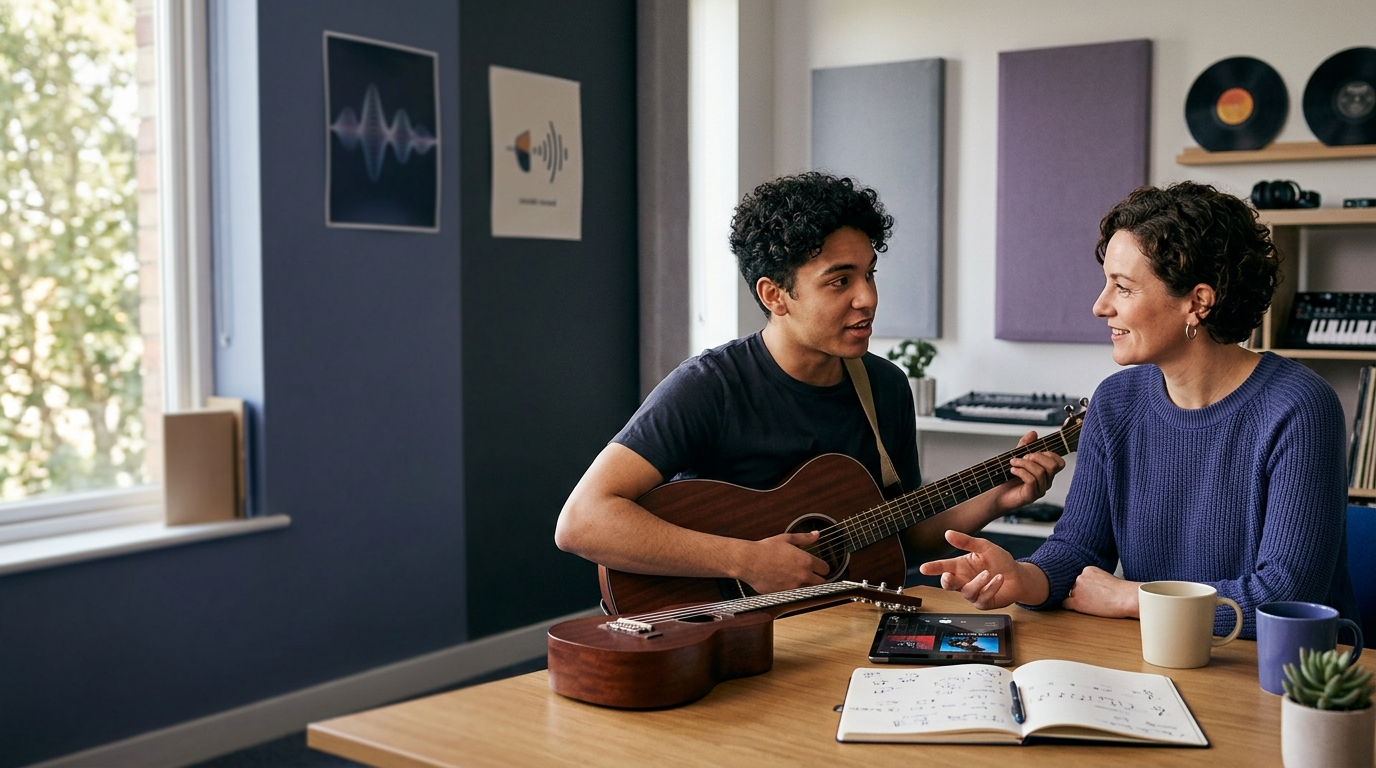
使用圖像作為想法提示。描述您注意到的內容,將其與您的經歷聯繫起來,然後回答真正的問題。

模範答案,並排聆聽
從更簡單的答案開始,切換 Band 來聽聽如何發展相同的任務,然後記錄個人回答。這些是教學範例,不是官方答案或分數保證。
Do you prefer sad or happy music?
I usually prefer happy music. It makes me feel more energetic and I enjoy singing along. But sometimes I like sad songs when I'm tired or thinking about something. Sad music can be relaxing and helps me feel better.
I tend to favour happy, upbeat music because it lifts my spirits and helps me get into a positive mood. That said, I do have a soft spot for melancholic songs too — they can be quite cathartic and give you space to reflect. So it really depends on my mood and the situation.
Does happy music make you feel more excited?
Yes, happy music often makes me feel more excited. Fast songs with a strong beat make me want to move or dance. But calm happy songs don't make me excited, they just make me feel pleasant.
On the whole, happy music does tend to make me feel more energised, especially if it has an uptempo beat and a driving rhythm — that really gets me going. However, context matters: if I'm tired or trying to concentrate, even upbeat tunes won't necessarily make me excited. Familiarity with a song also affects how strongly I react.
Have you taken any music classes?
Yes, I had piano lessons when I was a child. I did them for a few years and learnt some simple pieces. I stopped when I was a teenager because I was busy with school. I still practise sometimes for fun.
Yes — I had piano lessons from about seven and carried on for several years. They were one-to-one lessons, so I picked up technique, how to read notation and a few classical pieces. Later I joined a small ensemble at school, which really helped my timing and listening skills. Those experiences definitely increased my appreciation of music.
Do you listen to music while doing other things?
Yes, I often listen to music while doing other things. I play music when I cook, clean or travel. Sometimes I listen while studying, but only quiet songs because I need to concentrate.
Yes, I quite often have music on as background while I'm doing things. For exercise or housework I prefer lively tracks, but when I'm studying I switch to instrumental or ambient pieces so the lyrics don't distract me. Music helps set a rhythm, though if it's too engaging it can actually reduce my concentration.
練習狀態:上一個題庫週期的存檔主題。它對於技能練習仍然有用,但不會作為當前或保證的考試問題出現。 主題如何標記.
如何回答音樂雅思口說問題
音樂集包含 4 個簡短的面試問題。每個答案都以考官要求的資訊開始,然後用一個原因、例子或對比來擴展它。目標是自發性的、連貫的演講,而不是一篇小論文。
- 準確回答第一句中的問題。
- 新增一個原因或具體的個人詳細資料。
- 僅當新增資訊時才使用範例或對比。
- 自然結束,讓考官提出下一個問題。
逐個問題的方法
| 練習題 | 有用的答案動作 |
|---|---|
| Do you prefer sad or happy music? | 直接回答,給出理由並添加一個自然的個人細節。 |
| Does happy music make you feel more excited? | 給出一個直接的答案、一個原因和一個簡短的例子,無需記住腳本。 |
| Have you taken any music classes? | 舉一個過去的真實例子,然後說明發生了什麼變化或為什麼它很重要。 |
| Do you listen to music while doing other things? | 直接回答,給出理由並添加一個自然的個人細節。 |
詞彙重點
模型答案中已經展示的有用語言包括 lift my spirits, soft spot, melancholic, get me going, uptempo, pump me up, one-to-one lessons, practise scales。學習每個含義和自然的單字夥伴關係,然後在新的答案中使用該項目,而不是複製完整的腳本。
要避免的常見錯誤
- 給出的記憶答案只能部分回答問題。
- 加入困難的詞彙而不檢查意義或搭配。
- 每次錯誤後重新啟動,而不是短暫修正並繼續。
- 在記錄您自己的第一次嘗試之前,請先閱讀標準答案。
音樂練習常見問題
對於第 1 部分的音樂,我的答案應該要多長?
目標是直接回答加上原因或細節,通常是兩到四句話。當想法完成時就停止,而不是強制固定字數。
我應該記住音樂模型答案嗎?
不。用它們來注意結構和語言,然後根據您自己的經驗回答。當考官改變問題時,記憶的措詞可能會失敗。
如果我沒有該主題的經驗怎麼辦?
誠實地說出來,然後解釋相關的偏好、觀察或假設的例子。您的評估標準是語言,而不是專業知識。
