
การพูด IELTS ตอนที่ 1: Music คำถามและคำตอบ

ส่วนที่ 1 คำถาม
ย้ายทีละคำถาม: ฟัง ตอบ เปรียบเทียบ และลองอีกครั้ง ข้อความคำถามที่สมบูรณ์จะยังคงอยู่ในหน้า HTML เพื่อการเข้าถึงและการค้นหา
- 01Do you prefer sad or happy music?
- 02Does happy music make you feel more excited?
- 03Have you taken any music classes?
- 04Do you listen to music while doing other things?
อ่านบทบรรยายฉบับสมบูรณ์
I tend to favour happy, upbeat music because it lifts my spirits and helps me get into a positive mood. That said, I do have a soft spot for melancholic songs too — they can be quite cathartic and give you space to reflect. So it really depends on my mood and the situation.
สถานะการเตรียมการ: รอบหัวข้อที่คาดการณ์ไว้ แหล่งข้อมูลสำหรับฝึกหัดอิสระนี้ไม่ใช่ข้อสอบ IELTS อย่างเป็นทางการ และคำถามในการทดสอบอาจแตกต่างกันออกไป วิธีการติดป้ายกำกับหัวข้อ.
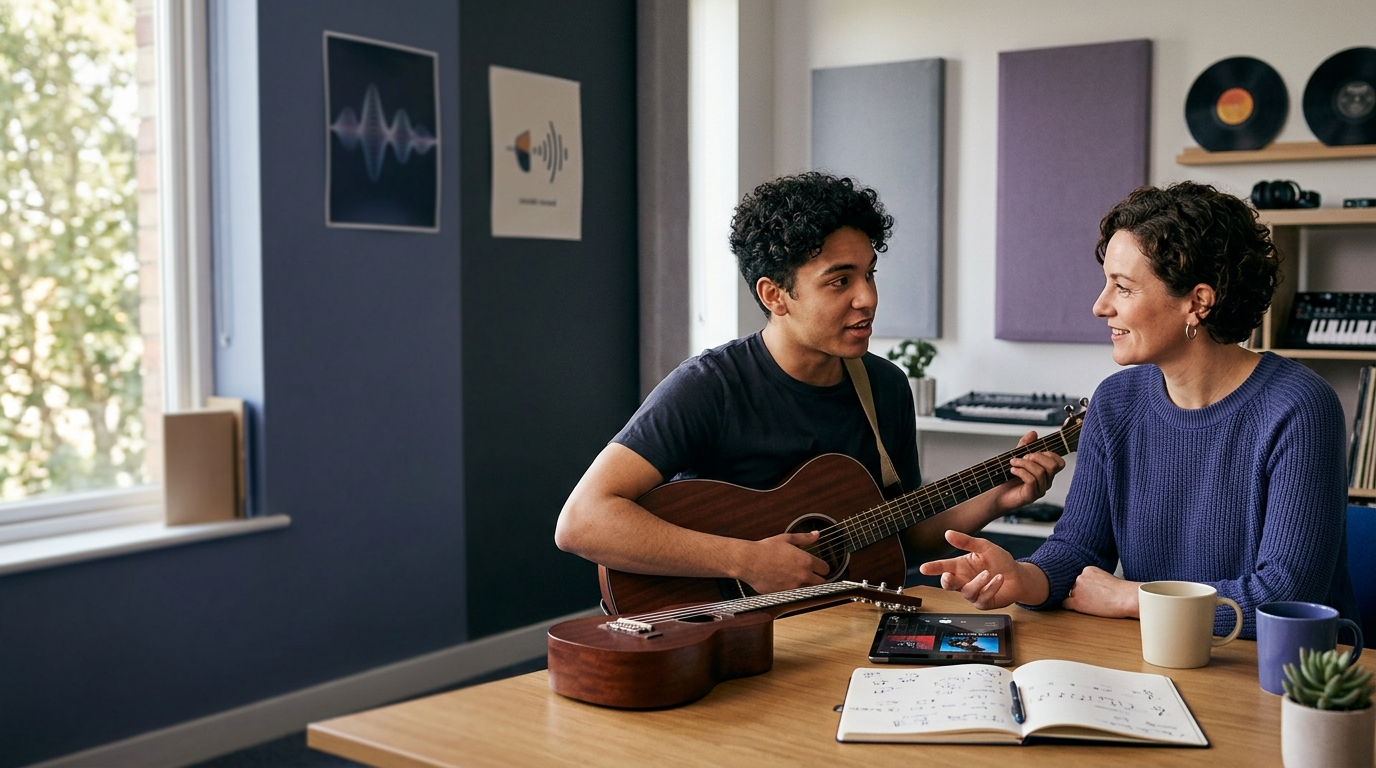
ดูหัวข้อก่อนพูด
ใช้รูปภาพเป็นไอเดีย อธิบายสิ่งที่คุณสังเกตเห็น เชื่อมโยงกับประสบการณ์ของคุณ แล้วตอบคำถามจริง

โมเดลตอบ ได้ยินพร้อมๆ กัน
เริ่มต้นด้วยคำตอบที่ง่ายกว่า สลับ Band เพื่อฟังว่างานเดียวกันนี้สามารถพัฒนาได้อย่างไร จากนั้นจึงบันทึกคำตอบส่วนตัว นี่เป็นตัวอย่างการสอน ไม่ใช่คำตอบอย่างเป็นทางการหรือการรับประกันคะแนน
Do you prefer sad or happy music?
I usually prefer happy music. It makes me feel more energetic and I enjoy singing along. But sometimes I like sad songs when I'm tired or thinking about something. Sad music can be relaxing and helps me feel better.
I tend to favour happy, upbeat music because it lifts my spirits and helps me get into a positive mood. That said, I do have a soft spot for melancholic songs too — they can be quite cathartic and give you space to reflect. So it really depends on my mood and the situation.
Does happy music make you feel more excited?
Yes, happy music often makes me feel more excited. Fast songs with a strong beat make me want to move or dance. But calm happy songs don't make me excited, they just make me feel pleasant.
On the whole, happy music does tend to make me feel more energised, especially if it has an uptempo beat and a driving rhythm — that really gets me going. However, context matters: if I'm tired or trying to concentrate, even upbeat tunes won't necessarily make me excited. Familiarity with a song also affects how strongly I react.
Have you taken any music classes?
Yes, I had piano lessons when I was a child. I did them for a few years and learnt some simple pieces. I stopped when I was a teenager because I was busy with school. I still practise sometimes for fun.
Yes — I had piano lessons from about seven and carried on for several years. They were one-to-one lessons, so I picked up technique, how to read notation and a few classical pieces. Later I joined a small ensemble at school, which really helped my timing and listening skills. Those experiences definitely increased my appreciation of music.
Do you listen to music while doing other things?
Yes, I often listen to music while doing other things. I play music when I cook, clean or travel. Sometimes I listen while studying, but only quiet songs because I need to concentrate.
Yes, I quite often have music on as background while I'm doing things. For exercise or housework I prefer lively tracks, but when I'm studying I switch to instrumental or ambient pieces so the lyrics don't distract me. Music helps set a rhythm, though if it's too engaging it can actually reduce my concentration.
สถานะการปฏิบัติ: หัวข้อที่เก็บถาวรจากรอบธนาคารคำถามครั้งก่อน ยังคงมีประโยชน์สำหรับการฝึกทักษะแต่ไม่ได้นำเสนอเป็นคำถามสอบในปัจจุบันหรือที่รับประกัน วิธีการติดป้ายกำกับหัวข้อ.
วิธีตอบคำถามดนตรี IELTS พูด
เพลงนี้ประกอบด้วยคำถามสัมภาษณ์สั้นๆ 4 ข้อ เริ่มคำตอบแต่ละข้อด้วยข้อมูลที่ผู้สอบถาม จากนั้นขยายเหตุผลด้วยตัวอย่างหรือข้อแตกต่างเพียงข้อเดียว เป้าหมายคือคำพูดที่เชื่อมโยงและเป็นธรรมชาติ ไม่ใช่เรียงความสั้นๆ
- ตอบคำถามให้ตรงในประโยคแรก
- เพิ่มเหตุผลหรือรายละเอียดส่วนบุคคลที่เฉพาะเจาะจง
- ใช้ตัวอย่างหรือการเปรียบเทียบเฉพาะเมื่อมีการเพิ่มข้อมูลใหม่เท่านั้น
- จบอย่างเป็นธรรมชาติและให้ผู้คุมถามคำถามถัดไป
แนวทางคำถามต่อคำถาม
| คำถามฝึกหัด | การย้ายคำตอบที่เป็นประโยชน์ |
|---|---|
| Do you prefer sad or happy music? | ตอบโดยตรง ให้เหตุผล และเพิ่มรายละเอียดส่วนบุคคลที่เป็นธรรมชาติหนึ่งรายการ |
| Does happy music make you feel more excited? | ให้คำตอบโดยตรง เหตุผลหนึ่งข้อ และตัวอย่างสั้นๆ โดยไม่ต้องจำสคริปต์ |
| Have you taken any music classes? | ยกตัวอย่างในอดีตที่แท้จริง จากนั้นพูดว่ามีอะไรเปลี่ยนแปลงหรือเหตุใดจึงสำคัญ |
| Do you listen to music while doing other things? | ตอบโดยตรง ให้เหตุผล และเพิ่มรายละเอียดส่วนบุคคลที่เป็นธรรมชาติหนึ่งรายการ |
เน้นคำศัพท์
ภาษาที่มีประโยชน์แสดงให้เห็นแล้วในคำตอบของโมเดล ได้แก่ lift my spirits, soft spot, melancholic, get me going, uptempo, pump me up, one-to-one lessons, practise scales. เรียนรู้แต่ละความหมายและคู่คำที่เป็นธรรมชาติ จากนั้นใช้รายการนั้นเป็นคำตอบใหม่แทนที่จะคัดลอกสคริปต์ที่สมบูรณ์
ข้อผิดพลาดทั่วไปที่ควรหลีกเลี่ยง
- ให้คำตอบที่จดจำซึ่งตอบคำถามเพียงบางส่วนเท่านั้น
- เติมคำศัพท์ยากๆ โดยไม่ต้องตรวจสอบความหมายหรือการจัดตำแหน่ง
- รีสตาร์ทหลังจากทุกข้อผิดพลาด แทนที่จะแก้ไขในช่วงสั้นๆ และดำเนินการต่อ
- อ่านคำตอบของแบบจำลองก่อนที่จะบันทึกความพยายามครั้งแรกของคุณเอง
คำถามที่พบบ่อยเกี่ยวกับการฝึกดนตรี
คำตอบของฉันสำหรับดนตรีในภาค 1 ควรยาวนานแค่ไหน?
ตั้งเป้าไปที่คำตอบโดยตรงพร้อมเหตุผลหรือรายละเอียด โดยปกติแล้วจะมีสองถึงสี่ประโยค หยุดเมื่อแนวคิดเสร็จสมบูรณ์ แทนที่จะบังคับให้นับจำนวนคำคงที่
ฉันควรจำคำตอบโมเดลดนตรีหรือไม่
ไม่ ใช้สิ่งเหล่านี้เพื่อสังเกตโครงสร้างและภาษา แล้วตอบจากประสบการณ์ของคุณเอง ถ้อยคำที่จำไว้อาจล้มเหลวเมื่อผู้ตรวจสอบเปลี่ยนคำถาม
จะเกิดอะไรขึ้นถ้าฉันไม่มีประสบการณ์ในหัวข้อนี้?
พูดอย่างนั้นอย่างตรงไปตรงมา จากนั้นอธิบายความชอบ การสังเกต หรือตัวอย่างที่เกี่ยวข้องกัน คุณได้รับการประเมินโดยใช้ภาษา ไม่ใช่ความรู้เฉพาะทาง
