
IELTS Speaking Parte 1: Walking Preguntas y respuestas

preguntas de la parte 1
Mueva una pregunta a la vez: escuche, responda, compare y vuelva a intentarlo. El texto completo de la pregunta permanece en la página HTML para accesibilidad y búsqueda.
- 01Do you walk a lot?
- 02Did you often go outside to have a walk when you were a child?Full Band 6/7 answer →
- 03Why do people like to walk in parks?
- 04Where would you like to take a long walk if you had the chance?
- 05Where did you go for a walk lately?Full Band 6/7 answer →
Lea la transcripción completa
Yes, I walk regularly. I try to fit in a brisk walk most days, either as part of my commute or as a short break to clear my head. Walking is my default way of getting about when distances are reasonable, and I find it helps me feel more alert than sitting on public transport.
Estado de preparación: ciclo de tema previsto. Este recurso de práctica independiente no es un documento oficial del IELTS y las preguntas de su examen pueden ser diferentes. Cómo se etiquetan los temas.
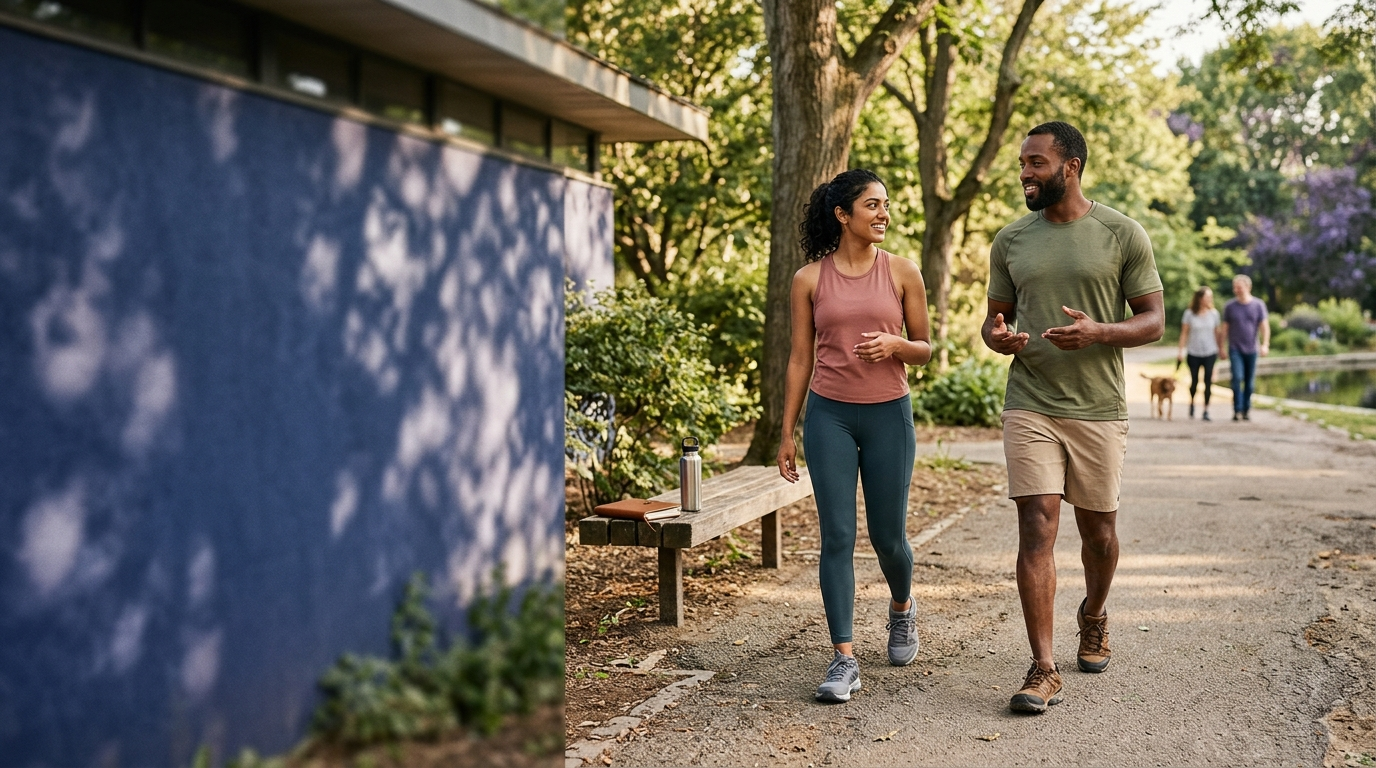
Vea el tema antes de hablar.
Utilice las imágenes como sugerencias de ideas. Describe lo que notas, conéctalo con tu experiencia y luego responde la pregunta real.

Respuestas modelo, escuchadas una al lado de la otra
Comience con la respuesta más simple, cambie Band para escuchar cómo se puede desarrollar la misma tarea y luego registre una respuesta personal. Estos son ejemplos de enseñanza, no respuestas oficiales ni garantías de puntuación.
Do you walk a lot?
I walk quite a bit, mostly as part of getting around. I walk to the shops and sometimes to work if the weather is fine. I don't always go for long walks but I do a few short ones every day.
Yes, I walk regularly. I try to fit in a brisk walk most days, either as part of my commute or as a short break to clear my head. Walking is my default way of getting about when distances are reasonable, and I find it helps me feel more alert than sitting on public transport.
Did you often go outside to have a walk when you were a child?
Yes, I used to go outside a lot as a child. I played in the street and in the park near our house. My parents also took us for walks at the weekend.
Quite often. As a child I was outdoors almost every day — walking to school, exploring the local park with friends, or going on family walks at the weekend. We weren’t supervised all the time, so there was a genuine sense of freedom to roam around and make little adventures out of ordinary streets and fields.
Why do people like to walk in parks?
People like walking in parks because it's calm and there is fresh air. It's a good place to exercise and for children to play. Parks are also safe compared with busy streets.
People enjoy parks because they offer green space and a break from city noise — you can get some fresh air, exercise, or simply unwind. Parks are great for social things too: you can meet friends, watch others, or let children run about in a safe environment. The natural setting also helps reduce stress and lift your mood.
Where would you like to take a long walk if you had the chance?
If I had the chance I'd like to walk by the sea or in the mountains. I enjoy quiet places, so a long coastal walk or a hill trail would be nice. It would be relaxing.
I'd love to do a long coastal walk along the west coast — somewhere with wild scenery and open skies, perhaps the Scottish coastline. Walking beside the sea for several days sounds ideal: you can think, switch off from everyday life and enjoy a real change of scenery. I’d plan the route so there are interesting villages to stop in and enough daylight to cover comfortable distances each day.
Where did you go for a walk lately?
Lately I went for a short walk in the local park last weekend. The weather was sunny, and I walked with a friend for about an hour. We sat and had a drink afterwards.
A few days ago I went for a late-afternoon walk in the neighbourhood park to stretch my legs. It was bright but brisk, and I took a different route so I could see the small river and a cluster of trees that were turning colour. I even paused at a bench to watch some ducks and then popped into a café on the way home — it felt like a nice, simple reset.
Cómo responder preguntas de Walking IELTS Speaking
Este conjunto de Walking contiene 5 preguntas breves de entrevista. Comience cada respuesta con la información que solicitó el examinador y luego amplíela con una razón, ejemplo o contraste. El objetivo es un discurso espontáneo y conectado, no un mini ensayo.
- Responde la pregunta exacta en la primera oración.
- Agregue un motivo o detalle personal específico.
- Utilice un ejemplo o contraste sólo cuando agregue nueva información.
- Termine naturalmente y deje que el examinador haga la siguiente pregunta.
Enfoque pregunta por pregunta
| pregunta de práctica | movimiento de respuesta útil |
|---|---|
| Do you walk a lot? | Responde directamente, da un motivo y añade un detalle personal natural. |
| Did you often go outside to have a walk when you were a child? | Dé un ejemplo real del pasado y luego diga qué cambió o por qué fue importante. |
| Why do people like to walk in parks? | Responda con una causa principal y luego apóyela con un ejemplo concreto. |
| Where would you like to take a long walk if you had the chance? | Da una respuesta directa, una razón y un breve ejemplo sin memorizar un guión. |
Enfoque de vocabulario
El lenguaje útil ya demostrado en las respuestas modelo incluye brisk walk, clear my head, fit in, roam around, explore, sense of freedom, green space, unwind. Aprenda cada significado y una asociación natural de palabras, luego use el elemento en una respuesta nueva en lugar de copiar un guión completo.
Errores comunes a evitar
- Dar una respuesta memorizada que responda sólo parcialmente a la pregunta.
- Agregar vocabulario difícil sin verificar el significado o la colocación.
- Reiniciar después de cada error en lugar de corregir brevemente y continuar.
- Leer la respuesta modelo antes de grabar su primer intento.
Preguntas frecuentes sobre la práctica de la caminata
¿Cuánto tiempo debería durar mi respuesta para Caminar en la Parte 1?
Busque una respuesta directa más una razón o detalle, generalmente de dos a cuatro oraciones. Deténgase cuando la idea esté completa en lugar de forzar un recuento fijo de palabras.
¿Debo memorizar las respuestas del modelo Caminar?
No. Úselos para notar la estructura y el lenguaje, luego responda desde su propia experiencia. La redacción memorizada puede fallar cuando el examinador cambia la pregunta.
¿Qué pasa si no tengo experiencia en el tema?
Dígalo honestamente y luego explique una preferencia, observación o ejemplo hipotético relacionado. Se le evalúa el idioma, no el conocimiento especializado.
