
การพูด IELTS ตอนที่ 1: Walking คำถามและคำตอบ

ส่วนที่ 1 คำถาม
ย้ายทีละคำถาม: ฟัง ตอบ เปรียบเทียบ และลองอีกครั้ง ข้อความคำถามที่สมบูรณ์จะยังคงอยู่ในหน้า HTML เพื่อการเข้าถึงและการค้นหา
- 01Do you walk a lot?
- 02Did you often go outside to have a walk when you were a child?Full Band 6/7 answer →
- 03Why do people like to walk in parks?
- 04Where would you like to take a long walk if you had the chance?
- 05Where did you go for a walk lately?Full Band 6/7 answer →
อ่านบทบรรยายฉบับสมบูรณ์
Yes, I walk regularly. I try to fit in a brisk walk most days, either as part of my commute or as a short break to clear my head. Walking is my default way of getting about when distances are reasonable, and I find it helps me feel more alert than sitting on public transport.
สถานะการเตรียมการ: รอบหัวข้อที่คาดการณ์ไว้ แหล่งข้อมูลสำหรับฝึกหัดอิสระนี้ไม่ใช่ข้อสอบ IELTS อย่างเป็นทางการ และคำถามในการทดสอบอาจแตกต่างกันออกไป วิธีการติดป้ายกำกับหัวข้อ.
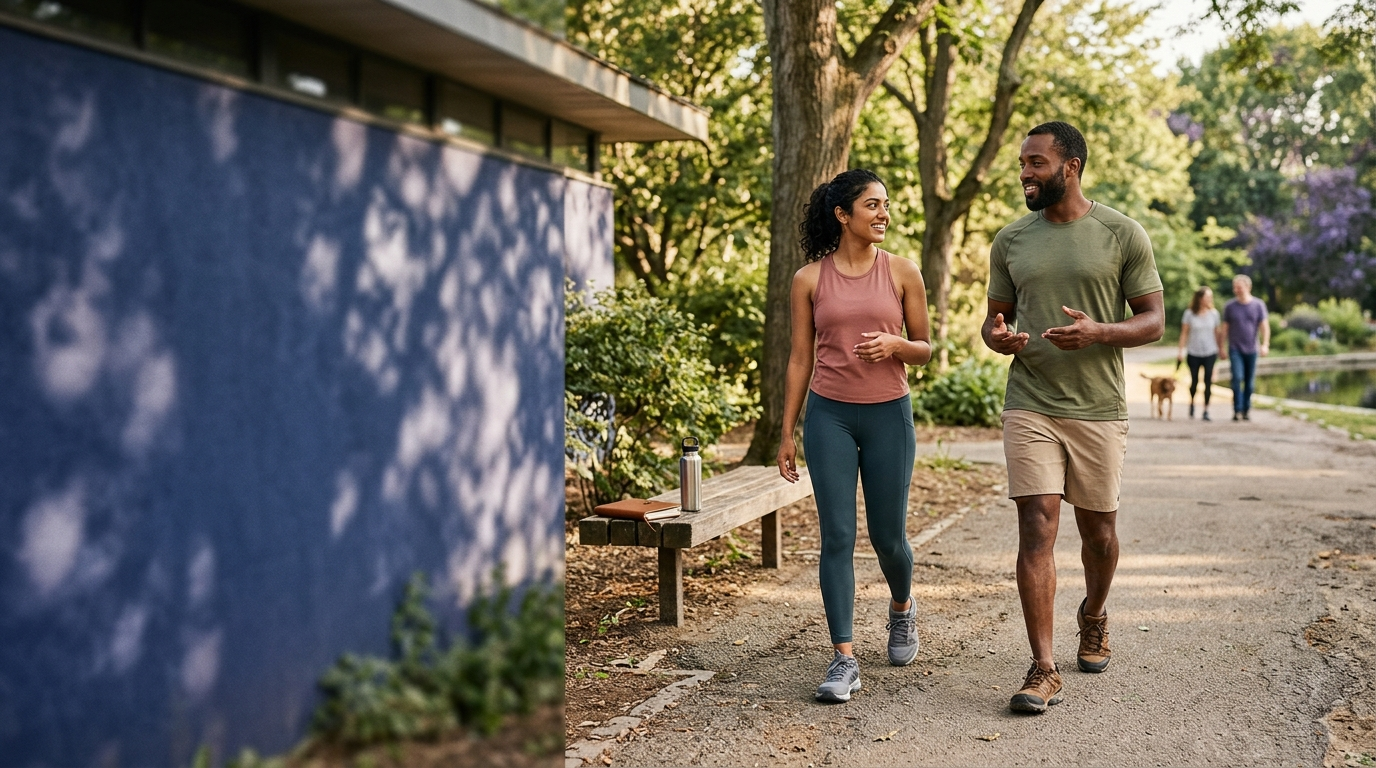
ดูหัวข้อก่อนพูด
ใช้รูปภาพเป็นไอเดีย อธิบายสิ่งที่คุณสังเกตเห็น เชื่อมโยงกับประสบการณ์ของคุณ แล้วตอบคำถามจริง

โมเดลตอบ ได้ยินพร้อมๆ กัน
เริ่มต้นด้วยคำตอบที่ง่ายกว่า สลับ Band เพื่อฟังว่างานเดียวกันนี้สามารถพัฒนาได้อย่างไร จากนั้นจึงบันทึกคำตอบส่วนตัว นี่เป็นตัวอย่างการสอน ไม่ใช่คำตอบอย่างเป็นทางการหรือการรับประกันคะแนน
Do you walk a lot?
I walk quite a bit, mostly as part of getting around. I walk to the shops and sometimes to work if the weather is fine. I don't always go for long walks but I do a few short ones every day.
Yes, I walk regularly. I try to fit in a brisk walk most days, either as part of my commute or as a short break to clear my head. Walking is my default way of getting about when distances are reasonable, and I find it helps me feel more alert than sitting on public transport.
Did you often go outside to have a walk when you were a child?
Yes, I used to go outside a lot as a child. I played in the street and in the park near our house. My parents also took us for walks at the weekend.
Quite often. As a child I was outdoors almost every day — walking to school, exploring the local park with friends, or going on family walks at the weekend. We weren’t supervised all the time, so there was a genuine sense of freedom to roam around and make little adventures out of ordinary streets and fields.
Why do people like to walk in parks?
People like walking in parks because it's calm and there is fresh air. It's a good place to exercise and for children to play. Parks are also safe compared with busy streets.
People enjoy parks because they offer green space and a break from city noise — you can get some fresh air, exercise, or simply unwind. Parks are great for social things too: you can meet friends, watch others, or let children run about in a safe environment. The natural setting also helps reduce stress and lift your mood.
Where would you like to take a long walk if you had the chance?
If I had the chance I'd like to walk by the sea or in the mountains. I enjoy quiet places, so a long coastal walk or a hill trail would be nice. It would be relaxing.
I'd love to do a long coastal walk along the west coast — somewhere with wild scenery and open skies, perhaps the Scottish coastline. Walking beside the sea for several days sounds ideal: you can think, switch off from everyday life and enjoy a real change of scenery. I’d plan the route so there are interesting villages to stop in and enough daylight to cover comfortable distances each day.
Where did you go for a walk lately?
Lately I went for a short walk in the local park last weekend. The weather was sunny, and I walked with a friend for about an hour. We sat and had a drink afterwards.
A few days ago I went for a late-afternoon walk in the neighbourhood park to stretch my legs. It was bright but brisk, and I took a different route so I could see the small river and a cluster of trees that were turning colour. I even paused at a bench to watch some ducks and then popped into a café on the way home — it felt like a nice, simple reset.
วิธีตอบคำถาม Walking IELTS Speaking
ชุดเดินนี้ประกอบด้วยคำถามสัมภาษณ์สั้นๆ 5 ข้อ เริ่มคำตอบแต่ละข้อด้วยข้อมูลที่ผู้สอบถาม จากนั้นขยายเหตุผลด้วยตัวอย่างหรือข้อแตกต่างเพียงข้อเดียว เป้าหมายคือคำพูดที่เชื่อมโยงและเป็นธรรมชาติ ไม่ใช่เรียงความสั้นๆ
- ตอบคำถามให้ตรงในประโยคแรก
- เพิ่มเหตุผลหรือรายละเอียดส่วนบุคคลที่เฉพาะเจาะจง
- ใช้ตัวอย่างหรือการเปรียบเทียบเฉพาะเมื่อมีการเพิ่มข้อมูลใหม่เท่านั้น
- จบอย่างเป็นธรรมชาติและให้ผู้คุมถามคำถามถัดไป
แนวทางคำถามต่อคำถาม
| คำถามฝึกหัด | การย้ายคำตอบที่เป็นประโยชน์ |
|---|---|
| Do you walk a lot? | ตอบโดยตรง ให้เหตุผล และเพิ่มรายละเอียดส่วนบุคคลที่เป็นธรรมชาติหนึ่งรายการ |
| Did you often go outside to have a walk when you were a child? | ยกตัวอย่างในอดีตที่แท้จริง จากนั้นพูดว่ามีอะไรเปลี่ยนแปลงหรือเหตุใดจึงสำคัญ |
| Why do people like to walk in parks? | ตอบด้วยสาเหตุหลักเพียงข้อเดียว แล้วสนับสนุนด้วยตัวอย่างที่เป็นรูปธรรม |
| Where would you like to take a long walk if you had the chance? | ให้คำตอบโดยตรง เหตุผลหนึ่งข้อ และตัวอย่างสั้นๆ โดยไม่ต้องจำสคริปต์ |
เน้นคำศัพท์
ภาษาที่มีประโยชน์แสดงให้เห็นแล้วในคำตอบของโมเดล ได้แก่ brisk walk, clear my head, fit in, roam around, explore, sense of freedom, green space, unwind. เรียนรู้แต่ละความหมายและคู่คำที่เป็นธรรมชาติ จากนั้นใช้รายการนั้นเป็นคำตอบใหม่แทนที่จะคัดลอกสคริปต์ที่สมบูรณ์
ข้อผิดพลาดทั่วไปที่ควรหลีกเลี่ยง
- ให้คำตอบที่จดจำซึ่งตอบคำถามเพียงบางส่วนเท่านั้น
- เติมคำศัพท์ยากๆ โดยไม่ต้องตรวจสอบความหมายหรือการจัดตำแหน่ง
- รีสตาร์ทหลังจากทุกข้อผิดพลาด แทนที่จะแก้ไขในช่วงสั้นๆ และดำเนินการต่อ
- อ่านคำตอบของแบบจำลองก่อนที่จะบันทึกความพยายามครั้งแรกของคุณเอง
คำถามที่พบบ่อยเกี่ยวกับการฝึกเดิน
คำตอบของฉันสำหรับ Walking in Part 1 ควรยาวนานแค่ไหน?
ตั้งเป้าไปที่คำตอบโดยตรงพร้อมเหตุผลหรือรายละเอียด โดยปกติแล้วจะมีสองถึงสี่ประโยค หยุดเมื่อแนวคิดเสร็จสมบูรณ์ แทนที่จะบังคับให้นับจำนวนคำคงที่
ฉันควรจำคำตอบของโมเดล Walking หรือไม่
ไม่ ใช้สิ่งเหล่านี้เพื่อสังเกตโครงสร้างและภาษา แล้วตอบจากประสบการณ์ของคุณเอง ถ้อยคำที่จำไว้อาจล้มเหลวเมื่อผู้ตรวจสอบเปลี่ยนคำถาม
จะเกิดอะไรขึ้นถ้าฉันไม่มีประสบการณ์ในหัวข้อนี้?
พูดอย่างนั้นอย่างตรงไปตรงมา จากนั้นอธิบายความชอบ การสังเกต หรือตัวอย่างที่เกี่ยวข้องกัน คุณได้รับการประเมินโดยใช้ภาษา ไม่ใช่ความรู้เฉพาะทาง
