
Preguntas de la Parte 1
- Did you do some house cleaning when you were young?
- What housework do you like or dislike doing?
- Do you like cooking?
- How often do you cook?
- Do you enjoy cooking with others?
- Do you like to cook for a large group of people?
- What do you think of working as a waiter?
Estado de la práctica: tema archivado de un ciclo anterior del banco de preguntas. Sigue siendo útil para la práctica de habilidades, pero no se presenta como una pregunta de examen actual o garantizada. Cómo se etiquetan los temas.
Lea la transcripción completa
Yes, from about eight years old I had a small rota. I’d clear the table, wash up and sometimes hoover the living room; at weekends I helped my mum with a deeper clean. It taught me responsibility and how to divide jobs so the house didn’t feel overwhelming.
Vea el tema antes de hablar.
Utilice las imágenes como sugerencias de ideas. Describe lo que notas, conéctalo con tu experiencia y luego responde la pregunta real.
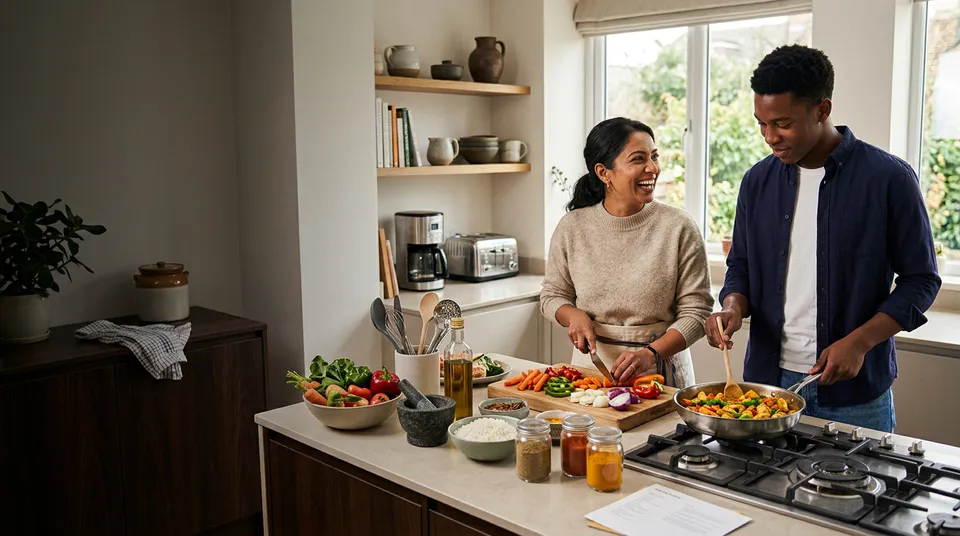

Respuestas modelo, escuchadas una al lado de la otra
Comience con la respuesta más simple, cambie Band para escuchar cómo se puede desarrollar la misma tarea y luego registre una respuesta personal. Estos son ejemplos de enseñanza, no respuestas oficiales ni garantías de puntuación.
Did you do some house cleaning when you were young?
Yes. When I was young I helped at home a lot. I used to sweep the floor, dust the shelves and clear the table after meals. My parents asked me to do these things every weekend, so it became a habit.
Yes, from about eight years old I had a small rota. I’d clear the table, wash up and sometimes hoover the living room; at weekends I helped my mum with a deeper clean. It taught me responsibility and how to divide jobs so the house didn’t feel overwhelming.
What housework do you like or dislike doing?
I don’t mind cooking and I like washing the dishes because it’s easy. I really dislike ironing though; it’s boring and takes too long.
I enjoy cooking and organising the kitchen because it feels productive, but I really dislike ironing — it’s tedious and you don’t see quick results. I prefer tasks where you can see a clear, immediate finish, like vacuuming or wiping surfaces.
Do you like cooking?
Yes, I like cooking most of the time. I enjoy making simple meals like pasta or stir-fries. It’s relaxing and I like eating what I’ve made.
Yes, I do — cooking is a creative outlet for me. I like trying new recipes and mixing flavours, and I find preparing food quite therapeutic after a busy day.
How often do you cook?
I cook about three or four times a week, usually in the evenings. On busy days I buy ready meals or eat out.
I cook most evenings — probably five nights a week. I batch-cook at the weekend so I’ve got meals ready during the week, which saves time and helps me eat more healthily.
Do you enjoy cooking with others?
Sometimes I do. Cooking with family can be fun because you talk while you cook, but it can also be a bit crowded in the kitchen.
Yes, I enjoy it — cooking with others is social and often more efficient. You can split tasks, swap tips and it turns a meal into an event rather than a chore, though it needs a bit of organisation to avoid chaos.
Do you like to cook for a large group of people?
I don’t mind cooking for a few people, but for a large group it’s stressful. It’s harder to make enough and keep everything hot.
Yes, I enjoy it, though it’s challenging. Cooking for a crowd needs planning — choose dishes that scale well, do prep in advance and consider a buffet style. The payoff is seeing everyone enjoy the food and that makes the effort worthwhile.
What do you think of working as a waiter?
I think being a waiter is okay for people who are starting out. It’s hard work and you meet lots of people, but the hours can be long.
I think it’s a solid job, especially for learning customer service and multitasking. It can be stressful and physically demanding, with irregular shift work, but it teaches you how to handle pressure and interact with different kinds of customers — skills useful in many careers.
Estado de la práctica: tema archivado de un ciclo anterior del banco de preguntas. Sigue siendo útil para la práctica de habilidades, pero no se presenta como una pregunta de examen actual o garantizada. Cómo se etiquetan los temas.
Cómo responder las preguntas orales del IELTS sobre tareas domésticas y cocina
Este juego de cocina y tareas domésticas contiene 7 preguntas breves de entrevista. Comience cada respuesta con la información que solicitó el examinador y luego amplíela con una razón, ejemplo o contraste. El objetivo es un discurso espontáneo y conectado, no un mini ensayo.
- Responde la pregunta exacta en la primera oración.
- Agregue un motivo o detalle personal específico.
- Utilice un ejemplo o contraste sólo cuando agregue nueva información.
- Termine naturalmente y deje que el examinador haga la siguiente pregunta.
Enfoque pregunta por pregunta
| pregunta de práctica | movimiento de respuesta útil |
|---|---|
| Did you do some house cleaning when you were young? | Dé un ejemplo real del pasado y luego diga qué cambió o por qué fue importante. |
| What housework do you like or dislike doing? | Primero nombra el objeto y luego describe una característica o ejemplo específico. |
| Do you like cooking? | Responde directamente, da un motivo y añade un detalle personal natural. |
| How often do you cook? | Describe el proceso o diferencia en un orden claro y agrega un resultado. |
Enfoque de vocabulario
El lenguaje útil ya demostrado en las respuestas modelo incluye rota, hoover, responsibility, tedious, productive, vacuuming, creative outlet, recipes. Aprenda cada significado y una asociación natural de palabras, luego use el elemento en una respuesta nueva en lugar de copiar un guión completo.
Errores comunes a evitar
- Dar una respuesta memorizada que responda sólo parcialmente a la pregunta.
- Agregar vocabulario difícil sin verificar el significado o la colocación.
- Reiniciar después de cada error en lugar de corregir brevemente y continuar.
- Leer la respuesta modelo antes de grabar su primer intento.
Preguntas frecuentes sobre las tareas del hogar y la práctica de la cocina
¿Cuánto tiempo debería durar mi respuesta para las tareas del hogar y la cocina en la Parte 1?
Busque una respuesta directa más una razón o detalle, generalmente de dos a cuatro oraciones. Deténgase cuando la idea esté completa en lugar de forzar un recuento fijo de palabras.
¿Debo memorizar las respuestas del modelo de tareas domésticas y cocina?
No. Úselos para notar la estructura y el lenguaje, luego responda desde su propia experiencia. La redacción memorizada puede fallar cuando el examinador cambia la pregunta.
¿Qué pasa si no tengo experiencia en el tema?
Dígalo honestamente y luego explique una preferencia, observación o ejemplo hipotético relacionado. Se le evalúa el idioma, no el conocimiento especializado.
