
第 1 部分問題
- Did you do some house cleaning when you were young?
- What housework do you like or dislike doing?
- Do you like cooking?
- How often do you cook?
- Do you enjoy cooking with others?
- Do you like to cook for a large group of people?
- What do you think of working as a waiter?
練習狀態:上一個題庫週期的存檔主題。它對於技能練習仍然有用,但不會作為當前或保證的考試問題出現。 主題如何標記.
閱讀完整的文字記錄
Yes, from about eight years old I had a small rota. I’d clear the table, wash up and sometimes hoover the living room; at weekends I helped my mum with a deeper clean. It taught me responsibility and how to divide jobs so the house didn’t feel overwhelming.
說話前先看清主題
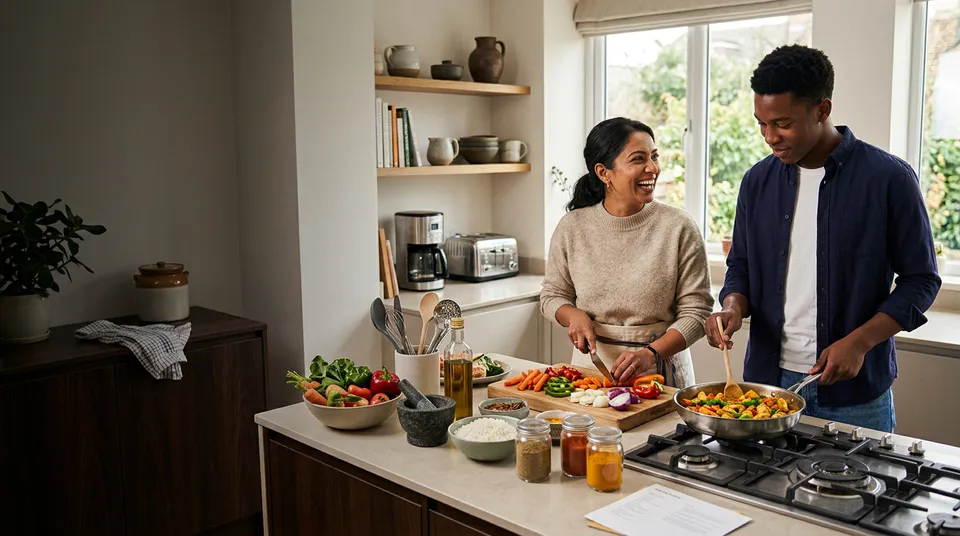
使用圖像作為想法提示。描述您注意到的內容,將其與您的經歷聯繫起來,然後回答真正的問題。

模範答案,並排聆聽
從更簡單的答案開始,切換 Band 來聽聽如何發展相同的任務,然後記錄個人回答。這些是教學範例,不是官方答案或分數保證。
Did you do some house cleaning when you were young?
Yes. When I was young I helped at home a lot. I used to sweep the floor, dust the shelves and clear the table after meals. My parents asked me to do these things every weekend, so it became a habit.
Yes, from about eight years old I had a small rota. I’d clear the table, wash up and sometimes hoover the living room; at weekends I helped my mum with a deeper clean. It taught me responsibility and how to divide jobs so the house didn’t feel overwhelming.
What housework do you like or dislike doing?
I don’t mind cooking and I like washing the dishes because it’s easy. I really dislike ironing though; it’s boring and takes too long.
I enjoy cooking and organising the kitchen because it feels productive, but I really dislike ironing — it’s tedious and you don’t see quick results. I prefer tasks where you can see a clear, immediate finish, like vacuuming or wiping surfaces.
Do you like cooking?
Yes, I like cooking most of the time. I enjoy making simple meals like pasta or stir-fries. It’s relaxing and I like eating what I’ve made.
Yes, I do — cooking is a creative outlet for me. I like trying new recipes and mixing flavours, and I find preparing food quite therapeutic after a busy day.
How often do you cook?
I cook about three or four times a week, usually in the evenings. On busy days I buy ready meals or eat out.
I cook most evenings — probably five nights a week. I batch-cook at the weekend so I’ve got meals ready during the week, which saves time and helps me eat more healthily.
Do you enjoy cooking with others?
Sometimes I do. Cooking with family can be fun because you talk while you cook, but it can also be a bit crowded in the kitchen.
Yes, I enjoy it — cooking with others is social and often more efficient. You can split tasks, swap tips and it turns a meal into an event rather than a chore, though it needs a bit of organisation to avoid chaos.
Do you like to cook for a large group of people?
I don’t mind cooking for a few people, but for a large group it’s stressful. It’s harder to make enough and keep everything hot.
Yes, I enjoy it, though it’s challenging. Cooking for a crowd needs planning — choose dishes that scale well, do prep in advance and consider a buffet style. The payoff is seeing everyone enjoy the food and that makes the effort worthwhile.
What do you think of working as a waiter?
I think being a waiter is okay for people who are starting out. It’s hard work and you meet lots of people, but the hours can be long.
I think it’s a solid job, especially for learning customer service and multitasking. It can be stressful and physically demanding, with irregular shift work, but it teaches you how to handle pressure and interact with different kinds of customers — skills useful in many careers.
練習狀態:上一個題庫週期的存檔主題。它對於技能練習仍然有用,但不會作為當前或保證的考試問題出現。 主題如何標記.
如何回答家務和烹飪雅思口語問題
這套家務和烹飪套裝包含 7 個簡短的面試問題。每個答案都以考官要求的資訊開始,然後用一個原因、例子或對比來擴展它。目標是自發性的、連貫的演講,而不是一篇小論文。
- 準確回答第一句中的問題。
- 新增一個原因或具體的個人詳細資料。
- 僅當新增資訊時才使用範例或對比。
- 自然結束,讓考官提出下一個問題。
逐個問題的方法
| 練習題 | 有用的答案動作 |
|---|---|
| Did you do some house cleaning when you were young? | 舉一個過去的真實例子,然後說明發生了什麼變化或為什麼它很重要。 |
| What housework do you like or dislike doing? | 首先命名事物,然後描述特定的功能或範例。 |
| Do you like cooking? | 直接回答,給出理由並添加一個自然的個人細節。 |
| How often do you cook? | 以清晰的順序描述流程或差異並添加結果。 |
詞彙重點
模型答案中已經展示的有用語言包括 rota, hoover, responsibility, tedious, productive, vacuuming, creative outlet, recipes。學習每個含義和自然的單字夥伴關係,然後在新的答案中使用該項目,而不是複製完整的腳本。
要避免的常見錯誤
- 給出的記憶答案只能部分回答問題。
- 加入困難的詞彙而不檢查意義或搭配。
- 每次錯誤後重新啟動,而不是短暫修正並繼續。
- 在記錄您自己的第一次嘗試之前,請先閱讀標準答案。
家務和烹飪常見問題解答
第 1 部分的家務和烹飪的答案應該要多長?
目標是直接回答加上原因或細節,通常是兩到四句話。當想法完成時就停止,而不是強制固定字數。
我應該記住家務和烹飪模型答案嗎?
不。用它們來注意結構和語言,然後根據您自己的經驗回答。當考官改變問題時,記憶的措詞可能會失敗。
如果我沒有該主題的經驗怎麼辦?
誠實地說出來,然後解釋相關的偏好、觀察或假設的例子。您的評估標準是語言,而不是專業知識。
