
IELTS Speaking Parte 1: Travelling Preguntas y respuestas

preguntas de la parte 1
Mueva una pregunta a la vez: escuche, responda, compare y vuelva a intentarlo. El texto completo de la pregunta permanece en la página HTML para accesibilidad y búsqueda.
- 01Do you prefer to sit by the window when travelling?
- 02Did you have a long journey with your family as a child?
Lea la transcripción completa
Sí, normalmente paso bastante tiempo mirando por la ventana cuando viajo en coche o autobús. Me gusta contemplar el paisaje cambiante, notar pequeños detalles como el clima o la arquitectura, y eso me ayuda a relajarme y pensar. Si la ruta es especialmente pintoresca, me apoyo en la ventana y observo durante mucho tiempo, aunque a veces reviso mi teléfono si es un viaje largo.
Estado de preparación: ciclo de tema previsto. Este recurso de práctica independiente no es un documento oficial del IELTS y las preguntas de su examen pueden ser diferentes. Cómo se etiquetan los temas.
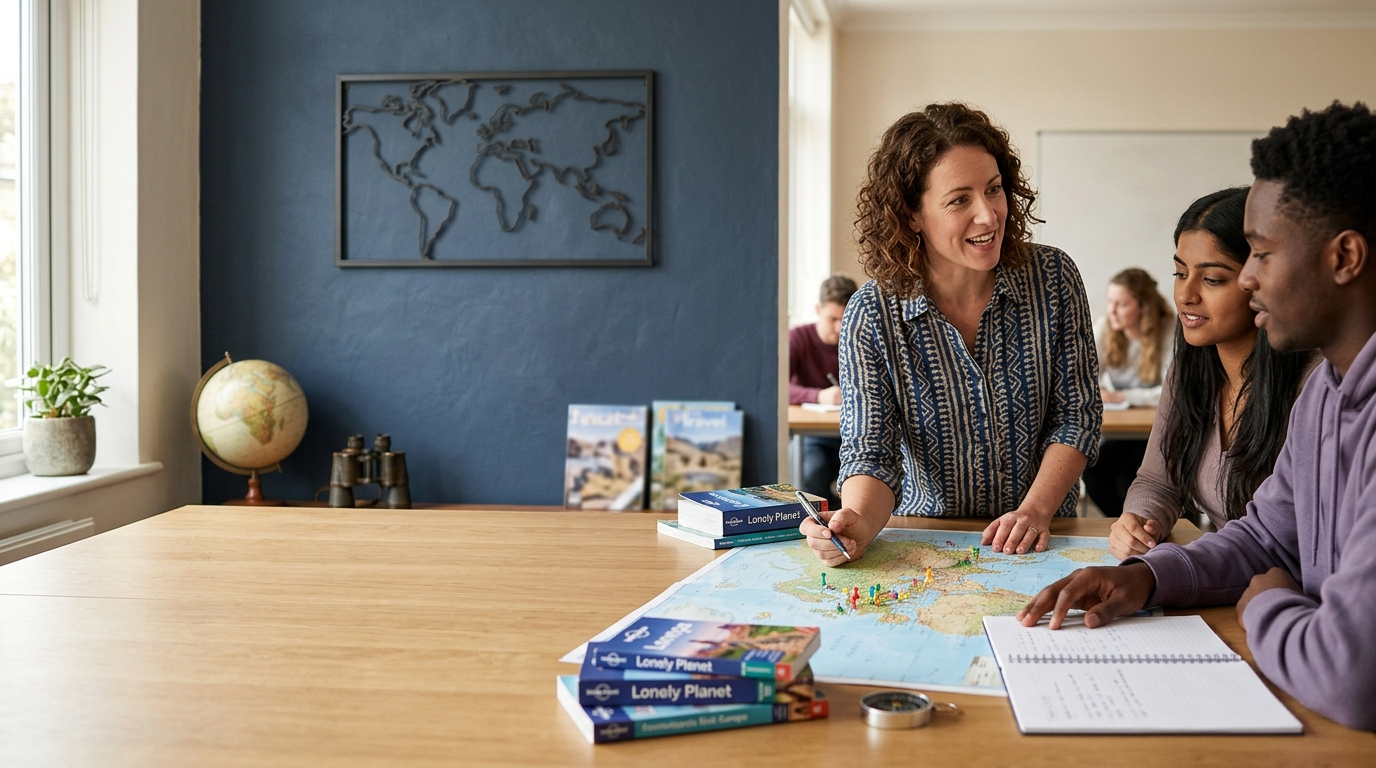
Vea el tema antes de hablar.
Utilice las imágenes como sugerencias de ideas. Describe lo que notas, conéctalo con tu experiencia y luego responde la pregunta real.

Respuestas modelo, escuchadas una al lado de la otra
Comience con la respuesta más simple, cambie Band para escuchar cómo se puede desarrollar la misma tarea y luego registre una respuesta personal. Estos son ejemplos de enseñanza, no respuestas oficiales ni garantías de puntuación.
Do you prefer to sit by the window when travelling?
Yes, I usually like to sit by the window when I travel. I enjoy looking at the view and it helps me sleep. If the journey is short I sometimes choose the aisle so I can get up more easily.
Most of the time I pick a window seat. I find it relaxing to watch the landscape go by and it’s easier to doze off with something to lean on. That said, on short trips or when I know I’ll need to move around a lot I’ll take an aisle seat so I can stretch my legs and get to the loo without disturbing others.
I generally prefer a window seat, though it depends on the type of trip. On trains and planes a window gives you uninterrupted views and a surface to rest your head, which makes sleeping easier and the journey feel less tiring. However, if it’s a short hop or I need to work on my laptop, I’ll opt for an aisle so I can stand up and move freely. Ultimately I choose the seat that best suits how I plan to spend the time – sightseeing and resting versus getting things done.
Did you have a long journey with your family as a child?
Yes, when I was a child we had long journeys with my family. We drove to the coast and it took many hours. We played games in the car and I remember being bored but excited to reach the beach.
When I was young my family often took long car journeys, usually to the coast or to visit relatives. One trip that sticks in my mind took about six hours; we passed through lots of countryside and my parents played music while we sang along. The journey felt long at the time, but it was also a chance to talk and play games, which made us feel closer.
Yes, several long journeys with my family are still vivid in my memory. One summer we drove for nearly eight hours to a coastal town; the route wound through hills and little villages and felt endless to a child. Despite the boredom, the drive became a time for family bonding — we shared snacks, told stories and our parents taught us to spot different types of birds and farm animals. Those stretches of road taught me patience and turned travelling from a chore into something I now associate with shared memories rather than just displacement.
Cómo responder preguntas orales del IELTS de viaje
This Travelling set contains 2 short interview questions. Start each answer with the information the examiner asked for, then extend it with one reason, example or contrast. The goal is spontaneous, connected speech—not a mini-essay.
- Responde la pregunta exacta en la primera oración.
- Agregue un motivo o detalle personal específico.
- Utilice un ejemplo o contraste sólo cuando agregue nueva información.
- Termine naturalmente y deje que el examinador haga la siguiente pregunta.
Enfoque pregunta por pregunta
| pregunta de práctica | movimiento de respuesta útil |
|---|---|
| Do you prefer to sit by the window when travelling? | Responde directamente, da un motivo y añade un detalle personal natural. |
| Did you have a long journey with your family as a child? | Dé un ejemplo real del pasado y luego diga qué cambió o por qué fue importante. |
Enfoque de vocabulario
El lenguaje útil ya demostrado en las respuestas modelo incluye window seat, aisle seat, stretch my legs, road trip, family bonding, long haul. Aprenda cada significado y una asociación natural de palabras, luego use el elemento en una respuesta nueva en lugar de copiar un guión completo.
Errores comunes a evitar
- Dar una respuesta memorizada que responda sólo parcialmente a la pregunta.
- Agregar vocabulario difícil sin verificar el significado o la colocación.
- Reiniciar después de cada error en lugar de corregir brevemente y continuar.
- Leer la respuesta modelo antes de grabar su primer intento.
Preguntas frecuentes sobre prácticas de viaje
¿Cuánto tiempo debería durar mi respuesta para Viajar en la Parte 1?
Busque una respuesta directa más una razón o detalle, generalmente de dos a cuatro oraciones. Deténgase cuando la idea esté completa en lugar de forzar un recuento fijo de palabras.
¿Debo memorizar las respuestas del modelo itinerante?
No. Úselos para notar la estructura y el lenguaje, luego responda desde su propia experiencia. La redacción memorizada puede fallar cuando el examinador cambia la pregunta.
¿Qué pasa si no tengo experiencia en el tema?
Dígalo honestamente y luego explique una preferencia, observación o ejemplo hipotético relacionado. Se le evalúa el idioma, no el conocimiento especializado.
