
IELTS Speaking, parties 2 et 3 : Describe an interesting video

Carte aide-mémoire de la deuxième partie
Describe an interesting video
Il faudrait dire :
- Quand et où l'avez-vous regardé
- De quoi s'agit-il
- Pourquoi tu l'as regardé
- Et explique ce que tu ressens à ce sujet
Vous disposerez d'une à deux minutes pour aborder ce sujet.
Lire la transcription complète
Last summer I watched a short documentary on YouTube about urban beekeeping while having lunch at home; it was made by a small independent filmmaker and lasted about 25 minutes. The film explained how ordinary people keep bees on rooftops to help pollinate city gardens and showed practical steps like building and maintaining a hive. I watched it because I'm thinking of keeping bees on my balcony and wanted to know the challenges and legal issues — for example it mentioned contacting local councils and checking guidance on where hives can be sited. The director combined interviews with experienced beekeepers and clear close-ups of bees at work, which made the subject surprisingly vivid; there was a memorable scene of a swarm being gently moved to a new hive. It also gave useful safety tips, such as how to tell when a hive is healthy and what protective clothing to use, and it listed approximate start-up costs. Within a week I joined an online community the filmmaker recommended to ask practical questions and share plans. After watching, I felt inspired but realistic — excited to try it, yet aware of the responsibility and the need for proper training.
État de préparation : cycle thématique prévu. Cette ressource de pratique indépendante n'est pas un document officiel de l'IELTS et les questions de votre test peuvent être différentes. Comment les sujets sont étiquetés.
Questions de discussion de la troisième partie
Déplacez une question à la fois : écoutez, répondez, comparez et réessayez. Le texte complet de la question reste dans la page HTML pour l'accessibilité et la recherche.
- 01What kind of videos do people in your country like to watch?
- 02Which is more helpful, watching videos or reading books?
- 03What skills can people learn from watching videos?
- 04Are there any differences between the videos that young people and old people like to watch?
- 05Are there any differences between the videos that young men and young women like to watch?
- 06What makes a video go viral online?
Voir le sujet avant de parler
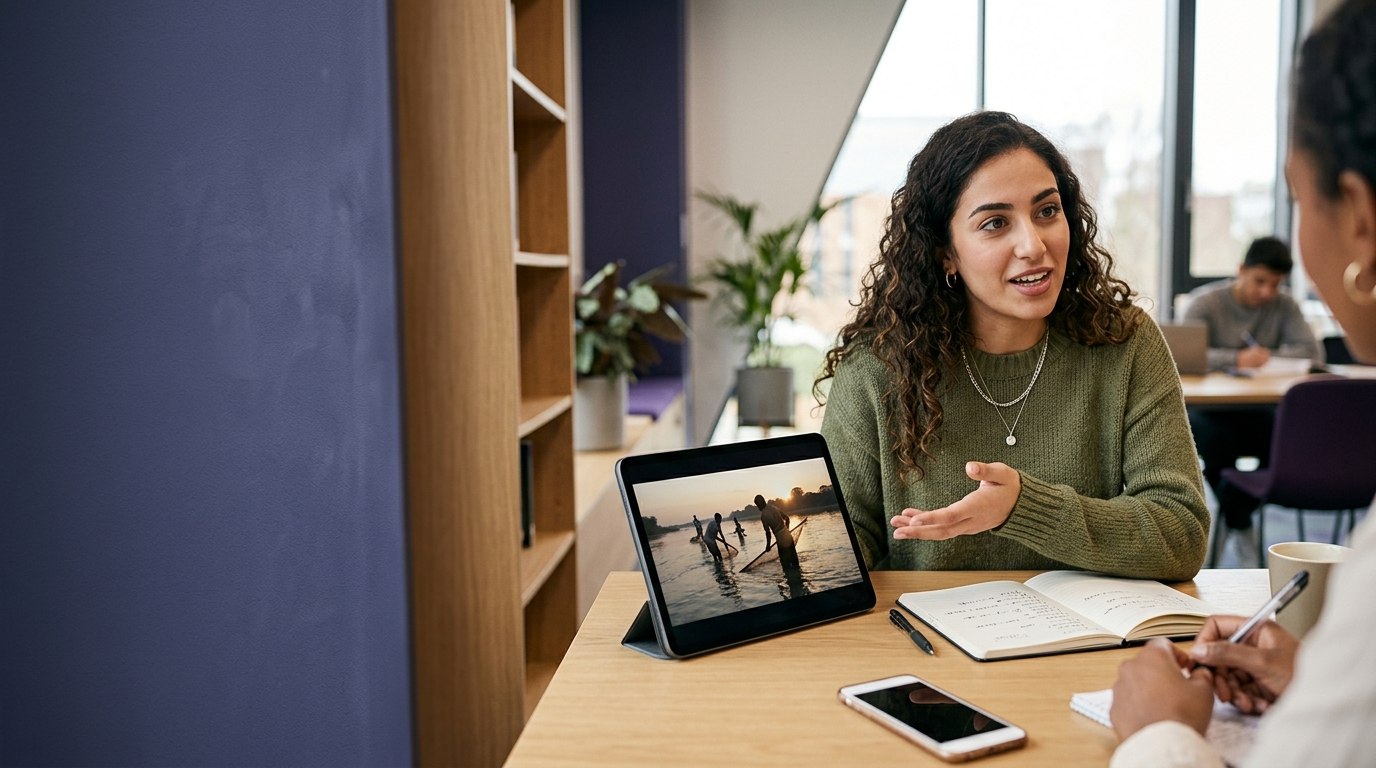
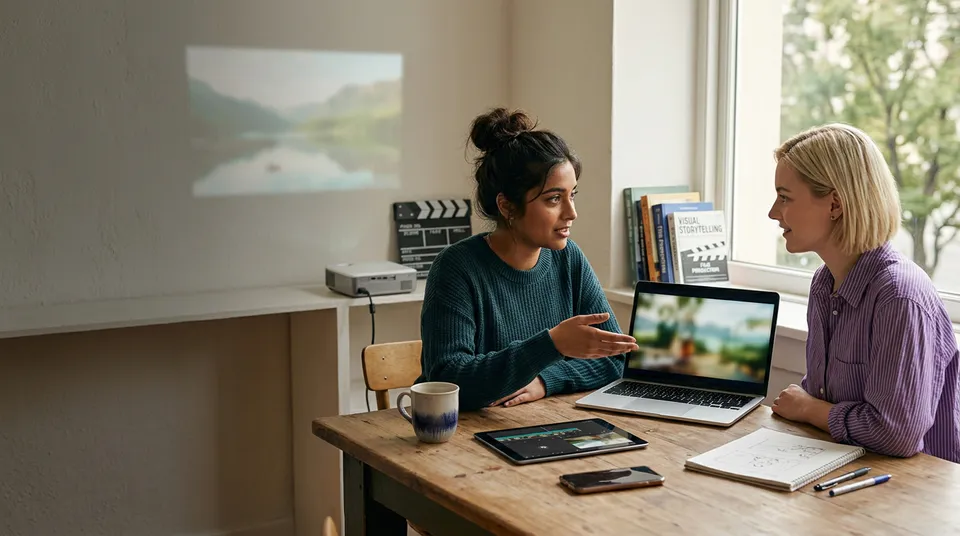
Utilisez les images comme invites à idées. Décrivez ce que vous remarquez, reliez-le à votre expérience, puis répondez à la vraie question.
Des réponses modèles, entendues côte à côte
Commencez par la réponse la plus simple, changez Band pour entendre comment la même tâche peut être développée, puis enregistrez une réponse personnelle. Ce sont des exemples pédagogiques, pas des réponses officielles ni des garanties de scores.
Partie 2 — Modèle de réponse
Part 2 cue-card response
I watched an interesting video last month on my laptop. It was a short documentary about people who keep bees in cities. I saw it at home in the evening while making tea. The video showed how they look after the bees, where they put the hives, and why bees are important for plants. I watched it because I like nature programmes and wanted an easy introduction to beekeeping. The pictures of bees and the hives were clear and the presenter explained things slowly. After watching, I felt curious and more confident that I could try learning more. It made me want to read a book or go to a class about bees.
Last summer I watched a short documentary on YouTube about urban beekeeping while having lunch at home; it was made by a small independent filmmaker and lasted about 25 minutes. The film explained how ordinary people keep bees on rooftops to help pollinate city gardens and showed practical steps like building and maintaining a hive. I watched it because I'm thinking of keeping bees on my balcony and wanted to know the challenges and legal issues — for example it mentioned contacting local councils and checking guidance on where hives can be sited. The director combined interviews with experienced beekeepers and clear close-ups of bees at work, which made the subject surprisingly vivid; there was a memorable scene of a swarm being gently moved to a new hive. It also gave useful safety tips, such as how to tell when a hive is healthy and what protective clothing to use, and it listed approximate start-up costs. Within a week I joined an online community the filmmaker recommended to ask practical questions and share plans. After watching, I felt inspired but realistic — excited to try it, yet aware of the responsibility and the need for proper training.
Partie 3 — Modèle de réponses
What kind of videos do people in your country like to watch?
People here watch lots of different videos. Many like music videos, funny clips, cooking shows and short social media posts. A lot of people also watch news clips and documentaries. It depends on age and mood — young people choose short, fast clips while older people might watch longer programmes.
People tend to follow global trends: short-form social clips, music videos and lifestyle tutorials are very popular, but there's also a steady audience for long-form documentaries and streamed dramas. Platform matters too — on phones you get quick, snackable content, while on a TV people prefer a full documentary or drama. So tastes are varied and often shaped by how people access the video and how much time they have.
Which is more helpful, watching videos or reading books?
It really depends on what you want to learn. Videos are good when you need to see something done, like cooking or DIY. Books are better for deep background, ideas and detailed explanations. For most people, using both is best.
Which is more helpful depends on the goal: videos excel at demonstrations and visual explanations, so they're ideal for practical skills, whereas books give more depth, structure and critical analysis, which is useful for theory and reflection. Many learners combine both — watch a video to grasp a procedure, then read a chapter for wider context and nuance. In short, they're complementary rather than mutually exclusive.
What skills can people learn from watching videos?
From videos people can learn cooking, DIY tasks, exercises, language basics and some software skills. You can copy steps and repeat them at home. It's easy to pause and try things yourself.
Videos are excellent for procedural and technical skills — cooking techniques, DIY repairs, software tutorials and musical instrument basics — because learners can see step-by-step actions and visual cues. They also help with soft skills like presentation or public speaking when you watch examples and mimic body language or phrasing. However, watching alone isn't enough; real improvement needs practice and feedback.
Are there any differences between the videos that young people and old people like to watch?
Yes — young people usually like short, fast clips, vlogs and gaming videos. Older people often prefer news, documentaries or gardening and cooking shows. Young viewers want quick entertainment while older viewers like more detail.
There are clear tendencies: younger audiences generally favour short-form content, influencers, live streams and gaming videos that move fast and are easy to share, whereas older viewers often prefer long-form material such as news, in-depth documentaries and traditional TV programmes. Preferences also reflect habits — younger people grew up with smartphones and social platforms, so they expect rapid editing and interaction, while older viewers favour a calmer pace and familiar formats. That said, overlap exists and many older viewers now enjoy viral clips too.
Are there any differences between the videos that young men and young women like to watch?
There can be differences, but they are not strict. Young men might watch gaming and tech reviews more, and young women might watch beauty and lifestyle videos more. But many kinds of videos are popular with both genders these days.
Differences do appear in viewing patterns, but they're more about interests and marketing than fixed rules: historically gaming and tech channels have skewed male, while beauty, fashion and lifestyle channels attract larger female audiences, yet many creators now reach broad, gender-mixed followings. Algorithms and targeted advertising also push certain genres to particular groups, which reinforces those patterns. Ultimately individual interests matter more than gender alone.
What makes a video go viral online?
A video goes viral if lots of people share it quickly. It needs to be funny, surprising or very emotional. Good thumbnails and short length help make people click and share.
Virality usually comes from a combination of factors: an immediate emotional hook (humour, surprise, awe or empathy), a clear and relatable idea that people want to share, and favourable timing or endorsement by an influencer. Platform mechanics matter too — the algorithm, an eye-catching thumbnail, short loopable format and subtitles for silent viewing all boost spread. Ultimately, simple originality plus social proof often makes a piece of content explode online.
Comment répondre Décrire une vidéo intéressante Questions orales IELTS
Pour la fiche vidéo Décrire une vidéo intéressante, utilisez la minute de préparation pour construire un parcours à travers l’exposé. Choisissez un sujet clair, ajoutez deux moments ou détails spécifiques et terminez par pourquoi c'est important. Utilisez ensuite les questions liées de la partie 3 pour pratiquer des explications et des comparaisons plus larges.
Invites de la carte aide-mémoire :
- Quand et où l'avez-vous regardé
- De quoi s'agit-il
- Pourquoi tu l'as regardé
- Et explique ce que tu ressens à ce sujet
- Ouverture : identifier la personne, le lieu, l'objet ou l'événement.
- Développement : décrire deux détails ou moments dans un ordre logique.
- Extension : expliquer une raison, un résultat, une comparaison ou un problème.
- Réflexion : terminez par pourquoi le sujet est mémorable ou important.
Approche question par question
| Question pratique | Mouvement de réponse utile |
|---|---|
| What kind of videos do people in your country like to watch? | Nommez d’abord la chose, puis décrivez une fonctionnalité ou un exemple spécifique. |
| Which is more helpful, watching videos or reading books? | Donnez une réponse directe, une raison et un court exemple sans mémoriser un script. |
| What skills can people learn from watching videos? | Nommez d’abord la chose, puis décrivez une fonctionnalité ou un exemple spécifique. |
| Are there any differences between the videos that young people and old people like to watch? | Donnez une réponse directe, une raison et un court exemple sans mémoriser un script. |
Focus sur le vocabulaire
Le langage utile déjà démontré dans les réponses modèles comprend short-form, lifestyle tutorials, snackable content, demonstration, in-depth, complementary, step-by-step, visual cues. Apprenez chaque signification et un partenariat de mots naturel, puis utilisez l'élément dans une nouvelle réponse au lieu de copier un script complet.
Erreurs courantes à éviter
- Donner une réponse mémorisée qui ne répond que partiellement à la question.
- Ajouter du vocabulaire difficile sans vérifier le sens ou la collocation.
- Redémarrer après chaque erreur au lieu de corriger brièvement et de continuer.
- Lisez la réponse modèle avant d’enregistrer votre propre première tentative.
Décrire une pratique vidéo intéressante
Comment dois-je utiliser la minute de préparation Décrire une carte de repère vidéo intéressante ?
Écrivez des mots-clés pour une introduction, deux ou trois détails et une réflexion finale. N'essayez pas d'écrire des phrases complètes.
Dois-je couvrir chaque puce de la carte signalétique ?
Les invites vous aident à organiser la discussion. Les couvrir est utile, mais une réponse cohérente d’une à deux minutes compte plus que de cocher mécaniquement chaque ligne.
Quel est le lien entre les questions de la partie 3 et la partie 2 ?
Ils développent le même thème général à travers des raisons, des comparaisons, des effets sociaux ou des possibilités futures, de sorte que les réponses nécessitent normalement plus d'explications que la première partie.
