
IELTS Speaking Parte 1: Outer space and stars Preguntas y respuestas

preguntas de la parte 1
Mueva una pregunta a la vez: escuche, responda, compare y vuelva a intentarlo. El texto completo de la pregunta permanece en la página HTML para accesibilidad y búsqueda.
- 01Have you ever learnt about outer space and stars?Full Band 6/7 answer →
- 02Do you like science fiction movies? Why?
- 03Do you want to know more about outer space?
- 04Do you want to go into outer space in the future?
Lea la transcripción completa
Yes, I have. At school we did a few units on astronomy and I also visited a planetarium once, which made it more vivid. Since then I've watched documentaries and followed a few online talks about topics like light‑years, exoplanets and how stars form. I guess I’ve picked up a mix of formal facts and popular explanations, so I can understand simple astronomy and also enjoy more detailed discussions when they come up.
Estado de preparación: ciclo de tema previsto. Este recurso de práctica independiente no es un documento oficial del IELTS y las preguntas de su examen pueden ser diferentes. Cómo se etiquetan los temas.
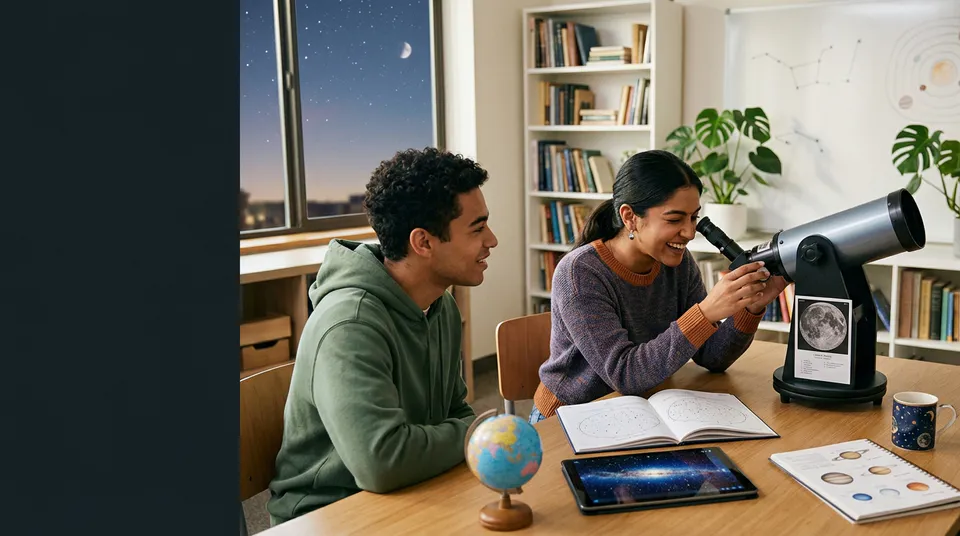
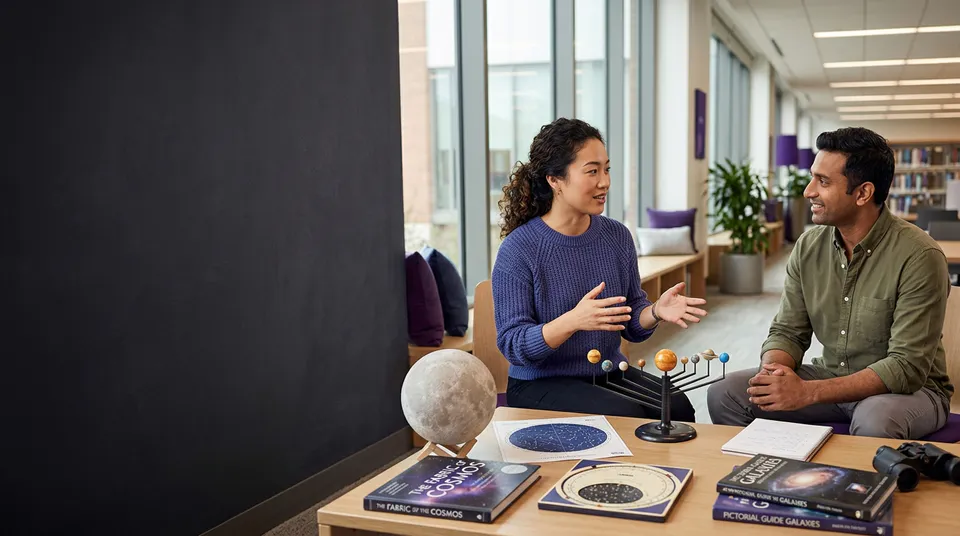
Vea el tema antes de hablar.
Utilice las imágenes como sugerencias de ideas. Describe lo que notas, conéctalo con tu experiencia y luego responde la pregunta real.
Respuestas modelo, escuchadas una al lado de la otra
Comience con la respuesta más simple, cambie Band para escuchar cómo se puede desarrollar la misma tarea y luego registre una respuesta personal. Estos son ejemplos de enseñanza, no respuestas oficiales ni garantías de puntuación.
Have you ever learnt about outer space and stars?
Yes, I have. I first learnt about outer space and stars at school in science lessons. We talked about the Sun, the planets and simple ideas like gravity. Later I watched a few documentaries and read articles online about constellations and the odd comet. It was interesting but mostly basic facts.
Yes, I have. At school we did a few units on astronomy and I also visited a planetarium once, which made it more vivid. Since then I've watched documentaries and followed a few online talks about topics like light‑years, exoplanets and how stars form. I guess I’ve picked up a mix of formal facts and popular explanations, so I can understand simple astronomy and also enjoy more detailed discussions when they come up.
Do you like science fiction movies? Why?
I do like science fiction movies. They’re fun and often exciting, with good special effects. I enjoy the escape and the ideas about space travel, even if some parts are unrealistic. Sometimes they’re a bit predictable, but I still watch them.
Yes, I’m a fan of good science fiction. I like films that combine believable science with strong characters because they make you think about the future and what it means to be human. For example, films that explore ethical dilemmas around artificial intelligence or space exploration really grab me, not just the spectacular special effects. Even when a film takes liberties with the science, as long as it keeps the story believable I’ll happily suspend my disbelief.
Do you want to know more about outer space?
Yes, I’d like to know more. Space seems mysterious and there are lots of things I don’t understand, like black holes and other planets. I often read a short article or watch a video when I have time.
Definitely. I’m curious not only about the big questions, like how the universe began, but also about practical advances such as satellite technology and the search for exoplanets. I follow a few science channels and occasionally take online lectures, because learning more helps me appreciate how discoveries can affect life on Earth. In short, there’s a lot I don’t know and I’d like to keep learning.
Do you want to go into outer space in the future?
Maybe, but I’m not sure. It sounds exciting to go into space, but it also seems dangerous and expensive. I’d probably prefer to try a short tourist flight rather than stay up there for long.
I’d love the idea of going into space one day, but only if it became reasonably safe and affordable. The idea of seeing Earth from orbit is incredibly appealing, yet I’m mindful of the health risks of microgravity and the intensive training involved. If commercial space tourism becomes routine and the safety record improves, I’d seriously consider a short trip, but long missions? I think I’d leave those to professional astronauts.
Cómo responder las preguntas orales del IELTS sobre el espacio exterior y las estrellas
Este conjunto de estrellas y espacio exterior contiene 4 preguntas breves de entrevista. Comience cada respuesta con la información que solicitó el examinador y luego amplíela con una razón, ejemplo o contraste. El objetivo es un discurso espontáneo y conectado, no un mini ensayo.
- Responde la pregunta exacta en la primera oración.
- Agregue un motivo o detalle personal específico.
- Utilice un ejemplo o contraste sólo cuando agregue nueva información.
- Termine naturalmente y deje que el examinador haga la siguiente pregunta.
Enfoque pregunta por pregunta
| pregunta de práctica | movimiento de respuesta útil |
|---|---|
| Have you ever learnt about outer space and stars? | Dé un ejemplo real del pasado y luego diga qué cambió o por qué fue importante. |
| Do you like science fiction movies? Why? | Responde directamente, da un motivo y añade un detalle personal natural. |
| Do you want to know more about outer space? | Responde directamente, da un motivo y añade un detalle personal natural. |
| Do you want to go into outer space in the future? | Responde directamente, da un motivo y añade un detalle personal natural. |
Enfoque de vocabulario
El lenguaje útil ya demostrado en las respuestas modelo incluye constellation, planetarium, light‑year, sci‑fi, special effects, suspension of disbelief, exoplanet, dark matter. Aprenda cada significado y una asociación natural de palabras, luego use el elemento en una respuesta nueva en lugar de copiar un guión completo.
Errores comunes a evitar
- Dar una respuesta memorizada que responda sólo parcialmente a la pregunta.
- Agregar vocabulario difícil sin verificar el significado o la colocación.
- Reiniciar después de cada error en lugar de corregir brevemente y continuar.
- Leer la respuesta modelo antes de grabar su primer intento.
Preguntas frecuentes sobre la práctica del espacio exterior y las estrellas
¿Cuánto tiempo debería durar mi respuesta para el espacio exterior y las estrellas en la Parte 1?
Busque una respuesta directa más una razón o detalle, generalmente de dos a cuatro oraciones. Deténgase cuando la idea esté completa en lugar de forzar un recuento fijo de palabras.
¿Debo memorizar las respuestas del modelo del espacio exterior y las estrellas?
No. Úselos para notar la estructura y el lenguaje, luego responda desde su propia experiencia. La redacción memorizada puede fallar cuando el examinador cambia la pregunta.
¿Qué pasa si no tengo experiencia en el tema?
Dígalo honestamente y luego explique una preferencia, observación o ejemplo hipotético relacionado. Se le evalúa el idioma, no el conocimiento especializado.
