
IELTS Konuşma Bölüm 2 ve 3: Describe a program you like to watch

Bölüm 2 işaret kartı
Describe a program you like to watch
Şunu söylemelisin:
- Bu ne
- Neyle ilgili?
- Kiminle izliyorsun
- Ve neden izlemeyi sevdiğinizi açıklayın
Bu konu hakkında konuşmak için bir ila iki dakikanız olacak.
Transkriptin tamamını okuyun
I enjoy watching a documentary series called 'Planet Lives' on a streaming service. It explores wildlife and ecosystems around the world, with high-quality footage and interviews with scientists. The episode I like best is about coral reefs, which showed how reefs support fish and how climate change damages them. I usually watch it with my partner and sometimes with friends; we like discussing surprising facts afterwards and it sparks lively conversation. Often we make a cup of tea and pause to look things up on our phones, so it becomes a shared, relaxed experience. I like it because it combines beautiful cinematography with serious science, so it's both enjoyable and informative. The presenters explain complex ideas clearly and the pacing is calm, which helps me concentrate. Watching the series has changed how I think about conservation; for example, I started buying less single-use plastic after an episode explained its impact. The series also includes short profiles of local people trying to protect habitats, which makes the issues feel human and immediate. I appreciate the clear call-to-action at the end of each episode, like links to charities or simple lifestyle changes.
Hazırlık durumu: Tahmin edilen konu döngüsü. Bu bağımsız uygulama kaynağı resmi bir IELTS sınavı değildir ve sınavınızdaki sorular farklı olabilir. Konular nasıl etiketlenir?.
Bölüm 3 tartışma soruları
Her seferinde bir soruyu hareket ettirin: dinleyin, yanıtlayın, karşılaştırın ve yeniden deneyin. Erişilebilirlik ve arama için soru metninin tamamı sayfa HTML'sinde kalır.
- 01What programs do people like to watch in your country?
- 02Do people in your country like to watch foreign TV programs?
- 03What's the benefit of letting kids watch animal videos than visiting zoos?
- 04Do teachers play videos in class in your country?
- 05Do you think watching talk shows is a waste of time?
- 06Do you think we can acquire knowledge from watching TV programs?
Konuşmadan önce konuya bakın
Görüntüleri fikir istemleri olarak kullanın. Neyi fark ettiğinizi açıklayın, bunu deneyiminizle ilişkilendirin ve ardından asıl soruyu yanıtlayın.
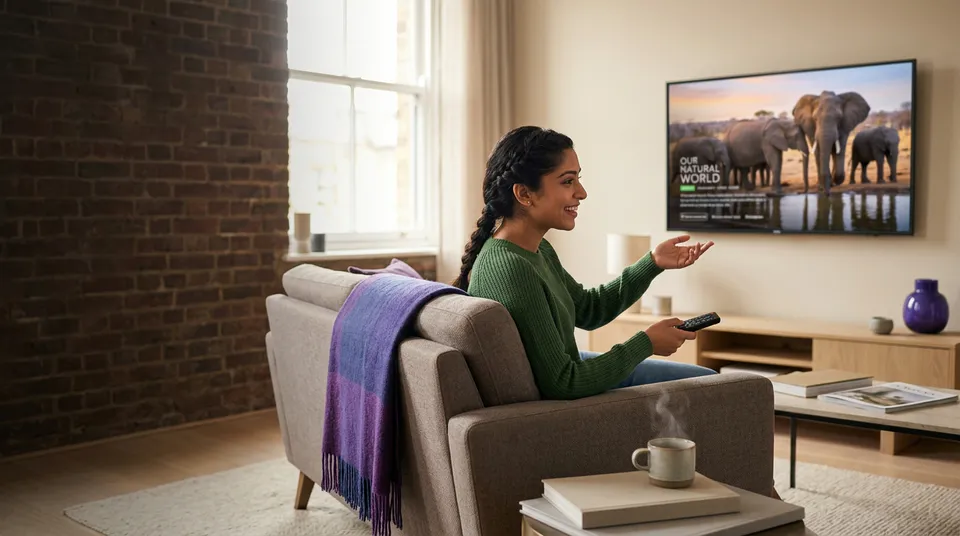

Yan yana duyulan model yanıtları
Daha basit cevapla başlayın, aynı görevin nasıl geliştirilebileceğini duymak için Band'yi değiştirin, ardından kişisel bir yanıtı kaydedin. Bunlar öğretim örnekleridir, resmi cevaplar veya puan garantisi değildir.
Bölüm 2 - Örnek Cevap
Part 2 cue-card response
I like watching a nature documentary series on TV. It's about animals and the places they live. One episode I remember showed coral reefs and many colourful fish. I usually watch it with my flatmate or sometimes alone in the evening. We sit on the sofa and sometimes talk about what we see. I like it because the pictures are very beautiful and it is relaxing. It teaches me things but not in a difficult way. After watching I sometimes try to do small things, like use less plastic. The show is easy to follow and enjoyable.
I enjoy watching a documentary series called 'Planet Lives' on a streaming service. It explores wildlife and ecosystems around the world, with high-quality footage and interviews with scientists. The episode I like best is about coral reefs, which showed how reefs support fish and how climate change damages them. I usually watch it with my partner and sometimes with friends; we like discussing surprising facts afterwards and it sparks lively conversation. Often we make a cup of tea and pause to look things up on our phones, so it becomes a shared, relaxed experience. I like it because it combines beautiful cinematography with serious science, so it's both enjoyable and informative. The presenters explain complex ideas clearly and the pacing is calm, which helps me concentrate. Watching the series has changed how I think about conservation; for example, I started buying less single-use plastic after an episode explained its impact. The series also includes short profiles of local people trying to protect habitats, which makes the issues feel human and immediate. I appreciate the clear call-to-action at the end of each episode, like links to charities or simple lifestyle changes.
Bölüm 3 - Örnek Yanıtlar
What programs do people like to watch in your country?
People in my country watch a lot of different programmes. Popular ones are soap operas, reality TV, news and sport. Many also like comedy shows and drama series. Younger people use streaming services for international series, while older viewers often stick to TV channels. Live sport, like football, gets big audiences. Evening news is also very common.
Viewing habits are quite varied. Domestic dramas and soap operas still attract large audiences in the evenings, while reality TV and talent shows tend to draw younger viewers. Sporting events command very big live audiences, and news programmes remain important for people who want up-to-date information. At the same time, streaming platforms have shifted tastes towards international series and niche documentaries, so audiences are more fragmented now. Broadly, people choose what fits their routine and mood — some watch to unwind after work, others to keep informed or learn something new.
Do people in your country like to watch foreign TV programs?
Yes, many people enjoy foreign programmes. American and Korean series are quite popular. People watch them with subtitles or dubbed versions. Foreign shows are seen as more exciting or different. They also help people practise language a bit.
Absolutely — foreign programmes are widely watched, especially via streaming services. American, Korean and Scandinavian series have found large audiences because of distinctive storytelling and high production values. Many viewers prefer subtitles to hear the original language, which can help with language learning and cultural understanding, while others pick dubbed versions for convenience. Overall, foreign TV has broadened tastes and introduced new storytelling styles to local viewers.
What's the benefit of letting kids watch animal videos than visiting zoos?
Watching animal videos is useful because they are easy to access and safe for children. You can watch at home and pause to talk about things. They often show a wide range of animals and habitats. But they are not the same as seeing animals in real life.
Animal videos offer several practical benefits compared with zoo visits. They are readily available on tablets or phones, so children can revisit clips and learn by repetition, which helps memory. Good videos can show rare species and close-up behaviour that a local zoo might not offer, and many include scientific commentary that explains what is happening. On the other hand, films can’t fully replace the sensory experience of a real visit, but they are a useful and ethical supplement when travel, cost or animal welfare are concerns.
Do teachers play videos in class in your country?
Yes, teachers sometimes play videos in class. They use short clips for language lessons or science. Videos help explain things and keep students interested. But teachers usually add some questions or activities after the film.
Yes — teachers increasingly use video as a teaching aid. Short clips, animated explainers or segments from documentaries are handy for presenting complex ideas visually, particularly in science, history and language lessons. Many educators follow a 'teach–watch–discuss' sequence: introduce the topic, show a focused clip, then run a follow-up activity or discussion to check understanding. Used thoughtfully, video can boost engagement and cater for different learning styles, but it needs to be actively taught around to avoid passive viewing.
Do you think watching talk shows is a waste of time?
I don't think all talk shows are a waste of time. Some have useful interviews and news. Others are just for entertainment and gossip. It depends on the show and what you want.
It depends on the programme. Some talk shows offer serious interviews, expert panels and thoughtful discussion that can be informative, while others are designed for entertainment and focus on celebrity gossip or sensational stories. For viewers looking to be entertained they have their place, but if your aim is to learn something substantial it's better to choose reputable current affairs or documentary programmes. Developing a bit of critical thinking helps too — don't accept everything you hear at face value.
Do you think we can acquire knowledge from watching TV programs?
Yes, I think you can learn from TV. Documentaries, news and educational shows give facts and ideas. You can also learn practical skills from cooking or DIY programmes. But it's important to check the information sometimes.
Definitely — television can be an effective source of knowledge when programmes are well produced. Documentaries, science shows and quality news provide factual information and use visuals to explain complex topics, which often inspires viewers to read more. Even entertainment formats can teach indirectly: historical dramas might spark an interest in a period, and lifestyle programmes can teach practical skills. The key is to treat TV as a starting point and to verify facts, since not all content is accurate or free from bias.
Alıştırma durumu: Önceki bir soru bankası döngüsünden arşivlenmiş konu. Beceri pratiği için yararlı olmayı sürdürüyor ancak güncel veya garantili bir sınav sorusu olarak sunulmuyor. Konular nasıl etiketlenir?.
Nasıl cevaplanır İzlemeyi sevdiğiniz bir programı tanımlayın IELTS Konuşma soruları
İzlemekten hoşlandığınız bir programı tanımlayın ipucu kartı için hazırlık dakikasını konuşma boyunca bir rota oluşturmak için kullanın. Net bir konu seçin, iki özel anı veya ayrıntıyı ekleyin ve bunun neden önemli olduğunu anlatarak bitirin. Daha sonra daha geniş bir açıklama ve karşılaştırma yapmak için bağlantılı Bölüm 3 sorularını kullanın.
İşaret kartı istemleri:
- Bu ne
- Neyle ilgili?
- Kiminle izliyorsun
- Ve neden izlemeyi sevdiğinizi açıklayın
- Açılış: Kişiyi, yeri, nesneyi veya olayı tanımlayın.
- Gelişim: İki ayrıntıyı veya anı mantıksal bir sırayla tanımlayın.
- Uzantı: Bir nedeni, sonucu, karşılaştırmayı veya sorunu açıklayın.
- Düşünme: Konunun neden unutulmaz veya önemli olduğunu açıklayarak bitirin.
Soru bazında yaklaşım
| Alıştırma sorusu | Yararlı cevap hamlesi |
|---|---|
| What programs do people like to watch in your country? | Önce bir şeye isim verin, ardından belirli bir özelliği veya örneği tanımlayın. |
| Do people in your country like to watch foreign TV programs? | Senaryoyu ezberlemeden doğrudan bir cevap, tek bir neden ve kısa bir örnek verin. |
| What's the benefit of letting kids watch animal videos than visiting zoos? | Önce bir şeye isim verin, ardından belirli bir özelliği veya örneği tanımlayın. |
| Do teachers play videos in class in your country? | Senaryoyu ezberlemeden doğrudan bir cevap, tek bir neden ve kısa bir örnek verin. |
Kelime odağı
Model cevaplarında halihazırda gösterilen faydalı dil şunları içerir: soap opera, streaming platform, fragmented audiences, subtitles, dubbed, production values, revisit, close-up behaviour. Her bir anlamı ve doğal kelime ortaklığını öğrenin, ardından tüm metni kopyalamak yerine öğeyi yeni bir yanıtta kullanın.
Kaçınılması gereken yaygın hatalar
- Soruyu yalnızca kısmen yanıtlayan ezberlenmiş bir yanıt vermek.
- Anlamı veya sıralamayı kontrol etmeden zor kelimeleri eklemek.
- Her hatadan sonra kısa süreliğine düzeltme yapıp devam etmek yerine yeniden başlatmak.
- İlk denemenizi kaydetmeden önce model cevabını okuyun.
Uygulamayı izlemeyi sevdiğiniz bir programı tanımlayın SSS
İzlemeyi sevdiğiniz bir programı tanımlayın ipucu kartı hazırlık dakikasını nasıl kullanmalıyım?
Bir açılış, iki veya üç ayrıntı ve son bir yansıma için anahtar kelimeler yazın. Tam cümleler yazmaya çalışmayın.
Her işaret kartı mermisini kapatmak zorunda mıyım?
Yönlendirmeler konuşmayı organize etmenize yardımcı olur. Bunları ele almak faydalıdır, ancak bir ila iki dakikalık tutarlı bir yanıt, her satırın mekanik olarak işaretlenmesinden daha önemlidir.
Bölüm 3 soruları Bölüm 2 ile nasıl bağlantılıdır?
Sebepler, karşılaştırmalar, sosyal etkiler veya gelecekteki olasılıklar yoluyla aynı geniş temayı geliştirirler, dolayısıyla yanıtlar normalde Bölüm 1'den daha fazla açıklamaya ihtiyaç duyar.
