
IELTS การพูด ตอนที่ 2 และ 3: Describe a program you like to watch

ส่วนที่ 2 บัตรคิว
Describe a program you like to watch
คุณควรพูดว่า:
- มันคืออะไร
- มันเกี่ยวกับอะไร
- ว่าคุณดูมันกับใคร.
- และอธิบายว่าทำไมคุณถึงชอบดูมัน
คุณจะมีเวลาหนึ่งถึงสองนาทีในการพูดคุยเกี่ยวกับหัวข้อนี้
อ่านบทบรรยายฉบับสมบูรณ์
I enjoy watching a documentary series called 'Planet Lives' on a streaming service. It explores wildlife and ecosystems around the world, with high-quality footage and interviews with scientists. The episode I like best is about coral reefs, which showed how reefs support fish and how climate change damages them. I usually watch it with my partner and sometimes with friends; we like discussing surprising facts afterwards and it sparks lively conversation. Often we make a cup of tea and pause to look things up on our phones, so it becomes a shared, relaxed experience. I like it because it combines beautiful cinematography with serious science, so it's both enjoyable and informative. The presenters explain complex ideas clearly and the pacing is calm, which helps me concentrate. Watching the series has changed how I think about conservation; for example, I started buying less single-use plastic after an episode explained its impact. The series also includes short profiles of local people trying to protect habitats, which makes the issues feel human and immediate. I appreciate the clear call-to-action at the end of each episode, like links to charities or simple lifestyle changes.
สถานะการเตรียมการ: รอบหัวข้อที่คาดการณ์ไว้ แหล่งข้อมูลสำหรับฝึกหัดอิสระนี้ไม่ใช่ข้อสอบ IELTS อย่างเป็นทางการ และคำถามในการทดสอบอาจแตกต่างกันออกไป วิธีการติดป้ายกำกับหัวข้อ.
ส่วนที่ 3 คำถามสนทนา
ย้ายทีละคำถาม: ฟัง ตอบ เปรียบเทียบ และลองอีกครั้ง ข้อความคำถามที่สมบูรณ์จะยังคงอยู่ในหน้า HTML เพื่อการเข้าถึงและการค้นหา
- 01What programs do people like to watch in your country?
- 02Do people in your country like to watch foreign TV programs?
- 03What's the benefit of letting kids watch animal videos than visiting zoos?
- 04Do teachers play videos in class in your country?
- 05Do you think watching talk shows is a waste of time?
- 06Do you think we can acquire knowledge from watching TV programs?
ดูหัวข้อก่อนพูด
ใช้รูปภาพเป็นไอเดีย อธิบายสิ่งที่คุณสังเกตเห็น เชื่อมโยงกับประสบการณ์ของคุณ แล้วตอบคำถามจริง
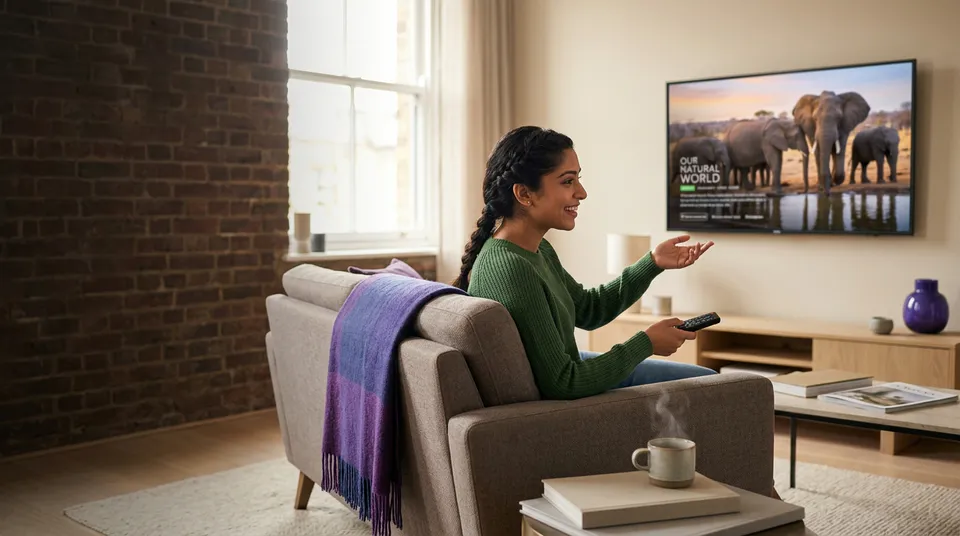

โมเดลตอบ ได้ยินพร้อมๆ กัน
เริ่มต้นด้วยคำตอบที่ง่ายกว่า สลับ Band เพื่อฟังว่างานเดียวกันนี้สามารถพัฒนาได้อย่างไร จากนั้นจึงบันทึกคำตอบส่วนตัว นี่เป็นตัวอย่างการสอน ไม่ใช่คำตอบอย่างเป็นทางการหรือการรับประกันคะแนน
ส่วนที่ 2 - คำตอบของแบบจำลอง
Part 2 cue-card response
I like watching a nature documentary series on TV. It's about animals and the places they live. One episode I remember showed coral reefs and many colourful fish. I usually watch it with my flatmate or sometimes alone in the evening. We sit on the sofa and sometimes talk about what we see. I like it because the pictures are very beautiful and it is relaxing. It teaches me things but not in a difficult way. After watching I sometimes try to do small things, like use less plastic. The show is easy to follow and enjoyable.
I enjoy watching a documentary series called 'Planet Lives' on a streaming service. It explores wildlife and ecosystems around the world, with high-quality footage and interviews with scientists. The episode I like best is about coral reefs, which showed how reefs support fish and how climate change damages them. I usually watch it with my partner and sometimes with friends; we like discussing surprising facts afterwards and it sparks lively conversation. Often we make a cup of tea and pause to look things up on our phones, so it becomes a shared, relaxed experience. I like it because it combines beautiful cinematography with serious science, so it's both enjoyable and informative. The presenters explain complex ideas clearly and the pacing is calm, which helps me concentrate. Watching the series has changed how I think about conservation; for example, I started buying less single-use plastic after an episode explained its impact. The series also includes short profiles of local people trying to protect habitats, which makes the issues feel human and immediate. I appreciate the clear call-to-action at the end of each episode, like links to charities or simple lifestyle changes.
ส่วนที่ 3 - คำตอบของแบบจำลอง
What programs do people like to watch in your country?
People in my country watch a lot of different programmes. Popular ones are soap operas, reality TV, news and sport. Many also like comedy shows and drama series. Younger people use streaming services for international series, while older viewers often stick to TV channels. Live sport, like football, gets big audiences. Evening news is also very common.
Viewing habits are quite varied. Domestic dramas and soap operas still attract large audiences in the evenings, while reality TV and talent shows tend to draw younger viewers. Sporting events command very big live audiences, and news programmes remain important for people who want up-to-date information. At the same time, streaming platforms have shifted tastes towards international series and niche documentaries, so audiences are more fragmented now. Broadly, people choose what fits their routine and mood — some watch to unwind after work, others to keep informed or learn something new.
Do people in your country like to watch foreign TV programs?
Yes, many people enjoy foreign programmes. American and Korean series are quite popular. People watch them with subtitles or dubbed versions. Foreign shows are seen as more exciting or different. They also help people practise language a bit.
Absolutely — foreign programmes are widely watched, especially via streaming services. American, Korean and Scandinavian series have found large audiences because of distinctive storytelling and high production values. Many viewers prefer subtitles to hear the original language, which can help with language learning and cultural understanding, while others pick dubbed versions for convenience. Overall, foreign TV has broadened tastes and introduced new storytelling styles to local viewers.
What's the benefit of letting kids watch animal videos than visiting zoos?
Watching animal videos is useful because they are easy to access and safe for children. You can watch at home and pause to talk about things. They often show a wide range of animals and habitats. But they are not the same as seeing animals in real life.
Animal videos offer several practical benefits compared with zoo visits. They are readily available on tablets or phones, so children can revisit clips and learn by repetition, which helps memory. Good videos can show rare species and close-up behaviour that a local zoo might not offer, and many include scientific commentary that explains what is happening. On the other hand, films can’t fully replace the sensory experience of a real visit, but they are a useful and ethical supplement when travel, cost or animal welfare are concerns.
Do teachers play videos in class in your country?
Yes, teachers sometimes play videos in class. They use short clips for language lessons or science. Videos help explain things and keep students interested. But teachers usually add some questions or activities after the film.
Yes — teachers increasingly use video as a teaching aid. Short clips, animated explainers or segments from documentaries are handy for presenting complex ideas visually, particularly in science, history and language lessons. Many educators follow a 'teach–watch–discuss' sequence: introduce the topic, show a focused clip, then run a follow-up activity or discussion to check understanding. Used thoughtfully, video can boost engagement and cater for different learning styles, but it needs to be actively taught around to avoid passive viewing.
Do you think watching talk shows is a waste of time?
I don't think all talk shows are a waste of time. Some have useful interviews and news. Others are just for entertainment and gossip. It depends on the show and what you want.
It depends on the programme. Some talk shows offer serious interviews, expert panels and thoughtful discussion that can be informative, while others are designed for entertainment and focus on celebrity gossip or sensational stories. For viewers looking to be entertained they have their place, but if your aim is to learn something substantial it's better to choose reputable current affairs or documentary programmes. Developing a bit of critical thinking helps too — don't accept everything you hear at face value.
Do you think we can acquire knowledge from watching TV programs?
Yes, I think you can learn from TV. Documentaries, news and educational shows give facts and ideas. You can also learn practical skills from cooking or DIY programmes. But it's important to check the information sometimes.
Definitely — television can be an effective source of knowledge when programmes are well produced. Documentaries, science shows and quality news provide factual information and use visuals to explain complex topics, which often inspires viewers to read more. Even entertainment formats can teach indirectly: historical dramas might spark an interest in a period, and lifestyle programmes can teach practical skills. The key is to treat TV as a starting point and to verify facts, since not all content is accurate or free from bias.
สถานะการปฏิบัติ: หัวข้อที่เก็บถาวรจากรอบธนาคารคำถามครั้งก่อน ยังคงมีประโยชน์สำหรับการฝึกทักษะแต่ไม่ได้นำเสนอเป็นคำถามสอบในปัจจุบันหรือที่รับประกัน วิธีการติดป้ายกำกับหัวข้อ.
วิธีตอบ อธิบายโปรแกรมที่คุณชอบดู คำถาม IELTS Speaking
สำหรับการอธิบายโปรแกรมที่คุณชอบดู บัตรคิว ให้ใช้นาทีการเตรียมการเพื่อสร้างเส้นทางผ่านการพูดคุย เลือกหัวข้อที่ชัดเจน เพิ่มช่วงเวลาหรือรายละเอียดที่เฉพาะเจาะจงสองรายการ และจบด้วยเหตุผลว่าทำไมจึงสำคัญ จากนั้นใช้คำถามส่วนที่ 3 ที่เชื่อมโยงเพื่อฝึกฝนการอธิบายและการเปรียบเทียบที่กว้างขึ้น
ข้อความแจ้งบัตรคิว:
- มันคืออะไร
- มันเกี่ยวกับอะไร
- ว่าคุณดูมันกับใคร.
- และอธิบายว่าทำไมคุณถึงชอบดูมัน
- การเปิด: ระบุบุคคล สถานที่ วัตถุ หรือเหตุการณ์
- การพัฒนา: อธิบายสองรายละเอียดหรือช่วงเวลาตามลำดับตรรกะ
- ส่วนขยาย: อธิบายเหตุผล ผลลัพธ์ การเปรียบเทียบ หรือปัญหา
- การสะท้อนกลับ: จบด้วยเหตุผลว่าทำไมหัวข้อนั้นถึงน่าจดจำหรือสำคัญ
แนวทางคำถามต่อคำถาม
| คำถามฝึกหัด | การย้ายคำตอบที่เป็นประโยชน์ |
|---|---|
| What programs do people like to watch in your country? | ตั้งชื่อสิ่งนั้นก่อน จากนั้นจึงอธิบายคุณลักษณะหรือตัวอย่างเฉพาะเจาะจง |
| Do people in your country like to watch foreign TV programs? | ให้คำตอบโดยตรง เหตุผลหนึ่งข้อ และตัวอย่างสั้นๆ โดยไม่ต้องจำสคริปต์ |
| What's the benefit of letting kids watch animal videos than visiting zoos? | ตั้งชื่อสิ่งนั้นก่อน จากนั้นจึงอธิบายคุณลักษณะหรือตัวอย่างเฉพาะเจาะจง |
| Do teachers play videos in class in your country? | ให้คำตอบโดยตรง เหตุผลหนึ่งข้อ และตัวอย่างสั้นๆ โดยไม่ต้องจำสคริปต์ |
เน้นคำศัพท์
ภาษาที่มีประโยชน์แสดงให้เห็นแล้วในคำตอบของโมเดล ได้แก่ soap opera, streaming platform, fragmented audiences, subtitles, dubbed, production values, revisit, close-up behaviour. เรียนรู้แต่ละความหมายและคู่คำที่เป็นธรรมชาติ จากนั้นใช้รายการนั้นเป็นคำตอบใหม่แทนที่จะคัดลอกสคริปต์ที่สมบูรณ์
ข้อผิดพลาดทั่วไปที่ควรหลีกเลี่ยง
- ให้คำตอบที่จดจำซึ่งตอบคำถามเพียงบางส่วนเท่านั้น
- เติมคำศัพท์ยากๆ โดยไม่ต้องตรวจสอบความหมายหรือการจัดตำแหน่ง
- รีสตาร์ทหลังจากทุกข้อผิดพลาด แทนที่จะแก้ไขในช่วงสั้นๆ และดำเนินการต่อ
- อ่านคำตอบของแบบจำลองก่อนที่จะบันทึกความพยายามครั้งแรกของคุณเอง
อธิบายรายการที่คุณชอบดูคำถามที่พบบ่อยฝึกซ้อม
ฉันจะใช้โปรแกรม Describe a ที่คุณต้องการดูนาทีการเตรียมบัตรคิวได้อย่างไร?
เขียนคำหลักสำหรับช่วงเริ่มต้น รายละเอียดสองหรือสามรายละเอียด และการไตร่ตรองขั้นสุดท้าย อย่าพยายามเขียนประโยคที่สมบูรณ์
ฉันต้องครอบคลุมสัญลักษณ์แสดงหัวข้อย่อยทุกบัตรคิวหรือไม่
ข้อความแจ้งจะช่วยคุณจัดระเบียบการสนทนา การครอบคลุมสิ่งเหล่านี้มีประโยชน์ แต่การตอบสนองหนึ่งถึงสองนาทีที่สอดคล้องกันนั้นมีความสำคัญมากกว่าการทำเครื่องหมายแต่ละบรรทัดโดยอัตโนมัติ
คำถามส่วนที่ 3 เชื่อมโยงกับส่วนที่ 2 อย่างไร
พวกเขาพัฒนาหัวข้อกว้างๆ ที่เหมือนกันด้วยเหตุผล การเปรียบเทียบ ผลกระทบทางสังคม หรือความเป็นไปได้ในอนาคต ดังนั้น คำตอบโดยปกติจะต้องมีคำอธิบายมากกว่าส่วนที่ 1
