
IELTS Berbicara Bagian 2 & 3: Describe a program you like to watch

Bagian 2 kartu isyarat
Describe a program you like to watch
Anda harus mengatakan:
- Apa itu
- Tentang apa ini
- Dengan siapa Anda menontonnya
- Dan jelaskan mengapa Anda suka menontonnya
Anda memiliki waktu satu hingga dua menit untuk membicarakan topik ini.
Baca transkrip lengkapnya
I enjoy watching a documentary series called 'Planet Lives' on a streaming service. It explores wildlife and ecosystems around the world, with high-quality footage and interviews with scientists. The episode I like best is about coral reefs, which showed how reefs support fish and how climate change damages them. I usually watch it with my partner and sometimes with friends; we like discussing surprising facts afterwards and it sparks lively conversation. Often we make a cup of tea and pause to look things up on our phones, so it becomes a shared, relaxed experience. I like it because it combines beautiful cinematography with serious science, so it's both enjoyable and informative. The presenters explain complex ideas clearly and the pacing is calm, which helps me concentrate. Watching the series has changed how I think about conservation; for example, I started buying less single-use plastic after an episode explained its impact. The series also includes short profiles of local people trying to protect habitats, which makes the issues feel human and immediate. I appreciate the clear call-to-action at the end of each episode, like links to charities or simple lifestyle changes.
Status persiapan: Siklus topik yang diprediksi. Sumber latihan mandiri ini bukan makalah IELTS resmi, dan soal-soal dalam tes Anda bisa berbeda. Bagaimana topik diberi label.
Bagian 3 pertanyaan diskusi
Pindahkan pertanyaan satu per satu: dengarkan, jawab, bandingkan, dan coba lagi. Teks pertanyaan lengkap tetap ada di halaman HTML untuk aksesibilitas dan pencarian.
- 01What programs do people like to watch in your country?
- 02Do people in your country like to watch foreign TV programs?
- 03What's the benefit of letting kids watch animal videos than visiting zoos?
- 04Do teachers play videos in class in your country?
- 05Do you think watching talk shows is a waste of time?
- 06Do you think we can acquire knowledge from watching TV programs?
Lihat topiknya sebelum Anda berbicara
Gunakan gambar sebagai petunjuk ide. Jelaskan apa yang Anda perhatikan, hubungkan dengan pengalaman Anda, lalu jawab pertanyaan sebenarnya.
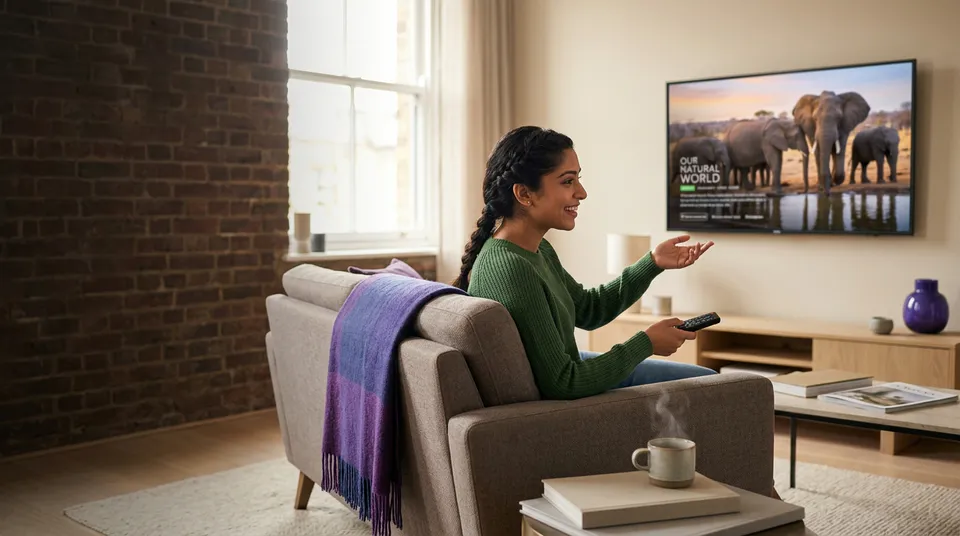

Jawaban model, terdengar berdampingan
Mulailah dengan jawaban yang lebih sederhana, alihkan Band untuk mendengarkan bagaimana tugas yang sama dapat dikembangkan, lalu catat tanggapan pribadi. Ini adalah contoh pengajaran, bukan jawaban resmi atau jaminan skor.
Bagian 2 — Jawaban Model
Part 2 cue-card response
I like watching a nature documentary series on TV. It's about animals and the places they live. One episode I remember showed coral reefs and many colourful fish. I usually watch it with my flatmate or sometimes alone in the evening. We sit on the sofa and sometimes talk about what we see. I like it because the pictures are very beautiful and it is relaxing. It teaches me things but not in a difficult way. After watching I sometimes try to do small things, like use less plastic. The show is easy to follow and enjoyable.
I enjoy watching a documentary series called 'Planet Lives' on a streaming service. It explores wildlife and ecosystems around the world, with high-quality footage and interviews with scientists. The episode I like best is about coral reefs, which showed how reefs support fish and how climate change damages them. I usually watch it with my partner and sometimes with friends; we like discussing surprising facts afterwards and it sparks lively conversation. Often we make a cup of tea and pause to look things up on our phones, so it becomes a shared, relaxed experience. I like it because it combines beautiful cinematography with serious science, so it's both enjoyable and informative. The presenters explain complex ideas clearly and the pacing is calm, which helps me concentrate. Watching the series has changed how I think about conservation; for example, I started buying less single-use plastic after an episode explained its impact. The series also includes short profiles of local people trying to protect habitats, which makes the issues feel human and immediate. I appreciate the clear call-to-action at the end of each episode, like links to charities or simple lifestyle changes.
Bagian 3 - Jawaban Model
What programs do people like to watch in your country?
People in my country watch a lot of different programmes. Popular ones are soap operas, reality TV, news and sport. Many also like comedy shows and drama series. Younger people use streaming services for international series, while older viewers often stick to TV channels. Live sport, like football, gets big audiences. Evening news is also very common.
Viewing habits are quite varied. Domestic dramas and soap operas still attract large audiences in the evenings, while reality TV and talent shows tend to draw younger viewers. Sporting events command very big live audiences, and news programmes remain important for people who want up-to-date information. At the same time, streaming platforms have shifted tastes towards international series and niche documentaries, so audiences are more fragmented now. Broadly, people choose what fits their routine and mood — some watch to unwind after work, others to keep informed or learn something new.
Do people in your country like to watch foreign TV programs?
Yes, many people enjoy foreign programmes. American and Korean series are quite popular. People watch them with subtitles or dubbed versions. Foreign shows are seen as more exciting or different. They also help people practise language a bit.
Absolutely — foreign programmes are widely watched, especially via streaming services. American, Korean and Scandinavian series have found large audiences because of distinctive storytelling and high production values. Many viewers prefer subtitles to hear the original language, which can help with language learning and cultural understanding, while others pick dubbed versions for convenience. Overall, foreign TV has broadened tastes and introduced new storytelling styles to local viewers.
What's the benefit of letting kids watch animal videos than visiting zoos?
Watching animal videos is useful because they are easy to access and safe for children. You can watch at home and pause to talk about things. They often show a wide range of animals and habitats. But they are not the same as seeing animals in real life.
Animal videos offer several practical benefits compared with zoo visits. They are readily available on tablets or phones, so children can revisit clips and learn by repetition, which helps memory. Good videos can show rare species and close-up behaviour that a local zoo might not offer, and many include scientific commentary that explains what is happening. On the other hand, films can’t fully replace the sensory experience of a real visit, but they are a useful and ethical supplement when travel, cost or animal welfare are concerns.
Do teachers play videos in class in your country?
Yes, teachers sometimes play videos in class. They use short clips for language lessons or science. Videos help explain things and keep students interested. But teachers usually add some questions or activities after the film.
Yes — teachers increasingly use video as a teaching aid. Short clips, animated explainers or segments from documentaries are handy for presenting complex ideas visually, particularly in science, history and language lessons. Many educators follow a 'teach–watch–discuss' sequence: introduce the topic, show a focused clip, then run a follow-up activity or discussion to check understanding. Used thoughtfully, video can boost engagement and cater for different learning styles, but it needs to be actively taught around to avoid passive viewing.
Do you think watching talk shows is a waste of time?
I don't think all talk shows are a waste of time. Some have useful interviews and news. Others are just for entertainment and gossip. It depends on the show and what you want.
It depends on the programme. Some talk shows offer serious interviews, expert panels and thoughtful discussion that can be informative, while others are designed for entertainment and focus on celebrity gossip or sensational stories. For viewers looking to be entertained they have their place, but if your aim is to learn something substantial it's better to choose reputable current affairs or documentary programmes. Developing a bit of critical thinking helps too — don't accept everything you hear at face value.
Do you think we can acquire knowledge from watching TV programs?
Yes, I think you can learn from TV. Documentaries, news and educational shows give facts and ideas. You can also learn practical skills from cooking or DIY programmes. But it's important to check the information sometimes.
Definitely — television can be an effective source of knowledge when programmes are well produced. Documentaries, science shows and quality news provide factual information and use visuals to explain complex topics, which often inspires viewers to read more. Even entertainment formats can teach indirectly: historical dramas might spark an interest in a period, and lifestyle programmes can teach practical skills. The key is to treat TV as a starting point and to verify facts, since not all content is accurate or free from bias.
Status latihan: Arsip topik dari siklus bank soal sebelumnya. Ini tetap berguna untuk latihan keterampilan tetapi tidak disajikan sebagai soal ujian saat ini atau yang dijamin. Bagaimana topik diberi label.
Bagaimana menjawab Jelaskan program yang Anda suka tonton pertanyaan IELTS Speaking
Untuk kartu isyarat Jelaskan program yang ingin Anda tonton, gunakan menit persiapan untuk membangun rute melalui pembicaraan. Pilih subjek yang jelas, tambahkan dua momen atau detail spesifik, dan akhiri dengan alasan mengapa hal itu penting. Kemudian gunakan pertanyaan Bagian 3 yang tertaut untuk melatih penjelasan dan perbandingan yang lebih luas.
Perintah kartu isyarat:
- Apa itu
- Tentang apa ini
- Dengan siapa Anda menontonnya
- Dan jelaskan mengapa Anda suka menontonnya
- Pembukaan: mengidentifikasi orang, tempat, benda atau peristiwa.
- Perkembangan: mendeskripsikan dua detail atau momen dalam urutan yang logis.
- Ekstensi: menjelaskan alasan, hasil, perbandingan atau masalah.
- Refleksi: akhiri dengan alasan mengapa subjek tersebut berkesan atau penting.
Pendekatan pertanyaan demi pertanyaan
| Soal latihan | Langkah jawaban yang berguna |
|---|---|
| What programs do people like to watch in your country? | Beri nama bendanya terlebih dahulu, lalu jelaskan fitur atau contoh spesifiknya. |
| Do people in your country like to watch foreign TV programs? | Berikan jawaban langsung, satu alasan dan contoh singkat tanpa harus hafal naskahnya. |
| What's the benefit of letting kids watch animal videos than visiting zoos? | Beri nama bendanya terlebih dahulu, lalu jelaskan fitur atau contoh spesifiknya. |
| Do teachers play videos in class in your country? | Berikan jawaban langsung, satu alasan dan contoh singkat tanpa harus hafal naskahnya. |
Fokus kosakata
Bahasa yang berguna sudah ditunjukkan dalam model jawaban yang disertakan soap opera, streaming platform, fragmented audiences, subtitles, dubbed, production values, revisit, close-up behaviour. Pelajari setiap arti dan hubungan kata yang alami, lalu gunakan item tersebut dalam jawaban baru alih-alih menyalin naskah lengkap.
Kesalahan umum yang harus dihindari
- Memberikan respon hafalan yang hanya menjawab sebagian pertanyaan.
- Menambah kosakata sulit tanpa memeriksa makna atau kolokasi.
- Memulai ulang setelah setiap kesalahan alih-alih mengoreksi sebentar dan melanjutkan.
- Membaca jawaban model sebelum merekam upaya pertama Anda.
Jelaskan program yang ingin Anda tonton latihan FAQ
Bagaimana saya harus menggunakan menit Jelaskan program yang Anda suka untuk menonton persiapan kartu isyarat?
Tulis kata kunci untuk pembukaan, dua atau tiga detail, dan refleksi akhir. Jangan mencoba menulis kalimat lengkap.
Apakah saya harus menutupi setiap poin di kartu petunjuk?
Petunjuknya membantu Anda mengatur pembicaraan. Meliputinya memang berguna, tetapi respons yang koheren selama satu hingga dua menit lebih penting daripada mencentang setiap baris secara mekanis.
Bagaimana pertanyaan Bagian 3 terhubung dengan Bagian 2?
Mereka mengembangkan tema luas yang sama melalui alasan, perbandingan, dampak sosial atau kemungkinan masa depan, sehingga jawaban biasanya memerlukan penjelasan lebih banyak daripada Bagian 1.
