
IELTS スピーキング パート 2 & 3: Describe a program you like to watch

パート2のキューカード
Describe a program you like to watch
次のように言うべきです。
- それは何ですか
- それは何についてですか
- 誰と一緒に見るか
- そしてなぜそれを見たいのか説明してください
このトピックについて話す時間は 1 ~ 2 分です。
完全なトランスクリプトを読む
I enjoy watching a documentary series called 'Planet Lives' on a streaming service. It explores wildlife and ecosystems around the world, with high-quality footage and interviews with scientists. The episode I like best is about coral reefs, which showed how reefs support fish and how climate change damages them. I usually watch it with my partner and sometimes with friends; we like discussing surprising facts afterwards and it sparks lively conversation. Often we make a cup of tea and pause to look things up on our phones, so it becomes a shared, relaxed experience. I like it because it combines beautiful cinematography with serious science, so it's both enjoyable and informative. The presenters explain complex ideas clearly and the pacing is calm, which helps me concentrate. Watching the series has changed how I think about conservation; for example, I started buying less single-use plastic after an episode explained its impact. The series also includes short profiles of local people trying to protect habitats, which makes the issues feel human and immediate. I appreciate the clear call-to-action at the end of each episode, like links to charities or simple lifestyle changes.
準備状況: 予測されたトピックサイクル。この独立した練習用リソースは IELTS の公式論文ではないため、テストの問題は異なる場合があります。 トピックのラベル付け方法.
パート 3 のディスカッションの質問
一度に 1 つずつ質問を進めてください。聞いて、答え、比較し、再試行してください。完全な質問テキストは、アクセシビリティと検索のためにページの HTML に残ります。
- 01What programs do people like to watch in your country?
- 02Do people in your country like to watch foreign TV programs?
- 03What's the benefit of letting kids watch animal videos than visiting zoos?
- 04Do teachers play videos in class in your country?
- 05Do you think watching talk shows is a waste of time?
- 06Do you think we can acquire knowledge from watching TV programs?
話す前にトピックを確認する
画像をアイデアのヒントとして使用します。気づいたことを説明し、それを自分の経験に結び付けてから、本当の質問に答えてください。
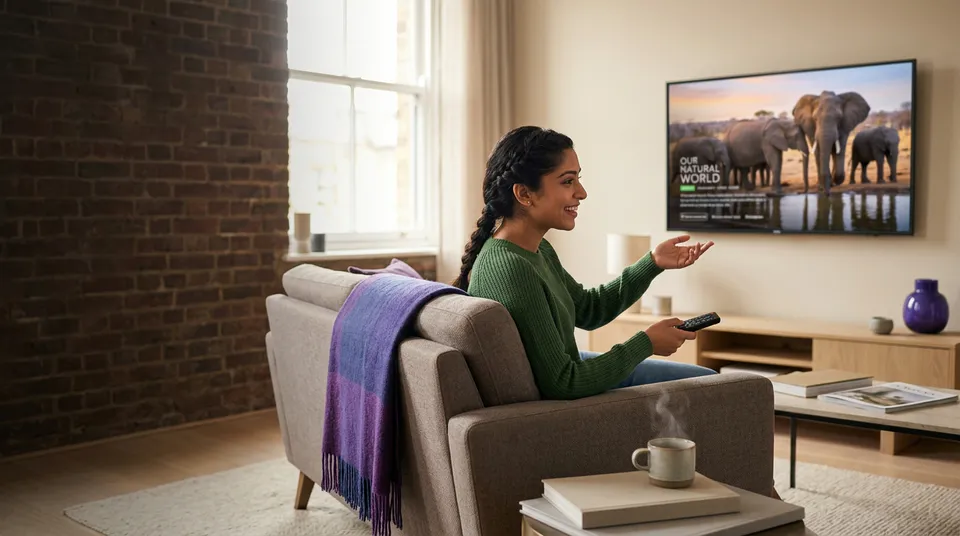

模範解答を並べて聞く
より単純な答えから始めて、Band を切り替えて、同じタスクをどのように開発できるかを聞き、それから個人的な応答を記録します。これらは指導例であり、正式な解答やスコアの保証ではありません。
パート 2 — 模範解答
Part 2 cue-card response
I like watching a nature documentary series on TV. It's about animals and the places they live. One episode I remember showed coral reefs and many colourful fish. I usually watch it with my flatmate or sometimes alone in the evening. We sit on the sofa and sometimes talk about what we see. I like it because the pictures are very beautiful and it is relaxing. It teaches me things but not in a difficult way. After watching I sometimes try to do small things, like use less plastic. The show is easy to follow and enjoyable.
I enjoy watching a documentary series called 'Planet Lives' on a streaming service. It explores wildlife and ecosystems around the world, with high-quality footage and interviews with scientists. The episode I like best is about coral reefs, which showed how reefs support fish and how climate change damages them. I usually watch it with my partner and sometimes with friends; we like discussing surprising facts afterwards and it sparks lively conversation. Often we make a cup of tea and pause to look things up on our phones, so it becomes a shared, relaxed experience. I like it because it combines beautiful cinematography with serious science, so it's both enjoyable and informative. The presenters explain complex ideas clearly and the pacing is calm, which helps me concentrate. Watching the series has changed how I think about conservation; for example, I started buying less single-use plastic after an episode explained its impact. The series also includes short profiles of local people trying to protect habitats, which makes the issues feel human and immediate. I appreciate the clear call-to-action at the end of each episode, like links to charities or simple lifestyle changes.
パート 3 — 模範解答
What programs do people like to watch in your country?
People in my country watch a lot of different programmes. Popular ones are soap operas, reality TV, news and sport. Many also like comedy shows and drama series. Younger people use streaming services for international series, while older viewers often stick to TV channels. Live sport, like football, gets big audiences. Evening news is also very common.
Viewing habits are quite varied. Domestic dramas and soap operas still attract large audiences in the evenings, while reality TV and talent shows tend to draw younger viewers. Sporting events command very big live audiences, and news programmes remain important for people who want up-to-date information. At the same time, streaming platforms have shifted tastes towards international series and niche documentaries, so audiences are more fragmented now. Broadly, people choose what fits their routine and mood — some watch to unwind after work, others to keep informed or learn something new.
Do people in your country like to watch foreign TV programs?
Yes, many people enjoy foreign programmes. American and Korean series are quite popular. People watch them with subtitles or dubbed versions. Foreign shows are seen as more exciting or different. They also help people practise language a bit.
Absolutely — foreign programmes are widely watched, especially via streaming services. American, Korean and Scandinavian series have found large audiences because of distinctive storytelling and high production values. Many viewers prefer subtitles to hear the original language, which can help with language learning and cultural understanding, while others pick dubbed versions for convenience. Overall, foreign TV has broadened tastes and introduced new storytelling styles to local viewers.
What's the benefit of letting kids watch animal videos than visiting zoos?
Watching animal videos is useful because they are easy to access and safe for children. You can watch at home and pause to talk about things. They often show a wide range of animals and habitats. But they are not the same as seeing animals in real life.
Animal videos offer several practical benefits compared with zoo visits. They are readily available on tablets or phones, so children can revisit clips and learn by repetition, which helps memory. Good videos can show rare species and close-up behaviour that a local zoo might not offer, and many include scientific commentary that explains what is happening. On the other hand, films can’t fully replace the sensory experience of a real visit, but they are a useful and ethical supplement when travel, cost or animal welfare are concerns.
Do teachers play videos in class in your country?
Yes, teachers sometimes play videos in class. They use short clips for language lessons or science. Videos help explain things and keep students interested. But teachers usually add some questions or activities after the film.
Yes — teachers increasingly use video as a teaching aid. Short clips, animated explainers or segments from documentaries are handy for presenting complex ideas visually, particularly in science, history and language lessons. Many educators follow a 'teach–watch–discuss' sequence: introduce the topic, show a focused clip, then run a follow-up activity or discussion to check understanding. Used thoughtfully, video can boost engagement and cater for different learning styles, but it needs to be actively taught around to avoid passive viewing.
Do you think watching talk shows is a waste of time?
I don't think all talk shows are a waste of time. Some have useful interviews and news. Others are just for entertainment and gossip. It depends on the show and what you want.
It depends on the programme. Some talk shows offer serious interviews, expert panels and thoughtful discussion that can be informative, while others are designed for entertainment and focus on celebrity gossip or sensational stories. For viewers looking to be entertained they have their place, but if your aim is to learn something substantial it's better to choose reputable current affairs or documentary programmes. Developing a bit of critical thinking helps too — don't accept everything you hear at face value.
Do you think we can acquire knowledge from watching TV programs?
Yes, I think you can learn from TV. Documentaries, news and educational shows give facts and ideas. You can also learn practical skills from cooking or DIY programmes. But it's important to check the information sometimes.
Definitely — television can be an effective source of knowledge when programmes are well produced. Documentaries, science shows and quality news provide factual information and use visuals to explain complex topics, which often inspires viewers to read more. Even entertainment formats can teach indirectly: historical dramas might spark an interest in a period, and lifestyle programmes can teach practical skills. The key is to treat TV as a starting point and to verify facts, since not all content is accurate or free from bias.
実践ステータス: 以前の質問バンク サイクルからアーカイブされたトピック。これはスキルの練習には役立ちますが、現在の試験問題または保証された試験問題としては提示されません。 トピックのラベル付け方法.
答え方 見たい番組について説明してください IELTS スピーキングの質問
「見たい番組について説明してください」というキュー カードの場合は、準備時間を使用してトークのルートを作成します。明確な主題を選択し、2 つの具体的な瞬間または詳細を追加し、それが重要な理由で終わります。次に、リンクされたパート 3 の質問を使用して、より広範な説明と比較を練習します。
キューカードのプロンプト:
- それは何ですか
- それは何についてですか
- 誰と一緒に見るか
- そしてなぜそれを見たいのか説明してください
- オープニング: 人、場所、物体、または出来事を特定します。
- 開発: 2 つの詳細または瞬間を論理的な順序で説明します。
- 拡張: 理由、結果、比較、または問題を説明します。
- 振り返り: その主題がなぜ記憶に残るのか、または重要なのかを最後に述べます。
質問ごとのアプローチ
| 練習問題 | 役に立つ答えの動き |
|---|---|
| What programs do people like to watch in your country? | まず物に名前を付けてから、具体的な機能や例を説明します。 |
| Do people in your country like to watch foreign TV programs? | スクリプトを暗記せずに、直接的な答え、理由を 1 つ、短い例を述べてください。 |
| What's the benefit of letting kids watch animal videos than visiting zoos? | まず物に名前を付けてから、具体的な機能や例を説明します。 |
| Do teachers play videos in class in your country? | スクリプトを暗記せずに、直接的な答え、理由を 1 つ、短い例を述べてください。 |
語彙に焦点を当てる
模範解答で既に示されている有用な文言には次のようなものがあります。 soap opera, streaming platform, fragmented audiences, subtitles, dubbed, production values, revisit, close-up behaviour。それぞれの意味と自然な単語の連携を学び、完全な台本をコピーするのではなく、新しい回答でその項目を使用します。
避けるべきよくある間違い
- 質問に対して部分的にしか答えていない、暗記した回答をする。
- 意味やコロケーションを確認せずに、難しい語彙を追加する。
- エラーが発生するたびに、簡単に修正して続行するのではなく、再起動します。
- 自分の最初の解答を記録する前に、模範解答を読んでください。
見たい番組について説明してください 練習に関するよくある質問
「見たい番組を説明する」キューカード準備分をどのように使用すればよいですか?
冒頭、2 つまたは 3 つの詳細、最後の感想のキーワードを書きます。完全な文章を書こうとしないでください。
キューカードのすべての箇条書きをカバーする必要がありますか?
プロンプトはトークを整理するのに役立ちます。それらをカバーすることは有益ですが、機械的に各行をチェックするよりも、1 ~ 2 分間の一貫した応答の方が重要です。
パート 3 の質問はパート 2 にどのように関連していますか?
これらは、理由、比較、社会的影響、将来の可能性を通じて同じ広範なテーマを展開するため、通常、回答にはパート 1 よりも詳しい説明が必要です。
