
IELTS Speaking Parte 1: Crowded place Preguntas y respuestas

preguntas de la parte 1
Mueva una pregunta a la vez: escuche, responda, compare y vuelva a intentarlo. El texto completo de la pregunta permanece en la página HTML para accesibilidad y búsqueda.
- 01Is the city where you live crowded?
- 02Is there a crowded place near where you live?
- 03Do you like crowded places?Full Band 6/7 answer →
- 04Do most people like crowded places?
- 05When was the last time you were in a crowded place?
Lea la transcripción completa
It really depends which part of the city you mean. The city centre is usually packed, particularly during the morning and evening rush hours, with crowded buses and busy pavements. By contrast, the suburbs and riverside parks are much quieter, so overall the city feels busy but not uniformly overcrowded.
Estado de preparación: ciclo de tema previsto. Este recurso de práctica independiente no es un documento oficial del IELTS y las preguntas de su examen pueden ser diferentes. Cómo se etiquetan los temas.
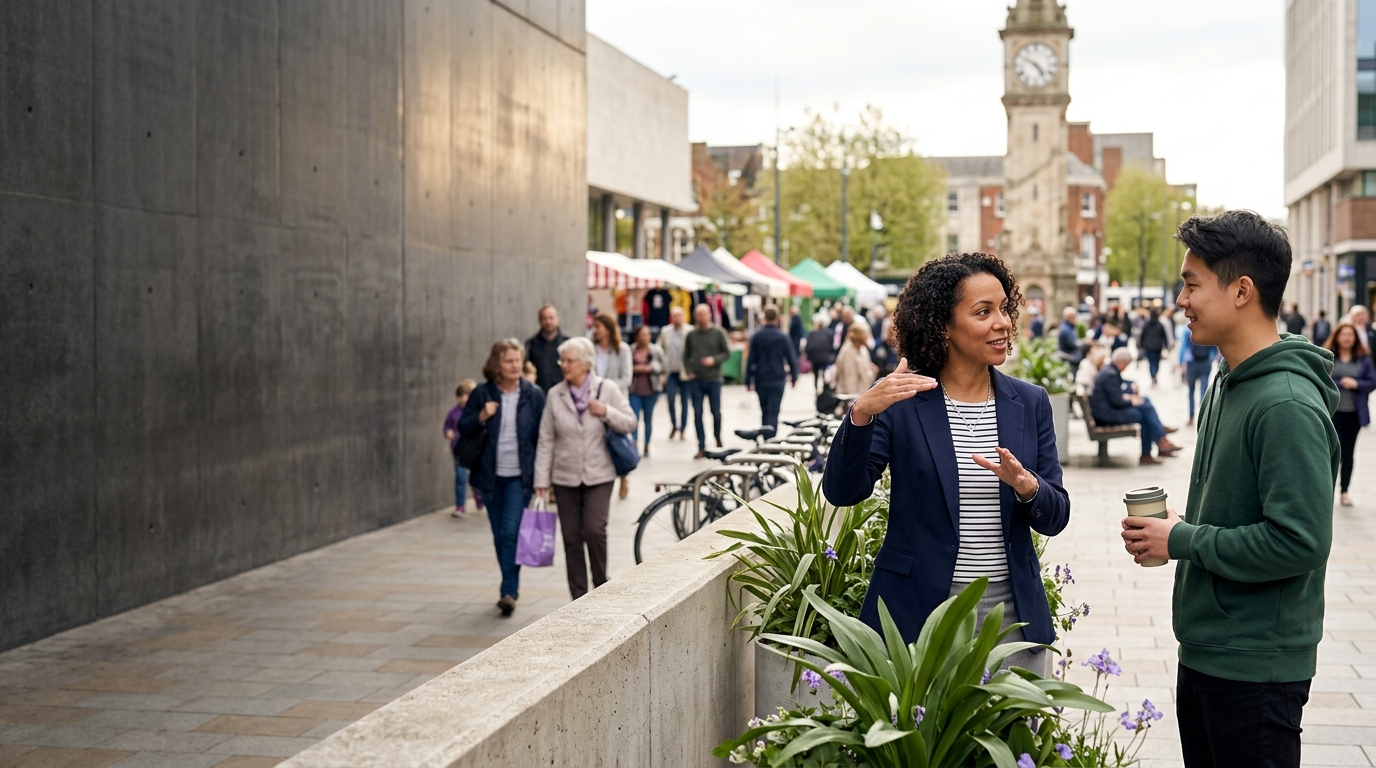
Vea el tema antes de hablar.
Utilice las imágenes como sugerencias de ideas. Describe lo que notas, conéctalo con tu experiencia y luego responde la pregunta real.

Respuestas modelo, escuchadas una al lado de la otra
Comience con la respuesta más simple, cambie Band para escuchar cómo se puede desarrollar la misma tarea y luego registre una respuesta personal. Estos son ejemplos de enseñanza, no respuestas oficiales ni garantías de puntuación.
Is the city where you live crowded?
Yes, the city I live in is quite crowded, especially in the centre. There are lots of cars and buses at rush hour and the pavements can be busy. Parks and some residential streets are much quieter though, so it depends where you go.
It really depends which part of the city you mean. The city centre is usually packed, particularly during the morning and evening rush hours, with crowded buses and busy pavements. By contrast, the suburbs and riverside parks are much quieter, so overall the city feels busy but not uniformly overcrowded.
Is there a crowded place near where you live?
Yes, there’s a busy shopping street a few minutes from my flat. On Saturdays it gets crowded, with people queuing outside shops and a lot of traffic nearby. It’s noisy but convenient for shopping.
There’s a small shopping district and a commuter train station close to where I live, and both can get quite busy. The train station is particularly crowded during weekday mornings, while the shopping area fills up at weekends and during sales, which creates queues and a lot of footfall.
Do you like crowded places?
I don’t mind crowded places sometimes. I like them when there’s a good atmosphere, like at a market or festival. But I don’t enjoy being cramped for a long time, so I usually avoid very crowded shops.
I’m fairly ambivalent — I enjoy crowds when there’s energy and a purpose, for example at a concert or a weekend market, because it feels lively. But I find very dense crowds draining and a bit claustrophobic, so I avoid them for shopping or long journeys if I can.
Do most people like crowded places?
I think opinions differ. Some people like crowded places because they’re lively and social. Others prefer quiet places and avoid crowds. It depends on the person.
Most people’s preferences vary — some thrive on the buzz of crowded places and enjoy being around others, while others prefer tranquillity and personal space. Factors like personality, age and cultural background often determine whether someone finds crowds appealing or stressful.
When was the last time you were in a crowded place?
The last time I was in a crowded place was last Saturday when I went to the weekend market. It was busy with families and stalls, and I only stayed for about an hour before it felt too crowded.
I was in a crowded place just a few days ago at a street food fair on Saturday evening. It was packed with people sampling food and chatting; I enjoyed wandering through the stalls for about ninety minutes but started to feel overwhelmed so I left before it got any later.
Estado de la práctica: tema archivado de un ciclo anterior del banco de preguntas. Sigue siendo útil para la práctica de habilidades, pero no se presenta como una pregunta de examen actual o garantizada. Cómo se etiquetan los temas.
Cómo responder preguntas orales del IELTS en Crowded Place
Este conjunto de lugares llenos de gente contiene 5 preguntas breves de entrevista. Comience cada respuesta con la información que solicitó el examinador y luego amplíela con una razón, ejemplo o contraste. El objetivo es un discurso espontáneo y conectado, no un mini ensayo.
- Responde la pregunta exacta en la primera oración.
- Agregue un motivo o detalle personal específico.
- Utilice un ejemplo o contraste sólo cuando agregue nueva información.
- Termine naturalmente y deje que el examinador haga la siguiente pregunta.
Enfoque pregunta por pregunta
| pregunta de práctica | movimiento de respuesta útil |
|---|---|
| Is the city where you live crowded? | Da una respuesta directa, una razón y un breve ejemplo sin memorizar un guión. |
| Is there a crowded place near where you live? | Da una respuesta directa, una razón y un breve ejemplo sin memorizar un guión. |
| Do you like crowded places? | Responde directamente, da un motivo y añade un detalle personal natural. |
| Do most people like crowded places? | Da una respuesta directa, una razón y un breve ejemplo sin memorizar un guión. |
Enfoque de vocabulario
El lenguaje útil ya demostrado en las respuestas modelo incluye rush hour, packed, pavements, commuter station, footfall, queues, atmosphere, claustrophobic. Aprenda cada significado y una asociación natural de palabras, luego use el elemento en una respuesta nueva en lugar de copiar un guión completo.
Errores comunes a evitar
- Dar una respuesta memorizada que responda sólo parcialmente a la pregunta.
- Agregar vocabulario difícil sin verificar el significado o la colocación.
- Reiniciar después de cada error en lugar de corregir brevemente y continuar.
- Leer la respuesta modelo antes de grabar su primer intento.
Preguntas frecuentes sobre la práctica en lugares concurridos
¿Cuánto tiempo debería durar mi respuesta para Lugar lleno de gente en la Parte 1?
Busque una respuesta directa más una razón o detalle, generalmente de dos a cuatro oraciones. Deténgase cuando la idea esté completa en lugar de forzar un recuento fijo de palabras.
¿Debo memorizar las respuestas del modelo de Crowded Place?
No. Úselos para notar la estructura y el lenguaje, luego responda desde su propia experiencia. La redacción memorizada puede fallar cuando el examinador cambia la pregunta.
¿Qué pasa si no tengo experiencia en el tema?
Dígalo honestamente y luego explique una preferencia, observación o ejemplo hipotético relacionado. Se le evalúa el idioma, no el conocimiento especializado.
