
IELTS Speaking Part 1: Crowded place Questions and Answers

Part 1 questions
Move one question at a time: listen, answer, compare and retry. The complete question text remains in the page HTML for accessibility and search.
- 01Is the city where you live crowded?
- 02Is there a crowded place near where you live?
- 03Do you like crowded places?Full Band 6/7 answer →
- 04Do most people like crowded places?
- 05When was the last time you were in a crowded place?
Read the complete transcript
It really depends which part of the city you mean. The city centre is usually packed, particularly during the morning and evening rush hours, with crowded buses and busy pavements. By contrast, the suburbs and riverside parks are much quieter, so overall the city feels busy but not uniformly overcrowded.
Preparation status: Dated predicted practice collection. This independent practice resource is not an official IELTS paper, and the questions in your test can be different. How topics are labelled.
See the topic before you speak
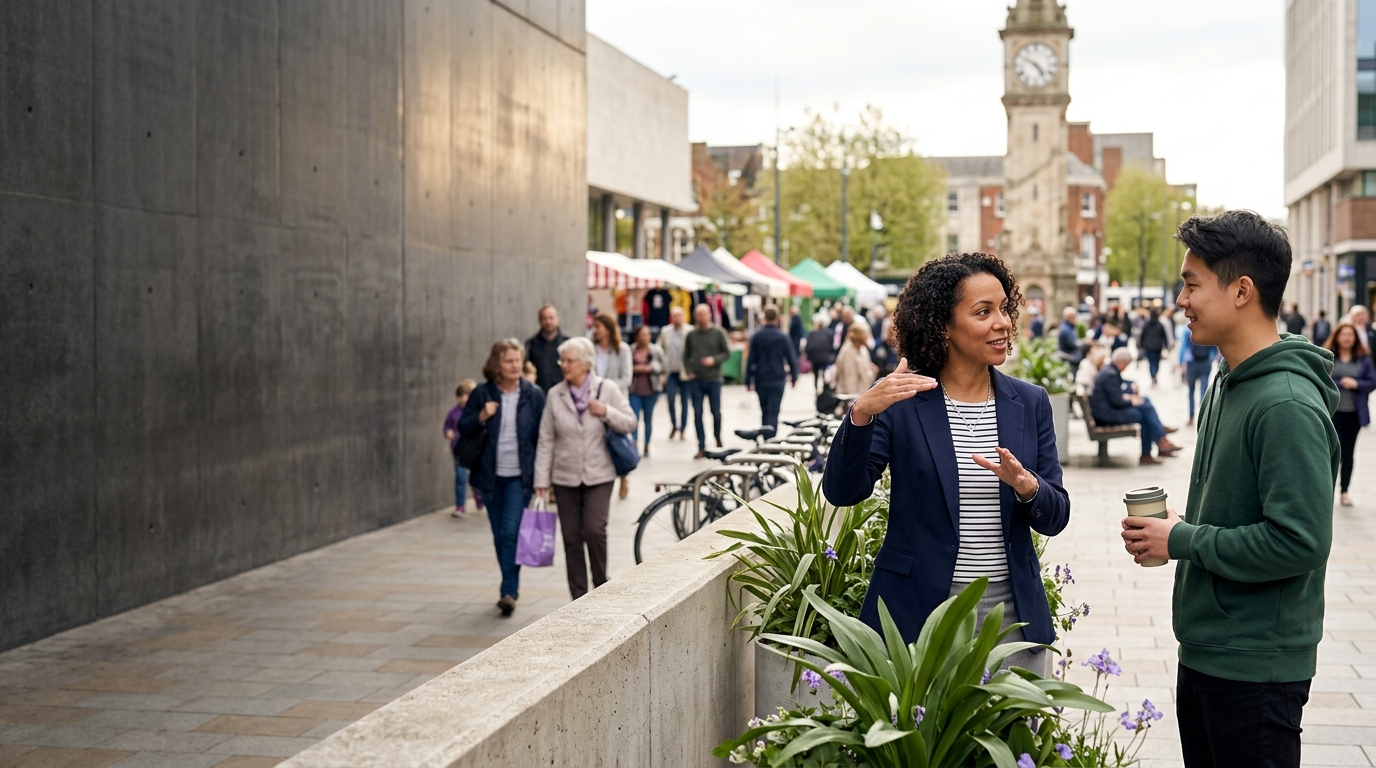
Use the images as idea prompts. Describe what you notice, connect it to your experience, then answer the real question.

Model answers, heard side by side
Start with the simpler answer, switch bands to hear how the same task can be developed, then record a personal response. These are teaching examples, not official answers or score guarantees.
Is the city where you live crowded?
Yes, the city I live in is quite crowded, especially in the centre. There are lots of cars and buses at rush hour and the pavements can be busy. Parks and some residential streets are much quieter though, so it depends where you go.
It really depends which part of the city you mean. The city centre is usually packed, particularly during the morning and evening rush hours, with crowded buses and busy pavements. By contrast, the suburbs and riverside parks are much quieter, so overall the city feels busy but not uniformly overcrowded.
Is there a crowded place near where you live?
Yes, there’s a busy shopping street a few minutes from my flat. On Saturdays it gets crowded, with people queuing outside shops and a lot of traffic nearby. It’s noisy but convenient for shopping.
There’s a small shopping district and a commuter train station close to where I live, and both can get quite busy. The train station is particularly crowded during weekday mornings, while the shopping area fills up at weekends and during sales, which creates queues and a lot of footfall.
Do you like crowded places?
I don’t mind crowded places sometimes. I like them when there’s a good atmosphere, like at a market or festival. But I don’t enjoy being cramped for a long time, so I usually avoid very crowded shops.
I’m fairly ambivalent — I enjoy crowds when there’s energy and a purpose, for example at a concert or a weekend market, because it feels lively. But I find very dense crowds draining and a bit claustrophobic, so I avoid them for shopping or long journeys if I can.
Do most people like crowded places?
I think opinions differ. Some people like crowded places because they’re lively and social. Others prefer quiet places and avoid crowds. It depends on the person.
Most people’s preferences vary — some thrive on the buzz of crowded places and enjoy being around others, while others prefer tranquillity and personal space. Factors like personality, age and cultural background often determine whether someone finds crowds appealing or stressful.
When was the last time you were in a crowded place?
The last time I was in a crowded place was last Saturday when I went to the weekend market. It was busy with families and stalls, and I only stayed for about an hour before it felt too crowded.
I was in a crowded place just a few days ago at a street food fair on Saturday evening. It was packed with people sampling food and chatting; I enjoyed wandering through the stalls for about ninety minutes but started to feel overwhelmed so I left before it got any later.
Practice status: Archived topic from a previous question-bank cycle. It remains useful for skill practice but is not presented as a current or guaranteed exam question. How topics are labelled.
How to answer Crowded place IELTS Speaking questions
This Crowded place set contains 5 short interview questions. Start each answer with the information the examiner asked for, then extend it with one reason, example or contrast. The goal is spontaneous, connected speech—not a mini-essay.
- Answer the exact question in the first sentence.
- Add one reason or specific personal detail.
- Use an example or contrast only when it adds new information.
- Finish naturally and let the examiner ask the next question.
Question-by-question approach
| Practice question | Useful answer move |
|---|---|
| Is the city where you live crowded? | Give a direct answer, one reason and a short example without memorising a script. |
| Is there a crowded place near where you live? | Give a direct answer, one reason and a short example without memorising a script. |
| Do you like crowded places? | Answer directly, give a reason and add one natural personal detail. |
| Do most people like crowded places? | Give a direct answer, one reason and a short example without memorising a script. |
Vocabulary focus
Useful language already demonstrated in the model answers includes rush hour, packed, pavements, commuter station, footfall, queues, atmosphere, claustrophobic. Learn each meaning and a natural word partnership, then use the item in a fresh answer instead of copying a complete script.
Common mistakes to avoid
- Giving a memorised response that only partly answers the question.
- Adding difficult vocabulary without checking meaning or collocation.
- Restarting after every error instead of correcting briefly and continuing.
- Reading the model answer before recording your own first attempt.
Crowded place practice FAQ
How long should my answer be for Crowded place in Part 1?
Aim for a direct answer plus a reason or detail, usually two to four sentences. Stop when the idea is complete rather than forcing a fixed word count.
Should I memorise the Crowded place model answers?
No. Use them to notice structure and language, then answer from your own experience. Memorised wording can fail when the examiner changes the question.
What if I have no experience of the topic?
Say that honestly, then explain a related preference, observation or hypothetical example. You are assessed on language, not specialist knowledge.
