
IELTS Speaking, parties 2 et 3 : Describe a time when you got up early
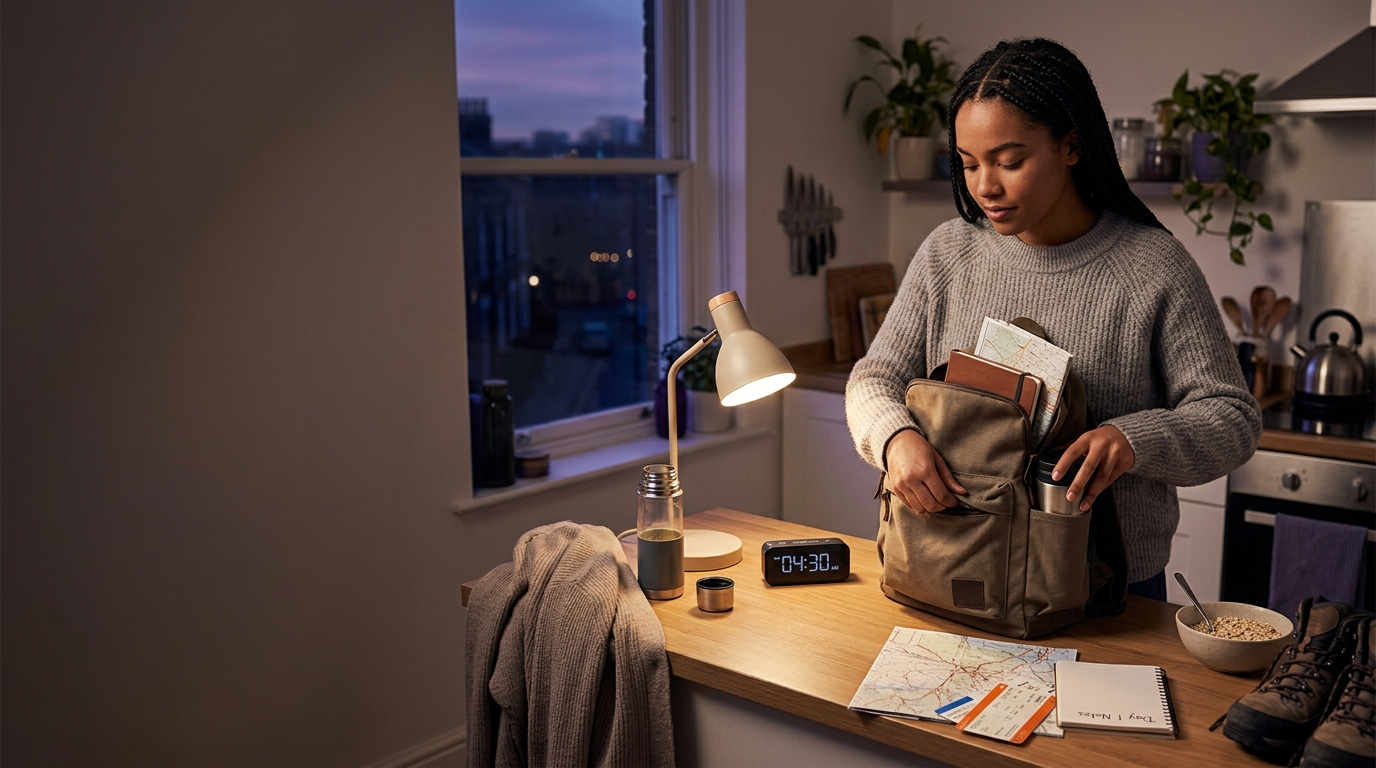
Carte aide-mémoire de la deuxième partie
Describe a time when you got up early
Il faudrait dire :
- Quand c'était
- Ce que tu as fait
- Pourquoi tu t'es levé tôt
- Et ce que tu as ressenti à ce sujet
Vous disposerez d'une à deux minutes pour aborder ce sujet.
Lire la transcription complète
Last autumn I woke up at 4.30am to climb a nearby hill and watch the sunrise. A friend who is an amateur photographer had suggested we try to catch the early light and the mist that sometimes sits in the valley, so we agreed the night before and set several alarms. I packed a small rucksack with a flask of tea, a camera and an extra jumper, and left the house in near darkness. The walk to the hilltop took about forty minutes; we moved quietly and chatted in whispers so as not to disturb the few other early risers. By the time the sun broke the horizon, the sky had turned from navy to pink and gold, and the mist lingered below the ridge — it was exactly the scene we had hoped for. I was tired at first, and a bit bleary-eyed, but as the light changed I felt energised and glad I hadn’t stayed in bed. Taking photographs and sharing them later with friends made the whole experience feel worthwhile. Getting up so early taught me that a small sacrifice can bring a memorable reward, and I’ve been more willing to try a dawn walk since then. It was a lovely morning.
État de préparation : cycle thématique prévu. Cette ressource de pratique indépendante n'est pas un document officiel de l'IELTS et les questions de votre test peuvent être différentes. Comment les sujets sont étiquetés.
Questions de discussion de la troisième partie
Déplacez une question à la fois : écoutez, répondez, comparez et réessayez. Le texte complet de la question reste dans la page HTML pour l'accessibilité et la recherche.
- 01Do you know anyone who likes to get up early?
- 02Why do people get up early?
- 03What kinds of occasions need people to arrive early?
- 04Why do some people like to stay up late?
- 05Is it good to arrive early in any situation?
- 06What kind of people like getting up early?
Voir le sujet avant de parler
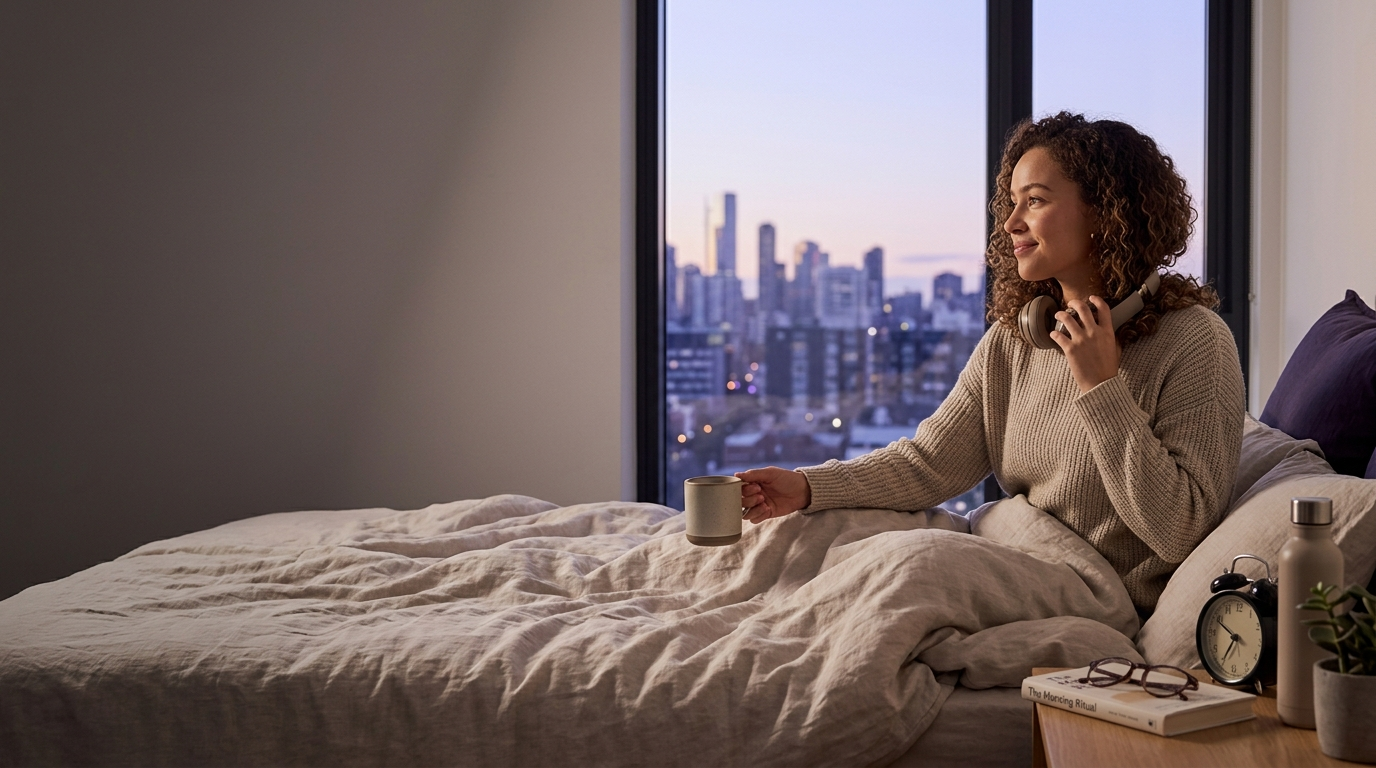
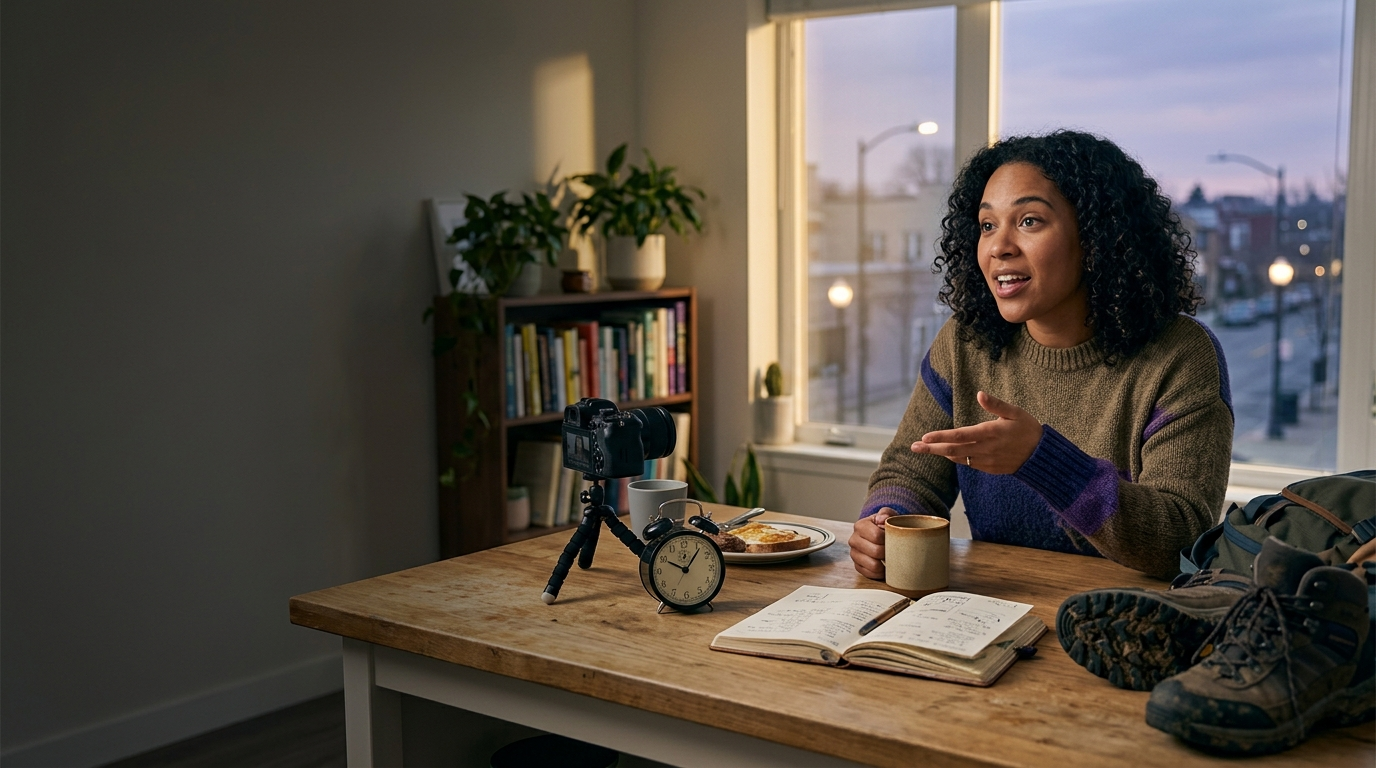
Utilisez les images comme invites à idées. Décrivez ce que vous remarquez, reliez-le à votre expérience, puis répondez à la vraie question.
Des réponses modèles, entendues côte à côte
Commencez par la réponse la plus simple, changez Band pour entendre comment la même tâche peut être développée, puis enregistrez une réponse personnelle. Ce sont des exemples pédagogiques, pas des réponses officielles ni des garanties de scores.
Partie 2 — Modèle de réponse
Part 2 cue-card response
A couple of months ago I had to get up very early because I was travelling to see my parents. My train left at 6.30am so I woke at 4.30am to pack last things, have a quick shower and grab breakfast. I took a taxi to the station and managed to sit down with a coffee before boarding. I got up early because the journey was long and I didn’t want to rush. At first I felt quite tired and a bit grumpy, but after breakfast and a short nap on the train I felt better and happy to be visiting family.
Last autumn I woke up at 4.30am to climb a nearby hill and watch the sunrise. A friend who is an amateur photographer had suggested we try to catch the early light and the mist that sometimes sits in the valley, so we agreed the night before and set several alarms. I packed a small rucksack with a flask of tea, a camera and an extra jumper, and left the house in near darkness. The walk to the hilltop took about forty minutes; we moved quietly and chatted in whispers so as not to disturb the few other early risers. By the time the sun broke the horizon, the sky had turned from navy to pink and gold, and the mist lingered below the ridge — it was exactly the scene we had hoped for. I was tired at first, and a bit bleary-eyed, but as the light changed I felt energised and glad I hadn’t stayed in bed. Taking photographs and sharing them later with friends made the whole experience feel worthwhile. Getting up so early taught me that a small sacrifice can bring a memorable reward, and I’ve been more willing to try a dawn walk since then. It was a lovely morning.
Partie 3 — Modèle de réponses
Do you know anyone who likes to get up early?
Yes, I know a few people who like to get up early. My next-door neighbour gets up at 5am every day to go running. She says she enjoys the quiet mornings and it helps her to have more time in the day. I sometimes try to join her at the weekend.
Yes, one of my colleagues is definitely an early riser — he’s up before 5am to fit in a gym session and deal with emails before the office gets busy. He finds the quiet hours much better for concentration, and he feels more in control of the day. Seeing how he plans his mornings has made me think differently about my own routine.
Why do people get up early?
People get up early for many reasons. Some have to because of work or school. Others wake early to exercise or prepare food. Also some people just prefer mornings and feel more active then.
There are several reasons why people wake early: practical obligations like commuting or shift work, health and fitness routines such as running, and personal preference linked to their biological clock. Additionally, some get up early to avoid traffic or to have uninterrupted time for planning and concentrating. Often it’s a mix of necessity and habit.
What kinds of occasions need people to arrive early?
Occasions that need people to arrive early include flights, exams and job interviews. Also ceremonies like weddings usually ask guests to be on time. If you are late it can cause problems.
Formal events such as job interviews, important meetings and exams definitely call for early arrival — you need time to register, settle and calm your nerves. Travel-related situations like catching a flight or a long-distance train also require being early because of queues and security checks. In short, whenever there’s a schedule or other people depending on you, it’s wise to turn up ahead of time.
Why do some people like to stay up late?
Some people like to stay up late because they enjoy watching TV, playing games or meeting friends. Others work or study at night. Sometimes they have trouble sleeping, so they stay awake.
Many stay up late because they are night owls by nature or because their work and social lives demand it — for instance, people in creative jobs or students often find the quiet of the night productive. Others are kept awake by screens or caffeine, and some simply prefer the social atmosphere of late-night events. Of course, staying up late can affect sleep quality and overall health.
Is it good to arrive early in any situation?
Usually it is good to arrive early. It gives you time to prepare and reduces stress. But sometimes arriving too early can be awkward, for example if you turn up at a friend’s house much too early.
Being early is generally beneficial — it shows respect, gives you space to prepare, and can help you find a good seat or settle any admin tasks. However, context matters: arriving hours before a social gathering might inconvenience the host, and some meetings start informally so turning up exceptionally early could be awkward. So it’s about judgement as much as punctuality.
What kind of people like getting up early?
People who like getting up early are often disciplined, like parents with young children, or people who work early shifts. Older people also seem to wake earlier. They usually enjoy routine.
Typically those who enjoy mornings are conscientious, organised people — parents with young children, farmers or anyone with an early-shift job are obvious examples. Also people with a morning chronotype naturally feel more alert early on and build routines around it. Often there’s a link between lifestyle, responsibilities and the preference for mornings.
Comment répondre Décrivez un moment où vous vous êtes levé tôt Questions orales IELTS
Pour la carte d'aide-mémoire Décrire un moment où vous vous êtes levé tôt, utilisez la minute de préparation pour construire un itinéraire tout au long de l'exposé. Choisissez un sujet clair, ajoutez deux moments ou détails spécifiques et terminez par pourquoi c'est important. Utilisez ensuite les questions liées de la partie 3 pour pratiquer des explications et des comparaisons plus larges.
Invites de la carte aide-mémoire :
- Quand c'était
- Ce que tu as fait
- Pourquoi tu t'es levé tôt
- Et ce que tu as ressenti à ce sujet
- Ouverture : identifier la personne, le lieu, l'objet ou l'événement.
- Développement : décrire deux détails ou moments dans un ordre logique.
- Extension : expliquer une raison, un résultat, une comparaison ou un problème.
- Réflexion : terminez par pourquoi le sujet est mémorable ou important.
Approche question par question
| Question pratique | Mouvement de réponse utile |
|---|---|
| Do you know anyone who likes to get up early? | Répondez directement, donnez une raison et ajoutez un détail personnel naturel. |
| Why do people get up early? | Répondez par une cause principale, puis soutenez-la par un exemple concret. |
| What kinds of occasions need people to arrive early? | Nommez d’abord la chose, puis décrivez une fonctionnalité ou un exemple spécifique. |
| Why do some people like to stay up late? | Répondez par une cause principale, puis soutenez-la par un exemple concret. |
Focus sur le vocabulaire
Le langage utile déjà démontré dans les réponses modèles comprend early riser, quiet hours, fit in, biological clock, avoid traffic, uninterrupted time, register, calm your nerves. Apprenez chaque signification et un partenariat de mots naturel, puis utilisez l'élément dans une nouvelle réponse au lieu de copier un script complet.
Erreurs courantes à éviter
- Donner une réponse mémorisée qui ne répond que partiellement à la question.
- Ajouter du vocabulaire difficile sans vérifier le sens ou la collocation.
- Redémarrer après chaque erreur au lieu de corriger brièvement et de continuer.
- Lisez la réponse modèle avant d’enregistrer votre propre première tentative.
Décrivez un moment où vous vous êtes levé tôt. FAQ
Comment dois-je utiliser la minute de préparation de la carte signalétique Décrire un moment où vous vous êtes levé tôt ?
Écrivez des mots-clés pour une introduction, deux ou trois détails et une réflexion finale. N'essayez pas d'écrire des phrases complètes.
Dois-je couvrir chaque puce de la carte signalétique ?
Les invites vous aident à organiser la discussion. Les couvrir est utile, mais une réponse cohérente d’une à deux minutes compte plus que de cocher mécaniquement chaque ligne.
Quel est le lien entre les questions de la partie 3 et la partie 2 ?
Ils développent le même thème général à travers des raisons, des comparaisons, des effets sociaux ou des possibilités futures, de sorte que les réponses nécessitent normalement plus d'explications que la première partie.
