
Describe a time when you got up early: IELTS Speaking Part 2 Cue Card and Part 3 Questions
Part 2 cue card
Describe a time when you got up early
You should say:
- When it was
- What you did
- Why you got up early
- And how you felt about it
You will have one to two minutes to talk about this topic.
Read the complete transcript
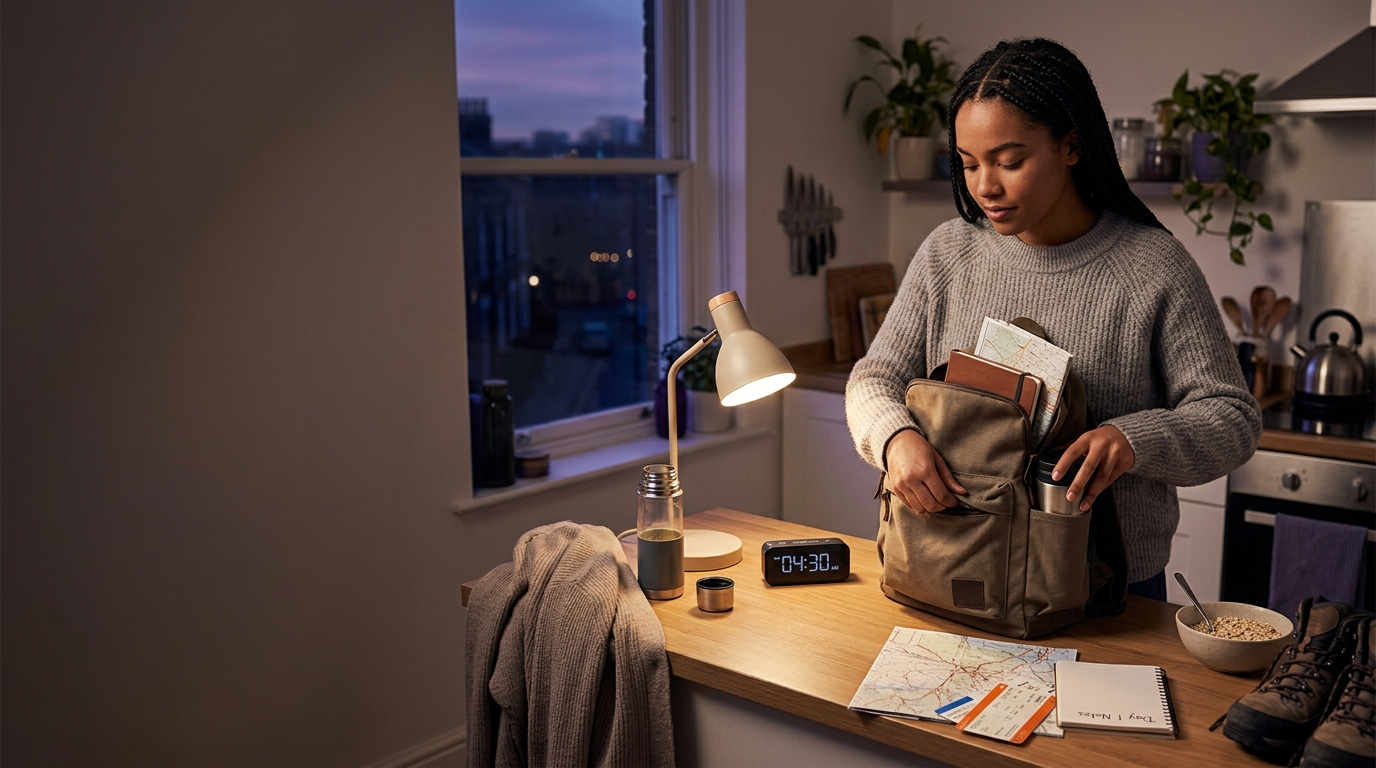
Last autumn I woke up at 4.30am to climb a nearby hill and watch the sunrise. A friend who is an amateur photographer had suggested we try to catch the early light and the mist that sometimes sits in the valley, so we agreed the night before and set several alarms. I packed a small rucksack with a flask of tea, a camera and an extra jumper, and left the house in near darkness. The walk to the hilltop took about forty minutes; we moved quietly and chatted in whispers so as not to disturb the few other early risers. By the time the sun broke the horizon, the sky had turned from navy to pink and gold, and the mist lingered below the ridge — it was exactly the scene we had hoped for. I was tired at first, and a bit bleary-eyed, but as the light changed I felt energised and glad I hadn’t stayed in bed. Taking photographs and sharing them later with friends made the whole experience feel worthwhile. Getting up so early taught me that a small sacrifice can bring a memorable reward, and I’ve been more willing to try a dawn walk since then. It was a lovely morning.
Preparation status: Predicted topic cycle. This independent practice resource is not an official IELTS paper, and the questions in your test can be different. How topics are labelled.
Part 3 discussion questions
Move one question at a time: listen, answer, compare and retry. The complete question text remains in the page HTML for accessibility and search.
- 01Do you know anyone who likes to get up early?
- 02Why do people get up early?
- 03What kinds of occasions need people to arrive early?
- 04Why do some people like to stay up late?
- 05Is it good to arrive early in any situation?
- 06What kind of people like getting up early?
See the topic before you speak
Use the images as idea prompts. Describe what you notice, connect it to your experience, then answer the real question.


Model answers, heard side by side
Start with the simpler answer, switch bands to hear how the same task can be developed, then record a personal response. These are teaching examples, not official answers or score guarantees.
Part 2 — Model Answer
Part 2 cue-card response
A couple of months ago I had to get up very early because I was travelling to see my parents. My train left at 6.30am so I woke at 4.30am to pack last things, have a quick shower and grab breakfast. I took a taxi to the station and managed to sit down with a coffee before boarding. I got up early because the journey was long and I didn’t want to rush. At first I felt quite tired and a bit grumpy, but after breakfast and a short nap on the train I felt better and happy to be visiting family.
Last autumn I woke up at 4.30am to climb a nearby hill and watch the sunrise. A friend who is an amateur photographer had suggested we try to catch the early light and the mist that sometimes sits in the valley, so we agreed the night before and set several alarms. I packed a small rucksack with a flask of tea, a camera and an extra jumper, and left the house in near darkness. The walk to the hilltop took about forty minutes; we moved quietly and chatted in whispers so as not to disturb the few other early risers. By the time the sun broke the horizon, the sky had turned from navy to pink and gold, and the mist lingered below the ridge — it was exactly the scene we had hoped for. I was tired at first, and a bit bleary-eyed, but as the light changed I felt energised and glad I hadn’t stayed in bed. Taking photographs and sharing them later with friends made the whole experience feel worthwhile. Getting up so early taught me that a small sacrifice can bring a memorable reward, and I’ve been more willing to try a dawn walk since then. It was a lovely morning.
Part 3 — Model Answers
Do you know anyone who likes to get up early?
Yes, I know a few people who like to get up early. My next-door neighbour gets up at 5am every day to go running. She says she enjoys the quiet mornings and it helps her to have more time in the day. I sometimes try to join her at the weekend.
Yes, one of my colleagues is definitely an early riser — he’s up before 5am to fit in a gym session and deal with emails before the office gets busy. He finds the quiet hours much better for concentration, and he feels more in control of the day. Seeing how he plans his mornings has made me think differently about my own routine.
Why do people get up early?
People get up early for many reasons. Some have to because of work or school. Others wake early to exercise or prepare food. Also some people just prefer mornings and feel more active then.
There are several reasons why people wake early: practical obligations like commuting or shift work, health and fitness routines such as running, and personal preference linked to their biological clock. Additionally, some get up early to avoid traffic or to have uninterrupted time for planning and concentrating. Often it’s a mix of necessity and habit.
What kinds of occasions need people to arrive early?
Occasions that need people to arrive early include flights, exams and job interviews. Also ceremonies like weddings usually ask guests to be on time. If you are late it can cause problems.
Formal events such as job interviews, important meetings and exams definitely call for early arrival — you need time to register, settle and calm your nerves. Travel-related situations like catching a flight or a long-distance train also require being early because of queues and security checks. In short, whenever there’s a schedule or other people depending on you, it’s wise to turn up ahead of time.
Why do some people like to stay up late?
Some people like to stay up late because they enjoy watching TV, playing games or meeting friends. Others work or study at night. Sometimes they have trouble sleeping, so they stay awake.
Many stay up late because they are night owls by nature or because their work and social lives demand it — for instance, people in creative jobs or students often find the quiet of the night productive. Others are kept awake by screens or caffeine, and some simply prefer the social atmosphere of late-night events. Of course, staying up late can affect sleep quality and overall health.
Is it good to arrive early in any situation?
Usually it is good to arrive early. It gives you time to prepare and reduces stress. But sometimes arriving too early can be awkward, for example if you turn up at a friend’s house much too early.
Being early is generally beneficial — it shows respect, gives you space to prepare, and can help you find a good seat or settle any admin tasks. However, context matters: arriving hours before a social gathering might inconvenience the host, and some meetings start informally so turning up exceptionally early could be awkward. So it’s about judgement as much as punctuality.
What kind of people like getting up early?
People who like getting up early are often disciplined, like parents with young children, or people who work early shifts. Older people also seem to wake earlier. They usually enjoy routine.
Typically those who enjoy mornings are conscientious, organised people — parents with young children, farmers or anyone with an early-shift job are obvious examples. Also people with a morning chronotype naturally feel more alert early on and build routines around it. Often there’s a link between lifestyle, responsibilities and the preference for mornings.
How to answer Describe a time when you got up early IELTS Speaking questions
For the Describe a time when you got up early cue card, use the preparation minute to build a route through the talk. Choose a clear subject, add two specific moments or details and end with why it matters. Then use the linked Part 3 questions to practise broader explanation and comparison.
Cue-card prompts:
- When it was
- What you did
- Why you got up early
- And how you felt about it
- Opening: identify the person, place, object or event.
- Development: describe two details or moments in a logical order.
- Extension: explain a reason, result, comparison or problem.
- Reflection: finish with why the subject is memorable or important.
Question-by-question approach
| Practice question | Useful answer move |
|---|---|
| Do you know anyone who likes to get up early? | Answer directly, give a reason and add one natural personal detail. |
| Why do people get up early? | Answer with one main cause, then support it with a concrete example. |
| What kinds of occasions need people to arrive early? | Name the thing first, then describe a specific feature or example. |
| Why do some people like to stay up late? | Answer with one main cause, then support it with a concrete example. |
Vocabulary focus
Useful language already demonstrated in the model answers includes early riser, quiet hours, fit in, biological clock, avoid traffic, uninterrupted time, register, calm your nerves. Learn each meaning and a natural word partnership, then use the item in a fresh answer instead of copying a complete script.
Common mistakes to avoid
- Giving a memorised response that only partly answers the question.
- Adding difficult vocabulary without checking meaning or collocation.
- Restarting after every error instead of correcting briefly and continuing.
- Reading the model answer before recording your own first attempt.
Describe a time when you got up early practice FAQ
How should I use the Describe a time when you got up early cue card preparation minute?
Write keywords for an opening, two or three details and a final reflection. Do not try to write complete sentences.
Do I have to cover every cue-card bullet?
The prompts help you organise the talk. Covering them is useful, but a coherent one-to-two-minute response matters more than mechanically ticking off each line.
How are Part 3 questions connected to Part 2?
They develop the same broad theme through reasons, comparisons, social effects or future possibilities, so answers normally need more explanation than Part 1.
