
Palestra IELTS Parte 2 e 3: Describe a time when you got up early
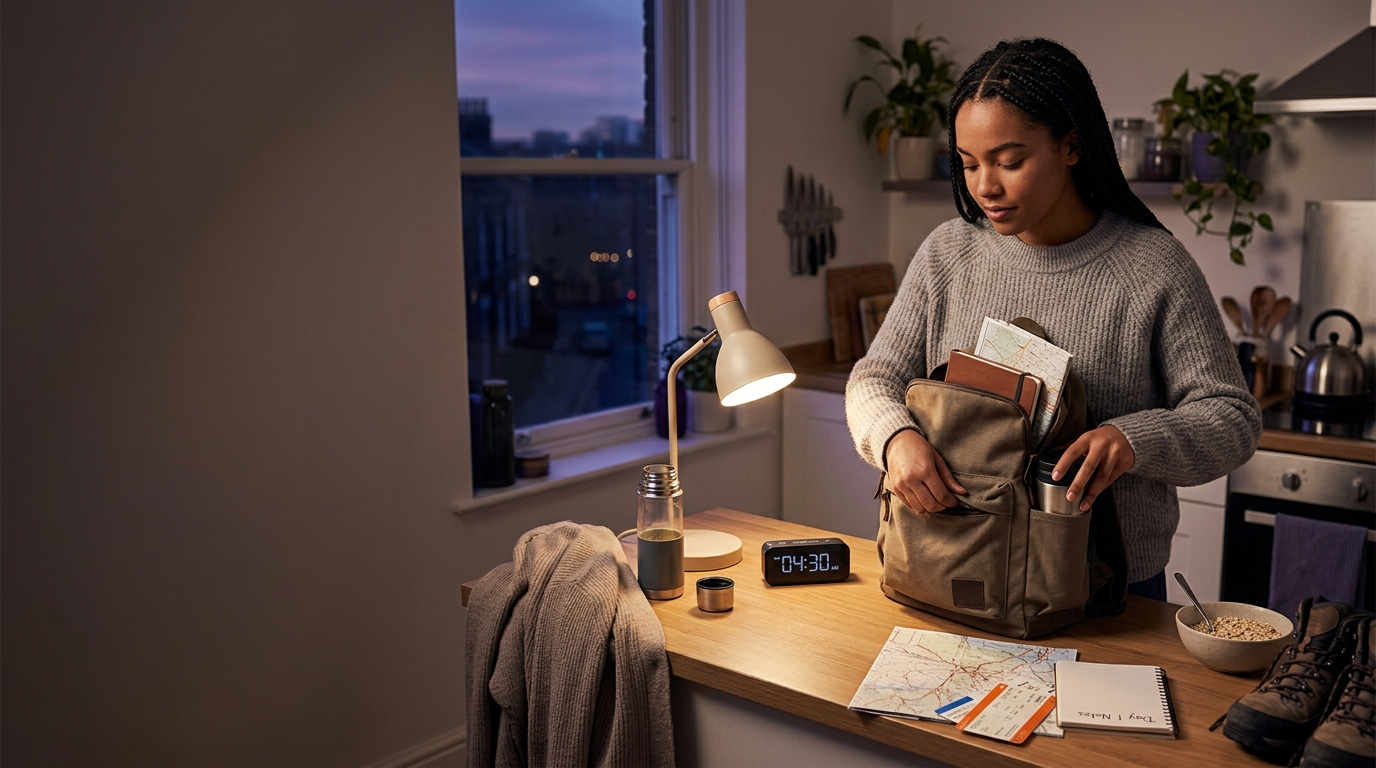
Cartão de dicas da parte 2
Describe a time when you got up early
Você deveria dizer:
- Quando foi
- O que você fez
- Por que você acordou cedo
- E como você se sentiu sobre isso
Você terá de um a dois minutos para falar sobre este assunto.
Leia a transcrição completa
Last autumn I woke up at 4.30am to climb a nearby hill and watch the sunrise. A friend who is an amateur photographer had suggested we try to catch the early light and the mist that sometimes sits in the valley, so we agreed the night before and set several alarms. I packed a small rucksack with a flask of tea, a camera and an extra jumper, and left the house in near darkness. The walk to the hilltop took about forty minutes; we moved quietly and chatted in whispers so as not to disturb the few other early risers. By the time the sun broke the horizon, the sky had turned from navy to pink and gold, and the mist lingered below the ridge — it was exactly the scene we had hoped for. I was tired at first, and a bit bleary-eyed, but as the light changed I felt energised and glad I hadn’t stayed in bed. Taking photographs and sharing them later with friends made the whole experience feel worthwhile. Getting up so early taught me that a small sacrifice can bring a memorable reward, and I’ve been more willing to try a dawn walk since then. It was a lovely morning.
Status de preparação: Ciclo de tópico previsto. Este recurso de prática independente não é um documento oficial do IELTS e as perguntas do seu teste podem ser diferentes. Como os tópicos são rotulados.
Questões para discussão da Parte 3
Mova uma pergunta de cada vez: ouça, responda, compare e tente novamente. O texto completo da pergunta permanece na página HTML para acessibilidade e pesquisa.
- 01Do you know anyone who likes to get up early?
- 02Why do people get up early?
- 03What kinds of occasions need people to arrive early?
- 04Why do some people like to stay up late?
- 05Is it good to arrive early in any situation?
- 06What kind of people like getting up early?
Veja o tópico antes de falar
Use as imagens como sugestões de ideias. Descreva o que você percebe, conecte-o à sua experiência e responda à verdadeira pergunta.

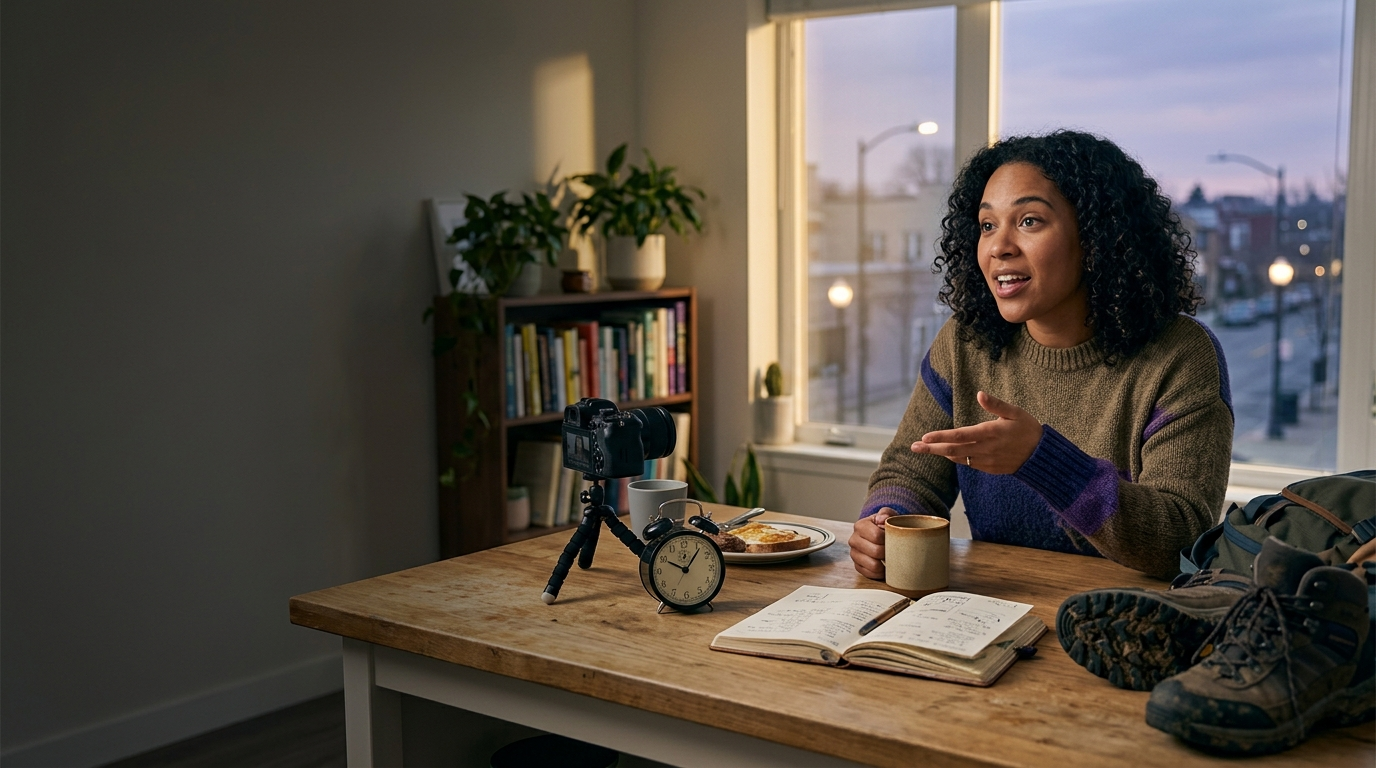
Respostas modelo, ouvidas lado a lado
Comece com a resposta mais simples, mude Band para ouvir como a mesma tarefa pode ser desenvolvida e depois registre uma resposta pessoal. Estes são exemplos didáticos, não respostas oficiais ou garantias de pontuação.
Parte 2 – Resposta do Modelo
Part 2 cue-card response
A couple of months ago I had to get up very early because I was travelling to see my parents. My train left at 6.30am so I woke at 4.30am to pack last things, have a quick shower and grab breakfast. I took a taxi to the station and managed to sit down with a coffee before boarding. I got up early because the journey was long and I didn’t want to rush. At first I felt quite tired and a bit grumpy, but after breakfast and a short nap on the train I felt better and happy to be visiting family.
Last autumn I woke up at 4.30am to climb a nearby hill and watch the sunrise. A friend who is an amateur photographer had suggested we try to catch the early light and the mist that sometimes sits in the valley, so we agreed the night before and set several alarms. I packed a small rucksack with a flask of tea, a camera and an extra jumper, and left the house in near darkness. The walk to the hilltop took about forty minutes; we moved quietly and chatted in whispers so as not to disturb the few other early risers. By the time the sun broke the horizon, the sky had turned from navy to pink and gold, and the mist lingered below the ridge — it was exactly the scene we had hoped for. I was tired at first, and a bit bleary-eyed, but as the light changed I felt energised and glad I hadn’t stayed in bed. Taking photographs and sharing them later with friends made the whole experience feel worthwhile. Getting up so early taught me that a small sacrifice can bring a memorable reward, and I’ve been more willing to try a dawn walk since then. It was a lovely morning.
Parte 3 – Respostas do Modelo
Do you know anyone who likes to get up early?
Yes, I know a few people who like to get up early. My next-door neighbour gets up at 5am every day to go running. She says she enjoys the quiet mornings and it helps her to have more time in the day. I sometimes try to join her at the weekend.
Yes, one of my colleagues is definitely an early riser — he’s up before 5am to fit in a gym session and deal with emails before the office gets busy. He finds the quiet hours much better for concentration, and he feels more in control of the day. Seeing how he plans his mornings has made me think differently about my own routine.
Why do people get up early?
People get up early for many reasons. Some have to because of work or school. Others wake early to exercise or prepare food. Also some people just prefer mornings and feel more active then.
There are several reasons why people wake early: practical obligations like commuting or shift work, health and fitness routines such as running, and personal preference linked to their biological clock. Additionally, some get up early to avoid traffic or to have uninterrupted time for planning and concentrating. Often it’s a mix of necessity and habit.
What kinds of occasions need people to arrive early?
Occasions that need people to arrive early include flights, exams and job interviews. Also ceremonies like weddings usually ask guests to be on time. If you are late it can cause problems.
Formal events such as job interviews, important meetings and exams definitely call for early arrival — you need time to register, settle and calm your nerves. Travel-related situations like catching a flight or a long-distance train also require being early because of queues and security checks. In short, whenever there’s a schedule or other people depending on you, it’s wise to turn up ahead of time.
Why do some people like to stay up late?
Some people like to stay up late because they enjoy watching TV, playing games or meeting friends. Others work or study at night. Sometimes they have trouble sleeping, so they stay awake.
Many stay up late because they are night owls by nature or because their work and social lives demand it — for instance, people in creative jobs or students often find the quiet of the night productive. Others are kept awake by screens or caffeine, and some simply prefer the social atmosphere of late-night events. Of course, staying up late can affect sleep quality and overall health.
Is it good to arrive early in any situation?
Usually it is good to arrive early. It gives you time to prepare and reduces stress. But sometimes arriving too early can be awkward, for example if you turn up at a friend’s house much too early.
Being early is generally beneficial — it shows respect, gives you space to prepare, and can help you find a good seat or settle any admin tasks. However, context matters: arriving hours before a social gathering might inconvenience the host, and some meetings start informally so turning up exceptionally early could be awkward. So it’s about judgement as much as punctuality.
What kind of people like getting up early?
People who like getting up early are often disciplined, like parents with young children, or people who work early shifts. Older people also seem to wake earlier. They usually enjoy routine.
Typically those who enjoy mornings are conscientious, organised people — parents with young children, farmers or anyone with an early-shift job are obvious examples. Also people with a morning chronotype naturally feel more alert early on and build routines around it. Often there’s a link between lifestyle, responsibilities and the preference for mornings.
Como responder Descreva um horário em que você acordou cedo Perguntas do IELTS Speaking
Para o cartão de dicas Descreva um horário em que você acordou cedo, use o minuto de preparação para construir um roteiro durante a palestra. Escolha um assunto claro, adicione dois momentos ou detalhes específicos e termine explicando por que é importante. Em seguida, use as perguntas vinculadas da Parte 3 para praticar explicações e comparações mais amplas.
Solicitações do cartão de sugestão:
- Quando foi
- O que você fez
- Por que você acordou cedo
- E como você se sentiu sobre isso
- Abertura: identificar a pessoa, lugar, objeto ou evento.
- Desenvolvimento: descreva dois detalhes ou momentos em uma ordem lógica.
- Extensão: explique um motivo, resultado, comparação ou problema.
- Reflexão: finalize explicando por que o assunto é memorável ou importante.
Abordagem pergunta por pergunta
| Pergunta prática | Movimento de resposta útil |
|---|---|
| Do you know anyone who likes to get up early? | Responda diretamente, dê um motivo e adicione um detalhe pessoal natural. |
| Why do people get up early? | Responda com uma causa principal e depois apoie-a com um exemplo concreto. |
| What kinds of occasions need people to arrive early? | Nomeie a coisa primeiro e depois descreva um recurso ou exemplo específico. |
| Why do some people like to stay up late? | Responda com uma causa principal e depois apoie-a com um exemplo concreto. |
Foco no vocabulário
A linguagem útil já demonstrada nas respostas do modelo inclui early riser, quiet hours, fit in, biological clock, avoid traffic, uninterrupted time, register, calm your nerves. Aprenda cada significado e uma parceria natural de palavras e, em seguida, use o item em uma nova resposta em vez de copiar um script completo.
Erros comuns a evitar
- Dar uma resposta memorizada que responde apenas parcialmente à pergunta.
- Adicionar vocabulário difícil sem verificar o significado ou a colocação.
- Reiniciar após cada erro em vez de corrigir brevemente e continuar.
- Lendo a resposta do modelo antes de gravar sua primeira tentativa.
Descreva um horário em que você acordou cedo para praticar FAQ
Como devo usar o minuto de preparação do cartão de sinalização Descreva um horário em que você acordou cedo?
Escreva palavras-chave para uma abertura, dois ou três detalhes e uma reflexão final. Não tente escrever frases completas.
Tenho que cobrir todos os marcadores do cartão de sinalização?
As instruções ajudam você a organizar a palestra. Cobri-los é útil, mas uma resposta coerente de um a dois minutos é mais importante do que marcar mecanicamente cada linha.
Como as perguntas da Parte 3 estão conectadas à Parte 2?
Desenvolvem o mesmo tema amplo através de razões, comparações, efeitos sociais ou possibilidades futuras, pelo que as respostas normalmente necessitam de mais explicações do que a Parte 1.
