
雅思口說第 1 部分:Tidiness 問答
第 1 部分問題
一次移動一個問題:聆聽、回答、比較並重試。完整的問題文字保留在 HTML 頁面中,以便於存取和搜尋。
- 01Do you like to keep things tidy?
- 02Did you use to keep your room tidy as a child?Full Band 6/7 answer →
- 03How do you keep your work or study space tidy?
- 04Do you think that it is necessary to be tidy?Full Band 6/7 answer →
閱讀完整的文字記錄
Generally I prefer to keep things tidy. I find that having a clear space helps me think and means I don't waste time looking for things. That said, I'm not obsessive about it — if I'm very busy I might let things pile up for a day or two, then I set aside time to sort everything out.
準備狀態:預測主題週期。這個獨立的練習資源不是雅思官方試卷,您測驗中的問題可能會有所不同。 主題如何標記.
說話前先看清主題
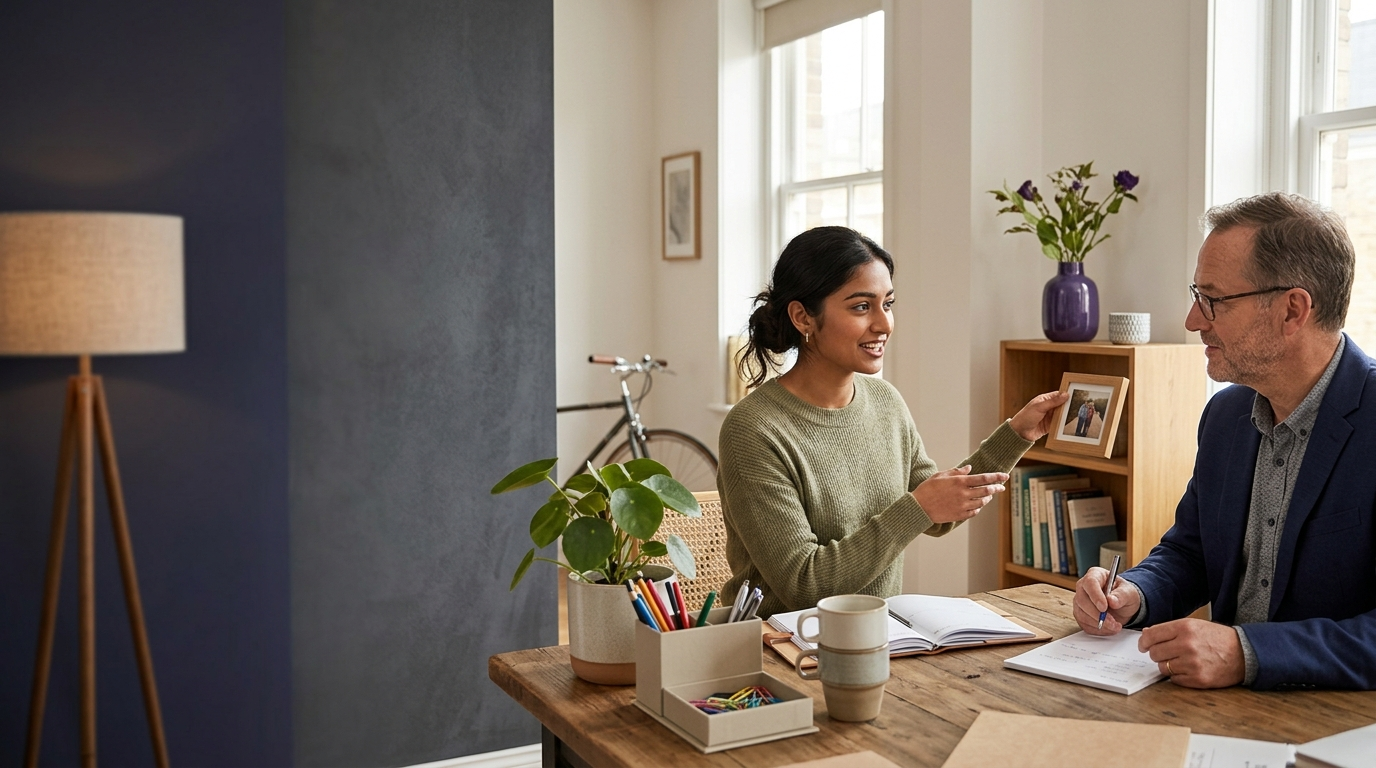
使用圖像作為想法提示。描述您注意到的內容,將其與您的經歷聯繫起來,然後回答真正的問題。

模範答案,並排聆聽
從更簡單的答案開始,切換 Band 來聽聽如何發展相同的任務,然後記錄個人回答。這些是教學範例,不是官方答案或分數保證。
Do you like to keep things tidy?
Yes, I do. I like things to be tidy because it makes it easier to find things. When my flat is tidy I feel calmer and less stressed. Sometimes I leave a bit of mess if I'm busy, but I usually do a quick tidy-up.
Generally I prefer to keep things tidy. I find that having a clear space helps me think and means I don't waste time looking for things. That said, I'm not obsessive about it — if I'm very busy I might let things pile up for a day or two, then I set aside time to sort everything out.
Did you use to keep your room tidy as a child?
No, not really. As a child I often left toys on the floor and my room could be messy. My parents had to tell me to clean it sometimes. Every so often I would tidy it properly.
I wasn't particularly tidy as a young child — my room could be a bit of a mess with toys and books everywhere. As I got older, especially at secondary school, I started to keep things neater because my parents insisted and I realised it made studying easier. So it improved with age and habit.
How do you keep your work or study space tidy?
I try to keep my desk tidy by putting pens and papers back in drawers. I clear away cups and food, and I throw away rubbish. If I finish work I make sure the desk is ready for the next day.
I keep my study space tidy by doing a quick clear-up at the end of each day: I file loose papers into labelled folders, stash chargers and cables in a box, and wipe the surface. I also do a more thorough declutter at the weekend so old notes don't build up. It really helps me stay focused.
Do you think that it is necessary to be tidy?
Yes, I think it is necessary to be tidy to some extent. Being tidy helps you work better and keeps things clean. But I don't think you need to be perfect all the time; a bit of mess is OK.
I think being reasonably tidy is important because it boosts productivity and reduces stress — you're less likely to lose things and more likely to concentrate. However, there's also room for personal style: some people do their best work in a bit of creative chaos, so it's not absolute. The key is finding a balance that works for you.
如何回答整潔的雅思口說問題
此 Tidiness 套裝包含 4 個簡短的面試問題。每個答案都以考官要求的資訊開始,然後用一個原因、例子或對比來擴展它。目標是自發性的、連貫的演講,而不是一篇小論文。
- 準確回答第一句中的問題。
- 新增一個原因或具體的個人詳細資料。
- 僅當新增資訊時才使用範例或對比。
- 自然結束,讓考官提出下一個問題。
逐個問題的方法
| 練習題 | 有用的答案動作 |
|---|---|
| Do you like to keep things tidy? | 直接回答,給出理由並添加一個自然的個人細節。 |
| Did you use to keep your room tidy as a child? | 舉一個過去的真實例子,然後說明發生了什麼變化或為什麼它很重要。 |
| How do you keep your work or study space tidy? | 以清晰的順序描述流程或差異並添加結果。 |
| Do you think that it is necessary to be tidy? | 陳述一種可能的觀點,解釋原因並添加一個條件或示例。 |
詞彙重點
模型答案中已經展示的有用語言包括 tidy up, on top of things, clutter, a bit of a mess, insisted, habit, labelled folders, declutter。學習每個含義和自然的單字夥伴關係,然後在新的答案中使用該項目,而不是複製完整的腳本。
要避免的常見錯誤
- 給出的記憶答案只能部分回答問題。
- 加入困難的詞彙而不檢查意義或搭配。
- 每次錯誤後重新啟動,而不是短暫修正並繼續。
- 在記錄您自己的第一次嘗試之前,請先閱讀標準答案。
整潔實踐常見問題
第 1 部分中「整潔」的答案應該要多長?
目標是直接回答加上原因或細節,通常是兩到四句話。當想法完成時就停止,而不是強制固定字數。
我應該記住 Tidiness 模型答案嗎?
不。用它們來注意結構和語言,然後根據您自己的經驗回答。當考官改變問題時,記憶的措詞可能會失敗。
如果我沒有該主題的經驗怎麼辦?
誠實地說出來,然後解釋相關的偏好、觀察或假設的例子。您的評估標準是語言,而不是專業知識。
