
IELTS Speaking Parte 1: Tidiness Preguntas y respuestas

preguntas de la parte 1
Mueva una pregunta a la vez: escuche, responda, compare y vuelva a intentarlo. El texto completo de la pregunta permanece en la página HTML para accesibilidad y búsqueda.
- 01Do you like to keep things tidy?
- 02Did you use to keep your room tidy as a child?Full Band 6/7 answer →
- 03How do you keep your work or study space tidy?
- 04Do you think that it is necessary to be tidy?Full Band 6/7 answer →
Lea la transcripción completa
Generally I prefer to keep things tidy. I find that having a clear space helps me think and means I don't waste time looking for things. That said, I'm not obsessive about it — if I'm very busy I might let things pile up for a day or two, then I set aside time to sort everything out.
Estado de preparación: ciclo de tema previsto. Este recurso de práctica independiente no es un documento oficial del IELTS y las preguntas de su examen pueden ser diferentes. Cómo se etiquetan los temas.
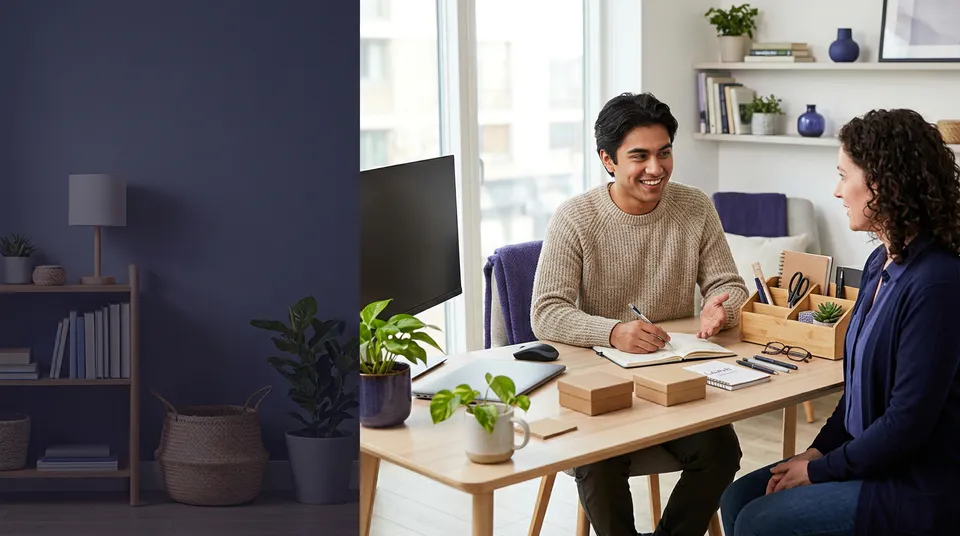
Vea el tema antes de hablar.
Utilice las imágenes como sugerencias de ideas. Describe lo que notas, conéctalo con tu experiencia y luego responde la pregunta real.

Respuestas modelo, escuchadas una al lado de la otra
Comience con la respuesta más simple, cambie Band para escuchar cómo se puede desarrollar la misma tarea y luego registre una respuesta personal. Estos son ejemplos de enseñanza, no respuestas oficiales ni garantías de puntuación.
Do you like to keep things tidy?
Yes, I do. I like things to be tidy because it makes it easier to find things. When my flat is tidy I feel calmer and less stressed. Sometimes I leave a bit of mess if I'm busy, but I usually do a quick tidy-up.
Generally I prefer to keep things tidy. I find that having a clear space helps me think and means I don't waste time looking for things. That said, I'm not obsessive about it — if I'm very busy I might let things pile up for a day or two, then I set aside time to sort everything out.
Did you use to keep your room tidy as a child?
No, not really. As a child I often left toys on the floor and my room could be messy. My parents had to tell me to clean it sometimes. Every so often I would tidy it properly.
I wasn't particularly tidy as a young child — my room could be a bit of a mess with toys and books everywhere. As I got older, especially at secondary school, I started to keep things neater because my parents insisted and I realised it made studying easier. So it improved with age and habit.
How do you keep your work or study space tidy?
I try to keep my desk tidy by putting pens and papers back in drawers. I clear away cups and food, and I throw away rubbish. If I finish work I make sure the desk is ready for the next day.
I keep my study space tidy by doing a quick clear-up at the end of each day: I file loose papers into labelled folders, stash chargers and cables in a box, and wipe the surface. I also do a more thorough declutter at the weekend so old notes don't build up. It really helps me stay focused.
Do you think that it is necessary to be tidy?
Yes, I think it is necessary to be tidy to some extent. Being tidy helps you work better and keeps things clean. But I don't think you need to be perfect all the time; a bit of mess is OK.
I think being reasonably tidy is important because it boosts productivity and reduces stress — you're less likely to lose things and more likely to concentrate. However, there's also room for personal style: some people do their best work in a bit of creative chaos, so it's not absolute. The key is finding a balance that works for you.
Cómo responder las preguntas de Tidiness IELTS Speaking
Este conjunto de Tidiness contiene 4 preguntas breves de entrevista. Comience cada respuesta con la información que solicitó el examinador y luego amplíela con una razón, ejemplo o contraste. El objetivo es un discurso espontáneo y conectado, no un mini ensayo.
- Responde la pregunta exacta en la primera oración.
- Agregue un motivo o detalle personal específico.
- Utilice un ejemplo o contraste sólo cuando agregue nueva información.
- Termine naturalmente y deje que el examinador haga la siguiente pregunta.
Enfoque pregunta por pregunta
| pregunta de práctica | movimiento de respuesta útil |
|---|---|
| Do you like to keep things tidy? | Responde directamente, da un motivo y añade un detalle personal natural. |
| Did you use to keep your room tidy as a child? | Dé un ejemplo real del pasado y luego diga qué cambió o por qué fue importante. |
| How do you keep your work or study space tidy? | Describe el proceso o diferencia en un orden claro y agrega un resultado. |
| Do you think that it is necessary to be tidy? | Indique una opinión probable, explique el motivo y agregue una condición o ejemplo. |
Enfoque de vocabulario
El lenguaje útil ya demostrado en las respuestas modelo incluye tidy up, on top of things, clutter, a bit of a mess, insisted, habit, labelled folders, declutter. Aprenda cada significado y una asociación natural de palabras, luego use el elemento en una respuesta nueva en lugar de copiar un guión completo.
Errores comunes a evitar
- Dar una respuesta memorizada que responda sólo parcialmente a la pregunta.
- Agregar vocabulario difícil sin verificar el significado o la colocación.
- Reiniciar después de cada error en lugar de corregir brevemente y continuar.
- Leer la respuesta modelo antes de grabar su primer intento.
Preguntas frecuentes sobre prácticas de orden
¿Cuánto tiempo debería durar mi respuesta para Orden en la Parte 1?
Busque una respuesta directa más una razón o detalle, generalmente de dos a cuatro oraciones. Deténgase cuando la idea esté completa en lugar de forzar un recuento fijo de palabras.
¿Debo memorizar las respuestas del modelo de Orden?
No. Úselos para notar la estructura y el lenguaje, luego responda desde su propia experiencia. La redacción memorizada puede fallar cuando el examinador cambia la pregunta.
¿Qué pasa si no tengo experiencia en el tema?
Dígalo honestamente y luego explique una preferencia, observación o ejemplo hipotético relacionado. Se le evalúa el idioma, no el conocimiento especializado.
