
Bölüm 2 İşaret Kartı
Resim yapmayı çok seven tanıdığınız bir çocuğu anlatın
Şunu söylemelisin:
- Onu nasıl tanıdın
- O nasıl biri
- Ne sıklıkla resim çiziyor
- Ve neden çizim yapmaktan hoşlandığını düşündüğünüzü açıklayın
Bu konu hakkında konuşmak için bir ila iki dakikanız olacak.
Bölüm 3 Tartışma Soruları
- What is the right age for a child to learn drawing?
- Why do most children draw more often than adults do?
- Why do some people visit galleries or museums instead of viewing artworks online?
- Do you think galleries and museums should be free of charge?
- How do artworks inspire people?
- What are the differences between reading a book and visiting a museum?
Alıştırma durumu: Önceki bir soru bankası döngüsünden arşivlenmiş konu. Beceri pratiği için yararlı olmayı sürdürüyor ancak güncel veya garantili bir sınav sorusu olarak sunulmuyor. Konular nasıl etiketlenir?.
Transkriptin tamamını okuyun
I’d like to describe my nephew, Ollie, who’s seven and completely obsessed with drawing. I first noticed his skill when I babysat him last year and he produced a detailed map of our local park, complete with trees and a little duck pond, which surprised me because he’d never had formal lessons. Ollie is thoughtful and energetic with a vivid imagination; he’s surprisingly patient when he draws, often sitting for long stretches without getting distracted. He draws almost every day, usually in the evenings after school and at weekends, and sometimes he even wakes up early to finish a picture before breakfast. I think he enjoys drawing because it gives him control — he can invent whole worlds or change colours however he likes — and he’s proud when others praise his work, so it becomes a positive feedback loop; for example, when his teacher displayed one of his landscapes at school he beamed for days and kept adding new details. He usually works with pencils, felt-tip pens and watercolour, and he loves experimenting with textures and patterns. His parents encourage him by buying art books and taking him to a children’s art club, which has helped him learn new techniques and stay motivated.
Konuşmadan önce konuya bakın
Görüntüleri fikir istemleri olarak kullanın. Neyi fark ettiğinizi açıklayın, bunu deneyiminizle ilişkilendirin ve ardından asıl soruyu yanıtlayın.
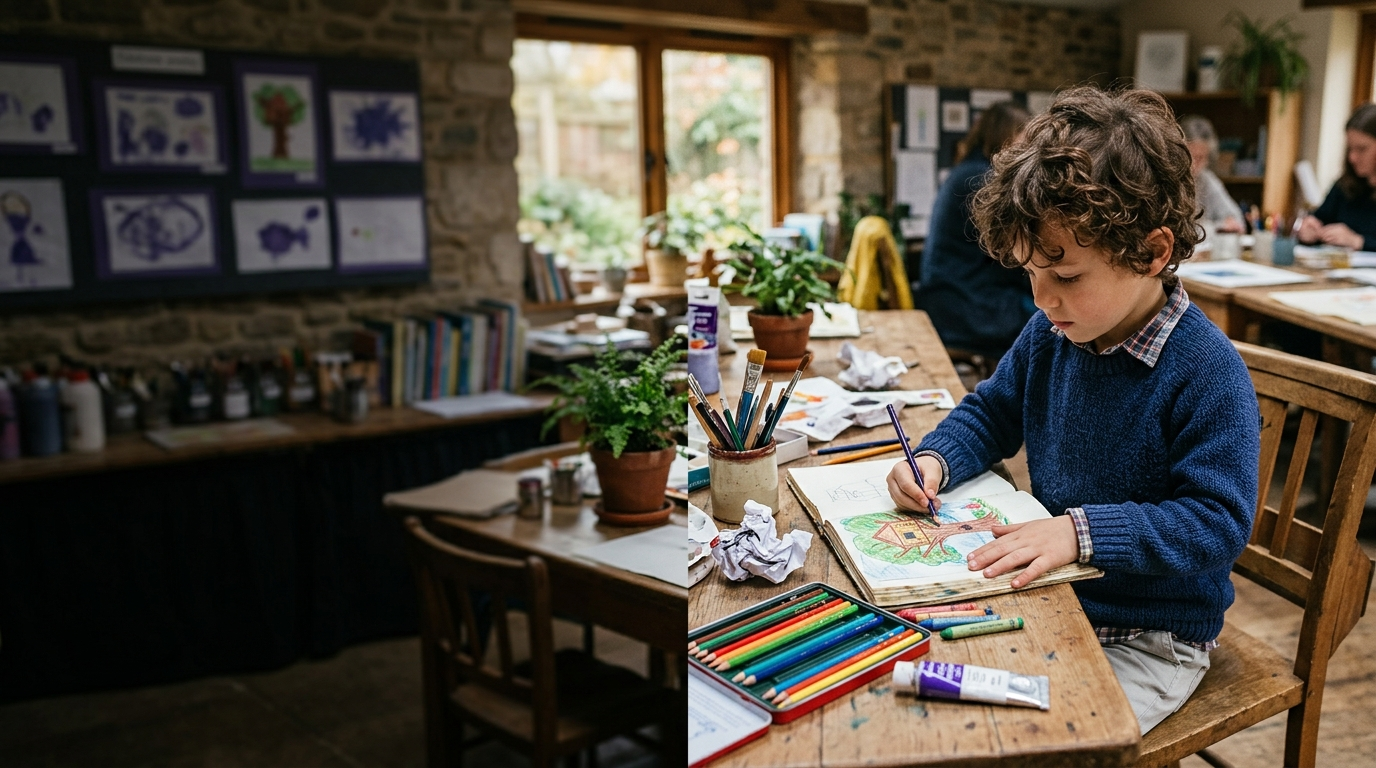
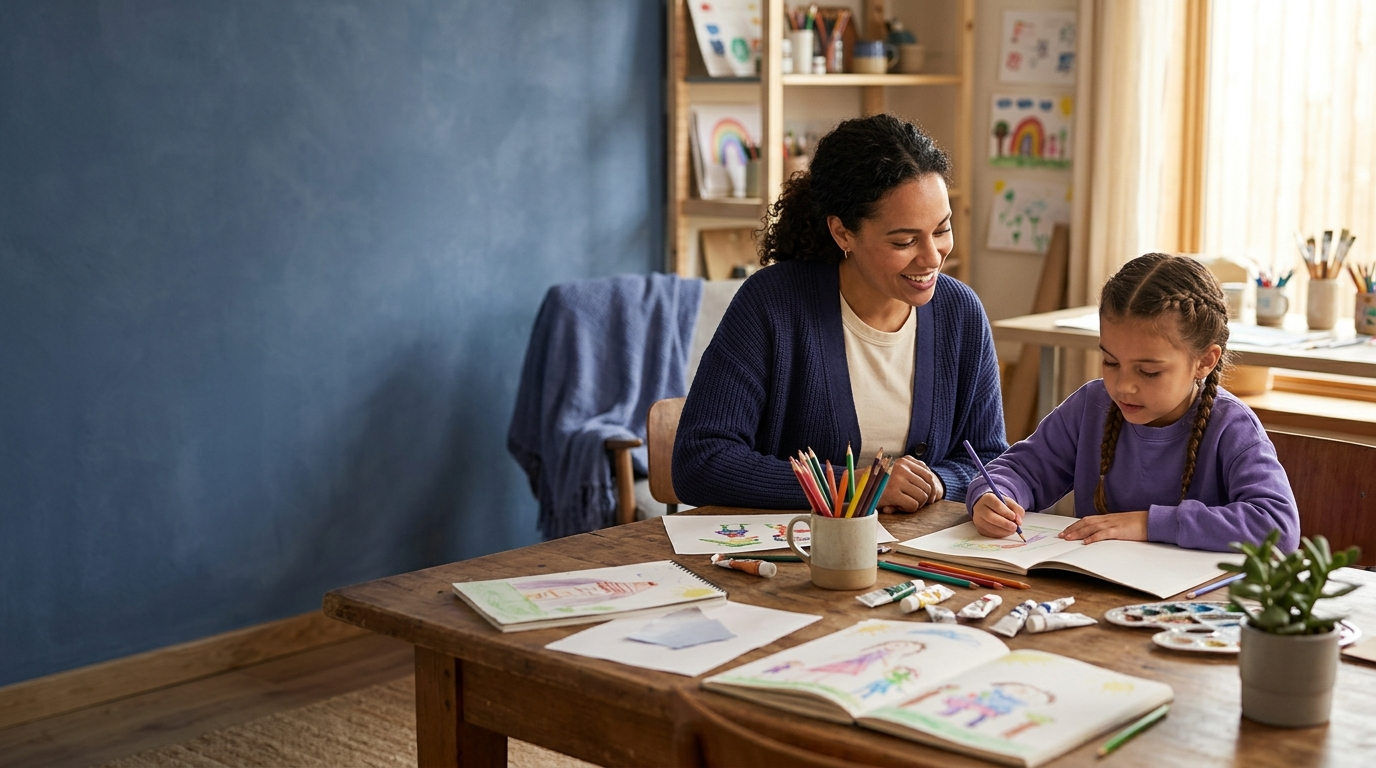
Yan yana duyulan model yanıtları
Daha basit cevapla başlayın, aynı görevin nasıl geliştirilebileceğini duymak için Band'yi değiştirin, ardından kişisel bir yanıtı kaydedin. Bunlar öğretim örnekleridir, resmi cevaplar veya puan garantisi değildir.
Bölüm 2 - Örnek Cevap
Part 2 cue-card response
My cousin Mia, who is eight, loves drawing. I know her because we go to the same after-school club. She’s quite quiet and creative and likes using bright colours and drawing animals. Mia draws almost every day, usually after she finishes her homework, for about half an hour or an hour. At weekends she sometimes spends longer on a picture. I think she likes drawing because it makes her feel calm and happy, and she can show things she can’t easily say with words. Her parents keep pencils and paper handy for her so she can draw whenever she wants.
I’d like to describe my nephew, Ollie, who’s seven and completely obsessed with drawing. I first noticed his skill when I babysat him last year and he produced a detailed map of our local park, complete with trees and a little duck pond, which surprised me because he’d never had formal lessons. Ollie is thoughtful and energetic with a vivid imagination; he’s surprisingly patient when he draws, often sitting for long stretches without getting distracted. He draws almost every day, usually in the evenings after school and at weekends, and sometimes he even wakes up early to finish a picture before breakfast. I think he enjoys drawing because it gives him control — he can invent whole worlds or change colours however he likes — and he’s proud when others praise his work, so it becomes a positive feedback loop; for example, when his teacher displayed one of his landscapes at school he beamed for days and kept adding new details. He usually works with pencils, felt-tip pens and watercolour, and he loves experimenting with textures and patterns. His parents encourage him by buying art books and taking him to a children’s art club, which has helped him learn new techniques and stay motivated.
Bölüm 3 - Örnek Yanıtlar
What is the right age for a child to learn drawing?
I think children can start learning basic drawing as soon as they can hold a pencil, maybe around three or four. At that age they enjoy scribbling and copying simple shapes. Formal lessons aren’t necessary early on — just lots of drawing time and praise.
Around three to five is a good time to introduce drawing more deliberately because children’s fine motor skills and hand-eye coordination are developing then. That said, learning to draw isn’t a race; some kids take to it later and still become good. Early exposure through play and simple guided activities tends to help rather than strict lessons.
Why do most children draw more often than adults do?
Children draw more often because they have more free time and drawing is a natural way to play. They also like bright colours and simple stories. Adults are busier and often worry their drawings won’t be good.
Children tend to draw more because it’s a primary form of play and self-expression for them; they’re less self-conscious and have more time for unstructured activities. Adults often abandon drawing because of time pressures, concern about skill level, or simply because it’s not seen as a practical hobby. In short, freedom and low self-criticism make children draw more.
Why do some people visit galleries or museums instead of viewing artworks online?
Some people prefer galleries because you can see the real painting and its size and texture. It feels special to stand in front of a work. Online images can’t show the exact colours or surface.
Many visitors choose galleries and museums because the physical presence of an artwork — its scale, texture and colour subtleties — can’t be fully captured online. The atmosphere of a gallery and the opportunity to view works in context, perhaps with expert labels or a guided tour, also adds value. For many, seeing the original piece is an emotional experience you just can’t replicate on a screen.
Do you think galleries and museums should be free of charge?
I think some museums should be free because then more people can go, especially those who can’t afford tickets. But I also know exhibitions cost money to run, so it’s not always possible.
Ideally basic access to national museums should be free to encourage cultural participation and educational visits, especially for young people and low-income families. However, special exhibitions and conservation work require funding, so a mixed model — free core galleries with paid special shows — is often the most realistic approach. That balances accessibility with financial sustainability.
How do artworks inspire people?
Artworks can make people feel things and spark ideas. A painting might remind someone of a place or memory, or give them new ways to look at an issue. They can also motivate people to paint themselves.
Artworks inspire by provoking emotion, offering fresh perspectives, and stimulating thought; a single image can challenge assumptions or rekindle a memory. They often open up conversations about identity, history or society, and can even spur practical creativity — for instance, inspiring someone to try a new technique or start a project. Essentially, art acts as a prompt for reflection and action.
What are the differences between reading a book and visiting a museum?
Reading a book is a private, quiet activity where you imagine things, while a museum is more physical and social. In a museum you see real objects and can learn from labels or guides. Both are educational but in different ways.
Reading a book tends to be an imaginative, often solitary experience that relies on language and the reader’s inner pictures, whereas visiting a museum is multisensory and social — you see the real objects, their scale and texture, and can access curated context and interpretation. Books offer depth and personal reflection; museums provide immediacy and embodied learning. Both complement each other well, offering different pathways to understanding.
Alıştırma durumu: Önceki bir soru bankası döngüsünden arşivlenmiş konu. Beceri pratiği için yararlı olmayı sürdürüyor ancak güncel veya garantili bir sınav sorusu olarak sunulmuyor. Konular nasıl etiketlenir?.
Nasıl cevaplanır? Çizim yapmaktan çok hoşlanan tanıdığınız bir çocuğu tanımlayın. IELTS Konuşma soruları
İşaret kartı çizmeyi çok seven tanıdığınız bir çocuğu tanımlayın için hazırlık dakikasını konuşma boyunca bir rota oluşturmak için kullanın. Net bir konu seçin, iki özel anı veya ayrıntıyı ekleyin ve bunun neden önemli olduğunu anlatarak bitirin. Daha sonra daha geniş bir açıklama ve karşılaştırma yapmak için bağlantılı Bölüm 3 sorularını kullanın.
İşaret kartı istemleri:
- Onu nasıl tanıdın
- O nasıl biri
- Ne sıklıkla resim çiziyor
- Ve neden çizim yapmaktan hoşlandığını düşündüğünüzü açıklayın
- Açılış: Kişiyi, yeri, nesneyi veya olayı tanımlayın.
- Gelişim: İki ayrıntıyı veya anı mantıksal bir sırayla tanımlayın.
- Uzantı: Bir nedeni, sonucu, karşılaştırmayı veya sorunu açıklayın.
- Düşünme: Konunun neden unutulmaz veya önemli olduğunu açıklayarak bitirin.
Soru bazında yaklaşım
| Alıştırma sorusu | Yararlı cevap hamlesi |
|---|---|
| What is the right age for a child to learn drawing? | Önce bir şeye isim verin, ardından belirli bir özelliği veya örneği tanımlayın. |
| Why do most children draw more often than adults do? | Tek bir ana sebeple cevap verin ve ardından bunu somut bir örnekle destekleyin. |
| Why do some people visit galleries or museums instead of viewing artworks online? | Tek bir ana sebeple cevap verin ve ardından bunu somut bir örnekle destekleyin. |
| Do you think galleries and museums should be free of charge? | Olası bir görüşü belirtin, nedenini açıklayın ve bir koşul veya örnek ekleyin. |
Kelime odağı
Model cevaplarında halihazırda gösterilen faydalı dil şunları içerir: fine motor skills, hand-eye coordination, exposure through play, self-expression, unstructured activities, self-conscious, physical presence, in context. Her bir anlamı ve doğal kelime ortaklığını öğrenin, ardından tüm metni kopyalamak yerine öğeyi yeni bir yanıtta kullanın.
Kaçınılması gereken yaygın hatalar
- Soruyu yalnızca kısmen yanıtlayan ezberlenmiş bir yanıt vermek.
- Anlamı veya sıralamayı kontrol etmeden zor kelimeleri eklemek.
- Her hatadan sonra kısa süreliğine düzeltme yapıp devam etmek yerine yeniden başlatmak.
- İlk denemenizi kaydetmeden önce model cevabını okuyun.
Çizim yapmaktan çok hoşlanan tanıdığınız bir çocuğu tanımlayın. SSS
Resim yapmayı çok seven tanıdığınız bir çocuğu tanımlayın ipucu kartı hazırlama dakikasını nasıl kullanmalıyım?
Bir açılış, iki veya üç ayrıntı ve son bir yansıma için anahtar kelimeler yazın. Tam cümleler yazmaya çalışmayın.
Her işaret kartı mermisini kapatmak zorunda mıyım?
Yönlendirmeler konuşmayı organize etmenize yardımcı olur. Bunları ele almak faydalıdır, ancak bir ila iki dakikalık tutarlı bir yanıt, her satırın mekanik olarak işaretlenmesinden daha önemlidir.
Bölüm 3 soruları Bölüm 2 ile nasıl bağlantılıdır?
Sebepler, karşılaştırmalar, sosyal etkiler veya gelecekteki olasılıklar yoluyla aynı geniş temayı geliştirirler, dolayısıyla yanıtlar normalde Bölüm 1'den daha fazla açıklamaya ihtiyaç duyar.
