
파트 2 큐 카드
그림 그리기를 아주 좋아하는 아이에 대해 설명해주세요.
당신은 이렇게 말해야 합니다:
- 그 사람을 어떻게 알았나요?
- 그/그녀는 어떤 사람인가
- 그/그녀가 그림을 그리는 빈도
- 그리고 그/그녀가 그림 그리기를 좋아한다고 생각하는 이유를 설명하세요.
이 주제에 대해 1~2분 정도 이야기할 시간이 있습니다.
3부 토론 질문
- What is the right age for a child to learn drawing?
- Why do most children draw more often than adults do?
- Why do some people visit galleries or museums instead of viewing artworks online?
- Do you think galleries and museums should be free of charge?
- How do artworks inspire people?
- What are the differences between reading a book and visiting a museum?
연습 상태: 이전 문제 은행 주기에서 보관된 주제입니다. 기술 연습에는 여전히 유용하지만 현재 또는 보장된 시험 문제로 제시되지는 않습니다. 주제에 라벨을 지정하는 방법.
전체 내용 읽기
I’d like to describe my nephew, Ollie, who’s seven and completely obsessed with drawing. I first noticed his skill when I babysat him last year and he produced a detailed map of our local park, complete with trees and a little duck pond, which surprised me because he’d never had formal lessons. Ollie is thoughtful and energetic with a vivid imagination; he’s surprisingly patient when he draws, often sitting for long stretches without getting distracted. He draws almost every day, usually in the evenings after school and at weekends, and sometimes he even wakes up early to finish a picture before breakfast. I think he enjoys drawing because it gives him control — he can invent whole worlds or change colours however he likes — and he’s proud when others praise his work, so it becomes a positive feedback loop; for example, when his teacher displayed one of his landscapes at school he beamed for days and kept adding new details. He usually works with pencils, felt-tip pens and watercolour, and he loves experimenting with textures and patterns. His parents encourage him by buying art books and taking him to a children’s art club, which has helped him learn new techniques and stay motivated.
말하기 전에 주제를 살펴보세요
이미지를 아이디어 프롬프트로 사용하세요. 발견한 사항을 설명하고 이를 경험과 연결한 다음 실제 질문에 답하세요.
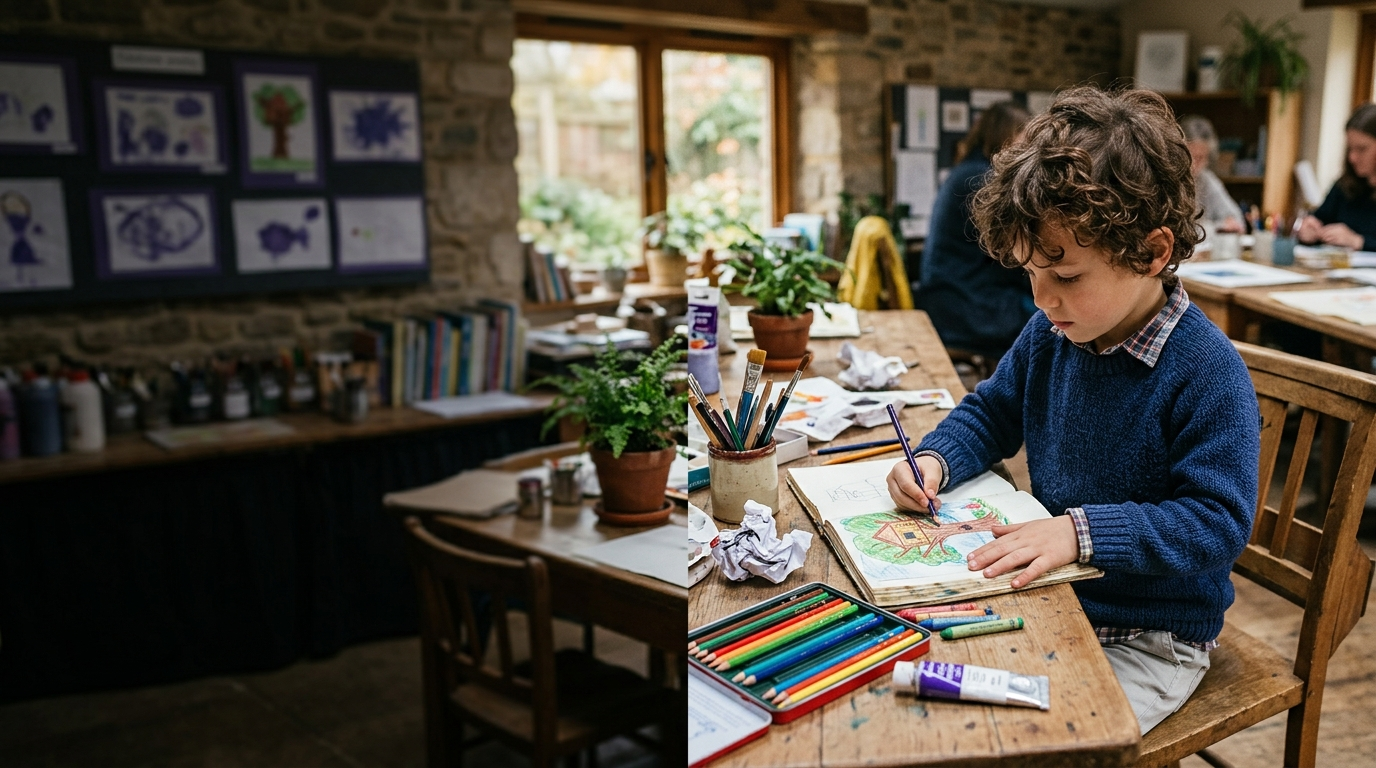
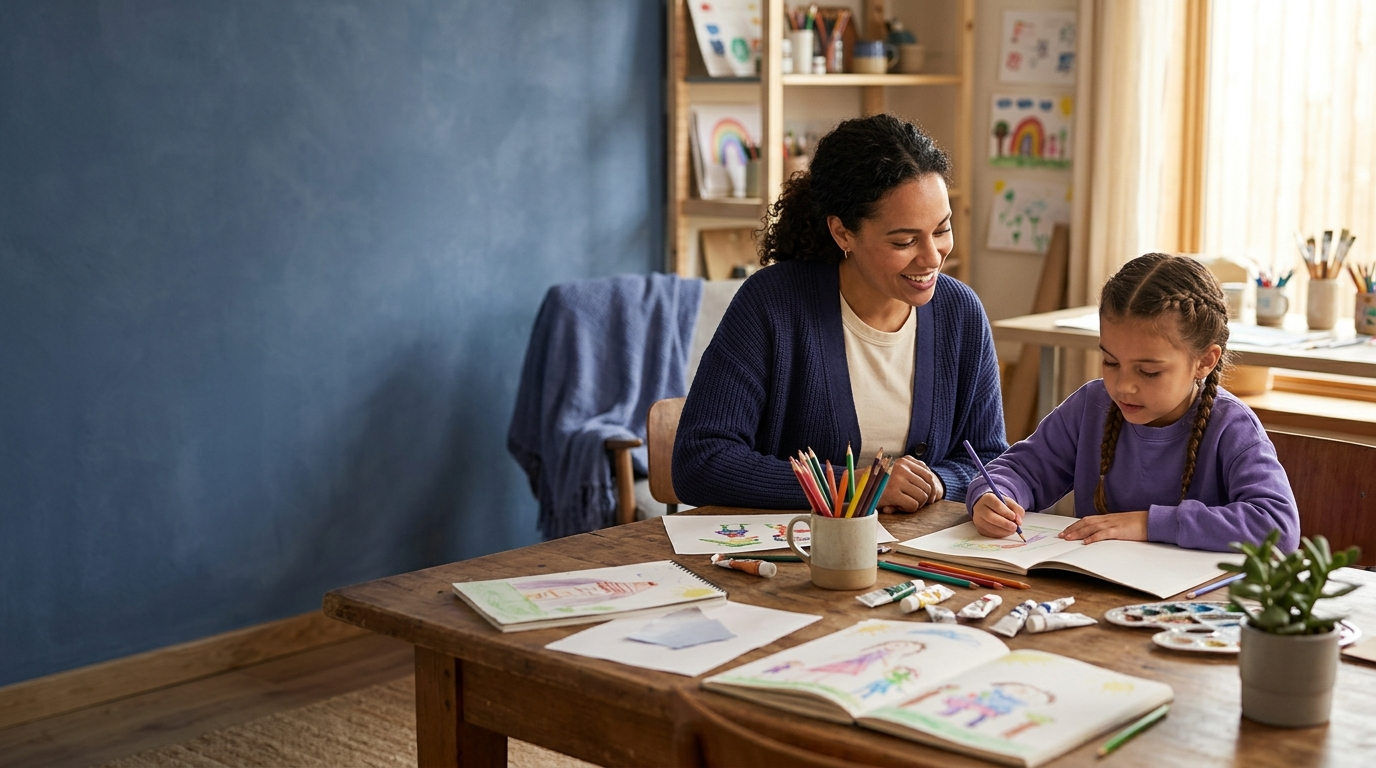
모델 답변을 나란히 들음
더 간단한 답변부터 시작하여 Band를 전환하여 동일한 작업이 어떻게 개발될 수 있는지 듣고 개인 응답을 녹음하세요. 이것은 공식적인 답변이나 점수 보장이 아닌 교육용 예시입니다.
2부 — 모델 답변
Part 2 cue-card response
My cousin Mia, who is eight, loves drawing. I know her because we go to the same after-school club. She’s quite quiet and creative and likes using bright colours and drawing animals. Mia draws almost every day, usually after she finishes her homework, for about half an hour or an hour. At weekends she sometimes spends longer on a picture. I think she likes drawing because it makes her feel calm and happy, and she can show things she can’t easily say with words. Her parents keep pencils and paper handy for her so she can draw whenever she wants.
I’d like to describe my nephew, Ollie, who’s seven and completely obsessed with drawing. I first noticed his skill when I babysat him last year and he produced a detailed map of our local park, complete with trees and a little duck pond, which surprised me because he’d never had formal lessons. Ollie is thoughtful and energetic with a vivid imagination; he’s surprisingly patient when he draws, often sitting for long stretches without getting distracted. He draws almost every day, usually in the evenings after school and at weekends, and sometimes he even wakes up early to finish a picture before breakfast. I think he enjoys drawing because it gives him control — he can invent whole worlds or change colours however he likes — and he’s proud when others praise his work, so it becomes a positive feedback loop; for example, when his teacher displayed one of his landscapes at school he beamed for days and kept adding new details. He usually works with pencils, felt-tip pens and watercolour, and he loves experimenting with textures and patterns. His parents encourage him by buying art books and taking him to a children’s art club, which has helped him learn new techniques and stay motivated.
3부 - 모델 답변
What is the right age for a child to learn drawing?
I think children can start learning basic drawing as soon as they can hold a pencil, maybe around three or four. At that age they enjoy scribbling and copying simple shapes. Formal lessons aren’t necessary early on — just lots of drawing time and praise.
Around three to five is a good time to introduce drawing more deliberately because children’s fine motor skills and hand-eye coordination are developing then. That said, learning to draw isn’t a race; some kids take to it later and still become good. Early exposure through play and simple guided activities tends to help rather than strict lessons.
Why do most children draw more often than adults do?
Children draw more often because they have more free time and drawing is a natural way to play. They also like bright colours and simple stories. Adults are busier and often worry their drawings won’t be good.
Children tend to draw more because it’s a primary form of play and self-expression for them; they’re less self-conscious and have more time for unstructured activities. Adults often abandon drawing because of time pressures, concern about skill level, or simply because it’s not seen as a practical hobby. In short, freedom and low self-criticism make children draw more.
Why do some people visit galleries or museums instead of viewing artworks online?
Some people prefer galleries because you can see the real painting and its size and texture. It feels special to stand in front of a work. Online images can’t show the exact colours or surface.
Many visitors choose galleries and museums because the physical presence of an artwork — its scale, texture and colour subtleties — can’t be fully captured online. The atmosphere of a gallery and the opportunity to view works in context, perhaps with expert labels or a guided tour, also adds value. For many, seeing the original piece is an emotional experience you just can’t replicate on a screen.
Do you think galleries and museums should be free of charge?
I think some museums should be free because then more people can go, especially those who can’t afford tickets. But I also know exhibitions cost money to run, so it’s not always possible.
Ideally basic access to national museums should be free to encourage cultural participation and educational visits, especially for young people and low-income families. However, special exhibitions and conservation work require funding, so a mixed model — free core galleries with paid special shows — is often the most realistic approach. That balances accessibility with financial sustainability.
How do artworks inspire people?
Artworks can make people feel things and spark ideas. A painting might remind someone of a place or memory, or give them new ways to look at an issue. They can also motivate people to paint themselves.
Artworks inspire by provoking emotion, offering fresh perspectives, and stimulating thought; a single image can challenge assumptions or rekindle a memory. They often open up conversations about identity, history or society, and can even spur practical creativity — for instance, inspiring someone to try a new technique or start a project. Essentially, art acts as a prompt for reflection and action.
What are the differences between reading a book and visiting a museum?
Reading a book is a private, quiet activity where you imagine things, while a museum is more physical and social. In a museum you see real objects and can learn from labels or guides. Both are educational but in different ways.
Reading a book tends to be an imaginative, often solitary experience that relies on language and the reader’s inner pictures, whereas visiting a museum is multisensory and social — you see the real objects, their scale and texture, and can access curated context and interpretation. Books offer depth and personal reflection; museums provide immediacy and embodied learning. Both complement each other well, offering different pathways to understanding.
연습 상태: 이전 문제 은행 주기에서 보관된 주제입니다. 기술 연습에는 여전히 유용하지만 현재 또는 보장된 시험 문제로 제시되지는 않습니다. 주제에 라벨을 지정하는 방법.
대답하는 방법 그림 그리기를 아주 좋아하는 아이를 묘사하세요. IELTS 말하기 질문
큐 카드 그리기를 아주 좋아하는 어린이에 대해 설명하기 위해 준비 시간을 활용하여 대화를 통한 경로를 구축하십시오. 명확한 주제를 선택하고 두 가지 구체적인 순간이나 세부 사항을 추가한 후 그것이 중요한 이유를 설명하여 마무리하세요. 그런 다음 연결된 파트 3 질문을 사용하여 더 폭넓은 설명과 비교를 연습하세요.
큐 카드 프롬프트:
- 그 사람을 어떻게 알았나요?
- 그/그녀는 어떤 사람인가
- 그/그녀가 그림을 그리는 빈도
- 그리고 그/그녀가 그림 그리기를 좋아한다고 생각하는 이유를 설명하세요.
- 열기: 사람, 장소, 사물 또는 사건을 식별합니다.
- 개발: 두 가지 세부 사항이나 순간을 논리적 순서로 설명합니다.
- 확장: 이유, 결과, 비교 또는 문제를 설명합니다.
- 묵상: 주제가 기억에 남거나 중요한 이유를 설명하여 마무리합니다.
질문별 접근 방식
| 연습문제 | 유용한 답변 이동 |
|---|---|
| What is the right age for a child to learn drawing? | 먼저 사물의 이름을 지정한 다음 구체적인 특징이나 예를 설명하세요. |
| Why do most children draw more often than adults do? | 한 가지 주요 원인을 제시하고 구체적인 예를 들어 이를 뒷받침하십시오. |
| Why do some people visit galleries or museums instead of viewing artworks online? | 한 가지 주요 원인을 제시하고 구체적인 예를 들어 이를 뒷받침하십시오. |
| Do you think galleries and museums should be free of charge? | 가능한 견해를 기술하고 이유를 설명하고 하나의 조건이나 예를 추가하십시오. |
어휘 집중
모델 답변에서 이미 입증된 유용한 언어는 다음과 같습니다. fine motor skills, hand-eye coordination, exposure through play, self-expression, unstructured activities, self-conscious, physical presence, in context. 각 의미와 자연스러운 단어 파트너십을 배운 다음 전체 스크립트를 복사하는 대신 새로운 답변에 항목을 사용하십시오.
피해야 할 일반적인 실수
- 질문에 부분적으로만 대답하는 암기된 답변을 제공합니다.
- 의미나 배열을 확인하지 않고 어려운 어휘를 추가합니다.
- 잠시 수정하고 계속하는 대신 오류가 발생할 때마다 다시 시작합니다.
- 첫 번째 시도를 기록하기 전에 모범 답변을 읽어보세요.
그림 그리기를 좋아하고 연습을 매우 좋아하는 아이에 대해 설명해주세요.
큐카드 준비시간은 그리기를 아주 좋아하는 아이 설명하기를 어떻게 활용해야 할까요?
오프닝, 두세 가지 세부 사항 및 최종 반영을 위한 키워드를 작성하세요. 완전한 문장을 쓰려고 하지 마세요.
큐카드 총알을 모두 가려야 하나요?
프롬프트는 대화를 정리하는 데 도움이 됩니다. 이를 덮는 것이 유용하지만 각 라인을 기계적으로 체크하는 것보다 일관된 1~2분 응답이 더 중요합니다.
파트 3 질문은 파트 2와 어떻게 연결되어 있나요?
이유, 비교, 사회적 영향 또는 미래 가능성을 통해 동일한 광범위한 주제를 전개하므로 답변에는 일반적으로 파트 1보다 더 많은 설명이 필요합니다.
