
Карточка-подсказка, часть 2
Опишите вашего знакомого ребенка, который очень любит рисовать.
Вы должны сказать:
- Как вы знали его/ее
- Какой он/она из себя представляет
- Как часто он/она рисует
- И объясните, почему, по вашему мнению, ему/ей нравится рисовать.
У вас будет одна-две минуты, чтобы поговорить на эту тему.
Часть 3. Вопросы для обсуждения
- What is the right age for a child to learn drawing?
- Why do most children draw more often than adults do?
- Why do some people visit galleries or museums instead of viewing artworks online?
- Do you think galleries and museums should be free of charge?
- How do artworks inspire people?
- What are the differences between reading a book and visiting a museum?
Статус практики: Архивированная тема из предыдущего цикла банка вопросов. Он по-прежнему полезен для практики навыков, но не представлен в качестве текущего или гарантированного вопроса экзамена. Как помечаются темы.
Читать полную расшифровку
I’d like to describe my nephew, Ollie, who’s seven and completely obsessed with drawing. I first noticed his skill when I babysat him last year and he produced a detailed map of our local park, complete with trees and a little duck pond, which surprised me because he’d never had formal lessons. Ollie is thoughtful and energetic with a vivid imagination; he’s surprisingly patient when he draws, often sitting for long stretches without getting distracted. He draws almost every day, usually in the evenings after school and at weekends, and sometimes he even wakes up early to finish a picture before breakfast. I think he enjoys drawing because it gives him control — he can invent whole worlds or change colours however he likes — and he’s proud when others praise his work, so it becomes a positive feedback loop; for example, when his teacher displayed one of his landscapes at school he beamed for days and kept adding new details. He usually works with pencils, felt-tip pens and watercolour, and he loves experimenting with textures and patterns. His parents encourage him by buying art books and taking him to a children’s art club, which has helped him learn new techniques and stay motivated.
Прежде чем говорить, просмотрите тему
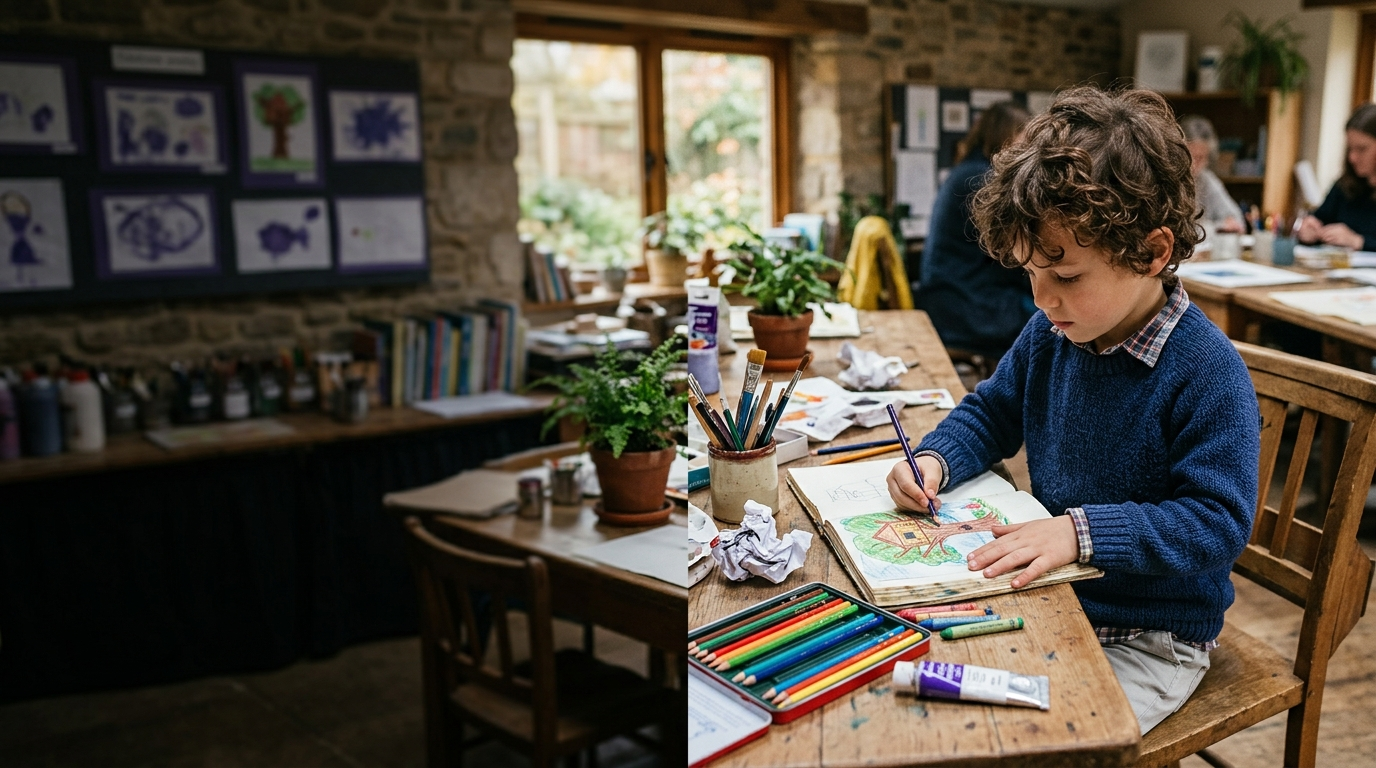
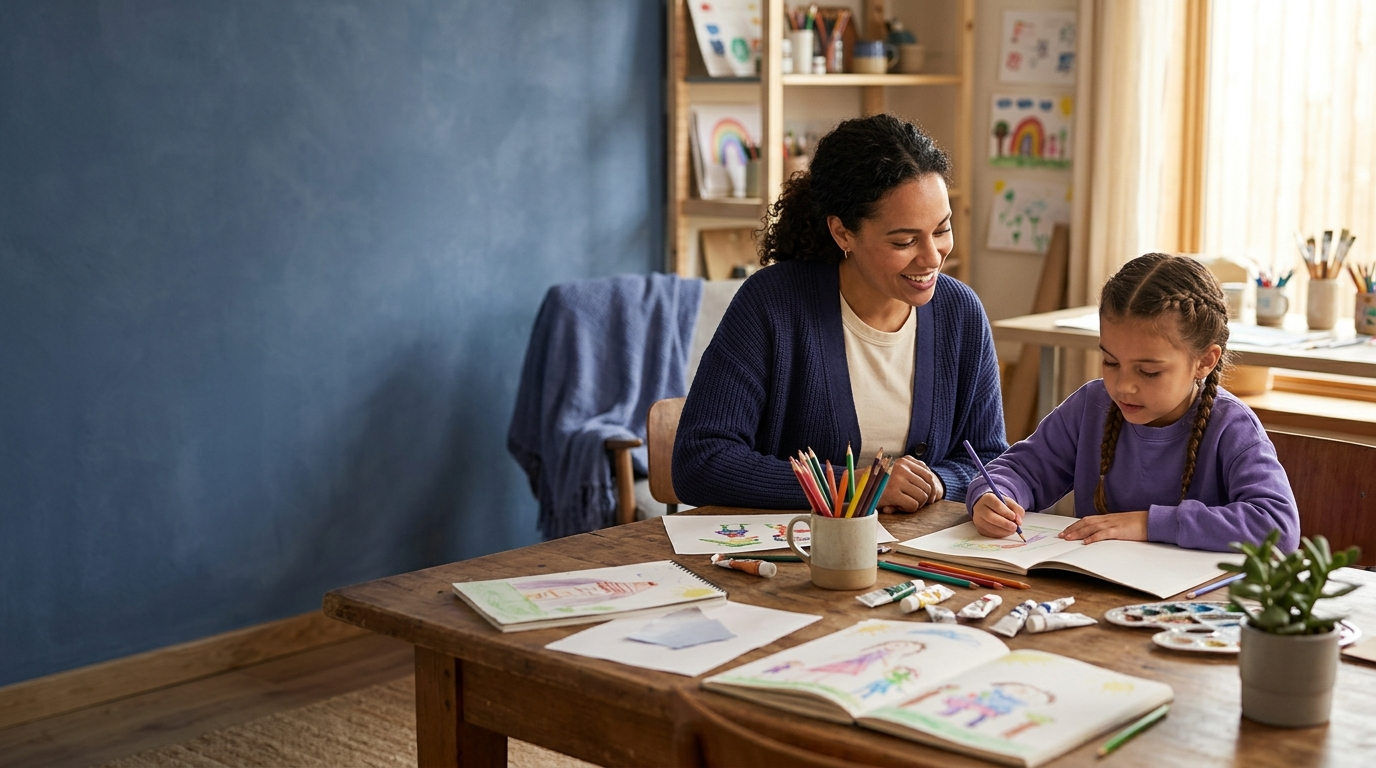
Используйте изображения в качестве подсказок идей. Опишите то, что вы заметили, свяжите это со своим опытом, а затем ответьте на реальный вопрос.
Типовые ответы, услышанные параллельно
Начните с более простого ответа, переключитесь на Band, чтобы услышать, как можно разработать ту же задачу, а затем запишите личный ответ. Это обучающие примеры, а не официальные ответы или гарантии баллов.
Часть 2. Типовой ответ
Part 2 cue-card response
My cousin Mia, who is eight, loves drawing. I know her because we go to the same after-school club. She’s quite quiet and creative and likes using bright colours and drawing animals. Mia draws almost every day, usually after she finishes her homework, for about half an hour or an hour. At weekends she sometimes spends longer on a picture. I think she likes drawing because it makes her feel calm and happy, and she can show things she can’t easily say with words. Her parents keep pencils and paper handy for her so she can draw whenever she wants.
I’d like to describe my nephew, Ollie, who’s seven and completely obsessed with drawing. I first noticed his skill when I babysat him last year and he produced a detailed map of our local park, complete with trees and a little duck pond, which surprised me because he’d never had formal lessons. Ollie is thoughtful and energetic with a vivid imagination; he’s surprisingly patient when he draws, often sitting for long stretches without getting distracted. He draws almost every day, usually in the evenings after school and at weekends, and sometimes he even wakes up early to finish a picture before breakfast. I think he enjoys drawing because it gives him control — he can invent whole worlds or change colours however he likes — and he’s proud when others praise his work, so it becomes a positive feedback loop; for example, when his teacher displayed one of his landscapes at school he beamed for days and kept adding new details. He usually works with pencils, felt-tip pens and watercolour, and he loves experimenting with textures and patterns. His parents encourage him by buying art books and taking him to a children’s art club, which has helped him learn new techniques and stay motivated.
Часть 3. Типовые ответы
What is the right age for a child to learn drawing?
I think children can start learning basic drawing as soon as they can hold a pencil, maybe around three or four. At that age they enjoy scribbling and copying simple shapes. Formal lessons aren’t necessary early on — just lots of drawing time and praise.
Around three to five is a good time to introduce drawing more deliberately because children’s fine motor skills and hand-eye coordination are developing then. That said, learning to draw isn’t a race; some kids take to it later and still become good. Early exposure through play and simple guided activities tends to help rather than strict lessons.
Why do most children draw more often than adults do?
Children draw more often because they have more free time and drawing is a natural way to play. They also like bright colours and simple stories. Adults are busier and often worry their drawings won’t be good.
Children tend to draw more because it’s a primary form of play and self-expression for them; they’re less self-conscious and have more time for unstructured activities. Adults often abandon drawing because of time pressures, concern about skill level, or simply because it’s not seen as a practical hobby. In short, freedom and low self-criticism make children draw more.
Why do some people visit galleries or museums instead of viewing artworks online?
Some people prefer galleries because you can see the real painting and its size and texture. It feels special to stand in front of a work. Online images can’t show the exact colours or surface.
Many visitors choose galleries and museums because the physical presence of an artwork — its scale, texture and colour subtleties — can’t be fully captured online. The atmosphere of a gallery and the opportunity to view works in context, perhaps with expert labels or a guided tour, also adds value. For many, seeing the original piece is an emotional experience you just can’t replicate on a screen.
Do you think galleries and museums should be free of charge?
I think some museums should be free because then more people can go, especially those who can’t afford tickets. But I also know exhibitions cost money to run, so it’s not always possible.
Ideally basic access to national museums should be free to encourage cultural participation and educational visits, especially for young people and low-income families. However, special exhibitions and conservation work require funding, so a mixed model — free core galleries with paid special shows — is often the most realistic approach. That balances accessibility with financial sustainability.
How do artworks inspire people?
Artworks can make people feel things and spark ideas. A painting might remind someone of a place or memory, or give them new ways to look at an issue. They can also motivate people to paint themselves.
Artworks inspire by provoking emotion, offering fresh perspectives, and stimulating thought; a single image can challenge assumptions or rekindle a memory. They often open up conversations about identity, history or society, and can even spur practical creativity — for instance, inspiring someone to try a new technique or start a project. Essentially, art acts as a prompt for reflection and action.
What are the differences between reading a book and visiting a museum?
Reading a book is a private, quiet activity where you imagine things, while a museum is more physical and social. In a museum you see real objects and can learn from labels or guides. Both are educational but in different ways.
Reading a book tends to be an imaginative, often solitary experience that relies on language and the reader’s inner pictures, whereas visiting a museum is multisensory and social — you see the real objects, their scale and texture, and can access curated context and interpretation. Books offer depth and personal reflection; museums provide immediacy and embodied learning. Both complement each other well, offering different pathways to understanding.
Статус практики: Архивированная тема из предыдущего цикла банка вопросов. Он по-прежнему полезен для практики навыков, но не представлен в качестве текущего или гарантированного вопроса экзамена. Как помечаются темы.
Как ответить Опишите своего знакомого ребенка, который очень любит рисовать Вопросы IELTS Speaking.
Для описания знакомого ребенка, который очень любит рисовать карточки-подсказки, используйте минуту подготовки, чтобы построить маршрут разговора. Выберите четкую тему, добавьте два конкретных момента или детали и закончите рассказом, почему это важно. Затем используйте связанные вопросы Части 3, чтобы попрактиковаться в более широком объяснении и сравнении.
Подсказки на карточке:
- Как вы знали его/ее
- Какой он/она из себя представляет
- Как часто он/она рисует
- И объясните, почему, по вашему мнению, ему/ей нравится рисовать.
- Открытие: идентифицируйте человека, место, предмет или событие.
- Развитие: опишите две детали или моменты в логическом порядке.
- Расширение: объясните причину, результат, сравнение или проблему.
- Для размышления: закончите рассказом о том, почему тема запомнилась или важна.
Повопросный подход
| Практический вопрос | Полезный ответный ход |
|---|---|
| What is the right age for a child to learn drawing? | Сначала назовите вещь, затем опишите конкретную особенность или пример. |
| Why do most children draw more often than adults do? | Ответьте на одну основную причину, а затем подтвердите ее конкретным примером. |
| Why do some people visit galleries or museums instead of viewing artworks online? | Ответьте на одну основную причину, а затем подтвердите ее конкретным примером. |
| Do you think galleries and museums should be free of charge? | Выскажите вероятную точку зрения, объясните причину и добавьте одно условие или пример. |
Словарный фокус
Полезные формулировки, уже продемонстрированные в примерных ответах, включают: fine motor skills, hand-eye coordination, exposure through play, self-expression, unstructured activities, self-conscious, physical presence, in context. Изучите каждое значение и естественное сочетание слов, а затем используйте этот элемент в новом ответе вместо того, чтобы копировать полный сценарий.
Распространенные ошибки, которых следует избегать
- Дает заученный ответ, который лишь частично отвечает на вопрос.
- Добавление сложной лексики без проверки значения или словосочетания.
- Перезапуск после каждой ошибки вместо кратковременного исправления и продолжения.
- Чтение ответа модели перед записью своей первой попытки.
Опишите вашего знакомого ребенка, который очень любит рисовать. Часто задаваемые вопросы.
Как мне использовать минуту подготовки «Опишите ребенка, которого вы знаете, который очень любит рисовать?»
Напишите ключевые слова для начала, двух-трех деталей и финального размышления. Не пытайтесь писать полные предложения.
Должен ли я покрывать каждый пункт подсказки?
Подсказки помогут вам организовать беседу. Рассказывать о них полезно, но последовательный ответ в течение одной-двух минут важнее, чем механическая отметка каждой строки.
Как вопросы Части 3 связаны с Частью 2?
Они развивают одну и ту же широкую тему посредством причин, сравнений, социальных последствий или будущих возможностей, поэтому ответы обычно требуют большего объяснения, чем Часть 1.
