
第 2 部分 提示卡
描述一個你認識的非常喜歡畫畫的孩子
你應該說:
- 你是如何認識他/她的
- 他/她是什麼樣的人
- 他/她畫畫的頻率
- 並解釋為什麼你認為他/她喜歡畫畫
您將有一到兩分鐘的時間來討論這個主題。
第 3 部分討論問題
- What is the right age for a child to learn drawing?
- Why do most children draw more often than adults do?
- Why do some people visit galleries or museums instead of viewing artworks online?
- Do you think galleries and museums should be free of charge?
- How do artworks inspire people?
- What are the differences between reading a book and visiting a museum?
練習狀態:上一個題庫週期的存檔主題。它對於技能練習仍然有用,但不會作為當前或保證的考試問題出現。 主題如何標記.
閱讀完整的文字記錄
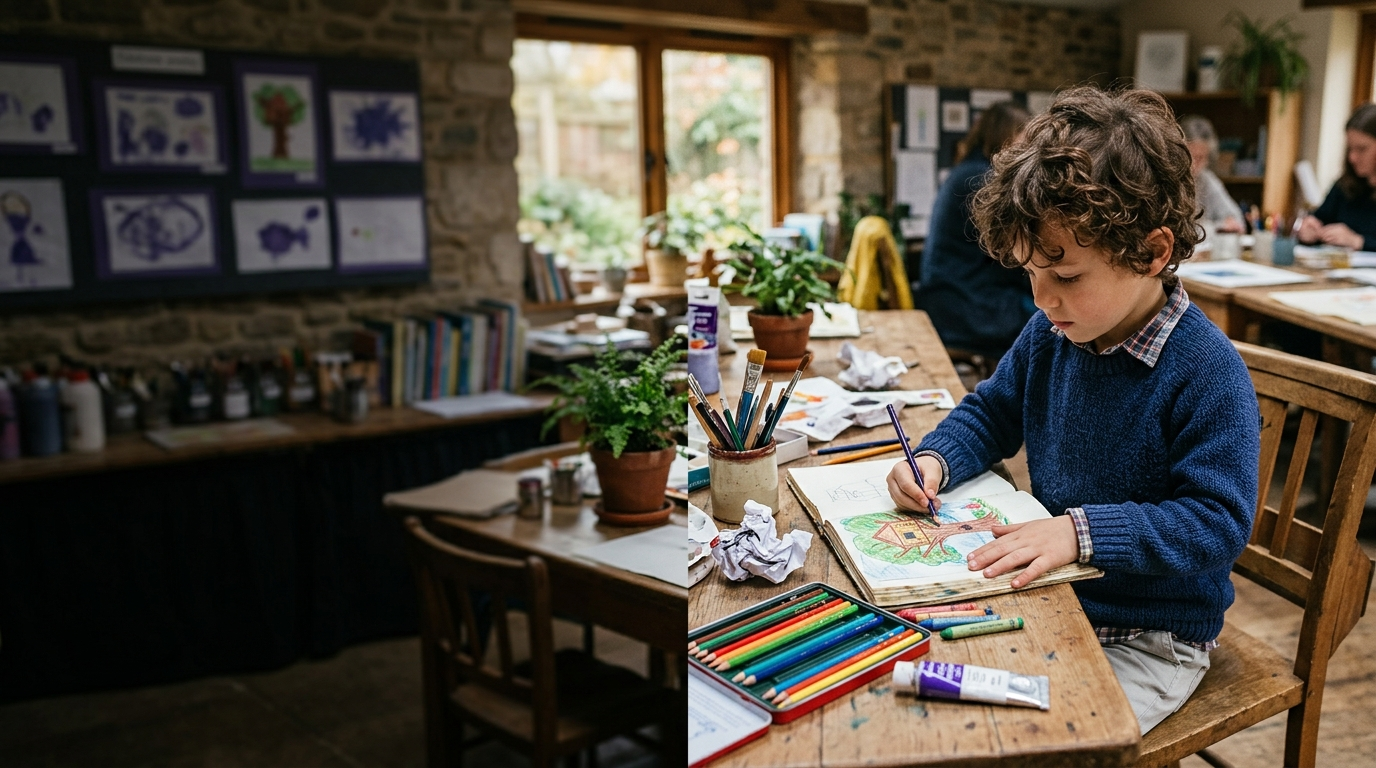
I’d like to describe my nephew, Ollie, who’s seven and completely obsessed with drawing. I first noticed his skill when I babysat him last year and he produced a detailed map of our local park, complete with trees and a little duck pond, which surprised me because he’d never had formal lessons. Ollie is thoughtful and energetic with a vivid imagination; he’s surprisingly patient when he draws, often sitting for long stretches without getting distracted. He draws almost every day, usually in the evenings after school and at weekends, and sometimes he even wakes up early to finish a picture before breakfast. I think he enjoys drawing because it gives him control — he can invent whole worlds or change colours however he likes — and he’s proud when others praise his work, so it becomes a positive feedback loop; for example, when his teacher displayed one of his landscapes at school he beamed for days and kept adding new details. He usually works with pencils, felt-tip pens and watercolour, and he loves experimenting with textures and patterns. His parents encourage him by buying art books and taking him to a children’s art club, which has helped him learn new techniques and stay motivated.
說話前先看清主題
使用圖像作為想法提示。描述您注意到的內容,將其與您的經歷聯繫起來,然後回答真正的問題。
模範答案,並排聆聽
從更簡單的答案開始,切換 Band 來聽聽如何發展相同的任務,然後記錄個人回答。這些是教學範例,不是官方答案或分數保證。
第 2 部分—標準答案
Part 2 cue-card response
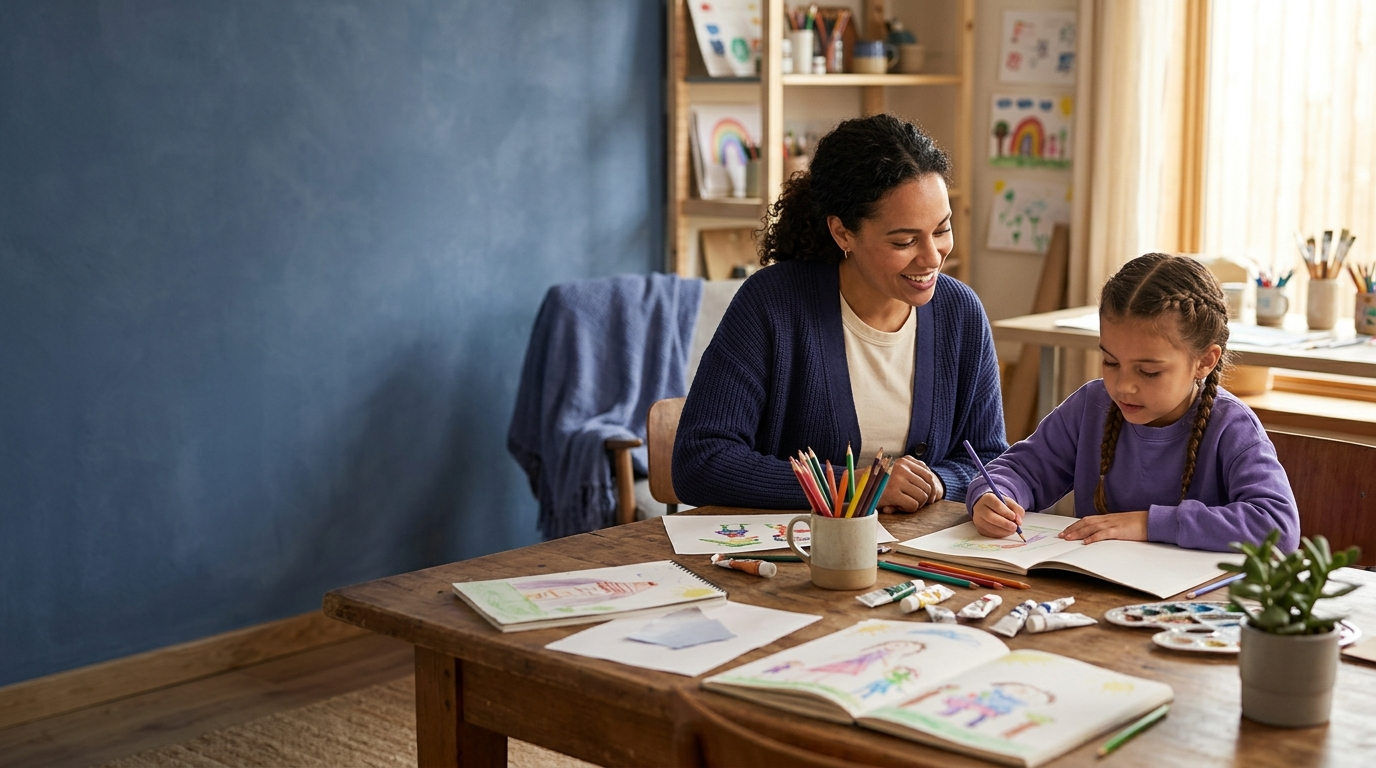
My cousin Mia, who is eight, loves drawing. I know her because we go to the same after-school club. She’s quite quiet and creative and likes using bright colours and drawing animals. Mia draws almost every day, usually after she finishes her homework, for about half an hour or an hour. At weekends she sometimes spends longer on a picture. I think she likes drawing because it makes her feel calm and happy, and she can show things she can’t easily say with words. Her parents keep pencils and paper handy for her so she can draw whenever she wants.
I’d like to describe my nephew, Ollie, who’s seven and completely obsessed with drawing. I first noticed his skill when I babysat him last year and he produced a detailed map of our local park, complete with trees and a little duck pond, which surprised me because he’d never had formal lessons. Ollie is thoughtful and energetic with a vivid imagination; he’s surprisingly patient when he draws, often sitting for long stretches without getting distracted. He draws almost every day, usually in the evenings after school and at weekends, and sometimes he even wakes up early to finish a picture before breakfast. I think he enjoys drawing because it gives him control — he can invent whole worlds or change colours however he likes — and he’s proud when others praise his work, so it becomes a positive feedback loop; for example, when his teacher displayed one of his landscapes at school he beamed for days and kept adding new details. He usually works with pencils, felt-tip pens and watercolour, and he loves experimenting with textures and patterns. His parents encourage him by buying art books and taking him to a children’s art club, which has helped him learn new techniques and stay motivated.
第 3 部分—標準答案
What is the right age for a child to learn drawing?
I think children can start learning basic drawing as soon as they can hold a pencil, maybe around three or four. At that age they enjoy scribbling and copying simple shapes. Formal lessons aren’t necessary early on — just lots of drawing time and praise.
Around three to five is a good time to introduce drawing more deliberately because children’s fine motor skills and hand-eye coordination are developing then. That said, learning to draw isn’t a race; some kids take to it later and still become good. Early exposure through play and simple guided activities tends to help rather than strict lessons.
Why do most children draw more often than adults do?
Children draw more often because they have more free time and drawing is a natural way to play. They also like bright colours and simple stories. Adults are busier and often worry their drawings won’t be good.
Children tend to draw more because it’s a primary form of play and self-expression for them; they’re less self-conscious and have more time for unstructured activities. Adults often abandon drawing because of time pressures, concern about skill level, or simply because it’s not seen as a practical hobby. In short, freedom and low self-criticism make children draw more.
Why do some people visit galleries or museums instead of viewing artworks online?
Some people prefer galleries because you can see the real painting and its size and texture. It feels special to stand in front of a work. Online images can’t show the exact colours or surface.
Many visitors choose galleries and museums because the physical presence of an artwork — its scale, texture and colour subtleties — can’t be fully captured online. The atmosphere of a gallery and the opportunity to view works in context, perhaps with expert labels or a guided tour, also adds value. For many, seeing the original piece is an emotional experience you just can’t replicate on a screen.
Do you think galleries and museums should be free of charge?
I think some museums should be free because then more people can go, especially those who can’t afford tickets. But I also know exhibitions cost money to run, so it’s not always possible.
Ideally basic access to national museums should be free to encourage cultural participation and educational visits, especially for young people and low-income families. However, special exhibitions and conservation work require funding, so a mixed model — free core galleries with paid special shows — is often the most realistic approach. That balances accessibility with financial sustainability.
How do artworks inspire people?
Artworks can make people feel things and spark ideas. A painting might remind someone of a place or memory, or give them new ways to look at an issue. They can also motivate people to paint themselves.
Artworks inspire by provoking emotion, offering fresh perspectives, and stimulating thought; a single image can challenge assumptions or rekindle a memory. They often open up conversations about identity, history or society, and can even spur practical creativity — for instance, inspiring someone to try a new technique or start a project. Essentially, art acts as a prompt for reflection and action.
What are the differences between reading a book and visiting a museum?
Reading a book is a private, quiet activity where you imagine things, while a museum is more physical and social. In a museum you see real objects and can learn from labels or guides. Both are educational but in different ways.
Reading a book tends to be an imaginative, often solitary experience that relies on language and the reader’s inner pictures, whereas visiting a museum is multisensory and social — you see the real objects, their scale and texture, and can access curated context and interpretation. Books offer depth and personal reflection; museums provide immediacy and embodied learning. Both complement each other well, offering different pathways to understanding.
練習狀態:上一個題庫週期的存檔主題。它對於技能練習仍然有用,但不會作為當前或保證的考試問題出現。 主題如何標記.
如何回答 描述一個你認識的非常喜歡畫畫的孩子 雅思口語問題
對於「描述一個您認識的非常喜歡畫畫的孩子」提示卡,請利用準備時間來建立整個演講的路線。選擇一個明確的主題,加入兩個特定的時刻或細節,最後說明為什麼它很重要。然後使用連結的第 3 部分問題來練習更廣泛的解釋和比較。
提示卡提示:
- 你是如何認識他/她的
- 他/她是什麼樣的人
- 他/她畫畫的頻率
- 並解釋為什麼你認為他/她喜歡畫畫
- 開頭:指出人物、地點、物件或事件。
- 發展:以邏輯順序描述兩個細節或時刻。
- 擴展:解釋原因、結果、比較或問題。
- 反思:以為什麼主題令人難忘或重要來結束。
逐個問題的方法
| 練習題 | 有用的答案動作 |
|---|---|
| What is the right age for a child to learn drawing? | 首先命名事物,然後描述特定的功能或範例。 |
| Why do most children draw more often than adults do? | 回答一個主要原因,然後用一個具體的例子來支持它。 |
| Why do some people visit galleries or museums instead of viewing artworks online? | 回答一個主要原因,然後用一個具體的例子來支持它。 |
| Do you think galleries and museums should be free of charge? | 陳述一種可能的觀點,解釋原因並添加一個條件或示例。 |
詞彙重點
模型答案中已經展示的有用語言包括 fine motor skills, hand-eye coordination, exposure through play, self-expression, unstructured activities, self-conscious, physical presence, in context。學習每個含義和自然的單字夥伴關係,然後在新的答案中使用該項目,而不是複製完整的腳本。
要避免的常見錯誤
- 給出的記憶答案只能部分回答問題。
- 加入困難的詞彙而不檢查意義或搭配。
- 每次錯誤後重新啟動,而不是短暫修正並繼續。
- 在記錄您自己的第一次嘗試之前,請先閱讀標準答案。
描述一個你認識的非常喜歡畫畫練習的孩子
我該如何使用「描述一個你認識的非常喜歡畫畫的孩子」提示卡來準備分鐘?
為開頭、兩三個細節和最後的反思寫下關鍵字。不要試圖寫出完整的句子。
我必須覆蓋所有提示卡項目符號嗎?
提示可以幫助您組織演講。涵蓋它們是有用的,但是一到兩分鐘的連貫響應比機械地勾選每一行更重要。
第 3 部分的問題與第 2 部分有何關聯?
他們透過原因、比較、社會影響或未來的可能性發展出相同的廣泛主題,因此答案通常需要比第 1 部分更多的解釋。
