
IELTS Speaking Part 1: Taking photos Questions and Answers
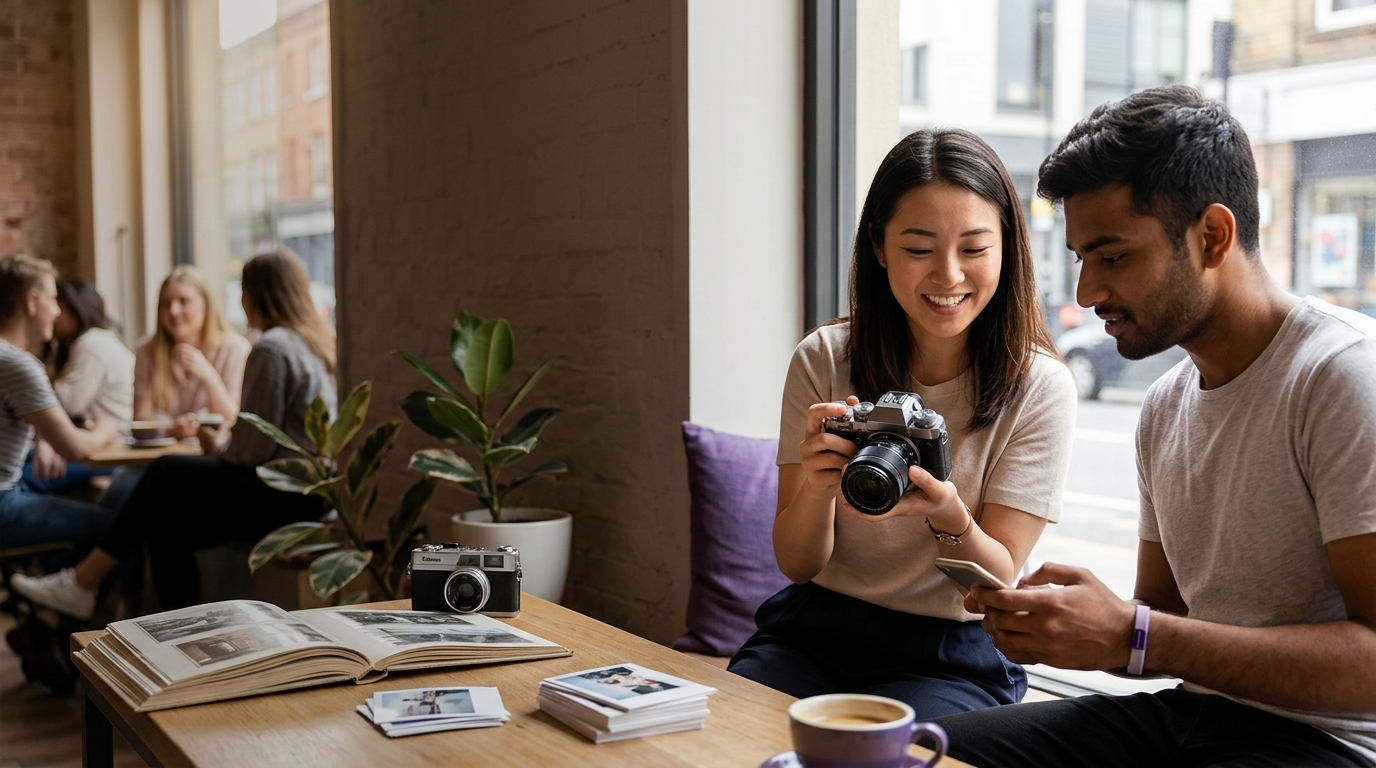
Part 1 questions
Move one question at a time: listen, answer, compare and retry. The complete question text remains in the page HTML for accessibility and search.
- 01Do you like taking photos?Full Band 6/7 answer →
- 02Where do you like to go to take photos?
- 03What types of photos do you enjoy taking the most?
- 04How often do you take photos in your daily life?
Read the complete transcript
Yes, I really enjoy taking photos — it's a simple hobby that makes me notice details I might otherwise miss. I mostly use my phone, though sometimes I take a small camera out if I want better quality. For me photography is a way to freeze a moment and tell a little story about people or places.
Preparation status: Predicted topic cycle. This independent practice resource is not an official IELTS paper, and the questions in your test can be different. How topics are labelled.
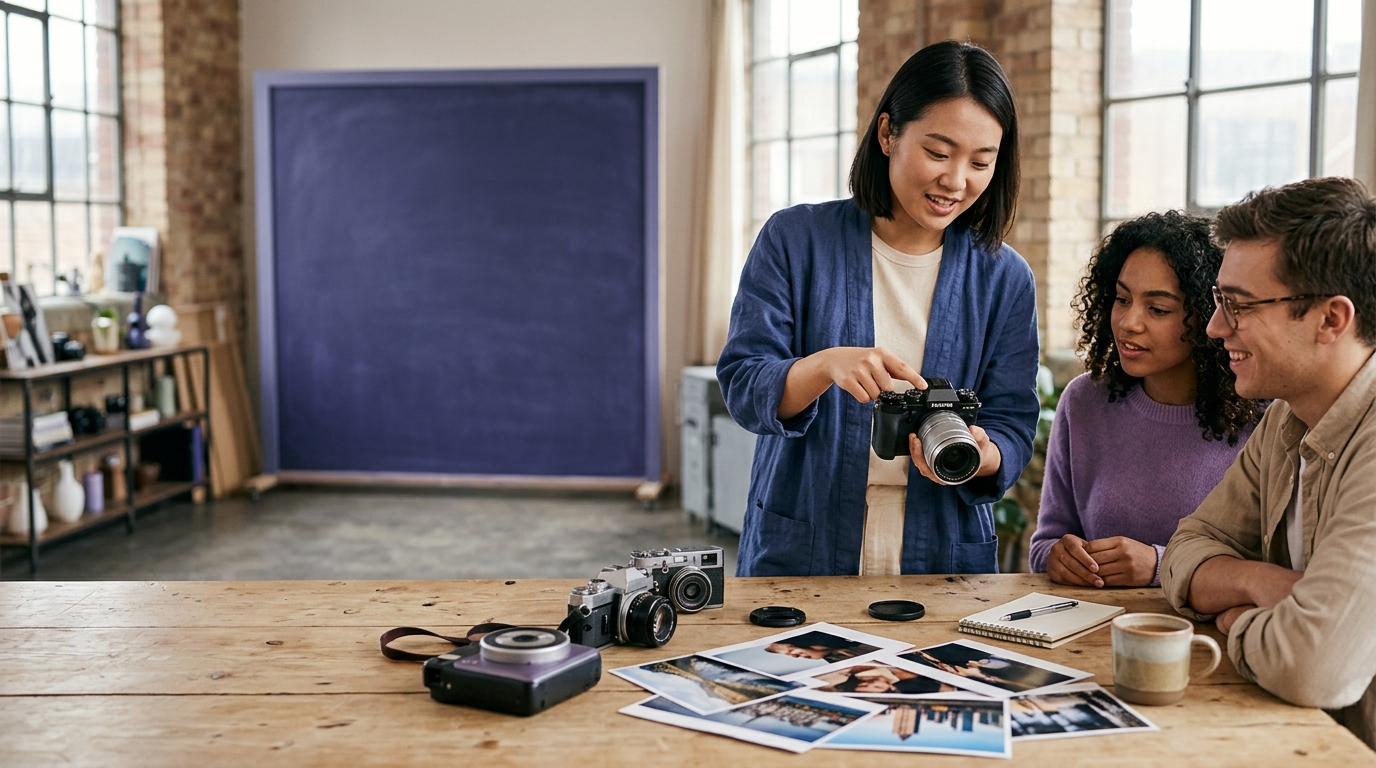
See the topic before you speak
Use the images as idea prompts. Describe what you notice, connect it to your experience, then answer the real question.

Model answers, heard side by side
Start with the simpler answer, switch bands to hear how the same task can be developed, then record a personal response. These are teaching examples, not official answers or score guarantees.
Do you like taking photos?
Yes, I like taking photos. I usually use my phone to take pictures of friends, food or places I visit. It helps me keep memories and I sometimes share them online. I'm not an expert, but I enjoy it.
Yes, I really enjoy taking photos — it's a simple hobby that makes me notice details I might otherwise miss. I mostly use my phone, though sometimes I take a small camera out if I want better quality. For me photography is a way to freeze a moment and tell a little story about people or places.
Where do you like to go to take photos?
I like to go to parks and busy streets to take photos. There is a nice park near my home and I often walk there with my phone. I also take photos when I travel to new towns or cities.
I tend to head to parks, riverbanks or old town centres because they offer varied scenes and good natural light. If I want something more dramatic I'll go to the coast at sunrise, or visit a busy market to capture everyday life and interactions. I enjoy places with texture and atmosphere.
What types of photos do you enjoy taking the most?
I enjoy taking photos of people and nature. I like simple portraits of my friends and family, and I also like landscapes when I travel. Mostly I try to get clear, straightforward pictures.
I prefer candid portraits and environmental shots — photos that show people in their usual surroundings rather than posed images. I also enjoy landscapes when I travel because they give a sense of scale and mood. Candid shots feel more natural and often tell a small story.
How often do you take photos in your daily life?
I take photos quite often, maybe a few times a week. On days out or when I'm travelling I take more pictures. At home I don't take many, just the odd photo on my phone.
It depends — on an ordinary day I might snap a couple of photos on my phone if something catches my eye, but at the weekend or on holiday I can take dozens. So it's fairly frequent overall, though concentrated around events or scenes that seem worth recording.
Practice status: Archived topic from a previous question-bank cycle. It remains useful for skill practice but is not presented as a current or guaranteed exam question. How topics are labelled.
How to answer Taking photos IELTS Speaking questions
This Taking photos set contains 4 short interview questions. Start each answer with the information the examiner asked for, then extend it with one reason, example or contrast. The goal is spontaneous, connected speech—not a mini-essay.
- Answer the exact question in the first sentence.
- Add one reason or specific personal detail.
- Use an example or contrast only when it adds new information.
- Finish naturally and let the examiner ask the next question.
Question-by-question approach
| Practice question | Useful answer move |
|---|---|
| Do you like taking photos? | Answer directly, give a reason and add one natural personal detail. |
| Where do you like to go to take photos? | Give a direct answer, one reason and a short example without memorising a script. |
| What types of photos do you enjoy taking the most? | Name the thing first, then describe a specific feature or example. |
| How often do you take photos in your daily life? | Describe the process or difference in a clear order and add a result. |
Vocabulary focus
Useful language already demonstrated in the model answers includes freeze a moment, hobby, notice details, natural light, riverbank, texture, candid, environmental shots. Learn each meaning and a natural word partnership, then use the item in a fresh answer instead of copying a complete script.
Common mistakes to avoid
- Giving a memorised response that only partly answers the question.
- Adding difficult vocabulary without checking meaning or collocation.
- Restarting after every error instead of correcting briefly and continuing.
- Reading the model answer before recording your own first attempt.
Taking photos practice FAQ
How long should my answer be for Taking photos in Part 1?
Aim for a direct answer plus a reason or detail, usually two to four sentences. Stop when the idea is complete rather than forcing a fixed word count.
Should I memorise the Taking photos model answers?
No. Use them to notice structure and language, then answer from your own experience. Memorised wording can fail when the examiner changes the question.
What if I have no experience of the topic?
Say that honestly, then explain a related preference, observation or hypothetical example. You are assessed on language, not specialist knowledge.
