
Part 1 Questions
- Do you like reading?
- Do you prefer to read on paper or on a screen?
- When do you need to read carefully, and when not?
- Do you prefer scanning or detailed reading?
Practice status: Archived topic from a previous question-bank cycle. It remains useful for skill practice but is not presented as a current or guaranteed exam question. How topics are labelled.
Read the complete transcript
Yes, I really enjoy reading — it’s one of my favourite ways to relax and learn. I tend to read fiction for pleasure, especially contemporary novels and short stories, but I also pick up non‑fiction like popular science or biographies when I want to learn something new. I usually read in the evenings or at the weekend; it helps me switch off from screens and pick up fresh ideas.
See the topic before you speak
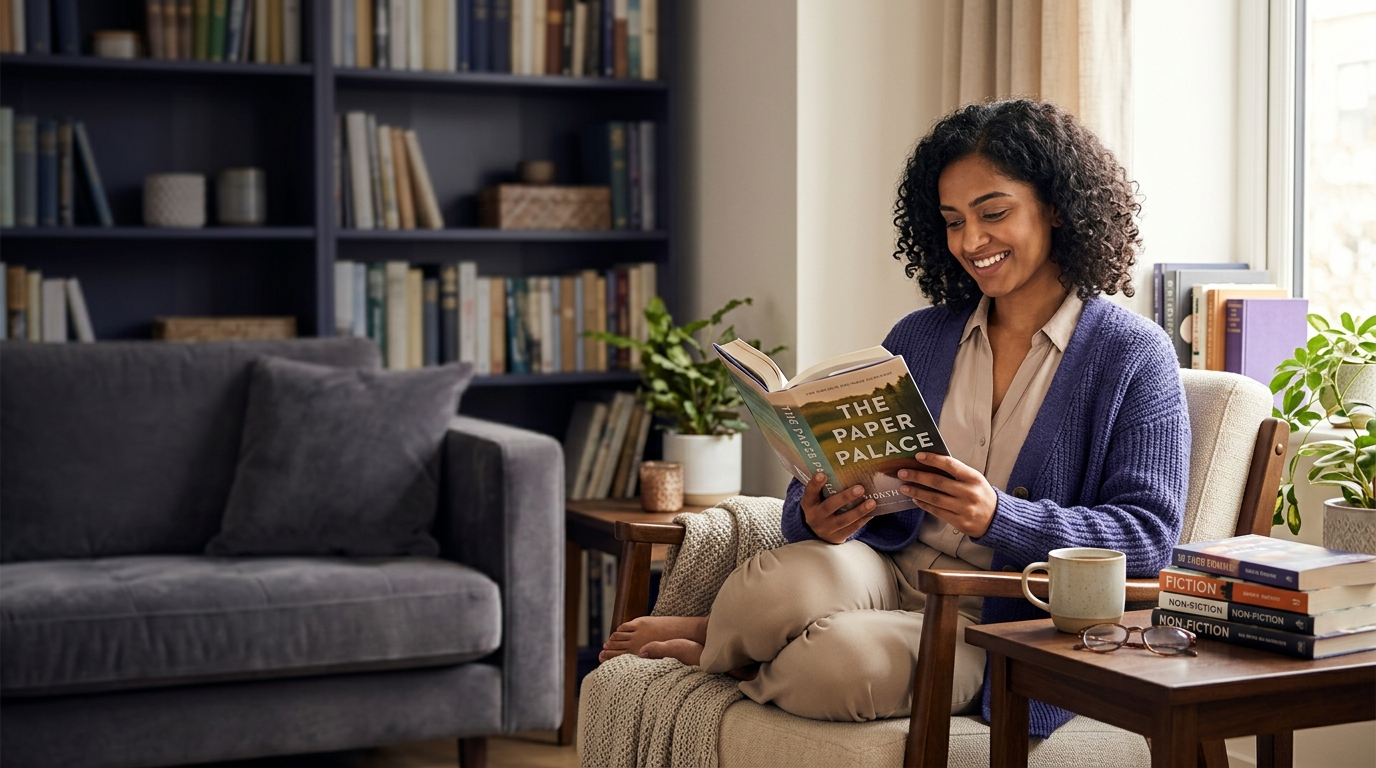
Use the images as idea prompts. Describe what you notice, connect it to your experience, then answer the real question.

Model answers, heard side by side
Start with the simpler answer, switch bands to hear how the same task can be developed, then record a personal response. These are teaching examples, not official answers or score guarantees.
Do you like reading?
Yes, I do like reading. I read quite often, mainly novels and short stories. I usually read in the evening to relax after work. I find reading helps me learn new words and it calms me down. I don't always have time, but when I do I enjoy it.
Yes, I really enjoy reading — it’s one of my favourite ways to relax and learn. I tend to read fiction for pleasure, especially contemporary novels and short stories, but I also pick up non‑fiction like popular science or biographies when I want to learn something new. I usually read in the evenings or at the weekend; it helps me switch off from screens and pick up fresh ideas.
Do you prefer to read on paper or on a screen?
I prefer to read on paper. Books feel nicer to hold and they don't hurt my eyes as much. When I need something quick, like news or a short article, I read on my phone, but for long reading I choose paper.
I generally prefer paper for long reads, like novels or non‑fiction, because it feels easier on the eyes and helps me remember the structure of the text. For quick stuff — news, emails or research — I use a screen because it’s more convenient and searchable. So it often depends on the purpose: immersion on paper, speed and convenience on screen.
When do you need to read carefully, and when not?
I need to read carefully when something is important, such as instructions, contracts or exam questions. For fun reading like magazines or light articles I don't read every word. If it's important I read slowly and maybe read it twice.
I read very carefully when the information matters — for example legal documents, technical instructions or exam papers — because missing a detail can have consequences. By contrast, when I’m browsing social media, headlines or a novel for pleasure, I’ll often skim and not worry about every sentence. Mostly it comes down to context and how serious the consequences of a mistake would be.
Do you prefer scanning or detailed reading?
I do both, but often I scan first to see if the text is useful. If it looks important I then read it in detail. Scanning saves time and detailed reading helps me understand more.
I normally use a two‑stage approach: I scan first to get an overview and decide whether the text is worth a deep read, and if it is I switch to detailed reading to analyse the arguments and note key points. That way I save time but still understand complex material when I need to.
Practice status: Archived topic from a previous question-bank cycle. It remains useful for skill practice but is not presented as a current or guaranteed exam question. How topics are labelled.
How to answer Reading IELTS Speaking questions
This Reading set contains 4 short interview questions. Start each answer with the information the examiner asked for, then extend it with one reason, example or contrast. The goal is spontaneous, connected speech—not a mini-essay.
- Answer the exact question in the first sentence.
- Add one reason or specific personal detail.
- Use an example or contrast only when it adds new information.
- Finish naturally and let the examiner ask the next question.
Question-by-question approach
| Practice question | Useful answer move |
|---|---|
| Do you like reading? | Answer directly, give a reason and add one natural personal detail. |
| Do you prefer to read on paper or on a screen? | Answer directly, give a reason and add one natural personal detail. |
| When do you need to read carefully, and when not? | Give a direct answer, one reason and a short example without memorising a script. |
| Do you prefer scanning or detailed reading? | Answer directly, give a reason and add one natural personal detail. |
Vocabulary focus
Useful language already demonstrated in the model answers includes relax, switch off, pick up, immersion, searchable, convenient, skim, consequences. Learn each meaning and a natural word partnership, then use the item in a fresh answer instead of copying a complete script.
Common mistakes to avoid
- Giving a memorised response that only partly answers the question.
- Adding difficult vocabulary without checking meaning or collocation.
- Restarting after every error instead of correcting briefly and continuing.
- Reading the model answer before recording your own first attempt.
Reading practice FAQ
How long should my answer be for Reading in Part 1?
Aim for a direct answer plus a reason or detail, usually two to four sentences. Stop when the idea is complete rather than forcing a fixed word count.
Should I memorise the Reading model answers?
No. Use them to notice structure and language, then answer from your own experience. Memorised wording can fail when the examiner changes the question.
What if I have no experience of the topic?
Say that honestly, then explain a related preference, observation or hypothetical example. You are assessed on language, not specialist knowledge.
