
Parte 1 Perguntas
- What sports do you like?
- Where did you learn how to do it?
- Did you do some sports when you were young?
- Do you think students need more exercise?
- Do you know any schoolmates who are good at sports?
- Do you think it is important for people to exercise?
- Should schools encourage young students to take more physical exercise?
Status da prática: Tópico arquivado de um ciclo anterior de banco de questões. Ela permanece útil para a prática de habilidades, mas não é apresentada como uma questão de exame atual ou garantida. Como os tópicos são rotulados.
Leia a transcrição completa
I enjoy a mix of team and solo sports — mainly football and swimming, and I go cycling when the weather’s good. Football gives me that team buzz and friendly competition, while swimming and cycling help me clear my head and build endurance. I try to fit at least a few sessions into my week so I don’t get too sedentary.
Veja o tópico antes de falar
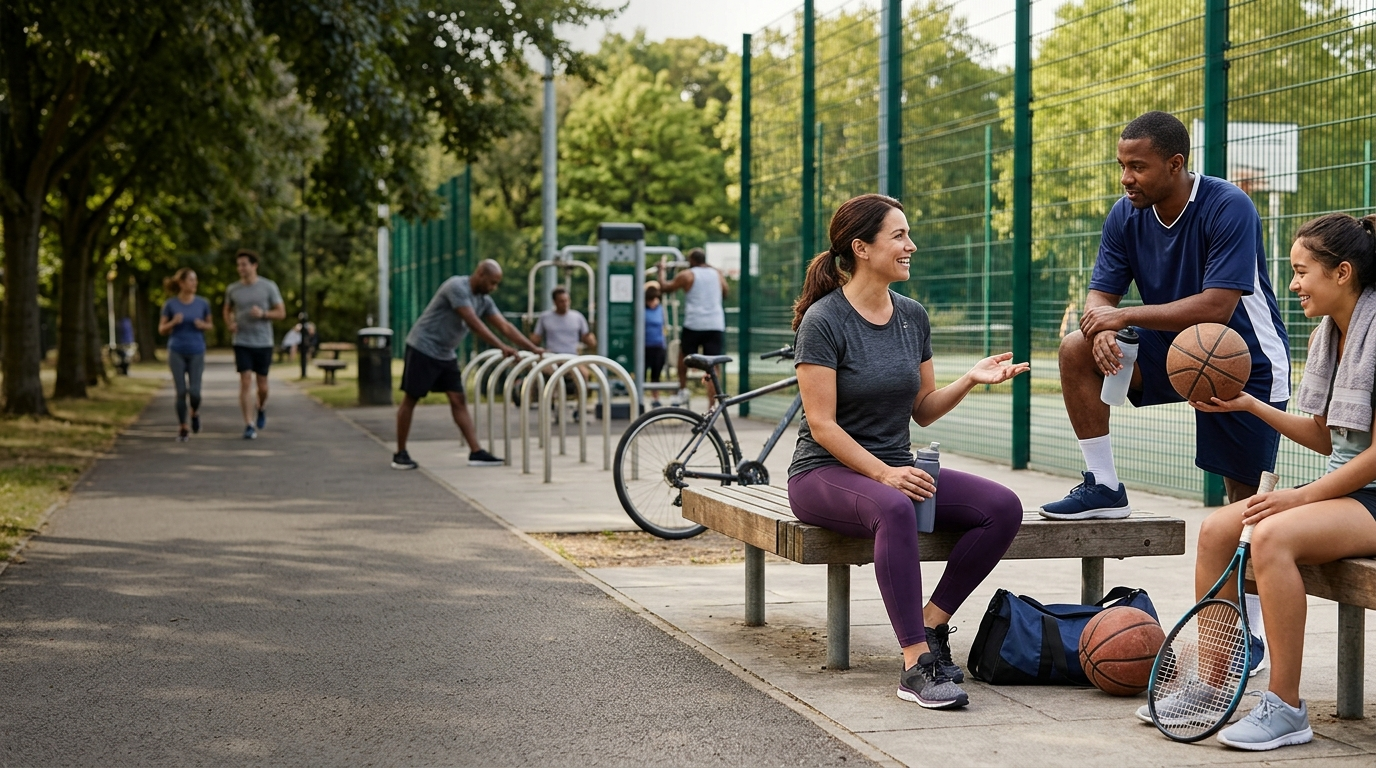
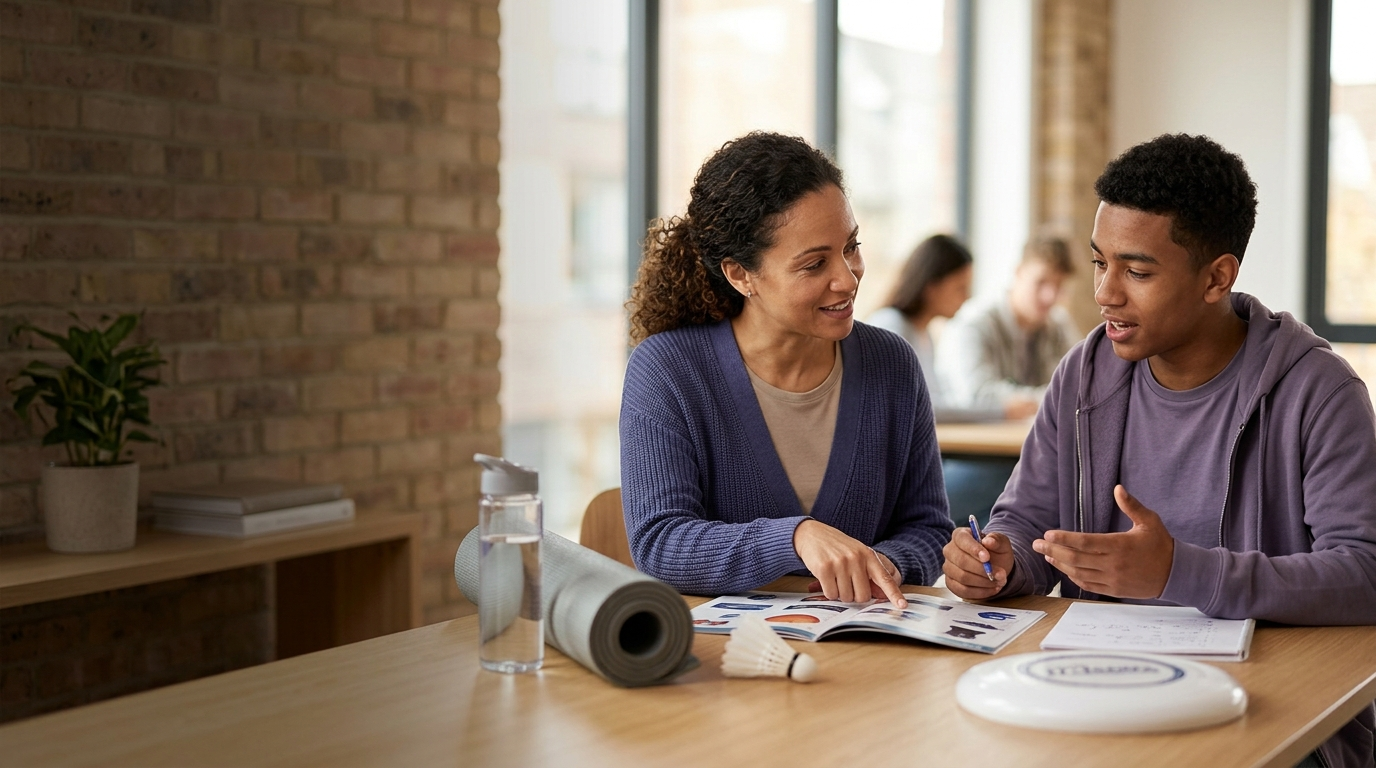
Use as imagens como sugestões de ideias. Descreva o que você percebe, conecte-o à sua experiência e responda à verdadeira pergunta.
Respostas modelo, ouvidas lado a lado
Comece com a resposta mais simples, mude Band para ouvir como a mesma tarefa pode ser desenvolvida e depois registre uma resposta pessoal. Estes são exemplos didáticos, não respostas oficiais ou garantias de pontuação.
What sports do you like?
I like football and swimming the most. I play football with friends at the weekend and I go swimming once or twice a week to relax. Sometimes I also go for runs if I have time.
I enjoy a mix of team and solo sports — mainly football and swimming, and I go cycling when the weather’s good. Football gives me that team buzz and friendly competition, while swimming and cycling help me clear my head and build endurance. I try to fit at least a few sessions into my week so I don’t get too sedentary.
Where did you learn how to do it?
I learned to play football at school and in a local club. For swimming I had lessons when I was small and then practised at the community pool.
I picked up football at primary school and then joined a local club where a coach taught me tactical skills and teamwork. Swimming started with lessons when I was quite young, and later I refined my technique at the community pool and from online tutorials for drills. Having a coach early on made a big difference to my basics and confidence.
Did you do some sports when you were young?
Yes, I did a lot of sport as a child. I played football and did swimming lessons. It was part of after-school activities.
Definitely — I was quite active as a youngster. I did football, went swimming and tried athletics at school. My parents also encouraged outdoor play, so I was always running about or riding my bike, which helped me develop basic fitness and coordination early on.
Do you think students need more exercise?
Yes, students need more exercise because it helps them stay healthy. Many spend too long sitting and that is bad for them.
I think students generally would benefit from more exercise. Apart from physical health, short regular activity boosts concentration and reduces stress — both important for learning. With so much screen time these days, building movement into the day, even through short breaks or active lessons, would be a sensible approach.
Do you know any schoolmates who are good at sports?
Yes, a few of my schoolmates are really good at sports. One friend was captain of the football team and another was strong at athletics.
Yes, I can think of several classmates who excelled in different sports. One of them captained the school football team and went on to play for a county side, while another was outstanding at athletics, winning regional events. They trained regularly, balanced studies and sport, and acted as role models for the rest of us.
Do you think it is important for people to exercise?
Yes, it is important for people to exercise. It keeps you fit and healthy and can stop you getting ill.
Absolutely — regular exercise is important across all ages. It reduces the risk of chronic illnesses, improves mood and sleep, and helps maintain mobility as you get older. Beyond health, exercise is great for social interaction and stress relief, so it’s a key part of a balanced life.
Should schools encourage young students to take more physical exercise?
Yes, schools should encourage more physical exercise. It would make children healthier and more active. PE lessons should be regular.
Yes, schools should actively encourage more physical activity and make it accessible for everyone. That could mean more varied PE options, daily short activity breaks, and well-supported extracurricular clubs so pupils find something they enjoy. Making exercise fun and inclusive is crucial — that way even less sporty kids are more likely to take part.
Status da prática: Tópico arquivado de um ciclo anterior de banco de questões. Ela permanece útil para a prática de habilidades, mas não é apresentada como uma questão de exame atual ou garantida. Como os tópicos são rotulados.
Como responder às perguntas do IELTS Speaking sobre Praticar Esportes
Este conjunto Doing Sports contém 7 perguntas curtas para entrevistas. Comece cada resposta com as informações solicitadas pelo examinador e, em seguida, estenda-as com um motivo, exemplo ou contraste. O objetivo é um discurso espontâneo e conectado – não um mini-ensaio.
- Responda exatamente à pergunta da primeira frase.
- Adicione um motivo ou detalhe pessoal específico.
- Use um exemplo ou contraste apenas quando adicionar novas informações.
- Termine naturalmente e deixe o examinador fazer a próxima pergunta.
Abordagem pergunta por pergunta
| Pergunta prática | Movimento de resposta útil |
|---|---|
| What sports do you like? | Nomeie a coisa primeiro e depois descreva um recurso ou exemplo específico. |
| Where did you learn how to do it? | Dê uma resposta direta, um motivo e um pequeno exemplo sem memorizar um roteiro. |
| Did you do some sports when you were young? | Dê um exemplo real do passado e depois diga o que mudou ou por que isso foi importante. |
| Do you think students need more exercise? | Indique uma opinião provável, explique a razão e adicione uma condição ou exemplo. |
Foco no vocabulário
A linguagem útil já demonstrada nas respostas do modelo inclui team buzz, clear my head, endurance, local club, refine my technique, tactical skills, after-school activities, coordination. Aprenda cada significado e uma parceria natural de palavras e, em seguida, use o item em uma nova resposta em vez de copiar um script completo.
Erros comuns a evitar
- Dar uma resposta memorizada que responde apenas parcialmente à pergunta.
- Adicionar vocabulário difícil sem verificar o significado ou a colocação.
- Reiniciar após cada erro em vez de corrigir brevemente e continuar.
- Lendo a resposta do modelo antes de gravar sua primeira tentativa.
Perguntas frequentes sobre prática de esportes
Qual deve ser a duração da minha resposta para Praticar Esportes na Parte 1?
Procure uma resposta direta mais um motivo ou detalhe, geralmente de duas a quatro frases. Pare quando a ideia estiver concluída, em vez de forçar uma contagem fixa de palavras.
Devo memorizar as respostas do modelo Doing Sports?
Não. Use-os para perceber a estrutura e a linguagem e depois responda com base na sua própria experiência. A redação memorizada pode falhar quando o examinador altera a pergunta.
E se eu não tiver experiência no assunto?
Diga isso honestamente e depois explique uma preferência, observação ou exemplo hipotético relacionado. Você é avaliado pelo idioma, não pelo conhecimento especializado.
