
IELTS Speaking Part 1: Public gardens and parks Questions and Answers
Part 1 questions
Move one question at a time: listen, answer, compare and retry. The complete question text remains in the page HTML for accessibility and search.
- 01Did you like going to parks as a child?
- 02Do you still like going to parks now?
- 03Would you like to see more parks in your city?
- 04Are there any parks you want to go to in the future?
- 05Would you prefer to play in a personal garden or public garden?
- 06How are the parks today different from those you visited as a kid?
- 07What do you like to do when visiting a park?
- 08Would you like to play in a public garden or park?
Read the complete transcript
Definitely. Parks were one of my favourite places as a child — a kind of mini-adventure. I loved climbing trees, exploring the bushes and playing games with neighbours. They felt safe and free, and I think those outdoor hours really helped me learn to be independent.
Preparation status: Dated predicted practice collection. This independent practice resource is not an official IELTS paper, and the questions in your test can be different. How topics are labelled.
See the topic before you speak
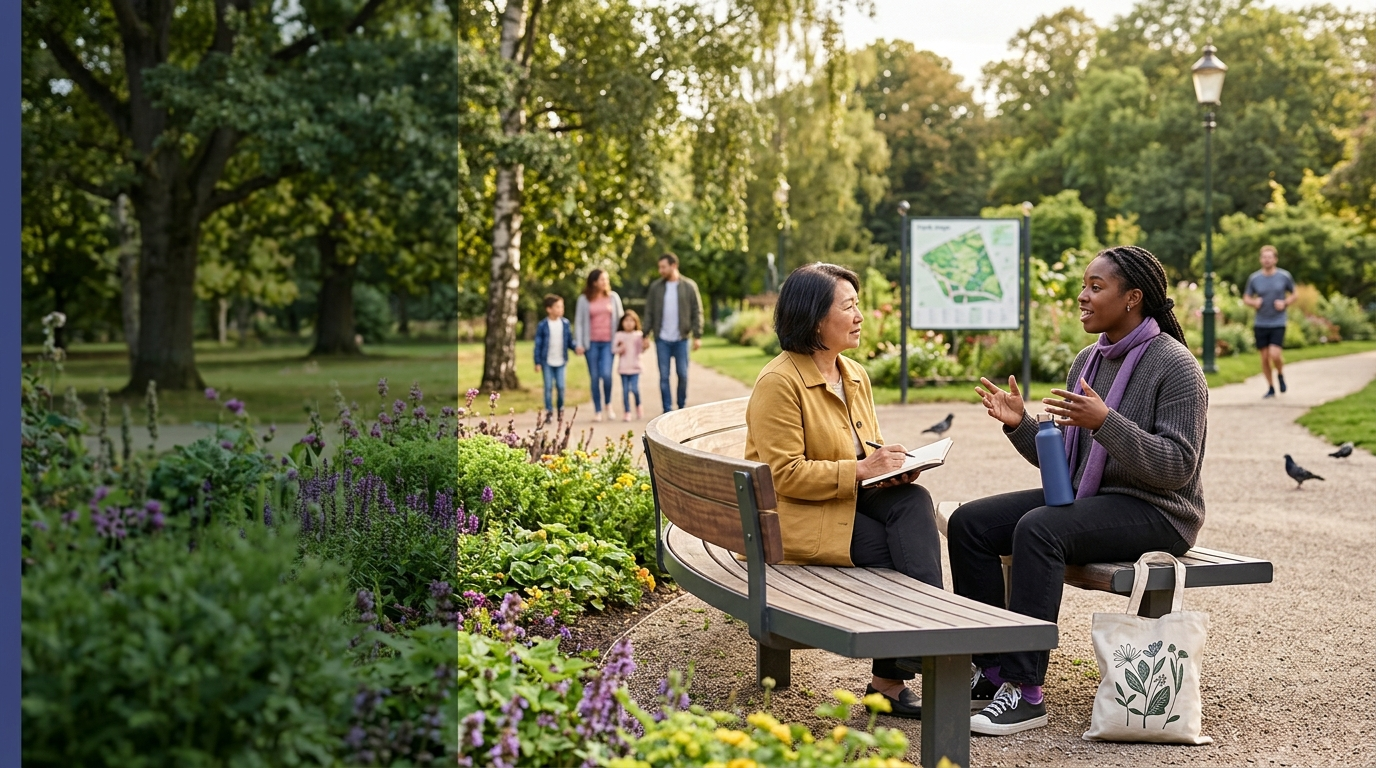
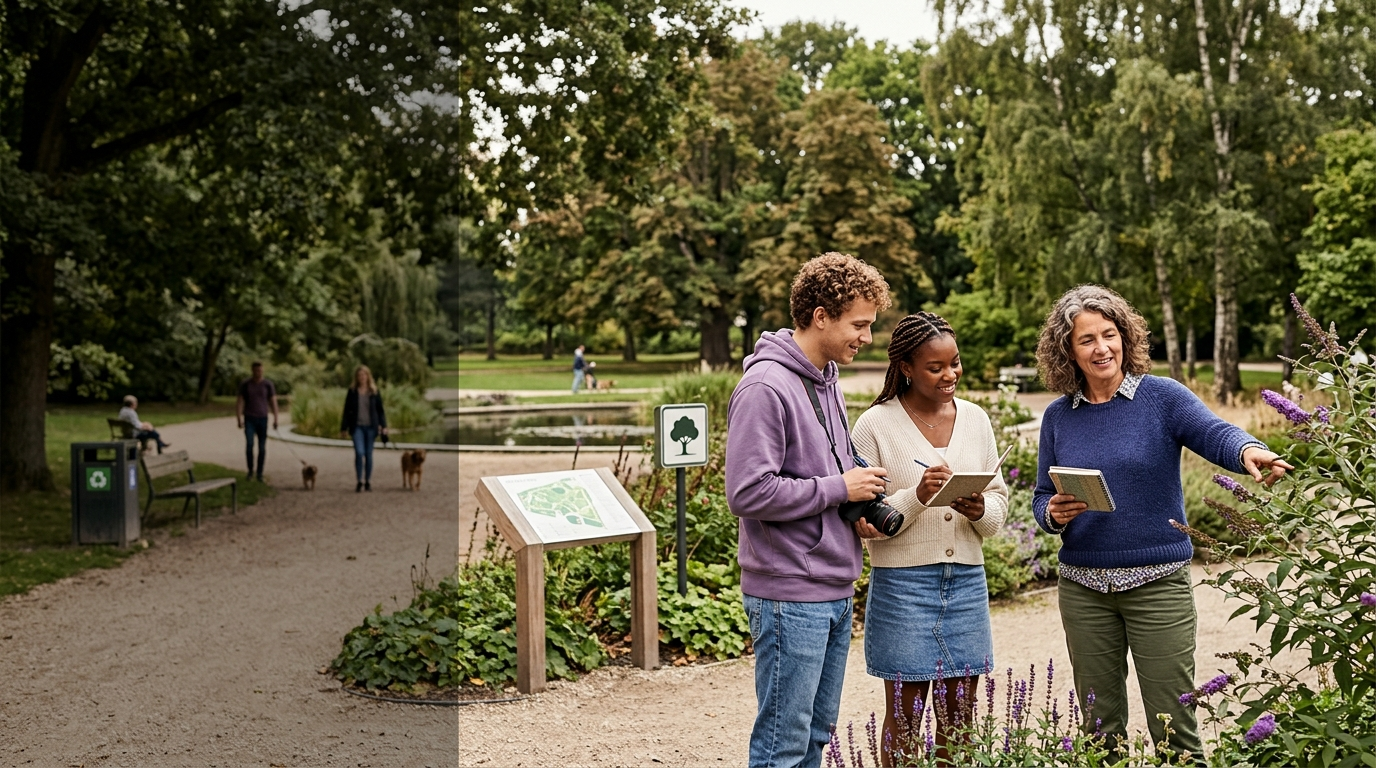
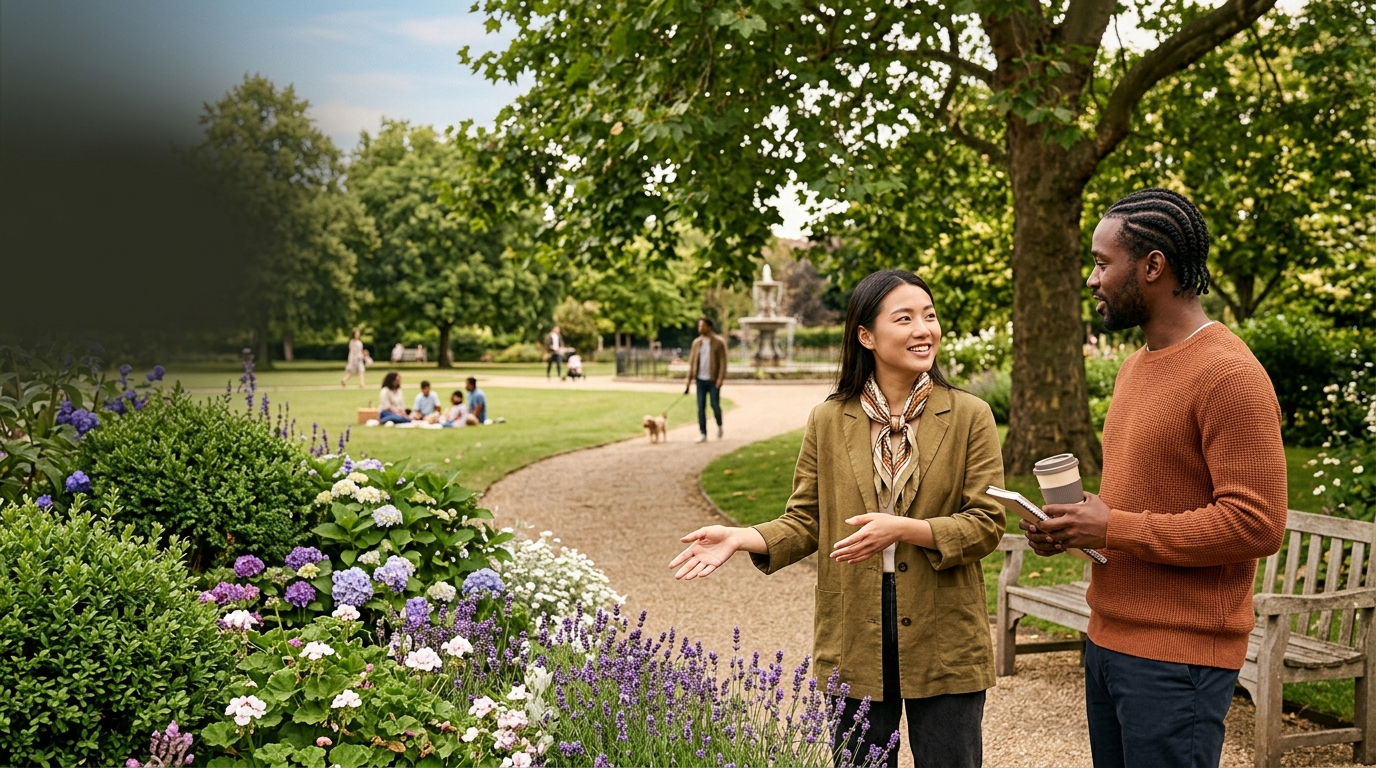
Use the images as idea prompts. Describe what you notice, connect it to your experience, then answer the real question.
Model answers, heard side by side
Start with the simpler answer, switch bands to hear how the same task can be developed, then record a personal response. These are teaching examples, not official answers or score guarantees.
Did you like going to parks as a child?
Yes, I liked going to parks as a child. My parents would take me to the playground and I’d spend ages on the swings and slide. Sometimes we had a picnic and I remember running around with other children.
Definitely. Parks were one of my favourite places as a child — a kind of mini-adventure. I loved climbing trees, exploring the bushes and playing games with neighbours. They felt safe and free, and I think those outdoor hours really helped me learn to be independent.
Do you still like going to parks now?
Yes, I still enjoy going to parks. I often go for a walk or sit and read. It’s nice to get out of the house and have some fresh air.
I do. Parks are a great escape from city noise — I go for a jog, cycle or sometimes meet friends for a coffee on a bench. They’re useful for keeping fit and for a quick mental reset during a busy week.
Would you like to see more parks in your city?
Yes, I would like more parks. My city is quite built-up and extra green areas would be good for families and children to play in.
Absolutely. More parks would improve air quality, give people space to exercise and help build community. Ideally they’d be spread evenly across neighbourhoods so everyone, including those in denser areas, can access green space.
Are there any parks you want to go to in the future?
There’s a well-known city park I haven’t been to yet that I’d like to visit. I’ve heard it has a botanic section and a big lake, so I’d like to go and see it.
Yes — I’d love to visit a nearby nature reserve that’s a short train ride away. It has wildflower meadows in spring and good trails for photography and birdwatching. I’m planning a weekend trip when the weather improves to get some pictures and relax.
Would you prefer to play in a personal garden or public garden?
I’d prefer a personal garden because it’s private and safe. You can leave toys out and not worry about strangers. It’s easier for young children.
It depends on the activity. For quiet things like reading or gardening I’d choose a private garden for privacy and convenience. But if I wanted to play sports or meet other people I’d pick a public park because it has more space and facilities.
How are the parks today different from those you visited as a kid?
Parks today seem cleaner and better maintained than when I was a child. There are more bins and new play equipment, and sometimes there are more people using them.
They’re quite different. Modern parks often have better safety standards, multi-use areas and organized activities like outdoor fitness classes. There’s also more emphasis on biodiversity and maintenance, whereas older parks felt more rough-and-ready and less managed.
What do you like to do when visiting a park?
I usually walk or sit on a bench. Sometimes I read or have a picnic with friends. If I have a dog, I’ll let it run around.
It depends on my mood — I might go for a run, do some sketching, or meet friends for a picnic. I also enjoy quiet activities like birdwatching or practising photography, and sometimes I join group yoga sessions that are held in the park.
Would you like to play in a public garden or park?
Yes, I would like to play in a public park. There’s more space and better equipment, and I can meet other people to play with.
I’d choose a public park for playing, especially for team games or anything that needs lots of room. Parks also tend to have marked pitches or courts and organised playgroups, which makes things easier than using a private garden.
Practice status: Archived topic from a previous question-bank cycle. It remains useful for skill practice but is not presented as a current or guaranteed exam question. How topics are labelled.
How to answer Public gardens and parks IELTS Speaking questions
This Public gardens and parks set contains 8 short interview questions. Start each answer with the information the examiner asked for, then extend it with one reason, example or contrast. The goal is spontaneous, connected speech—not a mini-essay.
- Answer the exact question in the first sentence.
- Add one reason or specific personal detail.
- Use an example or contrast only when it adds new information.
- Finish naturally and let the examiner ask the next question.
Question-by-question approach
| Practice question | Useful answer move |
|---|---|
| Did you like going to parks as a child? | Give a real past example, then say what changed or why it mattered. |
| Do you still like going to parks now? | Answer directly, give a reason and add one natural personal detail. |
| Would you like to see more parks in your city? | State a likely view, explain the reason and add one condition or example. |
| Are there any parks you want to go to in the future? | Give a direct answer, one reason and a short example without memorising a script. |
Vocabulary focus
Useful language already demonstrated in the model answers includes playground equipment, climb trees, have a picnic, go for a stroll, open green space, get some fresh air, urban green space, biodiversity. Learn each meaning and a natural word partnership, then use the item in a fresh answer instead of copying a complete script.
Common mistakes to avoid
- Giving a memorised response that only partly answers the question.
- Adding difficult vocabulary without checking meaning or collocation.
- Restarting after every error instead of correcting briefly and continuing.
- Reading the model answer before recording your own first attempt.
Public gardens and parks practice FAQ
How long should my answer be for Public gardens and parks in Part 1?
Aim for a direct answer plus a reason or detail, usually two to four sentences. Stop when the idea is complete rather than forcing a fixed word count.
Should I memorise the Public gardens and parks model answers?
No. Use them to notice structure and language, then answer from your own experience. Memorised wording can fail when the examiner changes the question.
What if I have no experience of the topic?
Say that honestly, then explain a related preference, observation or hypothetical example. You are assessed on language, not specialist knowledge.
