
雅思口语 Part 2 与 Part 3:Describe an occasion when you were not allowed to use your mobile phone

Part 2 话题卡
Describe an occasion when you were not allowed to use your mobile phone
你需要谈到:
- 当它是
- 它在哪里
- 为什么您不被允许使用手机
- 以及你对此有何感受
你需要围绕这个话题作答一到两分钟。
阅读完整的文字记录
Last winter, during my final university exam period, there was one occasion when I wasn't allowed to use my mobile phone. It happened in December, in a big exam hall at my campus where students were sitting shoulder-to-shoulder. To be precise, it was the two-hour economics exam on a cold Monday morning. The invigilators made it clear before we started that phones had to be switched off and left in our bags at the front; they even asked us to turn pockets inside out. The reason was obvious: phones could be used to cheat or to communicate with others outside, and exam boards take academic integrity very seriously. I remember one student who forgot and had to hand his phone in – he looked embarrassed. Initially I felt uneasy because I use my phone to check the time and calm myself with music, but after a while I relaxed and focused on the paper. In fact, removing that tiny distraction helped me concentrate better and finish on time. Afterwards, I realised it was a useful exercise in self-control, even though at first it felt like a loss of freedom. Later I joked about it with friends, and we all agreed the no-phone rule is fair — it protects everyone and keeps exams credible.
备考状态:预测题季。本页面为独立备考资源,并非 IELTS 官方试卷;实际考试题目可能不同。 话题标签说明.
Part 3 讨论题
每次练习一道题:听题、作答、对照并重试。为便于无障碍访问和搜索,页面 HTML 中会保留完整英文题目。
- 01How do young and old people use mobile phones differently?
- 02What positive and negative impact do mobile phones have on friendship?
- 03Is it a waste of time to take pictures with mobile phones?
- 04Do you think it is necessary to have laws on the use of mobile phones?
- 05What are examples of good and poor phone manners?
- 06How does the internet benefit people?
开口前先熟悉话题
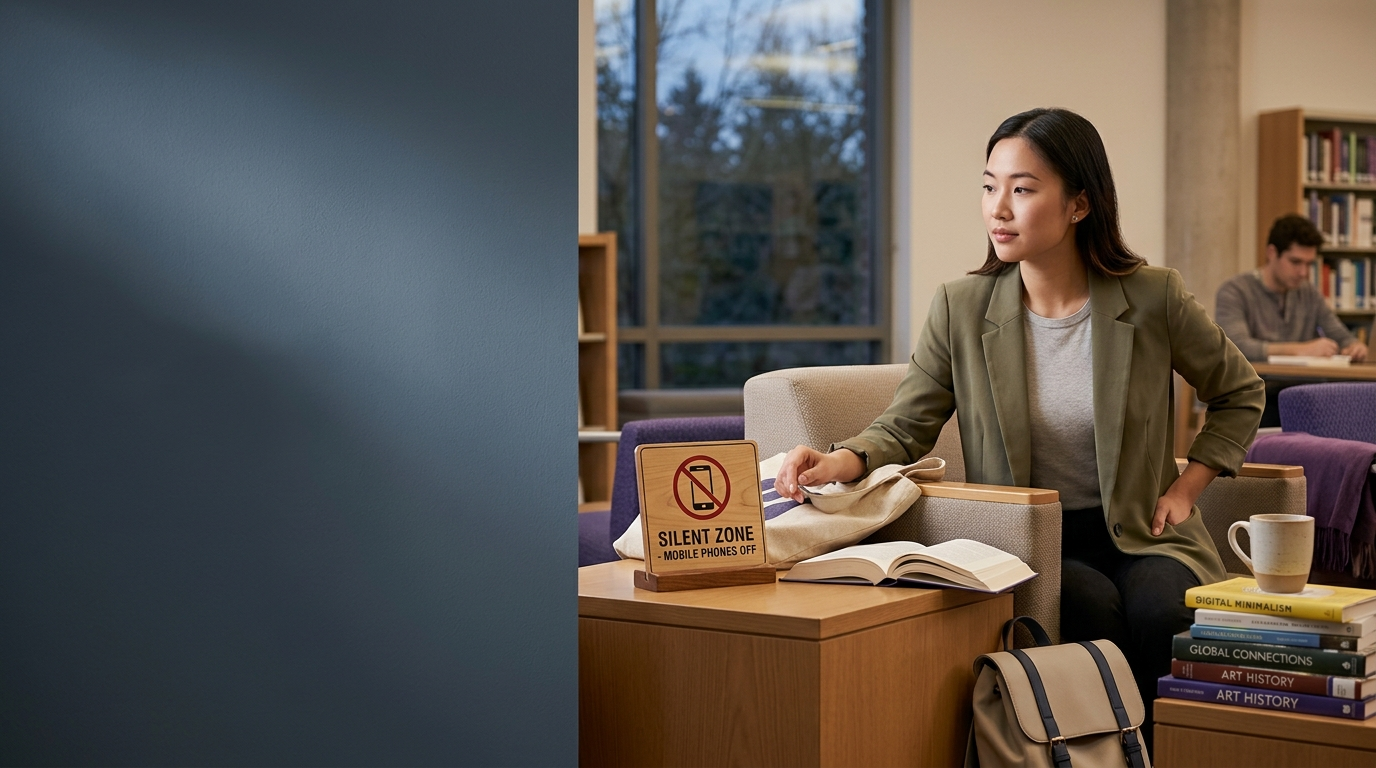
使用图像作为想法提示。描述您注意到的内容,将其与您的经历联系起来,然后回答真正的问题。

对照聆听参考答案
先听较简单的答案,再切换 Band 对照同一道题如何展开,最后录制你自己的回答。这些内容仅为教学示例,不是官方答案,也不保证对应分数。
Part 2 — 参考答案
Part 2 cue-card response
A few months ago I had to leave my phone in my bag during a job interview. It was at the company office in the city centre, in a small meeting room. The interviewer told me at the start that phones should be switched off so we could focus. They said it was professional and they didn’t want distractions. I felt a bit nervous because I like to check messages, but I understood why. After a few minutes I relaxed and concentrated on the questions, and the interview went well.
Last winter, during my final university exam period, there was one occasion when I wasn't allowed to use my mobile phone. It happened in December, in a big exam hall at my campus where students were sitting shoulder-to-shoulder. To be precise, it was the two-hour economics exam on a cold Monday morning. The invigilators made it clear before we started that phones had to be switched off and left in our bags at the front; they even asked us to turn pockets inside out. The reason was obvious: phones could be used to cheat or to communicate with others outside, and exam boards take academic integrity very seriously. I remember one student who forgot and had to hand his phone in – he looked embarrassed. Initially I felt uneasy because I use my phone to check the time and calm myself with music, but after a while I relaxed and focused on the paper. In fact, removing that tiny distraction helped me concentrate better and finish on time. Afterwards, I realised it was a useful exercise in self-control, even though at first it felt like a loss of freedom. Later I joked about it with friends, and we all agreed the no-phone rule is fair — it protects everyone and keeps exams credible.
Part 3 — 参考答案
How do young and old people use mobile phones differently?
Young people often use phones for social media, videos and games. They message friends and post photos. Older people tend to use phones to call, text or for simple apps, and they may be less confident with new features. There is some overlap though, like video calls with family.
Younger people typically treat their phones as multi-purpose devices: social media, short videos, gaming and organising their social lives. It’s part of their identity and how they keep up with friends. Older generations more often use phones for practical tasks — calling family, checking news, or health apps — and sometimes choose simpler models. Of course many older people are tech-savvy now, but overall the pattern is that young people multitask and older people prioritise functionality.
What positive and negative impact do mobile phones have on friendship?
Phones help friends stay in touch and share photos, which is good. But they can also cause problems like misunderstandings, jealousy or people ignoring each other in person. So there are both positive and negative effects.
Mobile phones have strengthened friendships by making it easy to keep in contact across distance, share support during tough times and organise meet-ups quickly. They also let people maintain daily small talk that keeps relationships alive. On the downside, communication can become superficial — a stream of messages without real depth — and things like ghosting or public posts can cause conflict. In short, phones are a useful tool but they can also create new kinds of friction.
Is it a waste of time to take pictures with mobile phones?
Taking pictures with phones is not always a waste. It helps remember moments and share them. But sometimes people take too many photos and miss the moment. It depends how you use it.
I wouldn't call it a waste of time in general. Photographing moments can preserve memories, help with creative hobbies and even serve practical purposes like recording notes or receipts. However, there’s a trade-off: if you spend an event filming every minute you may miss the experience itself — for example, watching a concert through a screen rather than your own eyes. Moderation is key, and being selective makes photos more meaningful.
Do you think it is necessary to have laws on the use of mobile phones?
Yes, I think some laws are necessary. For example, phones should not be used while driving. There should also be rules in schools and certain workplaces. Laws help keep people safe.
I do think sensible laws are necessary, especially where safety is concerned — the ban on handheld phones while driving is a good example because it reduces accidents. Regulations are also useful in places like hospitals and aeroplanes where interference or distraction can be harmful. That said, laws must be balanced with personal freedom and be enforceable; overly strict rules that are ignored do more harm than good.
What are examples of good and poor phone manners?
Good phone manners are putting your phone on silent, not taking loud calls in public, and not texting in the middle of conversations. Poor manners include speaking loudly, constantly checking the screen and using phones at the table.
Good phone etiquette includes simple things: switching to silent in public, quickly stepping aside for a call, replying to messages at an appropriate time and asking permission before taking photos of others. Poor manners are more intrusive: loud calls on public transport, scrolling through your phone during a meal or meeting, or filming people without consent. Small gestures like a brief apology when you need to use your phone can make a big difference.
How does the internet benefit people?
The internet helps people find information, communicate, shop and study. It makes life easier and gives access to services like banking. But not everyone has good access.
The internet has transformed how people access knowledge, work and services: you can learn online, see a doctor via telemedicine, work remotely and access government services from home. It also enables social connection and new business models. However, benefits are uneven because of the digital divide, and there are downsides like misinformation and privacy risks. Overall it’s hugely beneficial, provided we tackle access and safety issues.
练习状态:上一个题库周期的存档主题。它对于技能练习仍然有用,但不会作为当前或保证的考试问题出现。 话题标签说明.
如何回答 描述一次不准使用手机的场合 雅思口语问题
对于描述不允许您使用手机提示卡的场合,请利用准备时间来构建演讲路线。选择一个明确的主题,添加两个特定的时刻或细节,最后说明为什么它很重要。然后使用链接的第 3 部分问题来练习更广泛的解释和比较。
提示卡提示:
- 当它是
- 它在哪里
- 为什么您不被允许使用手机
- 以及你对此有何感受
- 开头:指出人物、地点、物体或事件。
- 发展:按逻辑顺序描述两个细节或时刻。
- 扩展:解释原因、结果、比较或问题。
- 反思:以为什么该主题令人难忘或重要来结束。
逐题练习方法
| 练习题 | 实用作答方法 |
|---|---|
| How do young and old people use mobile phones differently? | 以清晰的顺序描述过程或差异并添加结果。 |
| What positive and negative impact do mobile phones have on friendship? | 首先命名事物,然后描述特定的功能或示例。 |
| Is it a waste of time to take pictures with mobile phones? | 直接回答,给出理由并添加一个自然的个人细节。 |
| Do you think it is necessary to have laws on the use of mobile phones? | 陈述一种可能的观点,解释原因并添加一个条件或示例。 |
重点词汇
模型答案中已经展示的有用语言包括 multitask, tech-savvy, prioritise, ghosting, superficial, maintain contact, preserve memories, trade-off。学习每个含义和自然的单词伙伴关系,然后在新的答案中使用该项目,而不是复制完整的脚本。
需要避免的常见问题
- 给出的记忆答案只能部分回答问题。
- 添加困难的词汇而不检查含义或搭配。
- 每次错误后重新启动,而不是短暂纠正并继续。
- 在记录您自己的第一次尝试之前,请先阅读标准答案。
描述一次不被允许使用手机的场合练习常见问题解答
我应该如何使用描述一个不允许您使用手机提示卡准备分钟的场合?
为开头、两三个细节和最后的反思写下关键词。不要试图写出完整的句子。
我必须覆盖所有提示卡项目符号吗?
提示可以帮助您组织演讲。涵盖它们是有用的,但是一到两分钟的连贯响应比机械地勾选每一行更重要。
第 3 部分的问题与第 2 部分有何关联?
他们通过原因、比较、社会影响或未来的可能性发展出相同的广泛主题,因此答案通常需要比第 1 部分更多的解释。
