
Part 2 Cue Card
Describe an occasion when many people were smiling
You should say:
- When it happened
- Who you were with
- What happened
- And explain why most people were smiling
You will have one to two minutes to talk about this topic.
Part 3 Discussion Questions
- Do you think people who like to smile are more friendly?
- Why do most people smile in photographs?
- Do women smile more than men? Why?
- Do people smile more when they are younger or older?
- Is smiling important in your culture?
- Are there any occasions when people need to pretend to smile?
Practice status: Archived topic from a previous question-bank cycle. It remains useful for skill practice but is not presented as a current or guaranteed exam question. How topics are labelled.
Read the complete transcript
It was last summer during a small street festival in my town. I went with a couple of close friends and my partner, and we stayed for most of the afternoon. The festival was held on a cobbled street with stalls selling food, crafts and local beer; there were buskers and a small stage for live music. At one point a local choir started an upbeat song and people gathered around, clapping and swaying; a few children even started dancing between the crowd. As the song reached the chorus, someone suggested a sing-along and within minutes hundreds of people were joining in. What surprised me was how quickly strangers relaxed and smiled at one another; even visitors from other towns were beaming. Most people were smiling because the atmosphere was very friendly and inclusive, and there weren't any obvious worries — for a couple of hours everyone just enjoyed the moment. Also, the combination of sunshine, good music and a few glasses of wine probably helped lift people's mood. It felt like a brief escape from routine, where smiling became contagious and natural. It happened in July, early evening when the light was golden. I remember taking a photo that captured dozens of smiling faces.
See the topic before you speak
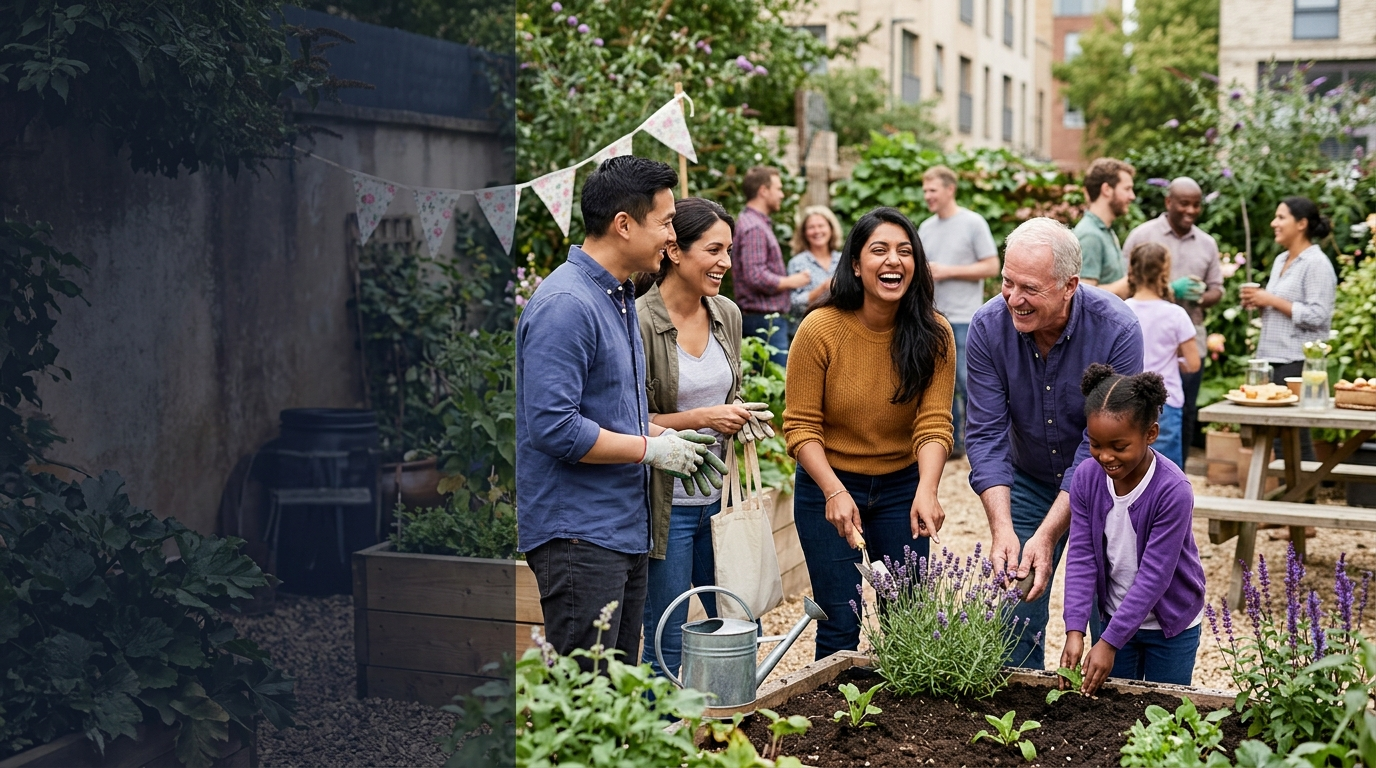
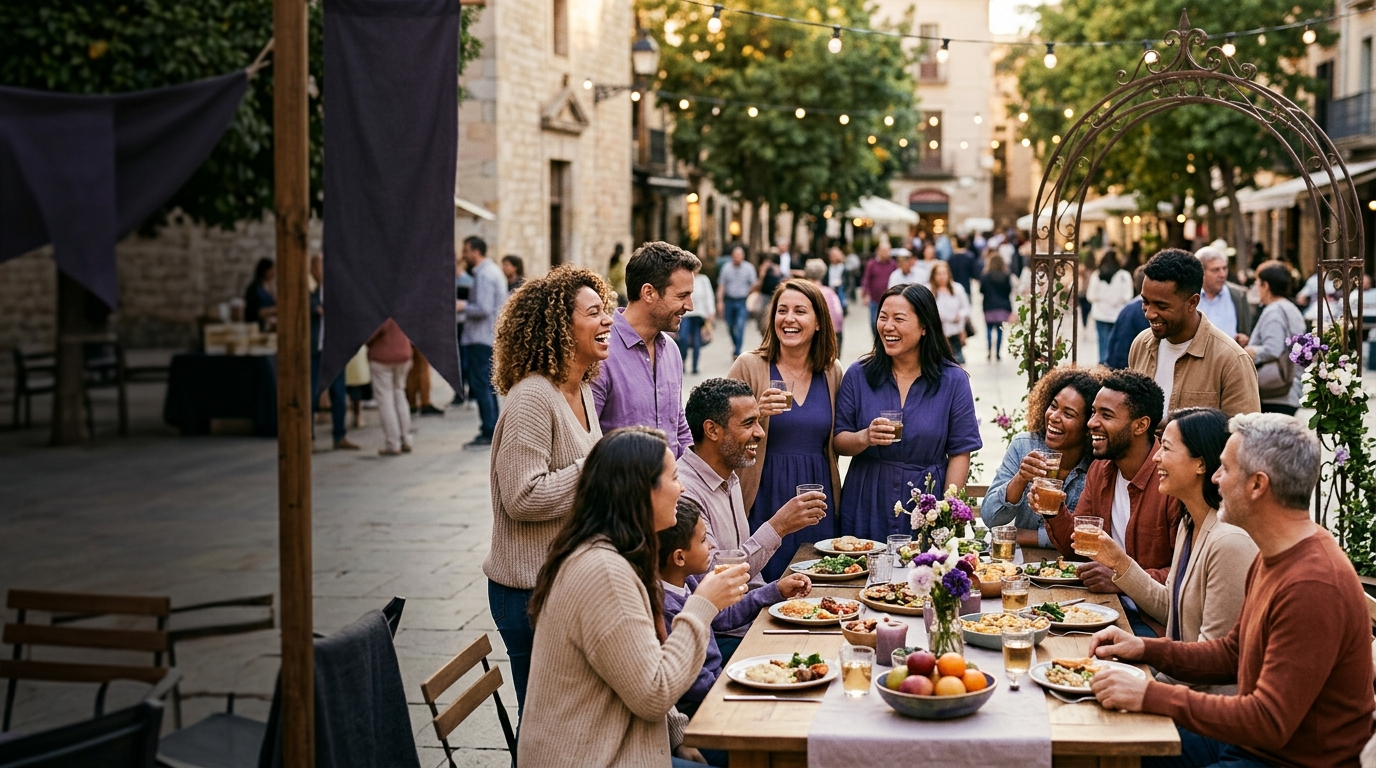
Use the images as idea prompts. Describe what you notice, connect it to your experience, then answer the real question.
Model answers, heard side by side
Start with the simpler answer, switch bands to hear how the same task can be developed, then record a personal response. These are teaching examples, not official answers or score guarantees.
Part 2 — Model Answer
Part 2 cue-card response
I remember a village fair last summer. I went with two friends and my sister. The fair had food stalls, a band and a small stage. During an afternoon set the band played a cheerful tune and many people started clapping. Soon others joined and it turned into a big sing-along. People were smiling a lot — families, older people and teenagers. I think most people smiled because they felt relaxed and happy. The sun was shining and the drinks were cheap, so everyone was in a good mood. I took some photos and most faces were laughing or smiling.
It was last summer during a small street festival in my town. I went with a couple of close friends and my partner, and we stayed for most of the afternoon. The festival was held on a cobbled street with stalls selling food, crafts and local beer; there were buskers and a small stage for live music. At one point a local choir started an upbeat song and people gathered around, clapping and swaying; a few children even started dancing between the crowd. As the song reached the chorus, someone suggested a sing-along and within minutes hundreds of people were joining in. What surprised me was how quickly strangers relaxed and smiled at one another; even visitors from other towns were beaming. Most people were smiling because the atmosphere was very friendly and inclusive, and there weren't any obvious worries — for a couple of hours everyone just enjoyed the moment. Also, the combination of sunshine, good music and a few glasses of wine probably helped lift people's mood. It felt like a brief escape from routine, where smiling became contagious and natural. It happened in July, early evening when the light was golden. I remember taking a photo that captured dozens of smiling faces.
Part 3 — Model Answers
Do you think people who like to smile are more friendly?
Yes, I think people who like to smile often seem friendlier. A smile makes someone look approachable and calmer. It helps when you talk to them, because you feel comfortable.
Smiling does tend to make a person appear more friendly and approachable, but it's not the whole story. Sometimes people smile as a polite social cue rather than out of genuine warmth, so you need to look at body language and tone as well. Overall, a smile usually opens doors in conversation.
Why do most people smile in photographs?
Most people smile in photos because it's a habit and it looks nice. We are taught to smile for pictures so everyone looks friendly and happy.
People smile in photographs because it's become a social convention — smiling signals confidence and likability. Cameras also prompt posed behaviour, so people put on a pleasant expression even if they're not feeling particularly joyful; candid shots, by contrast, often show a wider range of genuine emotion.
Do women smile more than men? Why?
I think women often smile more than men. Society teaches women to be pleasant, so they smile more in social situations. But it's not true for everyone.
Research and everyday observation suggest women tend to smile more due to social norms and expectations — they're often socialised to be welcoming and emotionally expressive. Men may be encouraged to appear reserved. That said, context matters: in professional settings some men smile a lot, while some women keep a neutral face.
Do people smile more when they are younger or older?
Younger people probably smile more because they are more carefree and outgoing. Older people smile too, but sometimes they're more reserved.
Younger people often smile more spontaneously — they're freer to show emotions in public. Older people may smile in a different way: more gently or knowingly, reflecting life experience. Health, culture and personality also influence how often people smile at different ages.
Is smiling important in your culture?
Yes, smiling is important in my culture. We smile to be polite and to greet people. It's part of everyday manners, like saying hello.
Smiling is important where I'm from, though there's a distinct British reserve: we often favour a small, polite smile rather than being overly demonstrative. In service industries and everyday interactions a quick smile smooths conversation and shows courtesy, but it doesn't always mean deep friendship.
Are there any occasions when people need to pretend to smile?
Yes, people sometimes pretend to smile, for example at work or at parties when they are tired. It's a way to be polite even if you don't feel happy.
There are plenty of occasions for a forced smile: customer service roles, formal diplomacy or even social events where you want to be polite. This emotional labour can be draining, because people conceal their real feelings to meet social or professional expectations.
Practice status: Archived topic from a previous question-bank cycle. It remains useful for skill practice but is not presented as a current or guaranteed exam question. How topics are labelled.
How to answer Describe an occasion when many people were smiling IELTS Speaking questions
For the Describe an occasion when many people were smiling cue card, use the preparation minute to build a route through the talk. Choose a clear subject, add two specific moments or details and end with why it matters. Then use the linked Part 3 questions to practise broader explanation and comparison.
Cue-card prompts:
- When it happened
- Who you were with
- What happened
- And explain why most people were smiling
- Opening: identify the person, place, object or event.
- Development: describe two details or moments in a logical order.
- Extension: explain a reason, result, comparison or problem.
- Reflection: finish with why the subject is memorable or important.
Question-by-question approach
| Practice question | Useful answer move |
|---|---|
| Do you think people who like to smile are more friendly? | State a likely view, explain the reason and add one condition or example. |
| Why do most people smile in photographs? | Answer with one main cause, then support it with a concrete example. |
| Do women smile more than men? Why? | Give a direct answer, one reason and a short example without memorising a script. |
| Do people smile more when they are younger or older? | Give a direct answer, one reason and a short example without memorising a script. |
Vocabulary focus
Useful language already demonstrated in the model answers includes approachable, social cue, genuine smile, pose, candid, impression management, emotional labour, socialised. Learn each meaning and a natural word partnership, then use the item in a fresh answer instead of copying a complete script.
Common mistakes to avoid
- Giving a memorised response that only partly answers the question.
- Adding difficult vocabulary without checking meaning or collocation.
- Restarting after every error instead of correcting briefly and continuing.
- Reading the model answer before recording your own first attempt.
Describe an occasion when many people were smiling practice FAQ
How should I use the Describe an occasion when many people were smiling cue card preparation minute?
Write keywords for an opening, two or three details and a final reflection. Do not try to write complete sentences.
Do I have to cover every cue-card bullet?
The prompts help you organise the talk. Covering them is useful, but a coherent one-to-two-minute response matters more than mechanically ticking off each line.
How are Part 3 questions connected to Part 2?
They develop the same broad theme through reasons, comparisons, social effects or future possibilities, so answers normally need more explanation than Part 1.