
Describe a food that people eat on special occasions/events: IELTS Speaking Part 2 Cue Card and Part 3 Questions
Part 2 cue card
Describe a food that people eat on special occasions/events
You should say:
- What it is
- What the special event/occasion is
- How it is cooked/made
- And explain why people eat it on that special occasion/event
You will have one to two minutes to talk about this topic.
Read the complete transcript
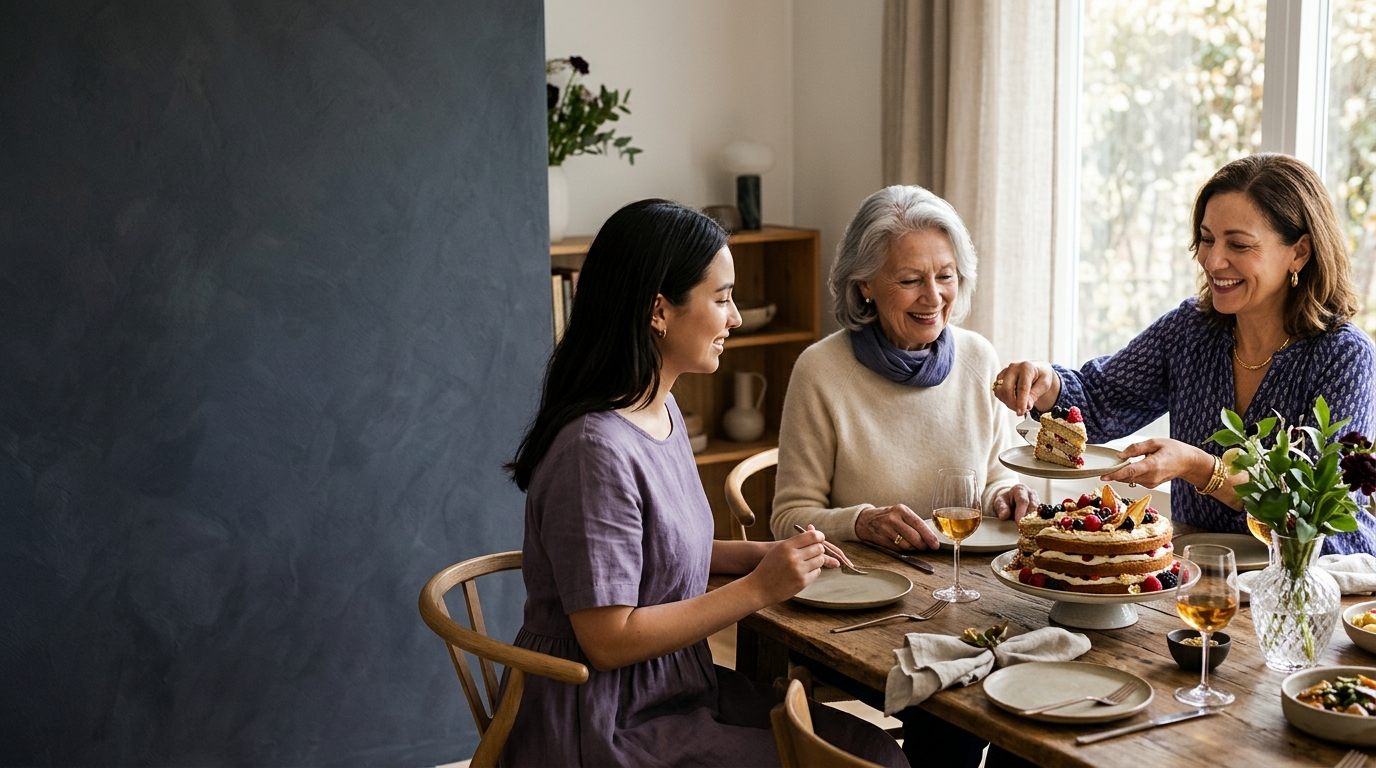
One food strongly associated with special occasions in many countries is roast turkey, especially at Christmas. It's a large bird, usually stuffed with herbs, onion and breadcrumbs, and roasted slowly until the skin is crisp and the meat is tender. The special event is Christmas dinner, a family meal on Christmas Day when households gather; in my family we always serve it and everyone helps with the preparation. To cook it, you season the turkey, fill the cavity with a stuffing mixture, truss the legs, and roast it in the oven for several hours, basting occasionally; sometimes we also add root vegetables to the roasting tray so they absorb the juices. People eat turkey at Christmas because it has become a symbol of abundance and celebration, replacing older dishes like goose; historically it was chosen because a single bird can feed a large group, which is practical for family gatherings. Additionally, the smell and taste create a sense of nostalgia and continuity, reminding people of past celebrations; for example, the sound of the oven timer always makes my extended family anticipate dessert and toasts. We also make gravy from the pan juices and serve cranberry sauce, which balances the richness; my aunt insists on adding a splash of sherry to the gravy. Leftovers are equally important — turkey sandwiches and soup keep the festive spirit for days.
Preparation status: Predicted topic cycle. This independent practice resource is not an official IELTS paper, and the questions in your test can be different. How topics are labelled.
Part 3 discussion questions
Move one question at a time: listen, answer, compare and retry. The complete question text remains in the page HTML for accessibility and search.
- 01Why are there special foods on special occasions or events?Full Band 6/7 answer →
- 02What are the differences between everyday food and festival food?Full Band 6/7 answer →
- 03Are there any differences between the food people eat today and the food people ate in the past?
- 04Do people today prefer eating at home or in a restaurant?
See the topic before you speak
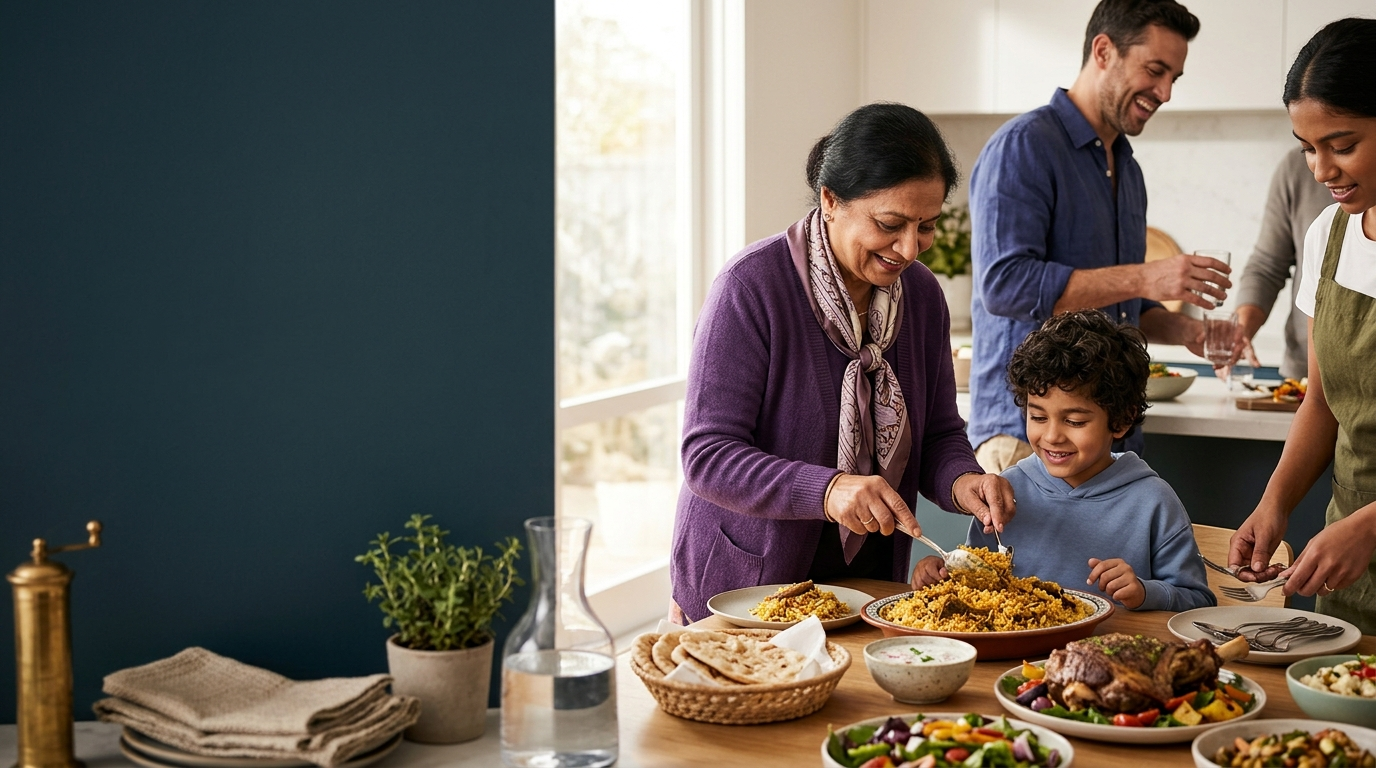
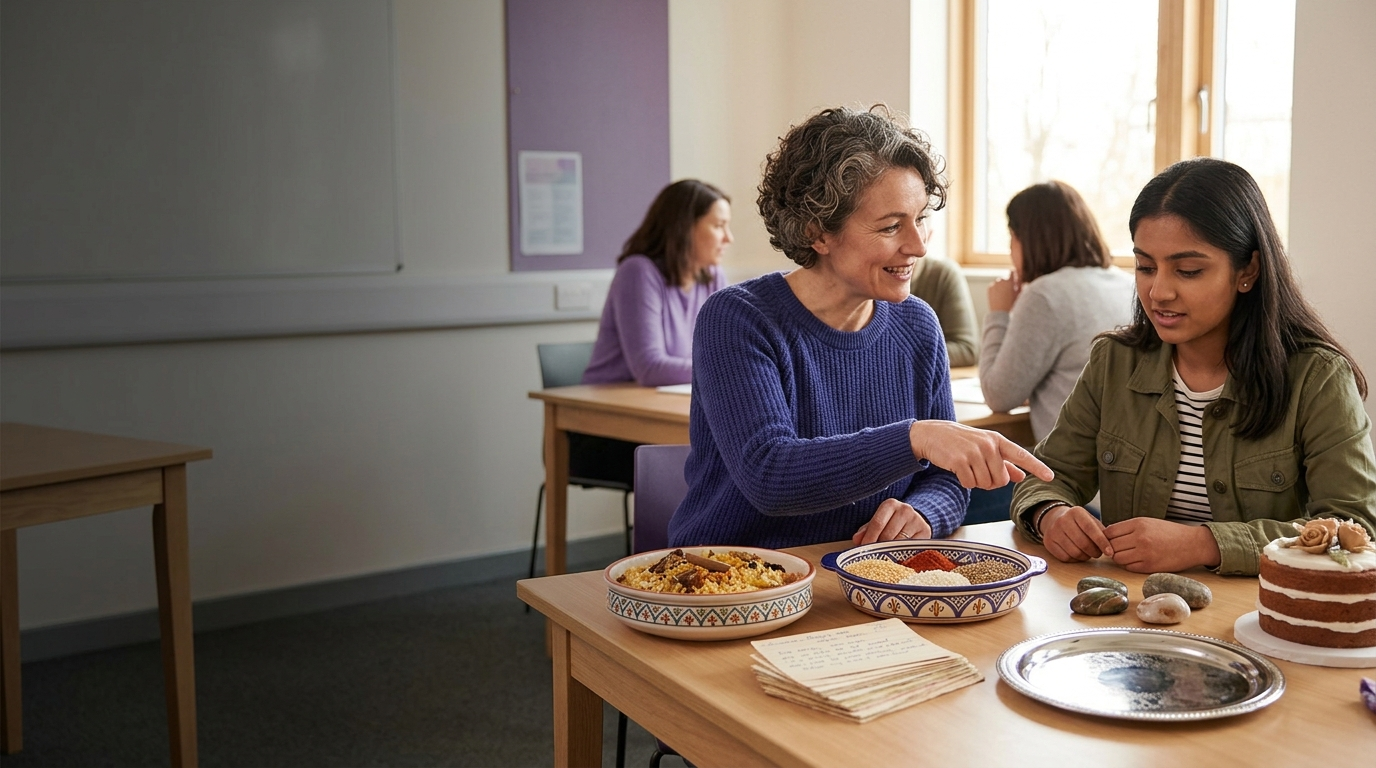
Use the images as idea prompts. Describe what you notice, connect it to your experience, then answer the real question.
Model answers, heard side by side
Start with the simpler answer, switch bands to hear how the same task can be developed, then record a personal response. These are teaching examples, not official answers or score guarantees.
Part 2 — Model Answer
Part 2 cue-card response
A food I associate with special occasions is roast turkey. People eat it at Christmas when families get together. The turkey is a big bird; you clean it, put stuffing inside, and roast it in the oven for a few hours until cooked. My family also makes roast potatoes and vegetables with it. People eat turkey at Christmas because it's a tradition and it feeds many people, so it's practical for gatherings. It also tastes special compared with everyday meals like chicken or pasta.
One food strongly associated with special occasions in many countries is roast turkey, especially at Christmas. It's a large bird, usually stuffed with herbs, onion and breadcrumbs, and roasted slowly until the skin is crisp and the meat is tender. The special event is Christmas dinner, a family meal on Christmas Day when households gather; in my family we always serve it and everyone helps with the preparation. To cook it, you season the turkey, fill the cavity with a stuffing mixture, truss the legs, and roast it in the oven for several hours, basting occasionally; sometimes we also add root vegetables to the roasting tray so they absorb the juices. People eat turkey at Christmas because it has become a symbol of abundance and celebration, replacing older dishes like goose; historically it was chosen because a single bird can feed a large group, which is practical for family gatherings. Additionally, the smell and taste create a sense of nostalgia and continuity, reminding people of past celebrations; for example, the sound of the oven timer always makes my extended family anticipate dessert and toasts. We also make gravy from the pan juices and serve cranberry sauce, which balances the richness; my aunt insists on adding a splash of sherry to the gravy. Leftovers are equally important — turkey sandwiches and soup keep the festive spirit for days.
Part 3 — Model Answers
Why are there special foods on special occasions or events?
I think special foods exist because people want to mark important events. Food makes a celebration feel different from normal days. Often the dish has been eaten for years at that festival, so it becomes a habit. It also brings people together, which is the main reason.
Special foods mark identity and ritual; they signal that a moment is different from everyday life. Many dishes gain symbolic meaning over time — for example, bread or cake might stand for prosperity — and that symbolism gets passed down through families. Additionally, the sensory aspect, like particular smells or flavours, helps create a collective memory, so people keep preparing the same dishes to maintain continuity and belonging.
What are the differences between everyday food and festival food?
Everyday food tends to be simpler and quicker, while festival food is richer and more elaborate. Festival dishes often use special ingredients or take longer to cook. People don't eat festival food all the time because it can be expensive or heavy.
Festival food usually differs in ingredients, preparation and presentation: it's often richer, uses more expensive or seasonal produce, and involves longer cooking or special techniques. Presentation matters too — meals are served in larger portions or as centrepieces. The difference also lies in social function: festival dishes are designed for sharing and ceremony, whereas everyday meals prioritise convenience and nutrition.
Are there any differences between the food people eat today and the food people ate in the past?
Yes, there are differences. Today people have more processed and convenience foods, like ready meals, which weren't common before. Also we can buy ingredients from around the world, so diets are more varied than in the past.
Food today differs from the past because of technology, global trade and changing lifestyles. We have frozen and ready-made options, supermarket supply chains and ingredients from across the globe, which wasn't possible for most households decades ago. At the same time there's a revival of interest in traditional methods — for example, artisan bread-making and local produce — so some people are reconnecting with older practices.
Do people today prefer eating at home or in a restaurant?
It depends. Some people prefer eating at home because it's cheaper and more comfortable, especially with family. Others like restaurants for special occasions or because it's more convenient. Young people might go out more, while older people stay in.
Preferences vary, but there's a clear trend: people choose restaurants for convenience, socialising and variety, while home-cooked meals remain popular for comfort, cost and tradition. The pandemic changed habits for a while, with more takeaways and cooking at home, yet dining out has bounced back as restaurants innovate and offer experiences you can't easily recreate at home. Ultimately it comes down to budget, occasion and lifestyle.
How to answer Describe a food that people eat on special occasions/events IELTS Speaking questions
For the Describe a food that people eat on special occasions/events cue card, use the preparation minute to build a route through the talk. Choose a clear subject, add two specific moments or details and end with why it matters. Then use the linked Part 3 questions to practise broader explanation and comparison.
Cue-card prompts:
- What it is
- What the special event/occasion is
- How it is cooked/made
- And explain why people eat it on that special occasion/event
- Opening: identify the person, place, object or event.
- Development: describe two details or moments in a logical order.
- Extension: explain a reason, result, comparison or problem.
- Reflection: finish with why the subject is memorable or important.
Question-by-question approach
| Practice question | Useful answer move |
|---|---|
| Why are there special foods on special occasions or events? | Answer with one main cause, then support it with a concrete example. |
| What are the differences between everyday food and festival food? | Name the thing first, then describe a specific feature or example. |
| Are there any differences between the food people eat today and the food people ate in the past? | Give a direct answer, one reason and a short example without memorising a script. |
| Do people today prefer eating at home or in a restaurant? | Give a direct answer, one reason and a short example without memorising a script. |
Vocabulary focus
Useful language already demonstrated in the model answers includes mark an occasion, symbolic meaning, collective memory, centrepiece, seasonal produce, presentation, ready-made, global trade. Learn each meaning and a natural word partnership, then use the item in a fresh answer instead of copying a complete script.
Common mistakes to avoid
- Giving a memorised response that only partly answers the question.
- Adding difficult vocabulary without checking meaning or collocation.
- Restarting after every error instead of correcting briefly and continuing.
- Reading the model answer before recording your own first attempt.
Describe a food that people eat on special occasions/events practice FAQ
How should I use the Describe a food that people eat on special occasions/events cue card preparation minute?
Write keywords for an opening, two or three details and a final reflection. Do not try to write complete sentences.
Do I have to cover every cue-card bullet?
The prompts help you organise the talk. Covering them is useful, but a coherent one-to-two-minute response matters more than mechanically ticking off each line.
How are Part 3 questions connected to Part 2?
They develop the same broad theme through reasons, comparisons, social effects or future possibilities, so answers normally need more explanation than Part 1.
